diplo.news
London's Ambassador: "Completely New Partnership" Despite Brexit

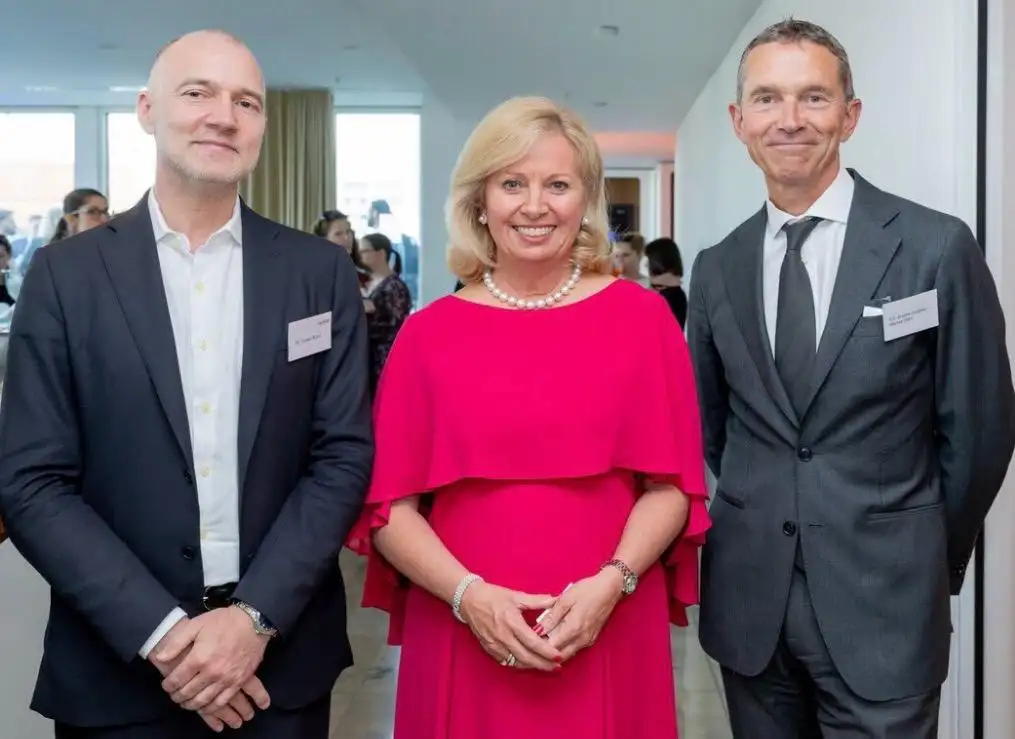
Five years after the UK’s exit from the European Union, the United Kingdom and Germany are growing much closer again. Andrew Mitchell, who has served as British Ambassador to Germany for the past year and a half, was invited as the keynote speaker at the summer party of the international business law firm Noerr at Gendarmenmarkt in Berlin. According to him, both countries are rediscovering each other: Especially in a time of geopolitical upheaval and increasing conflicts, “the UK and Germany are rediscovering why it makes sense—and has always made sense—to be the closest of partners.”
Although the United Kingdom is no longer a member of the EU, it remains determined to tackle current challenges together with the EU. “Our partnership carries even greater weight today. It is of crucial importance for the security and prosperity of our two nations, for Europe, and for the world as a whole. It is particularly important for European security.”
Highest Defense Spending
The Ambassador listed examples: "It is extraordinary that our two countries account for the two largest defense budgets in Europe and are the largest providers of military and financial support to Ukraine.”
On the topics of global responsibility and the transition to climate neutrality, Mitchell emphasized: “We are the second- and third-largest providers of development aid within the G7 and, at the same time, the two largest producers of offshore wind energy in Europe.”
The bilateral partnership is also important for the closely intertwined economies and economic resilience. “Imagine how significant it is for the United Kingdom that Germany is our second-largest trading partner.” 1,500 British companies operate in Germany, and 2,500 German companies in the United Kingdom. Bilateral trade secures 750,000 jobs in Germany and 500,000 in the UK.
Fundamental Change Thanks to the Kensington Agreement
Ambassador Mitchell emphasized the importance of the Kensington Treaty, which had been concluded shortly before Federal President Frank-Walter Steinmeier’s state visit last December. As if he knew that this comprehensive bilateral friendship and partnership treaty is little known in Berlin, he urged the guests at the Noerr reception to Google the treaty right after his speech. “This is a truly historic agreement, the first of its kind between our two countries,” said Mitchell.
“The treaty marks a profound transformation in our relations. It completely redefines our partnership, the full scope of which we are only beginning to grasp today.” It covers defense and security, trade, science, innovation, and people-to-people relations.
The treaty governs cooperation between the two countries in strategic aspects of security policy, including deterrence and defense, nuclear issues, arms control, non-proliferation, chemical, biological, radiological, and nuclear threats, space security, counter-terrorism, etc. Intelligence services will also strengthen their cooperation. Finally, both countries are committed to crisis management, conflict resolution, and prevention, and assure each other of consular support. Here is the text of the Kensington Treaty: Federal Government
New Industrial Strategy in London
On the economic front, Mitchell announced a new approach to the relationship between the state and the private sector, one that would also benefit Germany. He noted that he had spent the last five years of his career as Director General at the Department for Business, Energy and Industrial Strategy working specifically on this issue. “As a government, we want to work more actively and strategically with the private sector. We want to be a government capable of taking action, one that listens to businesses and understands what is needed for growth.”
This approach is at the heart of the new British industrial strategy, with clear growth priorities and investments in sectors critical to future competitiveness. “In this spirit, the British and German governments have set ambitious goals to reduce excessive regulation.”
Visa-free travel for school groups
Mitchell announced that, starting in August of this year, school groups—including those with non-EU citizens—will once again be able to travel to the countries without a visa. “This will make it easier for young people to get to know our countries firsthand.”
Furthermore, according to the treaty, a high-speed train will provide a direct connection between London, Cologne, and Frankfurt in less than four hours as early as 2030.
Return to the Erasmus Program
In the education sector, Great Britain will rejoin the Erasmus program starting in 2027. This will once again enable EU students to study in the UK, and British students to study in the EU.
The Kensington Treaty concerns not only the UK and Germany, but also the EU and other European neighbors. “It completes the triangle of agreements between the E3 states—France, Germany, and the United Kingdom—namely the Lancaster House Agreements between the UK and France and the Franco-German Élysée Treaty.”
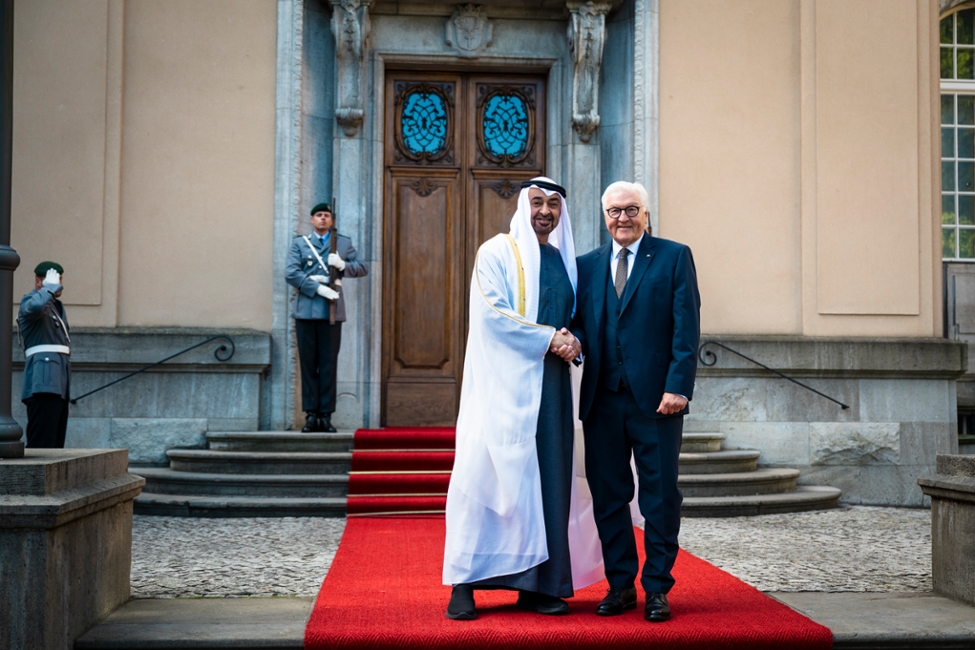
Steinmeier’s visit to the UK in December took German-British relations a major step forward. This first state visit by a German president in 27 years demonstrated the extraordinary breadth of the relationship. Mitchell quoted the British monarch: “As His Majesty emphasized during this visit: Britain and Germany stand shoulder to shoulder.”
ekö
.webp)