diplo.news
A Warning Sign from Great Britain
Column by Michael Backfisch
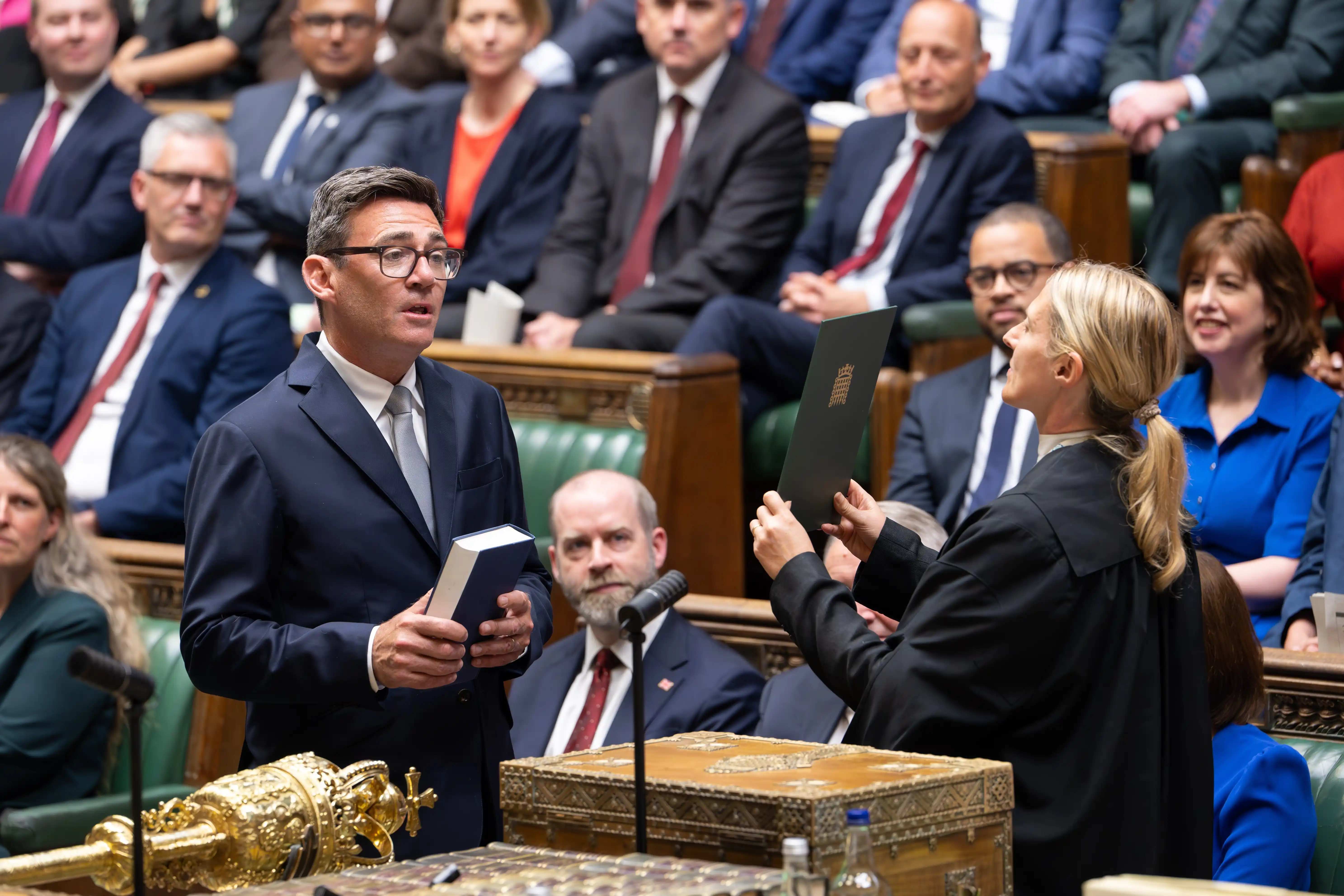
When Andy Burnham was sworn in as a newly elected MP in the British House of Commons on Monday, he received so much applause that some probably thought he could walk on water. The longtime mayor of the Greater Manchester metropolitan area in northern England is seen by many in the ruling Labour Party as a kind of messiah. The man who is soon to become Labour leader and British Prime Minister appears to be a personified contrast to the unlucky incumbent, Keir Starmer. He is considered down-to-earth, warm, and charismatic. And he pulled off a feat that sparked waves of euphoria within his own camp: In the by-election in the Makerfield constituency, he scored a resounding victory over the candidate from the right-wing populist party Reform UK. The group, led by Brexit champion Nigel Farage, is ahead of both the Social Democrats and the Conservatives in all national polls. Labour is now counting on Burnham to catapult its party back to the top.
But beware! Excessive enthusiasm is dangerous. Labor already learned this lesson just under two years ago. The British Labour Party’s hopes had soared to astronomical heights when Starmer secured a triumphant election victory on July 4, 2024. The chaotic years of Conservative governments following Brexit in 2016 seemed to be giving way to an era of new stability. Starmer raised high expectations. He wanted to initiate social reforms, bring the country closer to Europe again, and overhaul the ailing healthcare system.
But the prime minister was able to keep only a few of his promises. He failed to deliver on the grand vision for a country often referred to as “broken Britain.” Starmer had to backtrack on a number of plans, including cuts to government subsidies for heating costs for the elderly. Each time, it was resistance from within his own ranks that tripped him up. Because he was unwilling to significantly increase the defense budget, his Defense Minister, John Healey, resigned. Labor’s heavy defeat in the local and regional elections in England, Scotland, and Wales in May sealed Starmer’s fate. The right-wing populist Reform UK emerged as the big winner, making significant gains across the country.
There are many reasons for Starmer’s failure. His aloof demeanor and reluctance to reach out to people are just as much a part of it as his lack of an overarching vision. Admittedly, the task awaiting him was enormous. The Conservative Brexit dreamers—from Theresa May to Boris Johnson and Liz Truss—have driven the country into economic ruin. The economy stagnated, national debt skyrocketed, and the healthcare system continued to bleed out. Yet Starmer engaged in nothing but political patchwork.
Will Burnham do better? The 56-year-old certainly has a track record of success in local and regional politics. For instance, he expanded public transportation in Greater Manchester at affordable prices. Housing construction and the improvement of public healthcare are also among his priorities. Burnham sees himself as a proponent of "business-friendly socialism" and is a critic of Brexit. "I think we need to transfer what we have achieved in Greater Manchester to the national level," he recently emphasized in an interview with the BBC.
That's easier said than done. "It's a completely different situation when you sail into the storm of the seat of government, 10 Downing Street, where 150 matters land on your desk every day," emphasizes Robert Ford, Professor of Politics at the University of Manchester. “You don’t really have much influence over what issues people are arguing about. And you have no time to reflect."
One can only wish Burnham luck in successfully implementing concrete reform plans. For the political storm in Britain that led to Starmer’s resignation serves as a warning sign for Europe. Even though right-wing populist organizations such as Reform UK in the United Kingdom, the AfD in Germany, or the Rassemblement National in France cannot all be lumped together, they do share commonalities. They all want to make people believe that every political problem can be solved with a supposed magic formula: deporting foreigners, nationalism, and hatred of the government and democratic institutions. It’s a toxic cocktail with no promising plan behind it. It would lead to disappointments similar to those caused by Brexit in the UK.
The success of right-wing populists, however, is always linked to the fact that many people have lost trust in political elites. Faith in governments’ ability to solve problems has dwindled to an alarming degree. The global division of labor brought about by globalization—in which companies seek out lucrative markets with the lowest possible labor costs—is putting the old welfare state models to the test. Not everything that was financially viable in the past can be sustained today in an aging society. This leads to demands that are unreasonable and must be explained.
But this also presents an opportunity. Politicians are not powerless. The remedy is not to demonize right-wing populists, but to engage in open communication with the public. Top politicians must be reasonable, persuasive, and empathetic. They need a strategy for economic growth that creates incentives to work—and one that is socially balanced so that those truly in need are not left behind. People can be won over with a positive narrative that leads their own country to new heights.
The major pension reform that the federal government now intends to undertake is a step in this direction. It places responsibilities on employees as well as civil servants and companies. It links the retirement age to life expectancy and introduces a stock component into retirement planning. It requires sacrifices from both the young and the old in order to stabilize the entire system. Finally! A mammoth issue in social security is being tackled and put on a new, long-term footing. Similar steps must be taken with regard to health insurance, taxes, and the business environment for companies.
Burnham’s success or failure will have far-reaching implications. Ahead of the East German state elections in September and the French presidential elections in the spring of 2027, many eyes will be on the United Kingdom. Only with a convincing policy mix can he turn the tide. Otherwise, he will fail just like Starmer. And he won’t be the only one.
.jpeg)