diplo.news
Democracy Under Stress: Lessons from Populism in Ancient Greece
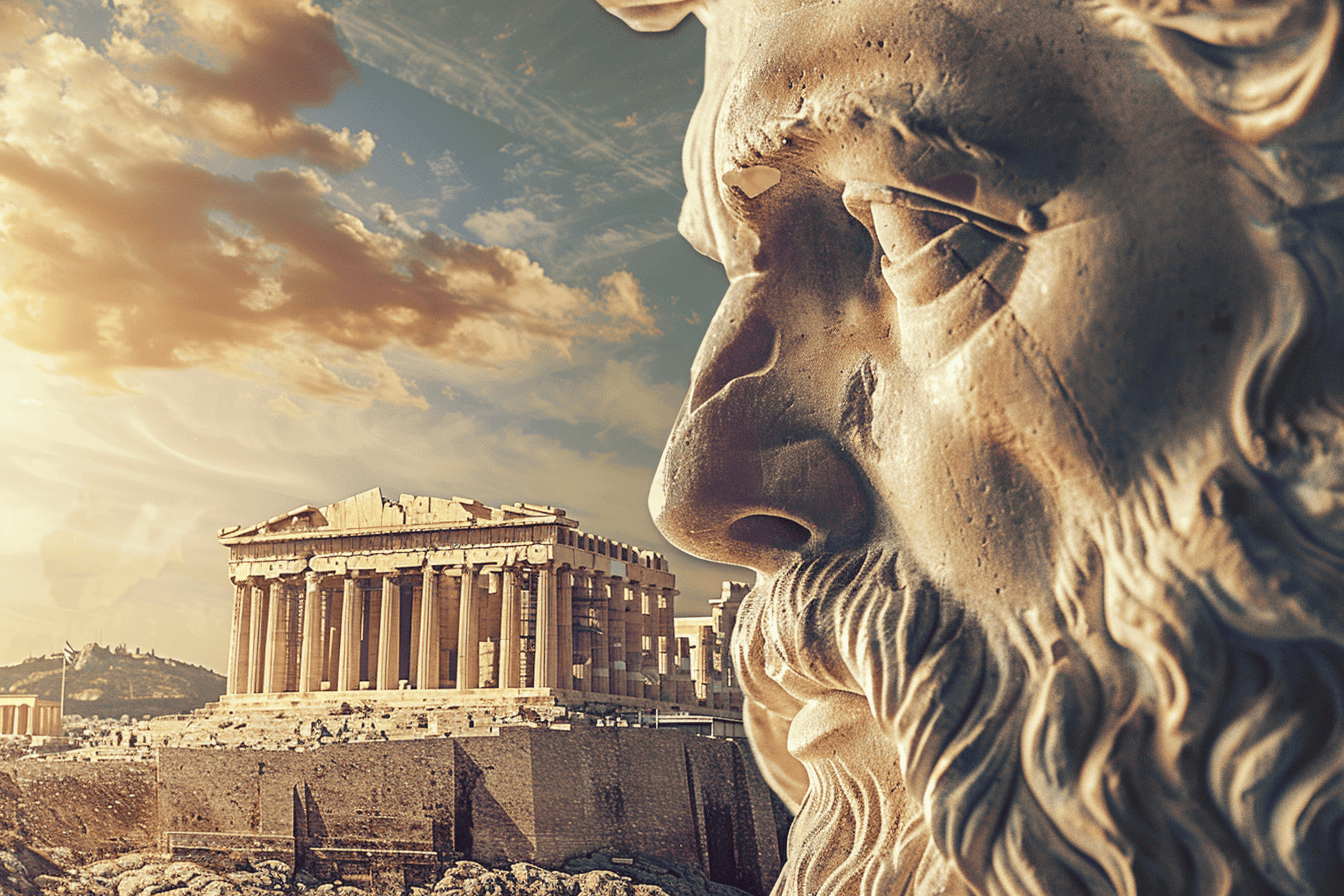
Democracy is under pressure—but its crises are not a phenomenon of the present. For philosopher Julian Nida-Rümelin, this is reason enough to dedicate a three-day conference to the topic on Berlin’s Museum Island. The former State Minister of Culture under Chancellor Gerhard Schröder—who previously served as Munich’s Cultural Affairs Officer and is currently (until September 2026) rector of the Humanistic University of Berlin (HHB)—explains his motivations. He advocates looking far back to the origins of democracy in ancient Greece—and learning from them.
The conference, which will take place from June 24 to 26, 2026, at the James-Simon-Galerie on Museum Island in cooperation with the Prussian Cultural Heritage Foundation, is dedicated to the historical origins and humanistic foundations of democracy. The location is fitting: situated between the Altes Museum and the Pergamon Museum, it bridges the gap from antiquity to the current challenges facing democratic societies.
According to Nida-Rümelin, Attic democracy in the 5th century B.C. did not arise solely as a result of social conflicts between the nobility and the common people. Bloody power struggles among rival elite families likely played an important role. Archaeological finds of graves containing numerous young men suggest conditions resembling a civil war.
A new model of conflict resolution
Democracy emerged not through revolutions, but as a new model for conflict resolution: public opinion formation, collective decision-making, and the control of political power were intended to break the cycle of violence.
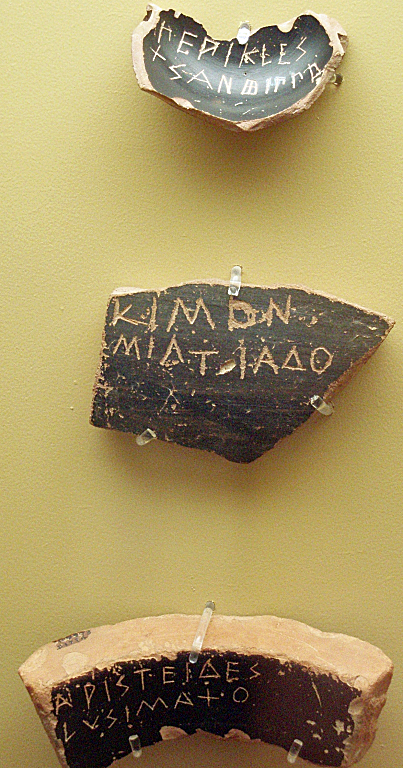
Ostracism, the Athenian democratic practice of banishment by lot, played a special role in this process. Through democratic voting—specifically, ostracism—excessively powerful figures could be banished from the polis, the city-state, for ten years. Democracy was thus, from the very beginning, also an instrument for limiting power.
“The ability to vote out men who had become too powerful and banish them for ten years was a new model for maintaining peace within the polis community, at a time when Greece did not yet exist as a unified state, but rather the state and the city—as the polis—formed a single entity. It worked surprisingly well,” explains Nida-Rümelin.
“However, even back then, democracy was threatened by populism, much like today.” When asked if ostracism should be reintroduced, he replied: “That would be an idea. I can think of a candidate in a large, democratic country who would be very suitable for that because of his abuse of power.”
Charismatic figures intoxicated by power
Even in ancient times, democracy was threatened by populist movements. Time and again, charismatic leaders rose to power who sought to override institutions and transform democratic structures into tyrannies. The parallels to the present day are striking.
A key figure in early democracy was the lawmaker Solon, who combined political wisdom with a strong sense of justice. “Solon was a great, influential figure. He shaped this first successful phase very wisely and, in doing so, displayed a certain down-to-earth quality. He was well-received; people found him impressive.” At the same time, his very sharp judgment was guided by a sense of justice.
Later, Plato explored the question of justice in greater philosophical depth. His conception of a stable order was based on the idea that people would assume responsibilities according to their abilities, serving not their own interests but the common good. Justice, he argued, does not consist in everyone having the same things, but in people being taken seriously in their respective roles.
A leap to the present
Nida-Rümelin moves from the historical origins and humanistic foundations to the present: “Democracy faces challenges today. Human dignity, respect, the public exercise of reason—a certain civilized culture of interaction has declined significantly in recent decades, especially in the U.S., but also in Europe.”
The scholar sees numerous democracies today in a transitional zone between democratic and authoritarian forms of government. He cites Turkey, Russia, Hungary, and developments in the U.S. as examples. While democratic institutions there remain formally intact, he notes, it is becoming clear just how strongly individual political figures can dominate the system.
“Is Turkey still a democracy? Freedom of the press is restricted. The opposition party, the CHP, is effectively being decapitated by imprisoning its leaders on suspicion of corruption. In my view, that is no longer a democracy. In the case of Russia, one can no longer speak of democracy anyway. Before Putin, it was relatively democratic, albeit very chaotic. In the transitional phase between democracy and autocracy, it is often unclear exactly which side individual states currently stand on.”
Tyrants in antiquity and the present
In antiquity, democracy in the city-states sometimes devolved into tyranny. “At first, the term ‘tyrant’ didn’t have negative connotations; they were mostly men of the people who were particularly strong, impressive, and assertive, and who established a kind of one-man rule. They destroyed democracy and, in their intoxication with power, became tyrants. This, too, is reminiscent of current developments.”
Europe has democracies structured differently. “Take Italy, for example. I say this with all due respect and full recognition of her governance, but Giorgia Meloni is a neo-fascist. Her background is in neo-fascism in Italy, Movimento Sociale Italiano, Alleanza Nazionale, and then ultimately Fratelli d'Italia. This represents a continuity, and despite the name changes, it is a neo-fascist party that still features a symbol representing Mussolini’s tomb on its emblem.”
However, Nida-Rümelin currently sees France as most at risk. “A presidential constitution endowed with powers similar to those of the U.S. system—in my estimation, even greater. And if Le Pen or someone like her wins the presidential election there—which, according to the polls, could happen—then I don’t know what will become of democracy in France and the European Union.”
Democracy: Not just a form of government
The real lesson to be learned from history and the present is that democracy should not be understood merely as a form of government. It is also a way of life and a social structure.
In addition to institutions such as the separation of powers, free elections, and independent courts, it requires a culture of mutual respect, a free public sphere, and a willingness to tolerate differences.
“What can we learn today from the crisis in ancient Greece, when populism ran rampant? Democracy is not merely a form of government that—once institutionally entrenched—lasts forever. Just think of the West’s attempts to exert influence in Egypt, Libya, Syria, and Iraq during the Arab Spring. The idea was always: If we end a dictatorship and topple Saddam Hussein, then democracy will come on its own and endure. But that’s not how it works!”
In the worst-case scenario, democratic elections lead to the election of anti-democratic forces, for example, in Egypt with the Muslim Brotherhood. “We breathed a sigh of relief when that democratic experiment came to an end. Because when the Muslim Brotherhood is in power, minorities are oppressed and a kind of clerical regime similar to that in Iran takes hold.”
Nida-Rümelin identifies a severe crisis facing democratic nations not only in Germany and the U.S., but also in the United Kingdom, France, many other countries, and even in Central and Eastern Europe.
Frustration over unresolved migration policy
The Social Democrat cites unresolved political problems as one of the causes of current democratic tensions. In particular, he argues, migration policy has not been adequately addressed for many years. “People have—in part rightly so—the impression that major problems are not being addressed. Take migration, for example. Starting in 2015 and 2016, it was obvious to everyone that a policy of open borders—where de facto, if not de jure, anyone who wants to come can stay here because there are always obstacles— Even if they could ultimately be deported legally, they cannot be deported because they cannot be located. Ninety percent or even more of those who come here and want to stay are actually able to stay, even though the asylum approval rate is below ten percent. That is a source of frustration.”
He states that this can be said even if one is generally very much in favor of immigration. "We need controlled, managed immigration, not one that depends on the vagaries of global developments."
Obligations to provide protection are not immigration law
The obligations to provide protection to war refugees are limited to the period during which a war is raging. “But that is not immigration law. It has been clear since 2015 that this policy cannot continue as it is. We’ve let ten years slip by. Only now has the European Union presented a plan for how this might work. That’s too long!”
In Denmark, Prime Minister Mette Frederiksen, a left-wing Social Democrat, has shown how to virtually eliminate far-right parties. “She has introduced a strict course on migration policy and a perfect integration policy: integration programs for those who can stay, and otherwise a very restrictive immigration policy. This means it's possible. It can be done."
The power of tech giants over democracy
Nida-Rümelin sees another threat to democratic societies in the enormous power wielded by large tech companies. Until now, railway networks, roads, and major public institutions have always been under state control. For the first time in modern industrial history, the central infrastructure of public and digital communication lies almost exclusively in the hands of a few private owners of giant corporations—usually major American companies. Democratic states have not yet found a convincing response to this.
For the philosopher, it is therefore clear: Anyone who wants to strengthen democracy must take its historical experiences seriously. Democratic systems are neither a given nor permanently guaranteed. They must be continually reaffirmed, defended, and culturally sustained.
The conference on Berlin’s Museum Island is intended to contribute to this effort. Admission is free, but registration is required.
More information: Humanistische Hochschule Berlin
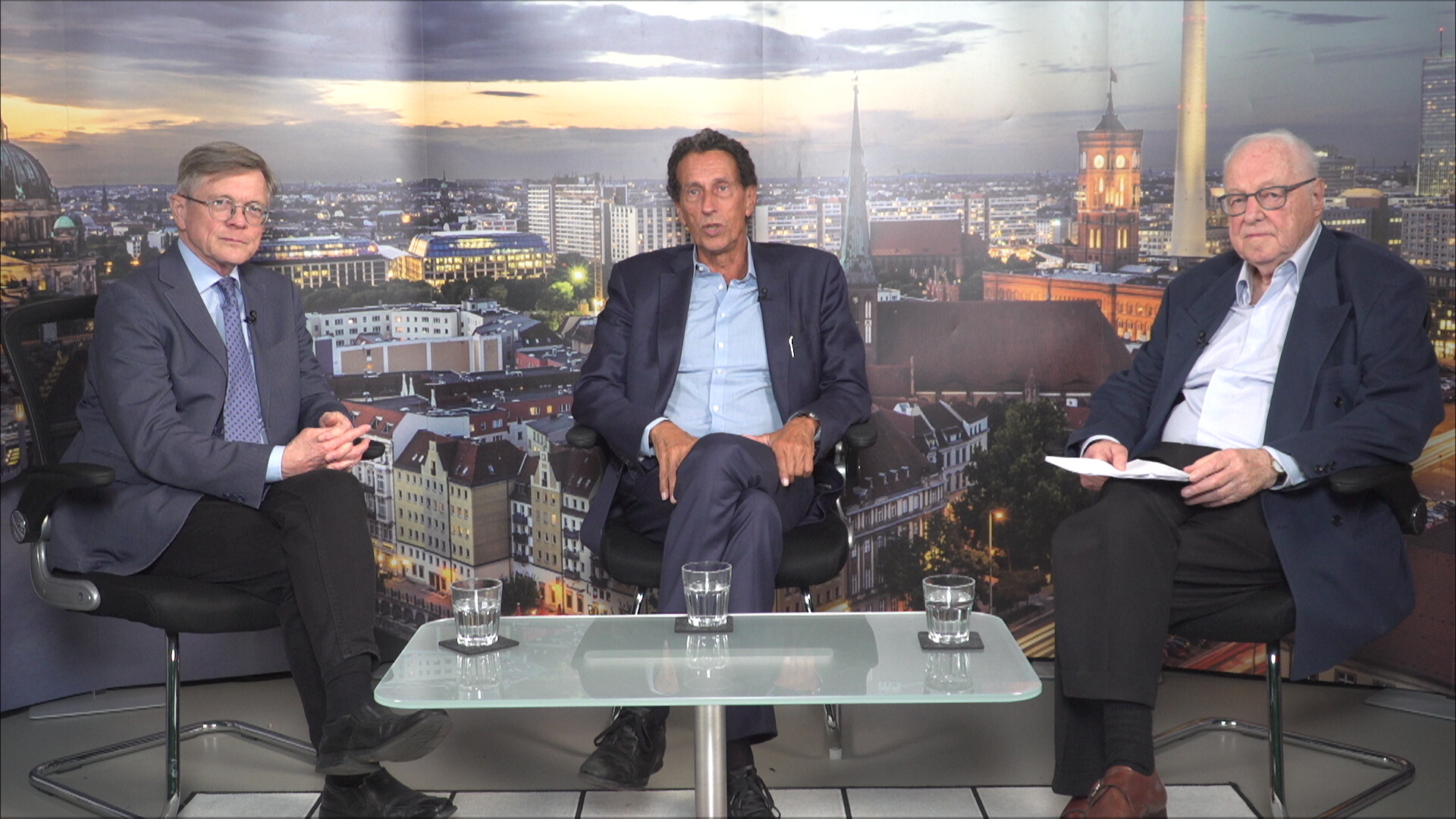
Julian Nida-Rümelin was interviewed by the hosts of the TV Berlin talk show “Brinkmann und König,” Dr. Peter Brinkmann and Ewald König.
Link to the show: YouTube
.webp)
.jpeg)