diplo.news
As UN Secretary General, Lana Nusseibeh wants to focus on mediation
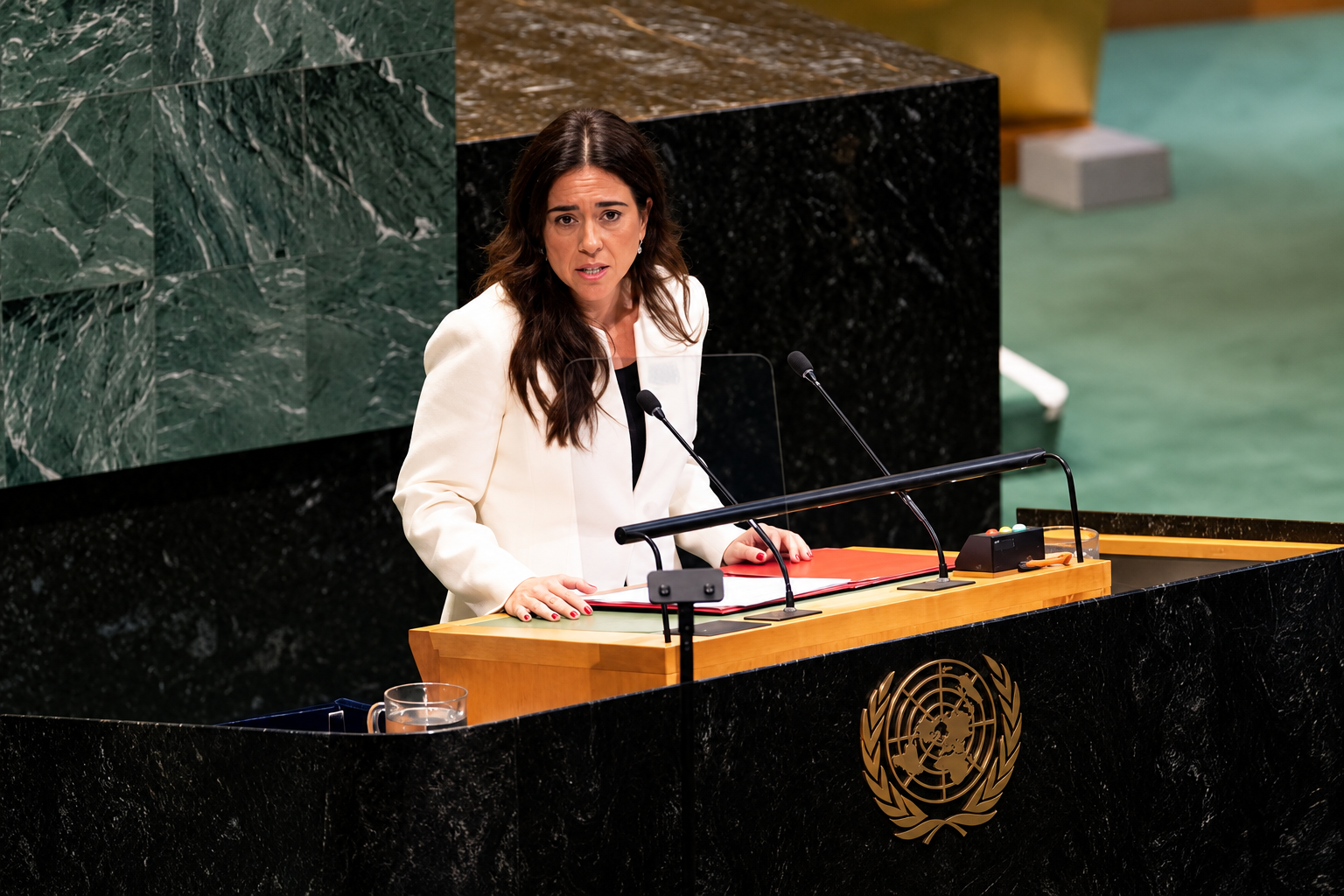
Top diplomat Lana Nusseibeh is aiming to succeed UN Secretary-General António Guterres. She was officially nominated for the position by the United Arab Emirates (UAE) on October 21. She brings more than a decade of experience at the United Nations to the role.
She represented her country at the UN from 2013 to 2024. When the UAE was a member of the UN Security Council, she served as its president twice. According to Reuters, her nomination came at a time when the veto-wielding powers on the Security Council were struggling to agree on a joint candidate to succeed Guterres.
She still lacks support from the EU
The six member states of the Gulf Cooperation Council unanimously support Nusseibeh's candidacy. Within the European Union, she has the backing of Cyprus. She is now seeking broader support in Europe. In the Spanish daily newspaper ABC, Fernández Arribas highlighted the shared interests of Europe and the Gulf states, including the protection of civilians and the security of sea lanes. The next step lies with the Security Council. Based on its recommendation, the UN General Assembly will appoint the future leadership of the world organization.
In a recent interview with Euronews, Nusseibeh stated that she wanted to mediate in international crises herself and was willing to take political risks for the sake of peace. The negotiations on UN Security Council Resolution 2720 on Gaza demonstrated what this approach might look like in practice. As the UAE’s UN ambassador, Nusseibeh participated in the talks that led to the adoption of the resolution. Her goal was to facilitate the delivery of humanitarian aid to the civilian population in the Gaza Strip.
UN Water Conference as a test case for the future
The UN Water Conference—which will take place in Abu Dhabi from December 8 to 10—serves as a sort of test case for the future of the United Nations from the candidate’s perspective. The water issue is not limited to environmental or development policy alone; it also relates to conflict and peace. The UN conference plans to hold a dialogue on “Water for Cooperation.” Water-related issues such as transboundary rivers, food security, health, migration, climate change, and conflicts provide a bridge to Nusseibeh’s key priorities of peace and security as well as preventive diplomacy. She aims to make the UN more effective, better coordinated, and more capable of taking action; she calls for tangible results, advocates for better cooperation, and demands a reform of UN structures.
The three-day UN Water Conference in Abu Dhabi is being co-hosted by the UAE and Senegal. The issue of water is now firmly on the global agenda, which is relevant for the next UN Secretary-General. An important political decision was already made on November 23, 2026: The General Assembly adopted by consensus a resolution introduced by the UAE and Senegal, stipulating that regular UN Water Conferences are to be held every three years starting in 2031. This is intended to permanently strengthen international cooperation in this area and to anchor the issue of water more firmly in the work of the entire UN system. Water will then no longer be merely the focus of individual conferences.
ekö