diplo.news
UNRWA faces a financing dilemma
By Gülfem Dodur
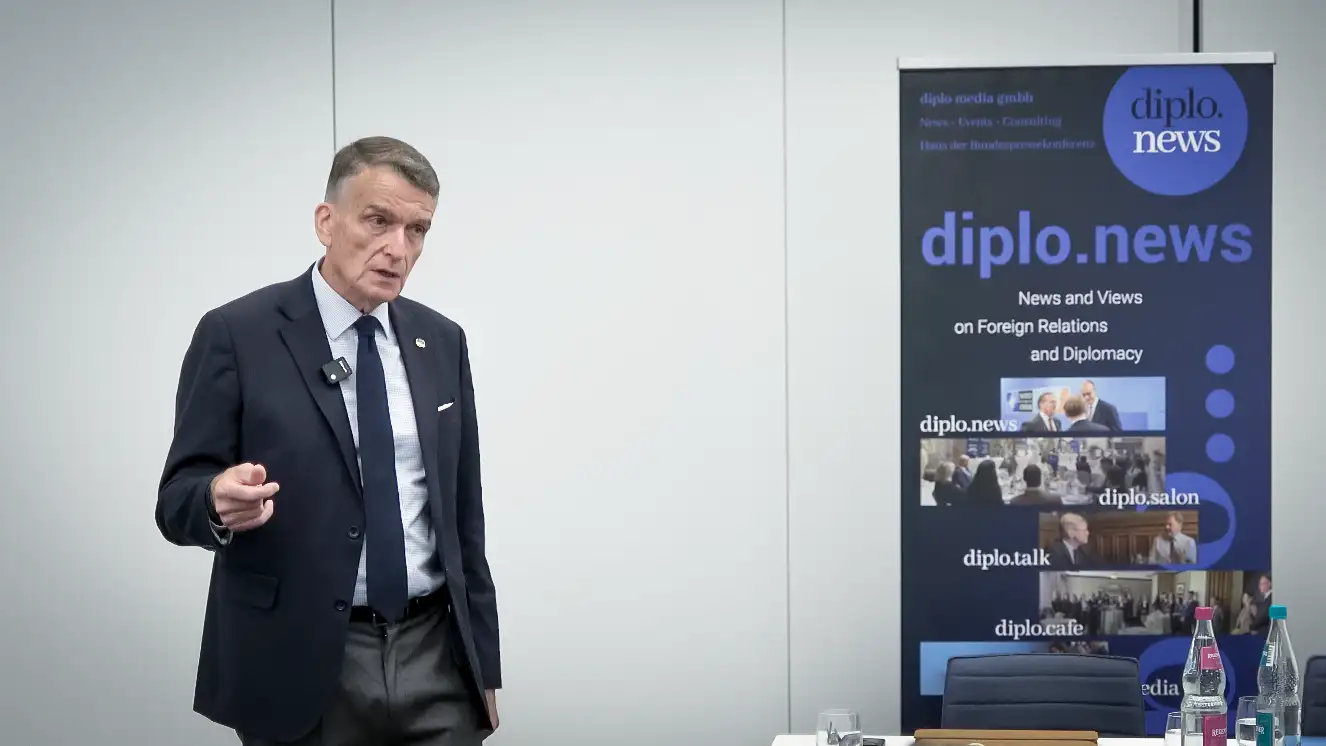
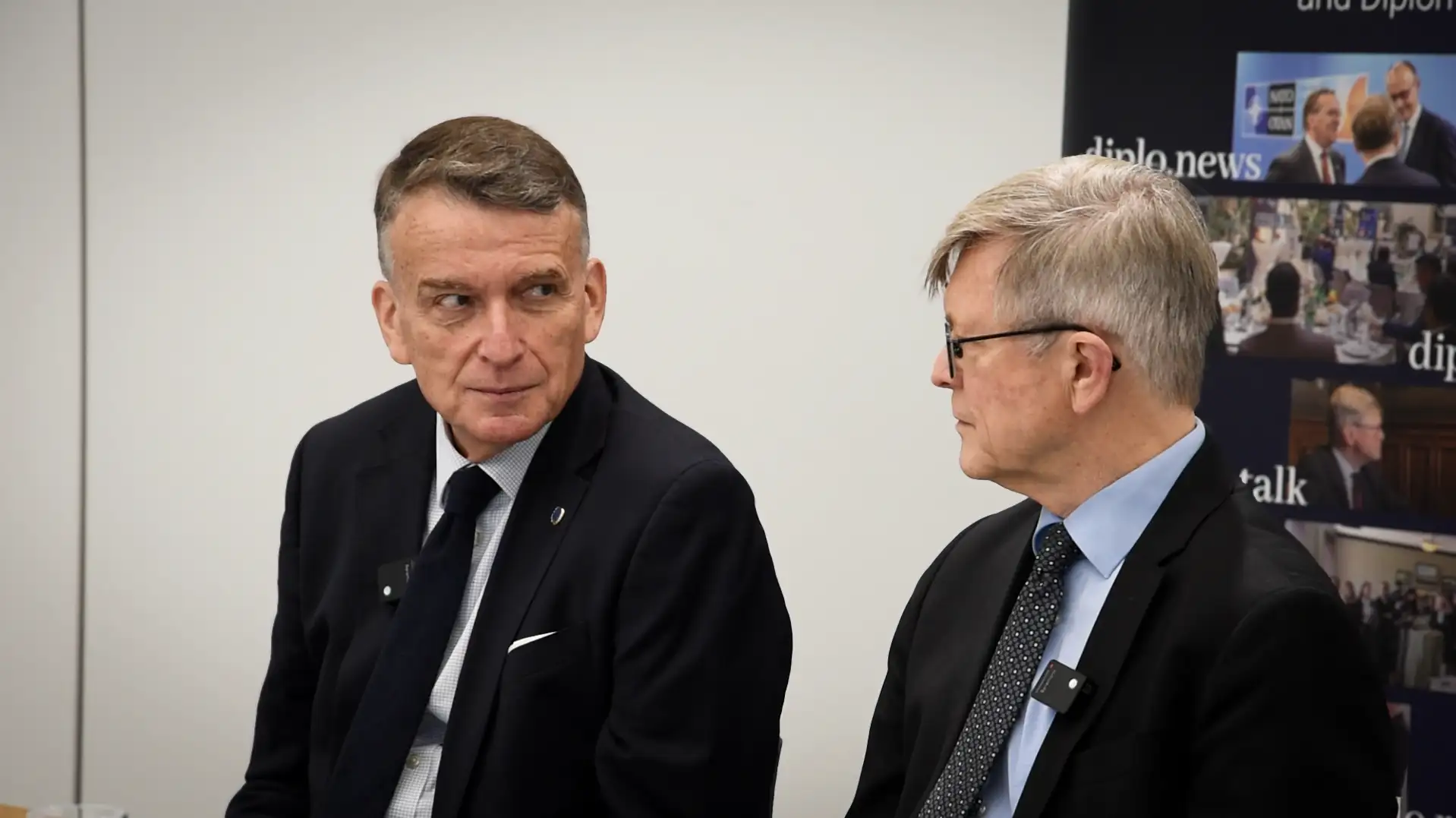
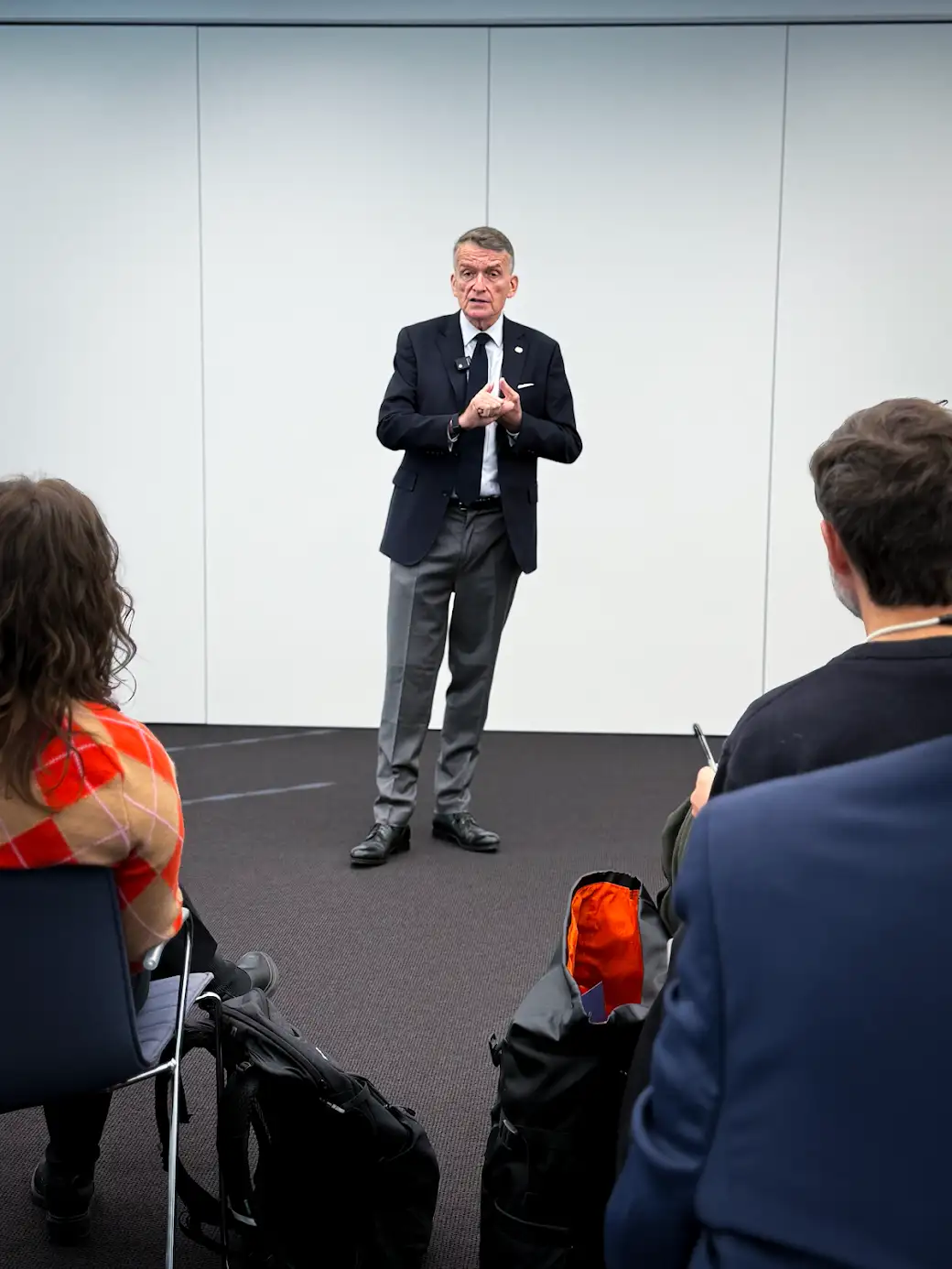
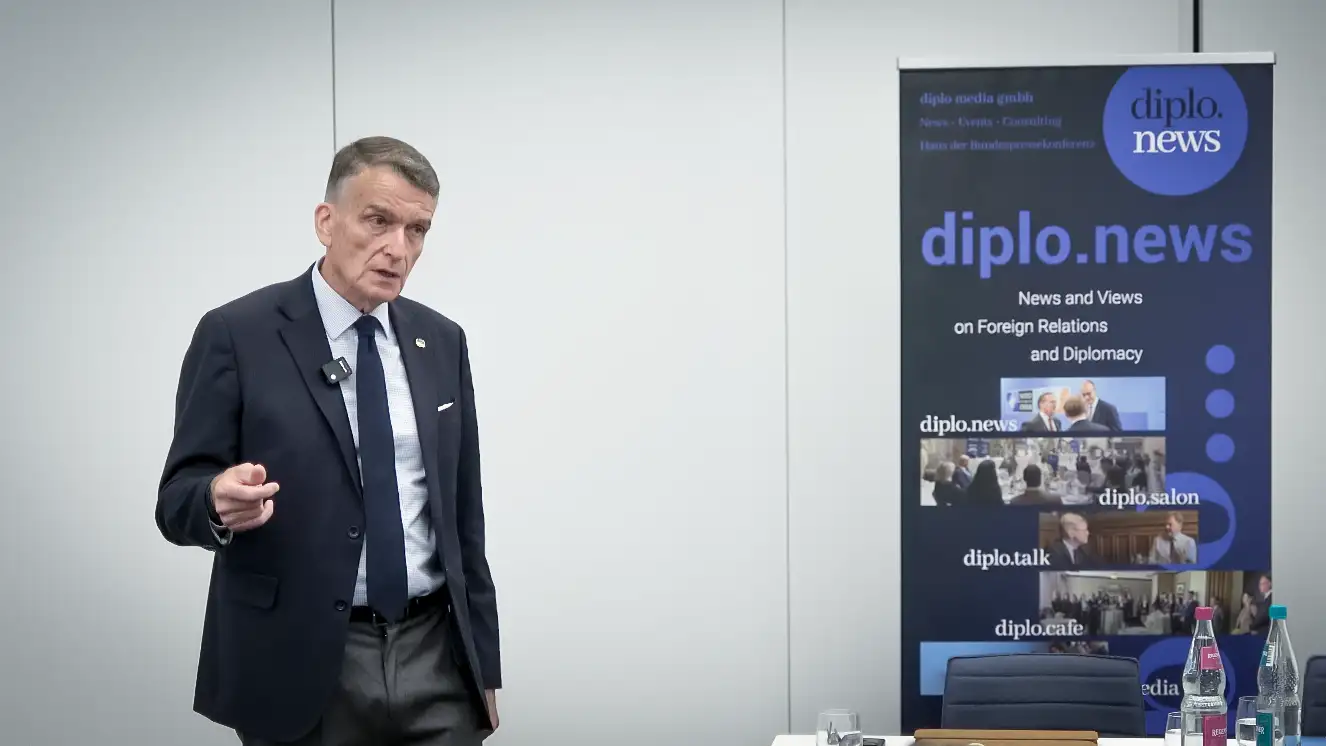
UNRWA Acting Commissioner-General Christian Saunders warned that the agency is about $70 million short of funding and will have to terminate a large number of staff if more money does not arrive soon. Speaking at diplo.academy, he also described the scale of Gaza's reconstruction, Germany's changing attitude toward the agency, and Israel's accusations against UNRWA and its opposition to the agency's role.
"We're still about $70 million short, because I can't spend with this hand more than I get in this hand," Saunders said. "If we don't get some more money soon, I'm going to have to make some cuts." With about 90% of the budget going to salaries, he said, those cuts would mean terminating "quite a large number of people."
The agency's donor base has narrowed. The United States and Sweden are among the countries that have stopped funding UNRWA. Gulf states have also almost stopped helping: before the war, each contributed around $15 million, but Saudi Arabia now gives only $2 million and the UAE has stopped contributing entirely. In the 2025 top 20 donor ranking (as of 31 December 2025), Qatar is the only Gulf country listed, with $10 million, while Kuwait contributes $2 million and Oman $1 million. The European Union and Germany are now the biggest contributors.
Gaza's reconstruction will take decades
Saunders said rebuilding Gaza will take decades. According to a September UN Trade and Development (UNCTAD) report, Gaza's recovery and reconstruction needs are estimated at $71.5 billion and at least 10 to 20 years. The report also found that an estimated 92% of economic establishments have been damaged or destroyed since October 2023.
The destruction of infrastructure has left much of the territory vulnerable to further humanitarian crises, and the coming winter is a serious concern. Saunders warned of severe flooding, like in 2025. "People who are now sleeping on the ground in tents will be sleeping in that water," he said.
About 82% of Gaza's structures, roughly 200,000 buildings, are damaged. 95% of schools have been damaged or destroyed since the war began, and most have been turned into shelters. The school year opened a few days ago. UNRWA provides psychological support to over half a million people, mostly children suffering from depression and trauma.
Agriculture has also suffered extensive damage. According to the UN Food and Agriculture Organization (FAO), only 3% of Gaza's cropland remains both accessible and undamaged, and that undamaged share has declined by 25.5% since October 2025. "Even though over the last year of the so-called ceasefire, more food is coming in and people are not starving now, they're not getting a balanced diet, because it is not possible to have fruit and vegetables," Saunders said.
Saunders stressed that reconstruction must go beyond repairing buildings and delivering aid. Creating jobs and restoring livelihoods, particularly for young people, will be essential to Gaza's long-term recovery. "If we focus on livelihoods, if we focus on jobs for the young people, then we reduce the possibilities of radicalism.
Germany's position on UNRWA
Saunders said Germany's attitude toward UNRWA has changed positively over time as it has seen the agency's reform efforts. UNRWA is working to reduce Palestinians' dependence on NGOs and other countries, and he believes Germany understands that it is much cheaper to support people where they are and keep the region stable.
Germany's support has nonetheless been conditional on reform.
In January 2024, after Israel accused 12 UNRWA staff of participating in the 7 October attack, Germany stopped approving new funding for UNRWA in Gaza.
In April 2024, it said it would resume cooperation there, following the Colonna report, an independent review of UNRWA's neutrality. The German foreign ministry urged UNRWA to implement the report's recommendations without delay. Israel's Foreign Ministry called the decision "regrettable and disappointing."
In November 2025, Germany abstained for the first time on a UN vote to extend UNRWA's mandate, ahead of the final General Assembly vote in early December. According to Der Spiegel, Foreign Minister Johann Wadephul said the abstention was meant to show that Germany expects a "significant change," particularly in UNRWA's work in the Palestinian territories. As of 31 December 2025, Germany is UNRWA's second-largest donor, after the European Union.
Israel's allegations and the closure of UNRWA facilities
According to UNRWA, Israel has accused the agency and its staff of Hamas infiltration or ties to Palestinian Islamic Jihad since even before 7 October 2023. The Israeli government has also accused the agency of storing weapons in its schools and of having tunnels dug under its buildings.
The Israeli government gave a list of 100 UNRWA workers who are allegedly members of the military wing of Palestinian armed groups. Saunders said he wrote a letter asking for further evidence in September 2025 and received no answer. He added that UNRWA has been providing the Israeli government with lists of its field staff for nearly two decades. But he did not rule out that some staff may have had sympathies with Hamas. "Would I put my hand in the fire and say there's nobody who is a supporter of Hamas or has been helping Hamas who worked for UNRWA? No, I won’t,” he said.
UNRWA has no police force or intelligence apparatus, therefore member states are responsible for criminal investigations and prosecutions of armed militant activity.
UNRWA's headquarters in East Jerusalem has now been demolished with the accusations of being infiltrated by Hamas. Israeli Security Forces have dismantled the facilities and seized the agency’s properties, including the Kalandia Training Centre in East Jerusalem, which once offered vocational training to young Palestinians. It will now be used as a museum for the IDF, an enlistment office and an office for the defense minister.
UNRWA remains a key player in the Gaza Strip
UNRWA has been in Palestine for 77 years and is the biggest organization and service provider in Gaza. It has about 10,500 staff in the Gaza Field Office and around 30,000 in total across Jordan, Lebanon, Syria, the Gaza Strip and the West Bank, including East Jerusalem. According to Saunders, the next largest UN agency in Gaza has 200 people.
Saunders said Israel has argued there is no place for UNRWA in Gaza's recovery. "My take on that is it's political, clearly," he said.
Saunders is convinced that UNRWA remains essential to humanitarian assistance and Gaza's eventual reconstruction because of its long-standing presence and experience. However, it seems that their ability to continue providing services will depend on adequate funding, access to the territory and the ability to operate. He does not expect Israel or the United States to publicly embrace UNRWA, "but if they can give us the space in which to operate and to help the reconstruction, that's all we need."
.webp)