diplo.news
The Problem of Populism in Western Europe and the Solution from the East
By Milan Dóka
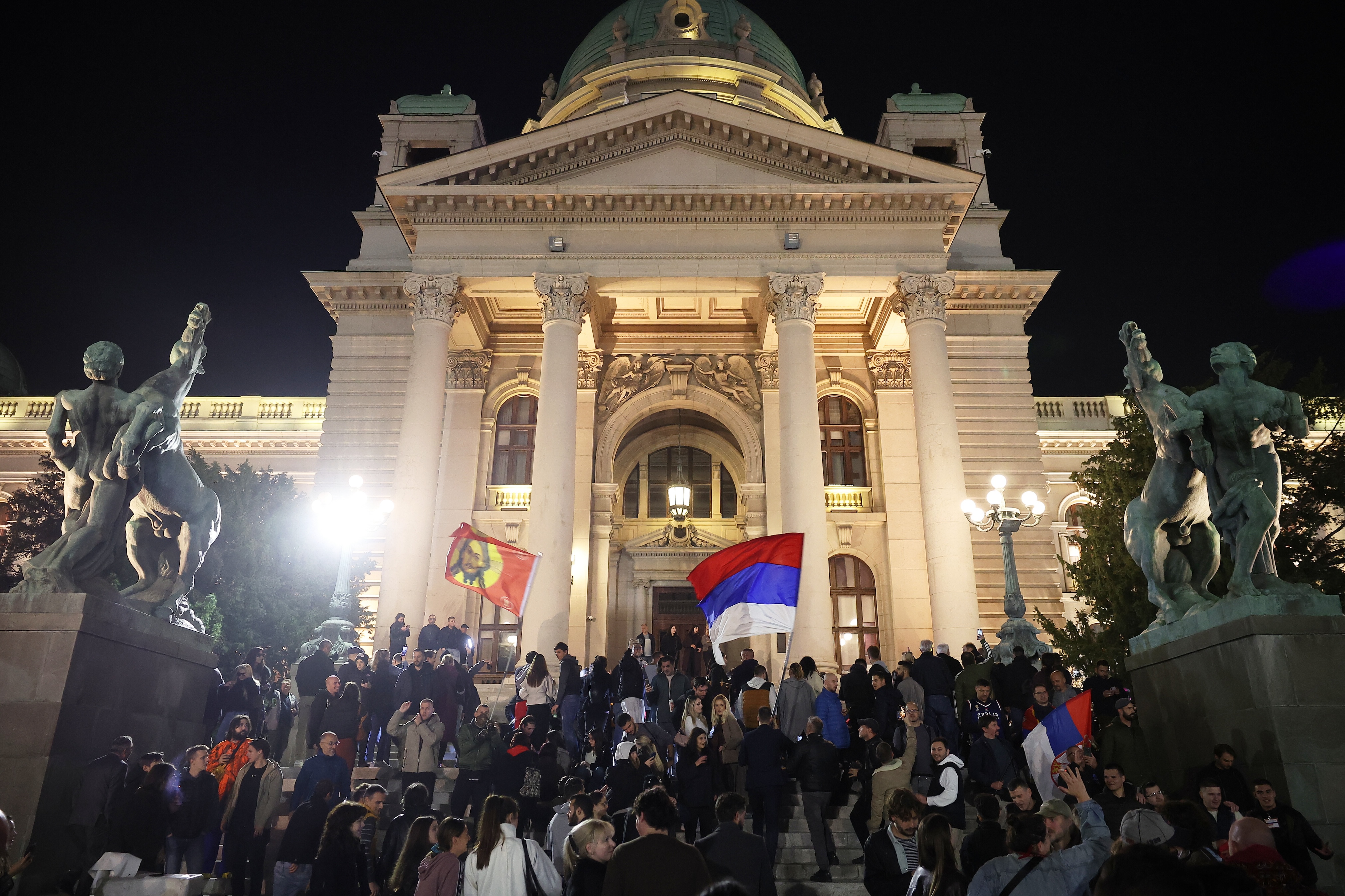
Last Sunday, the Serbs repeated the miracle that the Hungarians had already achieved in April: On a playing field heavily tilted in favor of their opponents, they swept away Aleksandar Vučić’s twelve-year-old regime at the polls. Viktor Orbán and Vučić, two of the most prominent figures of illiberal populism in Europe, are now a thing of the past.
Viewed from Germany, the irony of history is particularly striking. While Eastern Europeans—who are often ridiculed and criticized—are currently freeing themselves from their populist regimes, Western Europe is increasingly threatened by precisely such forces. While democracy is being celebrated in Budapest and Belgrade until the early hours of the morning, radical parties are gaining more and more strength in Berlin and Paris, and the traditional centrist parties are in free fall.
For decades, many Eastern Europeans looked at Western democracies—sometimes with envy, sometimes with admiration. In the West, on the other hand, there was a tendency to view populism as an Eastern European phenomenon—a persistent infantile disorder of post-communist societies. Now the roles seem to be reversing: While the shadows of extremist ideologies are once again looming over Western Europe, the East is attempting to save democracy using innovative methods.
We have reached a point where the former students of democracy could show their teachers a way forward. But is Western Europe even willing to learn from Eastern Europe?
The parallels are hard to overlook. Populists create scapegoats, stoke fears, and cast themselves as the sole saviors—whether in opposition or in power. For a long time, neither the CDU nor the SPD nor Macron’s “Renaissance” party found an effective response to this. Nor did the Hungarian and Serbian opposition before them. In Hungary and Serbia, it was ultimately not the traditional opposition parties that broke the populists’ hold on power, but new movements outside the political establishment. While the Serbian Student List deliberately presented itself without a single leader, Péter Magyar led the opposition in Hungary to success with a clearly recognizable face and his personal political history. Nevertheless, the foundation of both movements is the same: they are driven by new faces and grassroots initiatives that have broken with a political establishment that had lost its credibility.
Even though the Hungarian and Serbian models cannot be transferred one-to-one to Western Europe, important lessons can be learned from them.
The basic principle is simple: the new movements reached out to the people. Otherwise, a large portion of rural voters would have formed their opinion of the opposition based solely on government propaganda. During his campaign, Magyar visited four to five towns every day. Ironically, it is none other than AfD politician Ulrich Siegmund who has adopted the same method—with visible success, as the election results in Saxony-Anhalt show. Personal encounters with voters who may never have met a politician before can be the first step toward (re)gaining trust.
But the lessons from Hungary and Serbia go beyond campaign tactics. The populists were not defeated simply because their opponents repeatedly warned of the dangers to democracy. Rather, they were defeated because their opponents convinced voters that they offered a credible alternative. Perhaps this is exactly what Western Europe needs to understand: Warnings about the radicals are not enough as long as the traditional parties themselves fail to offer any alternatives.
Of course, it is easier for a new movement to build trust than it is for the old parties to regain lost trust. They must prove it through government action. The CDU and SPD are hardly strengthening faith in their ability to act when, in coalition disputes, their own partisan maneuvering seems more important than finding solutions for the common good. Compromise is part of democracy. If the moderate parties would, at least on the most important issues, think in terms of shared successes rather than in terms of “right” and “left,” perhaps fewer people would seek their future in parties that promise false solutions such as forced repatriation, hostility toward the LGBTQ community, or excessive state intervention.
The situation could hardly be more favorable for populists if the traditional parties themselves were to confirm that the political establishment is incapable of solving the country’s problems. Hungary and Serbia do not offer a magic formula for Western Europe. But they do show that demagogues can be defeated. And that it’s not enough to erect political firewalls or ritually warn of the dangers to democracy. Listening, taking voters seriously, and reaching out to them would be the better approach. Perhaps it is now time for Western Europe not only to teach democracy but also to learn something about it itself—even if it means learning from Eastern Europe.