diplo.news
The Ice Has Already Been Broken in the Arctic
Interview by Gudrun Dometeit
Chancellor Friedrich Merz has described the Arctic as a new security hotspot, while EU Foreign Affairs Commissioner Kaja Kallas has called it the “frontline of global power competition.” Is this an exaggeration, or are people talking about a development that doesn’t reflect reality?
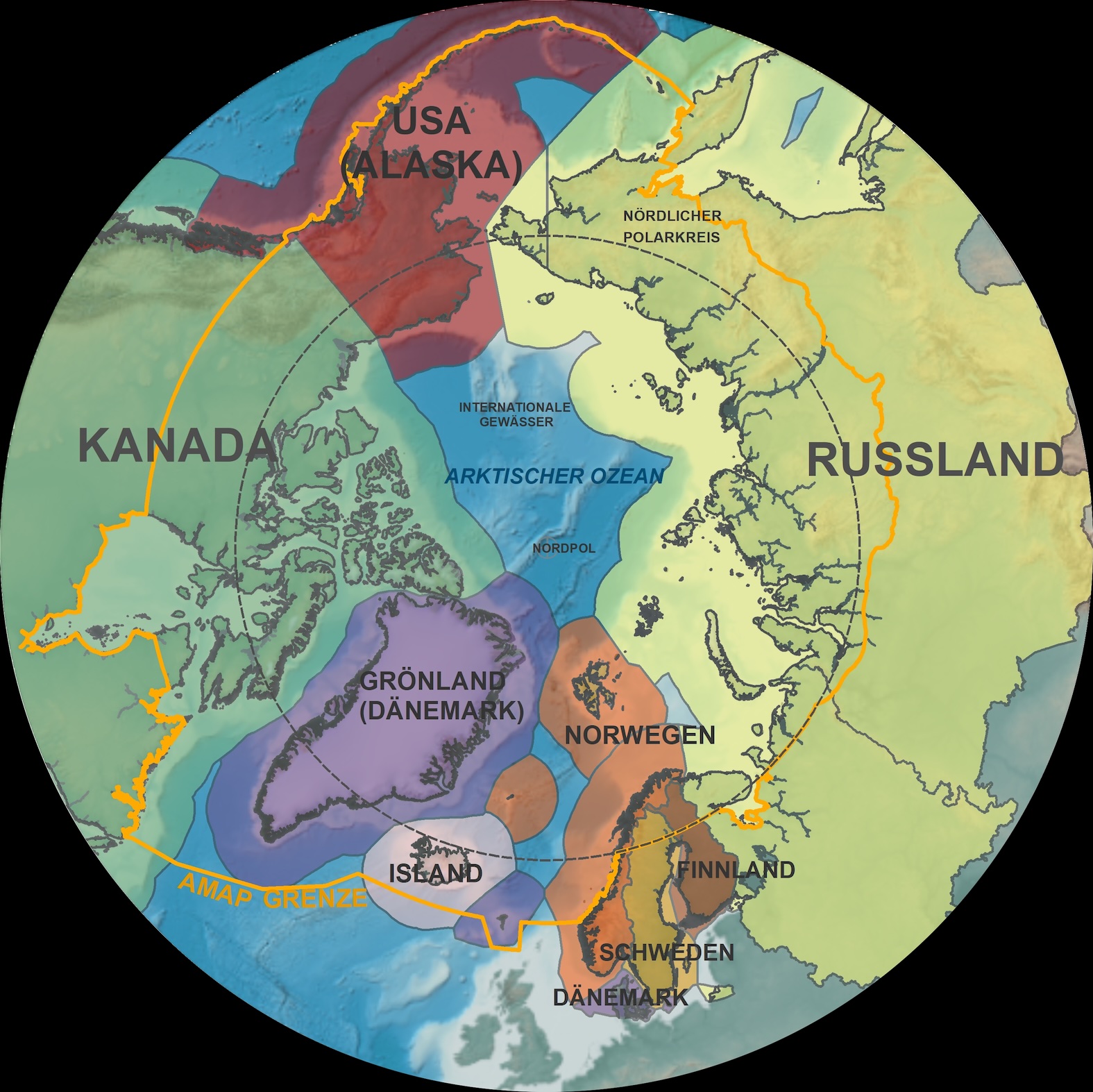
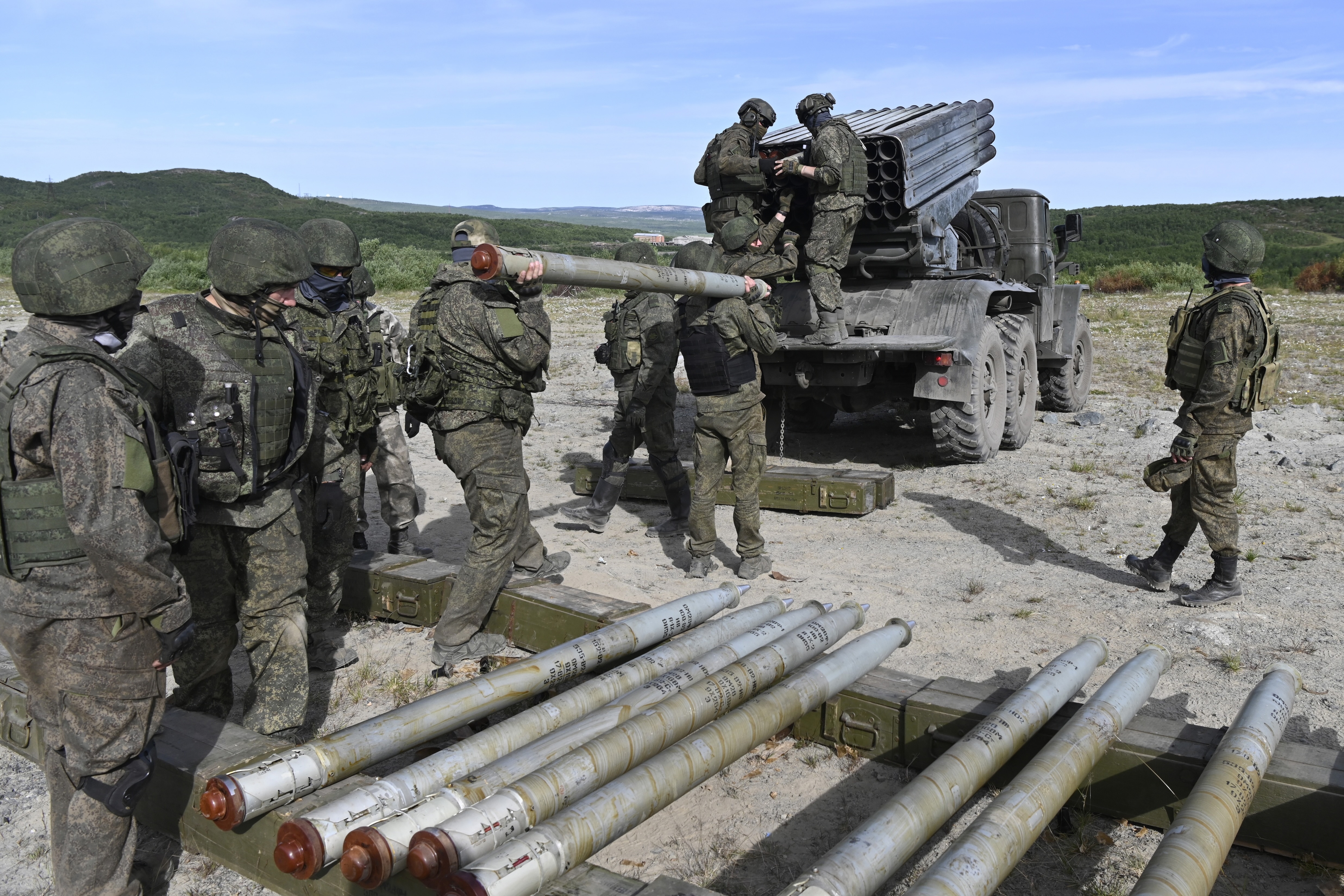
There’s certainly some truth to that. The Arctic has changed dramatically in recent years. During the Cold War, it was the hotspot for nuclear deterrence, as nuclear submarines from the Soviet Union and the U.S. lay hidden beneath the Arctic ice. After the collapse of the Soviet Union, the region was characterized by cooperation for 30 years, a dynamic that remained unaffected by other crises. That changed overnight in 2022 with Russia’s attack on Ukraine. However, Russia had already been strengthening its military presence in the Arctic prior to that, and China had also become more involved. The decisive factors, however, were the war in Ukraine and the accession of Sweden and Finland to NATO. Since then, Russia has faced seven NATO member states in the Arctic. In a sense, the term “front line” is therefore appropriate. However, we would not be having this discussion in this form without Arctic warming. As a result, the Russian coast is now accessible and vulnerable to attack, raising new security questions.
Climate change is occurring four times faster in the Arctic than the global average. It can have a massive impact on temperatures in Western and Northern Europe due to changes in the Gulf Stream. Are there actually technical ways to mitigate this change—as some rather unusual proposals suggest?
Theoretically, it’s possible, but in its new Arctic strategy, the EU clearly opposes this so-called geoengineering. Some ideas are truly absurd, such as covering the entire Antarctic with a black tarp. There is relative consensus in the scientific community that we should not interfere with the system. However, some wealthy sponsors are funding research in this area. But there are other approaches as well, such as CO₂ storage in Iceland, where climate-damaging carbon dioxide is removed from the atmosphere and stored underground. We know from ice cores quite precisely what the CO₂ levels in the atmosphere were throughout Earth’s history. We have to go back three million years to find CO₂ levels similar to those of today. For all that time, the CO₂ concentration was always lower. Back then, sea levels were several meters higher than today, and it was much warmer.
Former Economy Minister Robert Habeck has just written a book in which he explores, among other things, the connection between climate change and political events. Cooling temperatures, volcanic eruptions, and crop failures contributed to the fall of the Roman Empire. According to Habeck, the rapid warming of the Arctic—which is opening up new trade routes and making it easier to extract raw materials—could shape the geopolitical power struggle among the major powers.
I think he’s right about that. The first time policymakers understood what was happening in the Arctic was in 2005. That was when a study by the Arctic Council and the International Arctic Science Committee was published, providing a scientific analysis of the effects of warming. It served as a wake-up call for many and remains highly relevant today. In 2007, Russia planted the Russian flag at the North Pole to declare: The Arctic belongs to us. Two years later, China published its first Arctic strategy and designated itself a “Near Arctic State.” In 2007, we also saw, for the first time, much less sea ice in September than any models had predicted. The less sea ice there is, the easier it is to access the Arctic, and the easier it is to access resources and shipping routes. That’s really where it all began.
The EU Arctic Strategy, published a few days ago, places a great deal of emphasis on security and competition. The Alfred Wegener Institute (AWI) was also involved in its development. Were its proposals sufficiently taken into account, or is research being neglected?
Actually, we were relatively satisfied with what the strategy says about research. We found that some of our points were included. The focus is, of course, on security, but the aspects of climate and the environment are still there—and with them, the topic of research. The new guidelines for German Arctic policy from 2024 also focus on security policy, but emphasize that science, climate, and environmental protection should not be overlooked. We need climate science and early-warning systems to prepare ourselves and to be able to warn the people in the Arctic. For example, changes in spring precipitation cause a layer of ice to form on the snow. As a result, the reindeer—on which the Sami people in Northern Europe depend for their livelihood—can no longer find food. The wealth of experience possessed by indigenous peoples should be incorporated into scientific research.
Now, the importance of political initiatives is generally measured in terms of funding. The EU wants to establish a so-called “Maritime Security Hub,” install pan-Arctic data cables all the way to Greenland, and even create an EU icebreaker fleet in the future. However, funding is limited. Greater security at the expense of research
The strategy does not specify the actual costs of such projects. The situation is different when it comes to research funding, which is to continue as before. In recent years, the EU has funded it with approximately 100 million euros annually. That is a lot of money. The AWI has coordinated quite a few of these research projects—most of which are very large, ranging from three to 15 million euros and lasting four years—and is involved in many of them. Through the Horizon Europe program, Norway, Iceland, Greenland, the Faroe Islands, and Canada are now also being included.
Can you name any projects that have significance beyond the Arctic?
One is Polarin, a research infrastructure network that coordinates collaboration among polar stations, icebreakers, and observatories in various countries. It is one of the major EU projects led by the AWI and applies not only to the Arctic but also to Antarctica. The second example is Arctic Passion, or rather its successor, Beyond Arctic Passion—an important initiative in which I was personally involved. It focuses on establishing an observation system for the Arctic that compiles all relevant data. Another project coordinated by our Potsdam institute concerns permafrost development.

The keyword “permafrost”: Germany and other EU countries suspended scientific cooperation with Russia after 2022. Hasn’t this resulted in the loss of valuable data on climate change?
Especially for us here at the AWI in Potsdam, Russia was indeed our closest partner until 2022. I myself have led eight expeditions to Siberia and conducted research together with Russian colleagues. It was quite a shock for us when the research collaboration was halted overnight. That said, even in the scientific community, most people understand that it’s not possible to collaborate with Russia at the moment. However, we still maintain personal contacts. That’s not necessarily easy. But it’s important not to burn all the bridges completely, because hopefully there can be cooperation again someday. The breakdown of institutional cooperation, however, is a problem. Half of the Arctic belongs to Russia. We no longer have access to the data there, and of course we’re missing that information. Russian expertise has also been important.
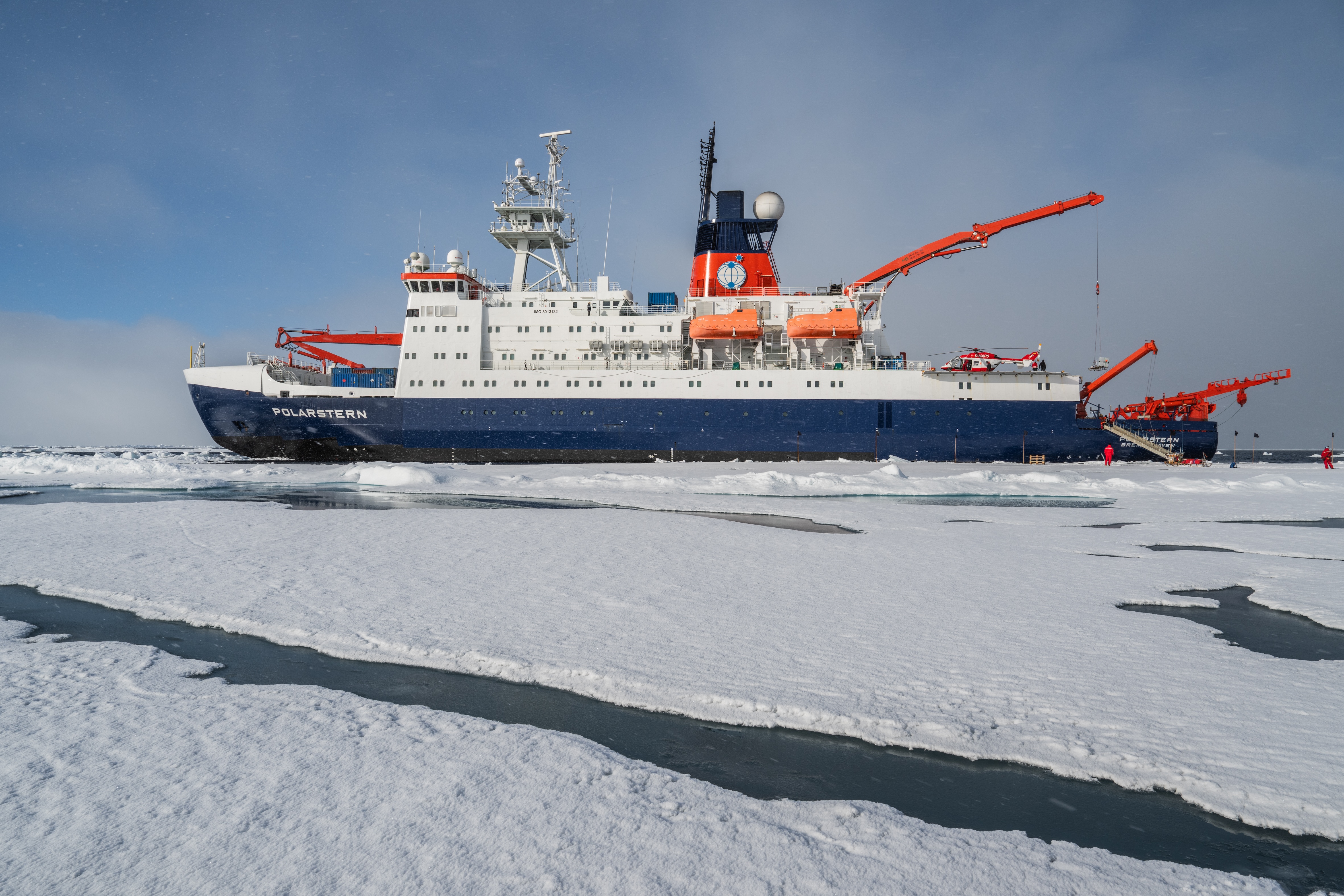
In 2020, during the COVID-19 pandemic, our icebreaker, the Polarstern, was frozen in the Arctic for an entire year, where it collected extremely important data over the winter. The Russian contribution was essential to this effort. Other icebreakers that were supposed to assist—including a Swedish one and a Chinese one—were unable to operate. So the Russians said: “Okay, we’ll help you with our icebreakers.” That would be unthinkable today. Even in long data series on permafrost—where temperatures have been measured in boreholes for decades—there are now gaps. If you want to run a model, you need data from the entire Arctic. If half of it is missing, you run into difficulties; you have to admit that honestly.
Could the resumption of Arctic cooperation be a possible starting point for a rapprochement between Europe and Russia? “Ice diplomacy,” so to say, to break the ice?
This month, there were major discussions about this at the Arctic Circle Assembly in Reykjavik, a forum for politicians, business leaders, and scientists. But there are only a few isolated voices advocating for cooperation with Russia despite everything. Politicians have responded with strong opposition. And the majority of scientists support the political stance.
What is your personal view on this?
It’s the same in science as it is in sports. I wouldn’t want to see the Russian flag on the podium either if a Ukrainian were standing next to it with a Ukrainian flag.
In Russia, the Arctic is associated with a myth, that of the heroic Northern Fleet, which is supposed to secure access to the Atlantic and the Pacific. Now, suddenly, this vast, long coastline is becoming accessible. Should we take Russian security concerns more seriously in the future?
You’re right; this heroic thinking from the Soviet era still prevails in Russia. Yet the Northern Sea Route has been in use for years. That’s why Russia has its fleet of icebreakers. In his famous Murmansk speech in 1987, Mikhail Gorbachev called for cooperation with the West on environmental protection and disarmament in the Arctic. This essentially led to the disarmament treaties and the establishment of the Arctic Council and the International Arctic Science Committee. At the time, he also announced Russia’s willingness to open the northern sea route—which passes through its own territorial waters—to other ships. Of course, Moscow required that a Russian icebreaker be chartered to escort ships through the passage. Occasionally, ships did pass through, but since the sanctions were imposed, the sea route through Russian waters has been off-limits to Western shipping companies. Now only the Russians use this route to transport gas from the Arctic, along with the occasional Chinese ship and, most recently, a South Korean one. A few years ago, it was still said that this was the alternative route to the Suez Canal because it was much shorter and free of pirates. That was supposed to be the future.
However, the need for secure trade routes has actually grown, especially when you consider the situation in the Red Sea or the Strait of Hormuz…
If we assume that we might have our first completely ice-free summer in the Arctic as early as 20 years from now, then the Central Arctic Route through the Arctic Ocean—which passes directly over the North Pole—will naturally become an attractive option. You no longer sail through Russian territorial waters there. That’s the high seas, where everyone has freedom of navigation.
China, too, has simply declared itself a global polar power by 2030, even though it sits at least 1,000 kilometers away from the polar region. It has clear economic and strategic interests, such as energy infrastructure projects in Siberia and shortening the trade route between Asia and Europe. How did this actually happen?
In 2009, the term “Near Arctic State” suddenly appeared in China’s Arctic strategy. This raised more than a few eyebrows among the Arctic coastal states. China has sought to gain access to resources through cooperation with coastal states, for example in Greenland. It has also positioned itself as a major scientific player with research icebreakers.
Isn’t this setting the stage for the next major conflict: China wants to exploit climate change in the Arctic for its own benefit—for example, to extract natural resources—while Europe would rather halt it and, at the very least, refrain from extracting resources such as gas, oil, or coal.
I see it that way, too. But if you mention China, then of course you also have to mention Russia and the U.S. Although Russia is a founding member of the Arctic Council and has always been very engaged, ultimately it has viewed the Arctic primarily as a repository of resources—oil, gas, diamonds, and metals. And the U.S.’s interest in Greenland naturally has to do with raw materials as well.
Is Europe once again being too hesitant because it’s focusing on security and climate change, while others want to snap up the raw materials—and we actually want to diversify our sources, for example, when it comes to rare metals?
That’s an interesting point. Previous EU strategies were all heavily focused on environmental protection, the rights of indigenous peoples, and science, and didn’t really address such issues at all. And now, for the first time, it explicitly states that EU citizens live in the Arctic. It has now been recognized that the Arctic is part of Europe, part of the EU. With Finland, Sweden, and the Kingdom of Denmark, three neighboring countries are EU members. The EU has come to realize that it has far more interests in the Arctic than just climate and environmental protection.
Do you expect U.S. President Donald Trump to make new claims on Greenland?
I hope that, for now, things will remain calm thanks to the security agreement he concluded with the Danes, with the involvement of the Greenlanders. At the moment, the U.S. seems to have other problems. It’s hard for me to say whether that will change again. The EU’s reaction was quite clear; its threat of countermeasures had an effect.
A two-day EU-Canada summit begins tomorrow, Thursday, in Montreal, and there’s also talk of joint Arctic projects. What could or should those be?
There is, in fact, already a concrete example: the submarines that Germany will be supplying to Canada. I’ve already mentioned our participation in the Europe Horizon research program. For us as an institute, Canada has now become a key partner, in part because the scientific questions—particularly regarding permafrost—are similar. We had planned expeditions with Russia, and we have students and doctoral candidates who had to pivot overnight. Many of these projects were then redirected to Canada—some to Alaska or Greenland as well—but essentially to Canada, because the geography, environment, and geology there are relatively similar.
Germany is also not a direct Arctic coastal state and, like China, has only observer status in the Arctic Council. Where exactly do Germany’s interests lie?
Research is a key issue for Germany. We conduct more Arctic research than most neighboring countries—solely through the AWI, which, with over 1,500 employees, is one of the world’s largest research institutes for the polar regions. Changes in ocean circulation in the North Atlantic or rising sea levels caused by the melting of the Greenland ice sheet directly affect Germany. This means that the hot, dry summers we have experienced recently can be directly linked to what is happening in the Arctic. This is primarily because the temperature gradient between the North Pole and the equator is becoming increasingly smaller. This leads to changes in atmospheric circulation patterns and, consequently, in the Gulf Stream, which is so important to us and influences our climate and weather.
The thawing of permafrost releases additional greenhouse gases because a great deal of carbon is locked up in this frozen soil; this carbon then escapes into the atmosphere as CO₂, further accelerating global warming. This means we have a vested interest in understanding what is happening here.

Is Russia actually capable of—or even willing to—deal with the effects of thawing permafrost and the resulting release of greenhouse gases?
Russia certainly has the expertise. In Yakutsk, there’s an institute we’ve collaborated with that focuses exclusively on permafrost. For example, they’ve developed technologies for building on permafrost. Every building must be anchored deep into the ground so that it doesn’t sink or collapse when the ground thaws in the summer. But the problems are already evident. About two years ago, a large diesel tank collapsed on permafrost. It resulted in a massive environmental disaster, though this was also due to the fact that the tank had likely simply rotted away. In addition to Yakutsk, two other scientific centers focus primarily on permafrost: one in Fairbanks, Alaska, and ours in Potsdam.
Is Germany, with its advocacy efforts—including the German Arctic Office—positioned well enough? For example, should Berlin maintain a diplomatic mission in Greenland, as France and Canada do?
The Arctic Office is part of the Alfred Wegener Institute. We represent the research community, not the federal government. Our role is to better connect science and politics. Germany is represented in the Arctic by the Federal Foreign Office. However, we do not have a publicly visible Arctic ambassador, as France does, for example. They often appoint a high-ranking former politician to that role. We lack that kind of visibility, but perhaps that’s not such a bad thing, because in France there is criticism that these figureheads act too much according to their own ideas. And a German consulate in Nuuk—that would be more of a symbolic gesture.
The fifth International Polar Year will take place in 2032/33. What exactly will happen then? And if you were to look into a small crystal ball, what do you think the region will look like then?
That’s a good question—one I’m currently working on myself. I helped organize the Polar Year in 2007–08, so naturally I’m interested in what the next one will look like. In any case, it’s a hotly debated topic right now. After all, a Polar Year really only works if all countries cooperate—including Russia and China. Some say this is an opportunity for science diplomacy. They’re referring to the International Geophysical Year of 1957–58, which took place in the midst of the Cold War. That ultimately led to the Antarctic Treaty. It’s the prime example of science diplomacy. The second problem lies with the U.S., which has severely cut funding for climate research since withdrawing from the Paris Climate Agreement. But climate change must, of course, be the central theme of the Polar Year. This situation could change by 2032—which is what most people actually expect—but the issue with Russia is unlikely to change. Yet Russia has an interest in participating and has already formed a committee. We in Germany have done the same; the first projects are set to begin as early as next year. It is a massive international event that always leaves behind something of a legacy.