diplo.news
The risk of a military confrontation with Russia is growing
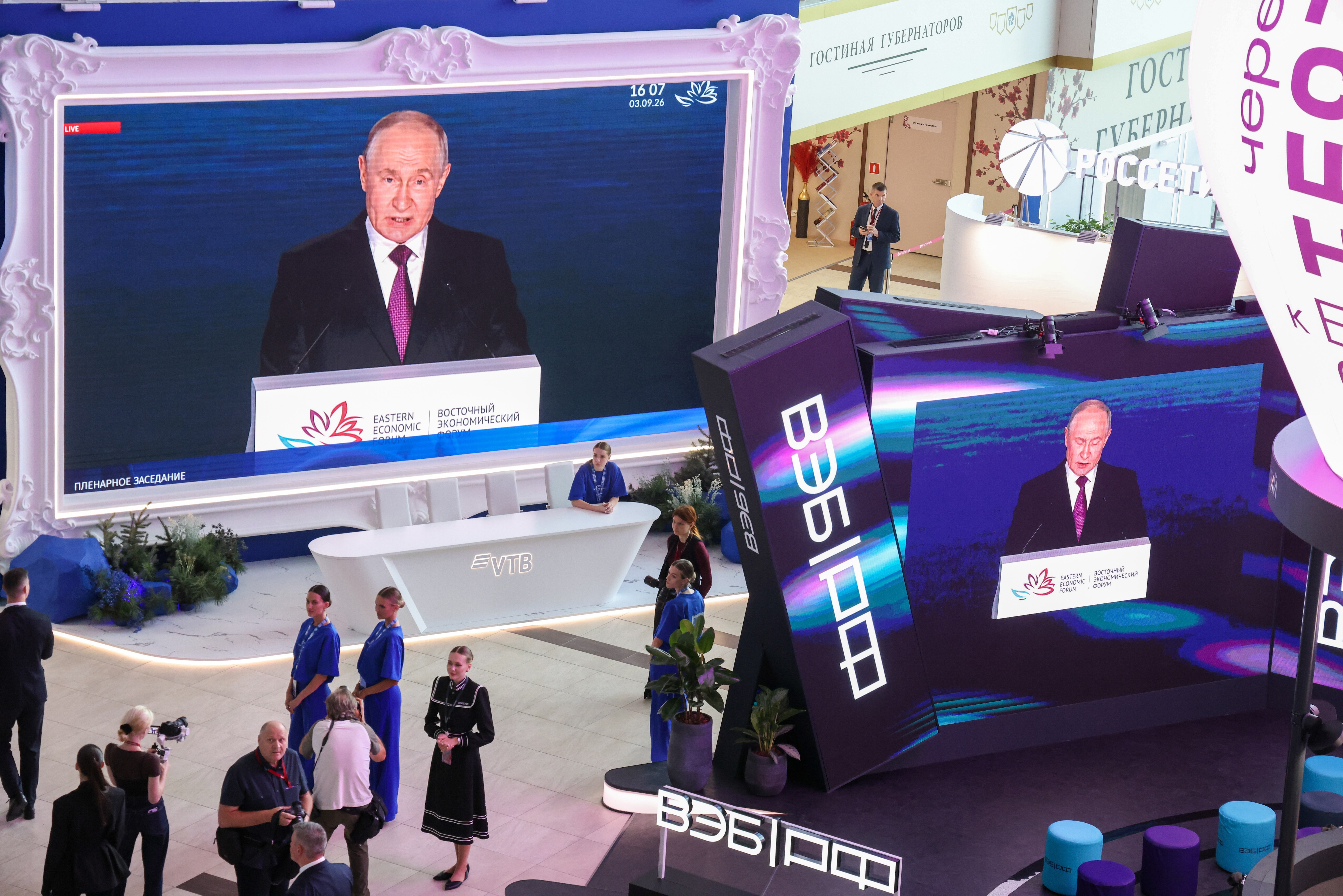
A direct confrontation between Europe and Russia is becoming increasingly likely—the increase and expansion of hybrid attacks, the ever-more frequent violations of European airspace by Russia, and its increasingly concrete and strident threats against European nations leave little room for any other conclusion. Western intelligence agencies, security experts, and politicians are stating with ever greater clarity that a Russian attack extending beyond Ukraine is almost certain to occur.
What is striking here is that the year 2029—which was so frequently mentioned in the past as the point from which a Russian attack on Europe was considered possible—is hardly mentioned anymore. Instead, the focus has shifted to a period beginning this fall. The acting head of the Munich Security Conference, Wolfgang Ischinger—who is known for his cautious choice of words—recently stated on German television that he expects a “dangerous fall” this year. And at the end of August, Polish Prime Minister Donald Tusk noted on the X platform that “escalation is proceeding” and that the coming six months are likely to be decisive.
The recent NATO air exercise around Kaliningrad demonstrates just how seriously the situation is now being taken at the NATO level. It was clearly a large-scale exercise, and unlike usual practice, it was not announced in advance but only confirmed after it became public knowledge. And also contrary to customary practice—which is to provide the public with at least basic information about the nature and scope of such exercises—no official information was released regarding the purpose or scale of the operation. Information on this came solely from observations by non-governmental organizations. These facts lead to the conclusion that this was not one of the usual routine exercises, but rather a rehearsal for a military operation expected in the near future, intended as a demonstration to Russia.
The evolution of Russian threats is particularly noteworthy. The Kremlin has always issued threats, especially in direct connection with the war in Ukraine. No matter how martial these threats sometimes sounded, they served as a deterrent and were intended to dissuade Western nations from supporting Ukraine. However, the wording was vague enough to allow the Kremlin to back away from or downplay them at any time. Occasionally, Putin would let Dmitry Medvedev, deputy head of the National Security Council, off the leash to issue particularly menacing barks; but since everyone knew—and Putin was only too aware of this—that Medvedev had not the slightest decision-making authority or even a serious advisory role, most people rightly did not take this too seriously. The Russian leadership was happy to leave the ostentatious posturing around military escalation to lower-ranking members of the propaganda apparatus.
A change in the tone of Russian threats
However, in light of Ukraine’s military successes and the apparent continued failure of Russian troops, the tone has shifted significantly. The threats from the Kremlin are more specific than ever before: Foreign Minister Sergey Lavrov announced that Russia would take active measures against Ukraine’s supporters—and had already begun doing so. The United Kingdom threatened Russia with attacks on its military facilities, while Medvedev himself threatened attacks on ships of “hostile states”—specifically, “anywhere” on the world’s oceans.
It can be assumed that these are still threats that are not necessarily intended to be carried out. However, such an escalation cannot be continued indefinitely. Either it is followed by action, or Russia will be taken less and less seriously. With regard to past threats, this effect was clearly evident—Europe did not waver in its support for Ukraine but actually intensified it. This is likely one reason for the recent escalation in rhetoric. Moscow hopes that by adopting an even more martial stance, it will still achieve the desired effect.
And therein lies the problem: A further increase in rhetoric is now hardly possible. If Europe remains unimpressed by this—and that is how it looks—Russia must act and put its threats into practice, at least to some extent, including the military ones. Otherwise, Putin makes himself look ridiculous or loses credibility. However, Russia cannot currently afford a major war against NATO/Europe, as practically its entire military potential is tied up in Ukraine and is not even sufficient to win the war there. Therefore, more limited actions are to be expected.
The following scenarios for such a military escalation are possible:
- A limited Russian operation in the Baltic states. For example, irregular or unofficial Russian units could attempt to seize the Estonian city of Narva, which has a high proportion of Russian-speaking residents. Such an action would force NATO to decide whether to tolerate such an incursion or risk a major conflict with Russia. From Russia’s perspective, the purpose would be less about territorial gain and more about demonstrating that NATO is unwilling to engage in precisely this kind of military conflict with Russia. NATO’s weakness would thus be exposed—with unforeseeable political and military consequences.
However, such an action would be highly risky for Russia. If NATO were to respond militarily, the disguise of Russian troops as "little green men" could not be maintained, and Russia would risk suddenly finding itself in an unwanted military confrontation with NATO. Such an action is therefore less likely.
- Hybrid attacks—not immediately recognizable as Russian—using drones or long-range missiles against military or infrastructure targets in Europe, particularly in Germany, which serves as a logistics hub for Ukraine. The foiled drone attack at Leipzig Airport in early August would fit this pattern. Had it succeeded, all three Ukrainian Antonov cargo planes stationed there might have been destroyed, causing significant damage to the airport’s infrastructure. Taken together, this would have severely disrupted logistics for Ukraine. In addition to military facilities, other targets could include, for example, weapons production facilities, railways, ports, power plants, and dams.
Beyond the immediate effect, such attacks could impact the population in the hope of exerting political pressure on decision-makers to stop aid to Ukraine. Furthermore, cyberattacks could be extended to virtually anything. Such an approach would leave both the attacker and the attacked a certain amount of room for maneuver regarding reactions. The attacker could intensify or reduce the pressure at will without losing face, as they are officially not involved at all. The victims, in turn, can calibrate their responses, as it is not immediately apparent who the attacker is or whether an attack has even taken place.
This pattern can currently be seen in the Iran conflict. The Gulf states only partially hold Iran officially responsible for attacks, and the United Arab Emirates and Saudi Arabia have responded with limited military force. There was often talk only of "attacks of unknown origin," which relieved states that shy away from open conflict with Iran of the need for a clear response. In the case of Russia, however, this flexibility would be limited. If hybrid attacks remain below a certain threshold of effectiveness, Russia runs the risk of missing its intended effect. In the event of serious damage, it risks—judging by past behavior—harsh reactions from Europeans, which could lead to further escalations.
- An air war with the intensity of the one against Ukraine is not to be expected. At least three aspects argue against this: 1) The disguise could not be maintained in the long term. 2) For geographical reasons, only a portion of the Russian arsenal—namely long-range weapons with very great reach—would even be an option, and their numbers are naturally limited. The Iskander missiles stationed in Kaliningrad with a range of 500 kilometers can cover a large part of German territory, but their use would be all too obvious (one purpose of the aforementioned NATO maneuver was undoubtedly to demonstrate to the Kremlin that Kaliningrad is extremely vulnerable). 3) Russian production capacities would not be sufficient to conduct another air war of a similar scale alongside the one against Ukraine.
A confrontation at sea in the near future is particularly likely
- Maritime Escalation. Aside from the aforementioned Russian threat to take action against European shipping, the seas already harbor significant potential for escalation. In light of the boarding of numerous vessels from the so-called Russian “shadow fleet”—particularly by the British and French navies—Russia has begun to have these vessels escorted by warships. In the future, NATO will either leave the shadow fleet unmolested or take military action against the Russian escorts. Both options carry a high risk of escalation for both sides. If NATO backs down, it will lose credibility and signal that it is shying away from a military confrontation with Russia. If the Russian escorts do not intervene when these ships are being detained, this in turn means a loss of face for Russia.
In the event of a direct encounter between NATO ships and the Russian Navy in connection with the shadow fleet, neither side can essentially back down—escalation follows almost inevitably. The decision would have to be made at the political level. At the moment, however, there is no sign of the Kremlin backing down. On the contrary: in August of this year, Russian warships appeared demonstratively off Fehmarn several times, and they have also been spotted again in the Mediterranean, which had recently been noticeably free of Russia's navy. The risk of maritime escalation must therefore be assessed as very high. British military scientist Michael Clarke expects a direct confrontation at sea in the foreseeable future, either later this year or at the latest next year.
Putin may conclude from the Europeans' behavior thus far that no real resistance will come from them. Driven by a desire to avoid military conflict with Russia, most Europeans have ostentatiously sought to avoid such a conflict under almost any circumstances, while simultaneously making it clear that they will accept it if there is no other choice left. A clear example of this is the German government's current reaction to the drone attack at Leipzig Airport. From the German government's perspective, this reaction clearly expresses that such attacks will not be tolerated and that repetitions will lead to harsh consequences, while at the same time making it clear that they do not want an irreversible escalation.
For the time being, Moscow responded in a rather reciprocal and diplomatic manner to the closure of the Russian Consulate General in Bonn and the Russian House of Science and Culture in Berlin by closing the three Goethe-Instituts in Russia. From Russia’s perspective, however, the German government’s measured response could be interpreted as a sign of fear—and is likely, sooner or later, to encourage further escalation rather than deter it.
.webp)