diplo.news
How Can Europe Become a Geo-Economic Powerhouse?
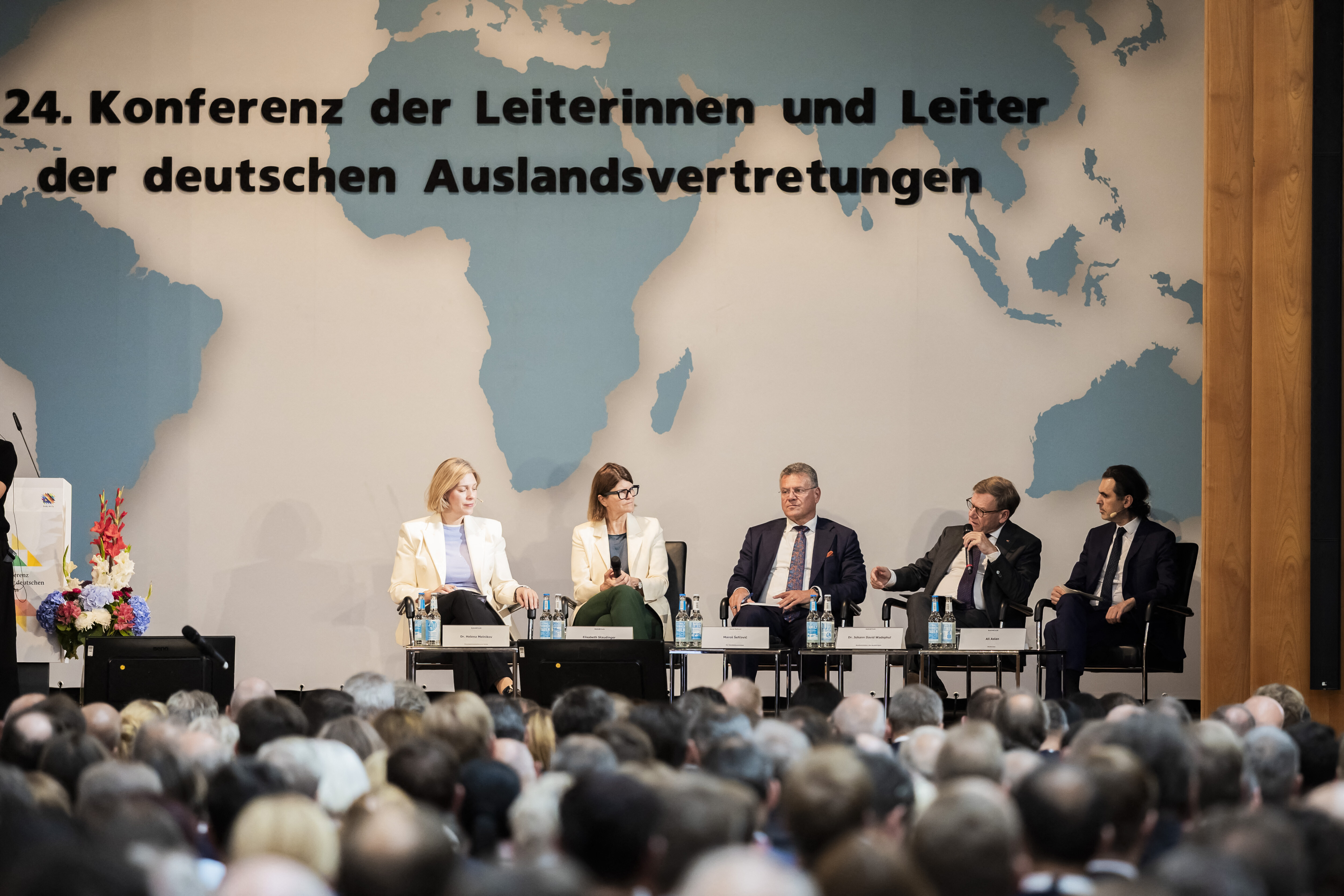
According to Foreign Minister Johann Wadephul (CDU), Europe—and Germany in particular—must work to improve their competitiveness in order to strengthen the EU as a geo-economic powerhouse. The European single market must be deepened, and the fiscal and investment union, as well as industrial policy aimed at securing critical supply chains, must be advanced, Wadephul said at the Business Forum of the 24th Heads of German Missions Conference in Berlin. If international markets were to collapse and trade with China and the U.S. were to decline, the EU would serve as the safety net, “our anchor and our true engine of growth.”
However, competitiveness alone is not enough, the CDU politician emphasized in the packed Weltsaal of the Federal Foreign Office. "We Europeans must also fight harder for our interests." Economic vulnerability must be reduced through de-risking, critical infrastructure protected, and strategic dependencies must be decreased.
What the Foreign Minister formulated in rather abstract terms, Helena Melnikov, Chief Executive Officer of the Association of German Chambers of Commerce and Industry, made concrete. Often enough, European and German competitiveness is hindered less by international competitors and more by home-grown problems such as excessive bureaucracy. In Germany alone, this costs 146 billion euros per year in lost economic output. For example, more than 1,000 new regulations came from Brussels in 2025, meaning four every working day. Europe is slow and inflexible, the business representative emphasized. Eliminating such weaknesses would boost growth and accelerate competitiveness.
Wadephul, on the other hand, defended the EU: “We should be proud of it.” Europe may be slow and complicated, he said, but it is a reliable partner. The heads of more than 230 German diplomatic missions abroad have been invited to the conference. Among other topics, they will discuss the use of artificial intelligence in the world of diplomacy. This coming Thursday, NATO Secretary General Mark Rutte will be the guest of honor at the meeting’s conclusion.
Following the AfD’s success, Wadephul and Šefčovič warn against isolationism and going it alone
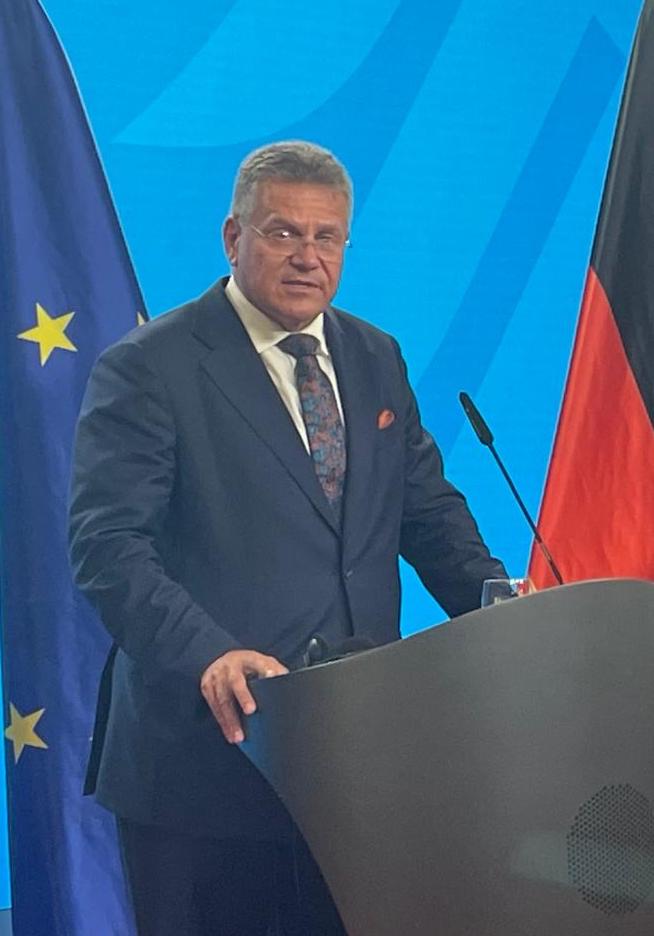
At a subsequent press conference, Wadephul and EU Trade Commissioner Maroš Šefčovič only addressed the potential consequences of far-right election victories—such as the one that just took place in Saxony-Anhalt—for foreign investment in Germany after journalists asked about them. Both politicians warned against economic isolationism and unilateral national actions. Wadephul said, “I can only strongly warn against a return to national solutions.”
Only the EU makes it possible to secure even remotely fair conditions for German industry on the global market. Any threat to the European Union must be avoided. Anyone who advocates leaving the eurozone jeopardizes cohesion within the EU and, with it, prosperity, security, and freedom.
The EU Trade Commissioner recalled how international trade policy is fought with elbow-jostling and power politics, and warned: “Anyone considering going it alone should imagine what it would be like if, instead of the EU as a heavyweight, Saxony-Anhalt—or even a major economy like Germany—had to negotiate on its own. Our unity is our strength.”
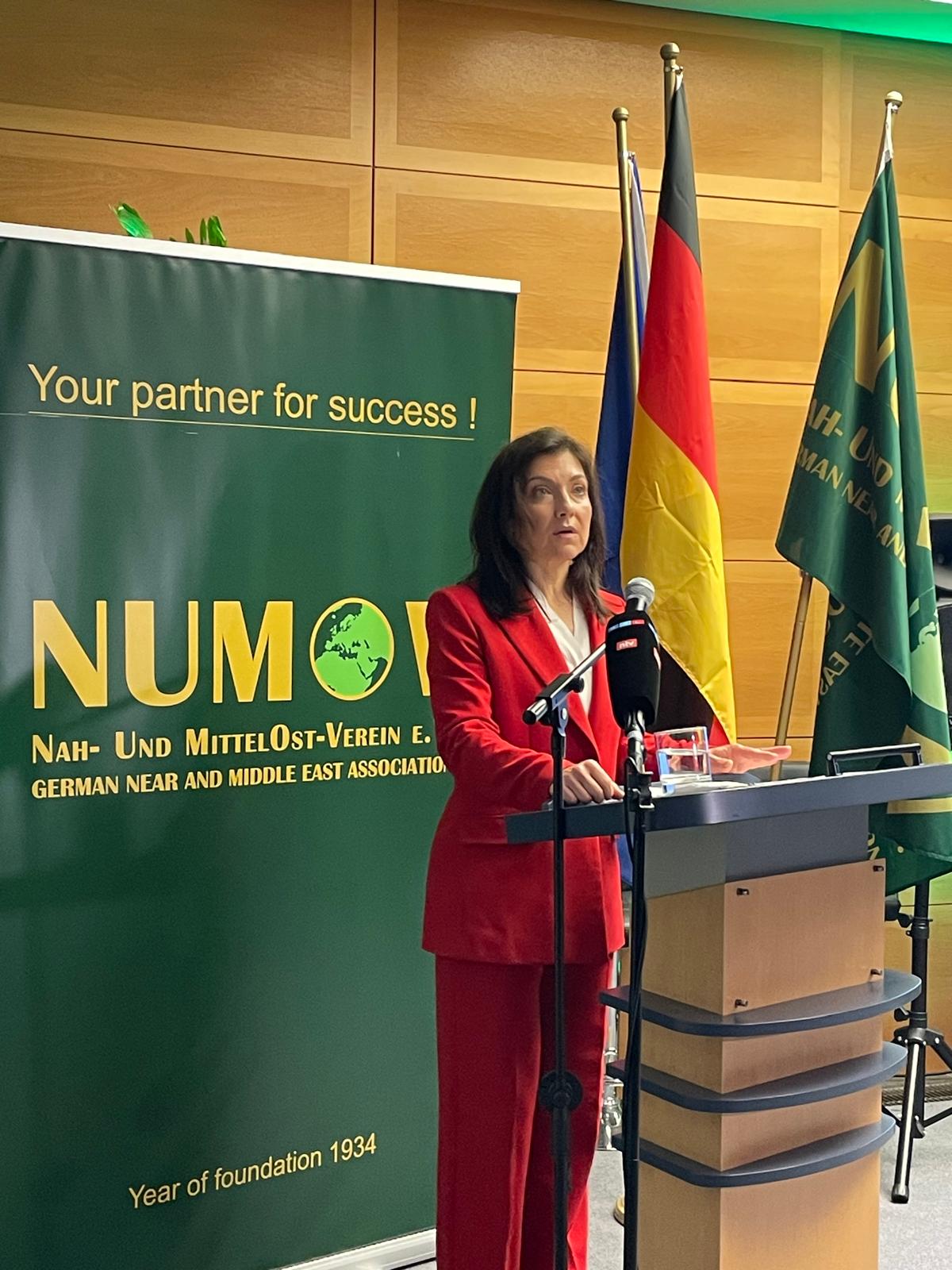
On the eve of the Heads of German Missions Conference, Federal Minister for Economic Affairs Katherina Reiche (CDU) emphasized at the traditional reception hosted by the Near and Middle East Association (NUMOV) that the MENA region is not a problem to be solved, but rather a region that must be understood in a spirit of partnership and that deserves respect. The market is developing dynamically; however, Germany's future relations with the region must go beyond the mere exchange of goods. We should conduct joint research, produce together, and invest together.
Every year, NUMOV takes advantage of the Federal Foreign Office's Heads of German Missions Conference to bring together the German ambassadors stationed in the Near and Middle East and the ambassadors of those countries accredited to Germany on the eve of the event.
ekö/gd
.webp)