Arab League Closes Its Berlin Embassy; Vienna Office to Be Expanded

The League of Arab States (LAS) is closing several of its offices worldwide. Its diplomatic mission in Germany is also being closed. In return, the League’s office in Vienna will be expanded. In the future, Germany is to be served in part from the Austrian capital. diplo.news learned this from diplomatic circles.
Officially, cost considerations are cited as the reason for the measures. Unofficially, however, other factors may also have played a role for the 22 member states. Longtime observers of bilateral relations point to the recent upheavals and crises and wonder whether deeper-rooted reasons might have been the deciding factor. Rumors suggest that dissatisfaction with Germany’s Middle East policy could also be a factor. The Berlin office on Jägerstraße, near the Gendarmenmarkt in the Mitte district, is now set to be vacated in a few months.
Vienna is being upgraded
Vienna’s status as the headquarters of several multilateral organizations is being enhanced. The Arab League’s mission on Donau-City-Straße in the 22nd district holds the diplomatic status of an embassy and serves as a liaison office to Austria as well as to international organizations such as UN agencies.
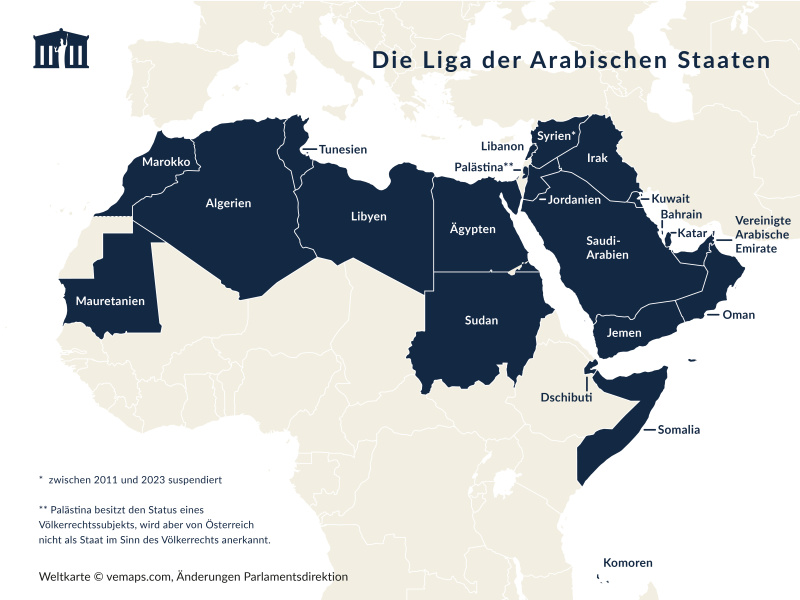
Austria is, of course, not a member state of the Arab League, but has been accredited as an observer since 2013. The League currently has 22 members: Egypt, Algeria, Bahrain, Djibouti, Iraq, Yemen, Jordan, Qatar, the Comoros, Kuwait, Lebanon, Libya, Morocco, Mauritania, Oman, Palestine (which is not recognized as a state by Austria), Saudi Arabia, Somalia, Sudan, Syria, Tunisia, and the United Arab Emirates.
The League’s main objective is to deepen relations among member states and coordinate their political activities; however, this has not always been successfully achieved.
Withdrawal from Argentina and Kenya
In addition to its headquarters in Cairo, the organization operates diplomatic missions around the world to strengthen political, economic, and cultural ties between the Arab world and other regions. Until now, these have included Buenos Aires, the capital of Argentina, and Nairobi, the capital of Kenya. However, the two locations in Latin America and Africa are expected to face the same fate as Berlin—namely, closure in the first half of next year.
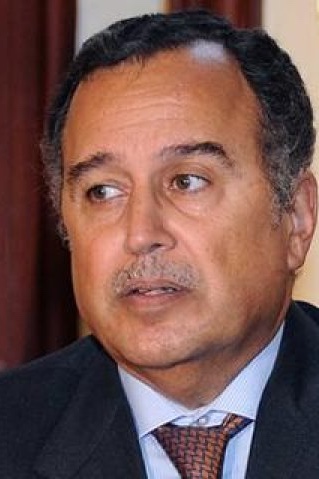
Since July 2026, the League has had a new Secretary-General. Egyptian diplomat Nabil Fahmy, born in New York in 1951, is the son of former Egyptian Foreign Minister Ismail Fahmi and served as Foreign Minister himself from 2013 to 2014, as well as Egypt’s ambassador to the United States and Japan.
Throughout his diplomatic and academic career—he is dean emeritus of the School of Global Affairs and Public Policy at the American University in Cairo—Fahmy has maintained ties to Berlin, partly through political discussions and partly as a member of the advisory board of the Hertie School of Governance in Berlin. Three months ago, Fahmy took over the role of Secretary-General from his predecessor, Ahmed Abu El Gheit, another Egyptian diplomat who had led the League for ten years.
Ewald König