Red City Hall firmly in Turkish hands
Berlin’s incumbent mayor, Kai Wegner (CDU), sat in the middle of the front row, with Left Party leader Elif Eralp just a few seats to his right. With her Turkish background and aspirations to become mayor, she was among the VIPs as the historic agreement of October 30, 1961, was honored and the Turkish community was celebrated. When her name was mentioned in the opening remarks, Eralp received a strikingly long round of applause. It remained unclear, however, whether the vast majority of the Berlin Turks in attendance were supporters of the Left Party or whether they simply wanted to pay her respect for having come so far.
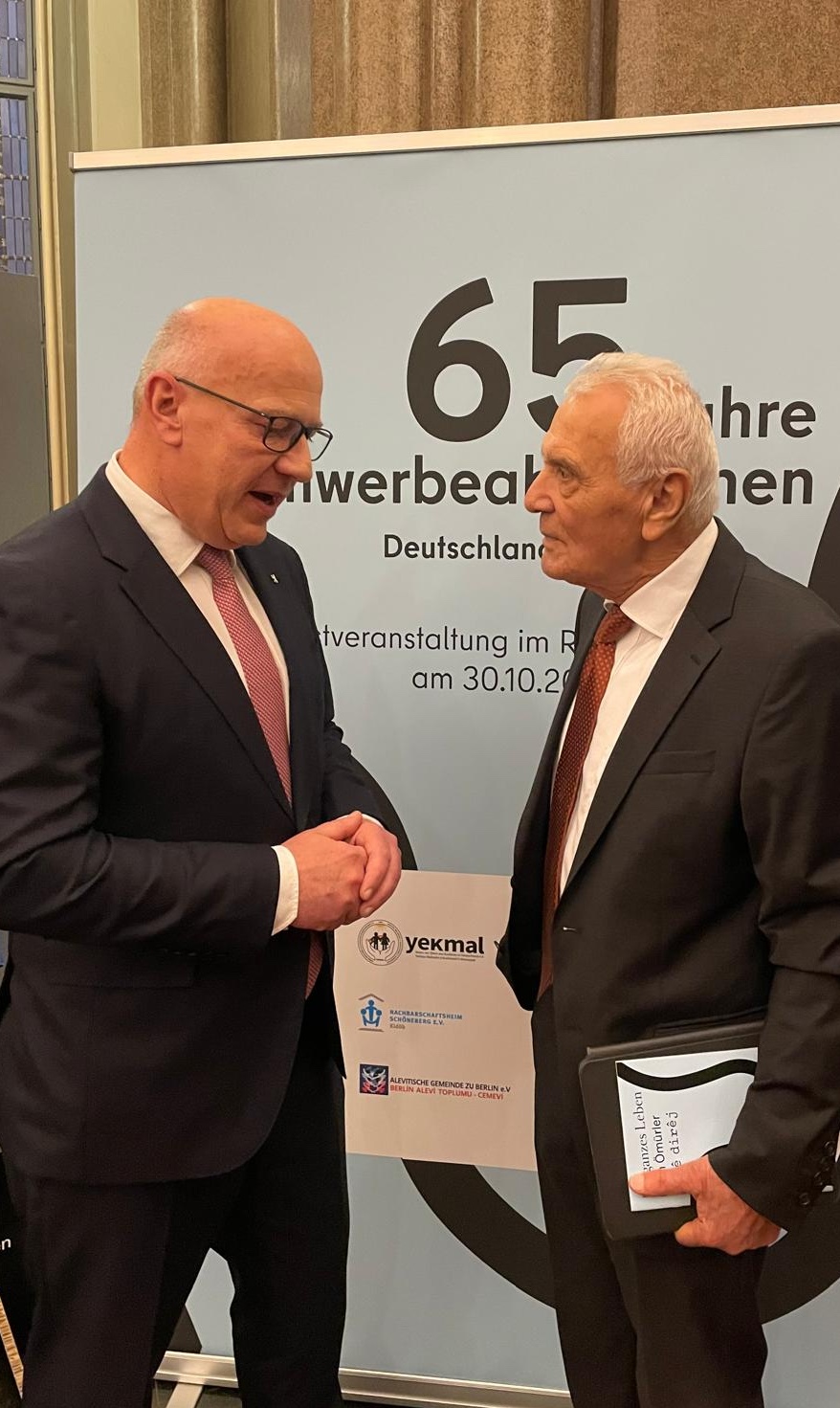
In his speech, Wegner said: “It was a very short document, but it changed Germany and Berlin forever.” By 1973—the year Germany stopped recruiting workers—900,000 people had left their Turkish homeland to work here. According to the rotation principle, they were supposed to be replaced every two years—a principle that never worked. “Until the mid-1980s, they expected to return home eventually, lived out of a suitcase, and felt like they didn’t belong. They lived in a society that had no experience with migration and integration and offered no opportunities to learn German,” said Wegner.
Largest Turkish community outside Turkey
Berlin has the world’s largest Turkish community outside of Turkey, the mayor said with pride. “The history of Turkish immigrants is a success story, and we must learn from the mistakes of the past.”
Wegner suggested that this history should also be included in schools and the education system; he also announced the construction of a “monument to guest workers.” The Senator for Integration, Diversity, and Anti-Discrimination, Cansel Kiziltepe, also proposed the establishment of a migration museum and a documentation center.
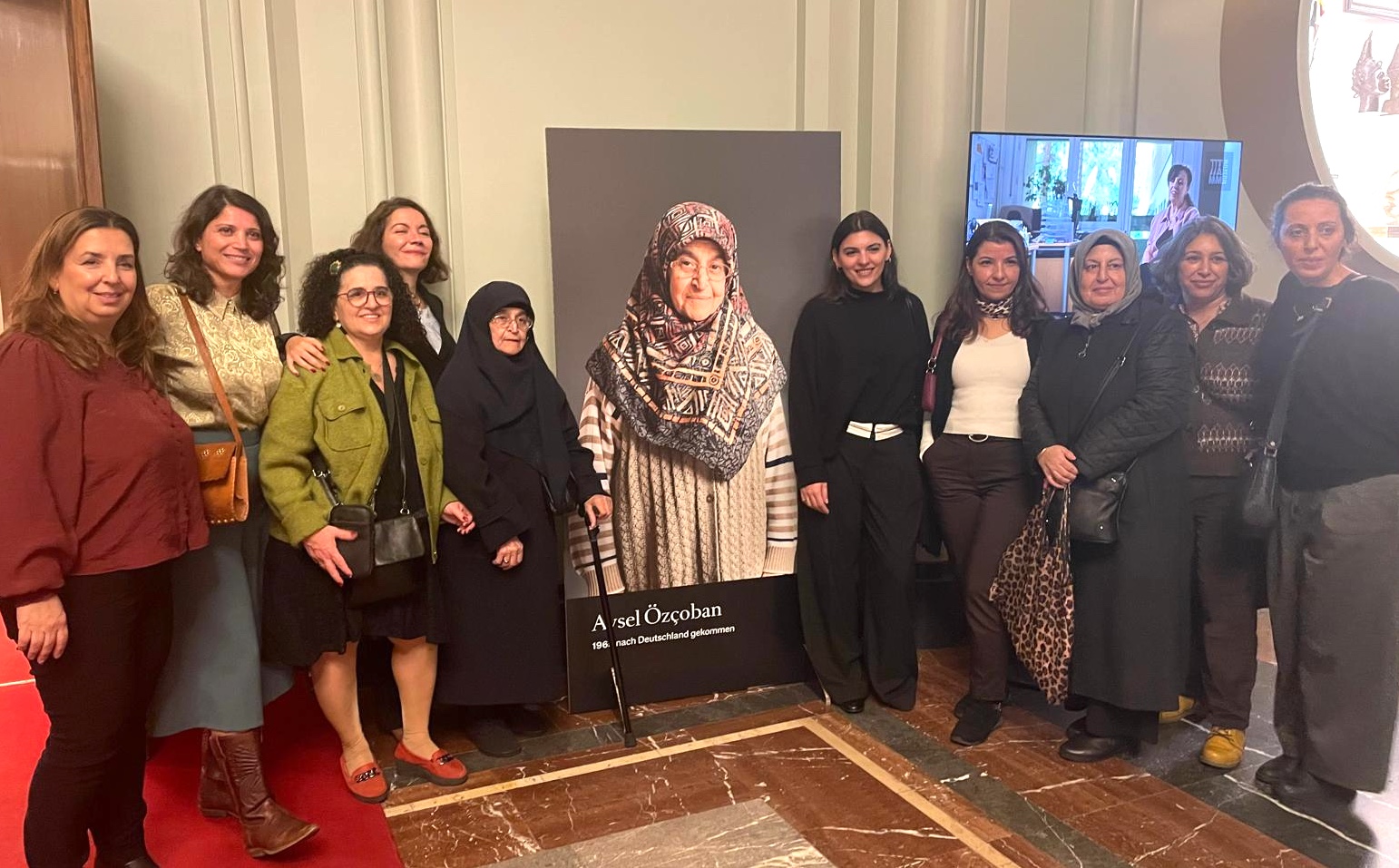
An exhibition on display at the Rotes Rathaus through November 11 and Friday’s ceremony were organized by several associations. A panel on stage in the Festaal, featuring representatives of the second, third, and even fourth generations, recounted the early days of the first generation and their lives in small, old apartments without elevators or bathrooms and heated by coal stoves. They had imagined Berlin to be very different. One of them, Enver Sen, summed up the evolution: “At first, we were just ‘guest workers,’ then ‘foreigners,’ then at least ‘foreign fellow citizens,’ and finally ‘migrants’—but never Berliners!”
“The best of both identities”
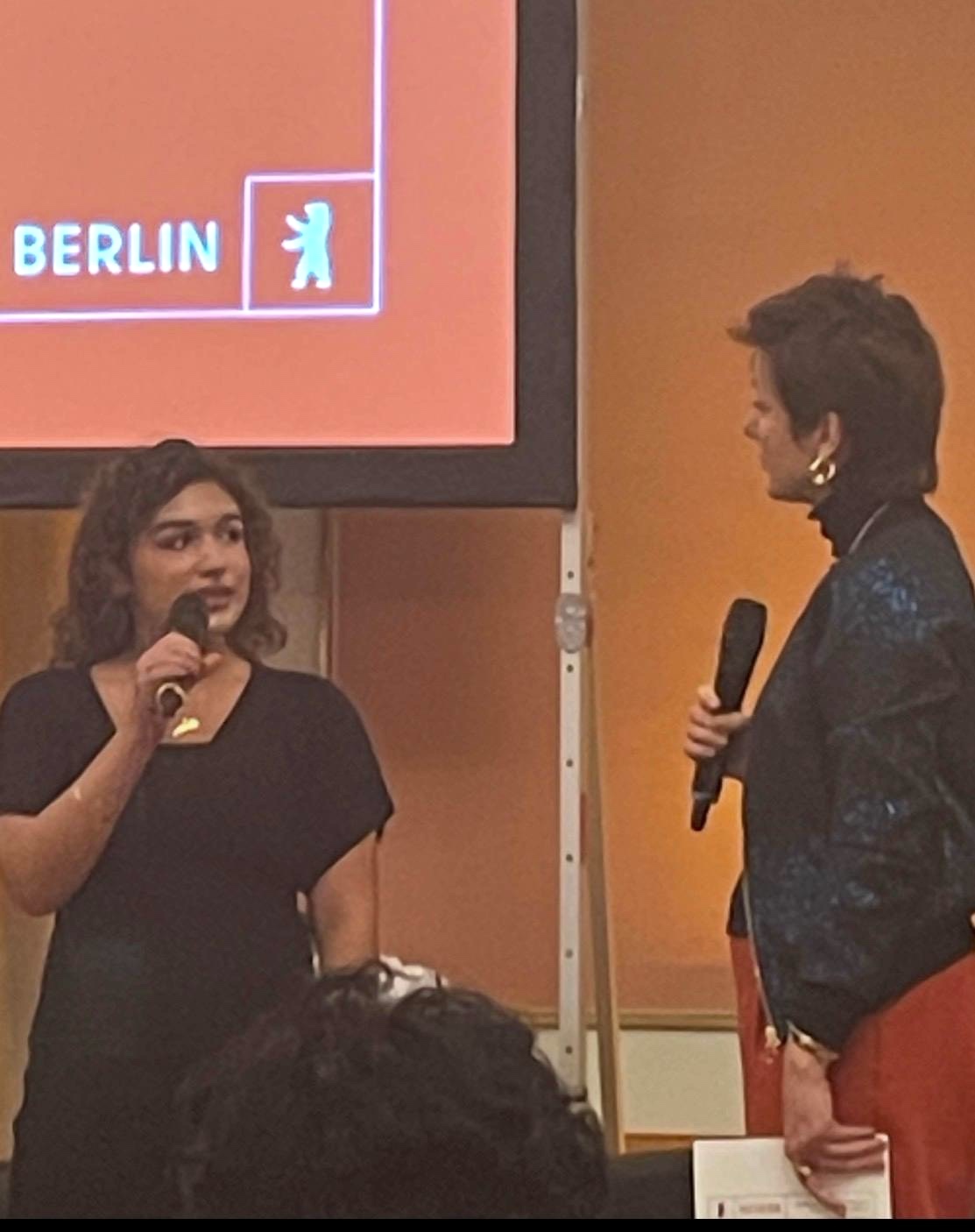
Speaking on behalf of the fourth generation, 17-year-old Helen Yavuz, a student from Berlin-Charlottenburg, told the story of her immigrant great-grandfather with his Turkish-Kurdish-Arab roots and confidently addressed the identity issues between Turkey and Germany that many in subsequent generations still face: “I just take the best of both identities!”
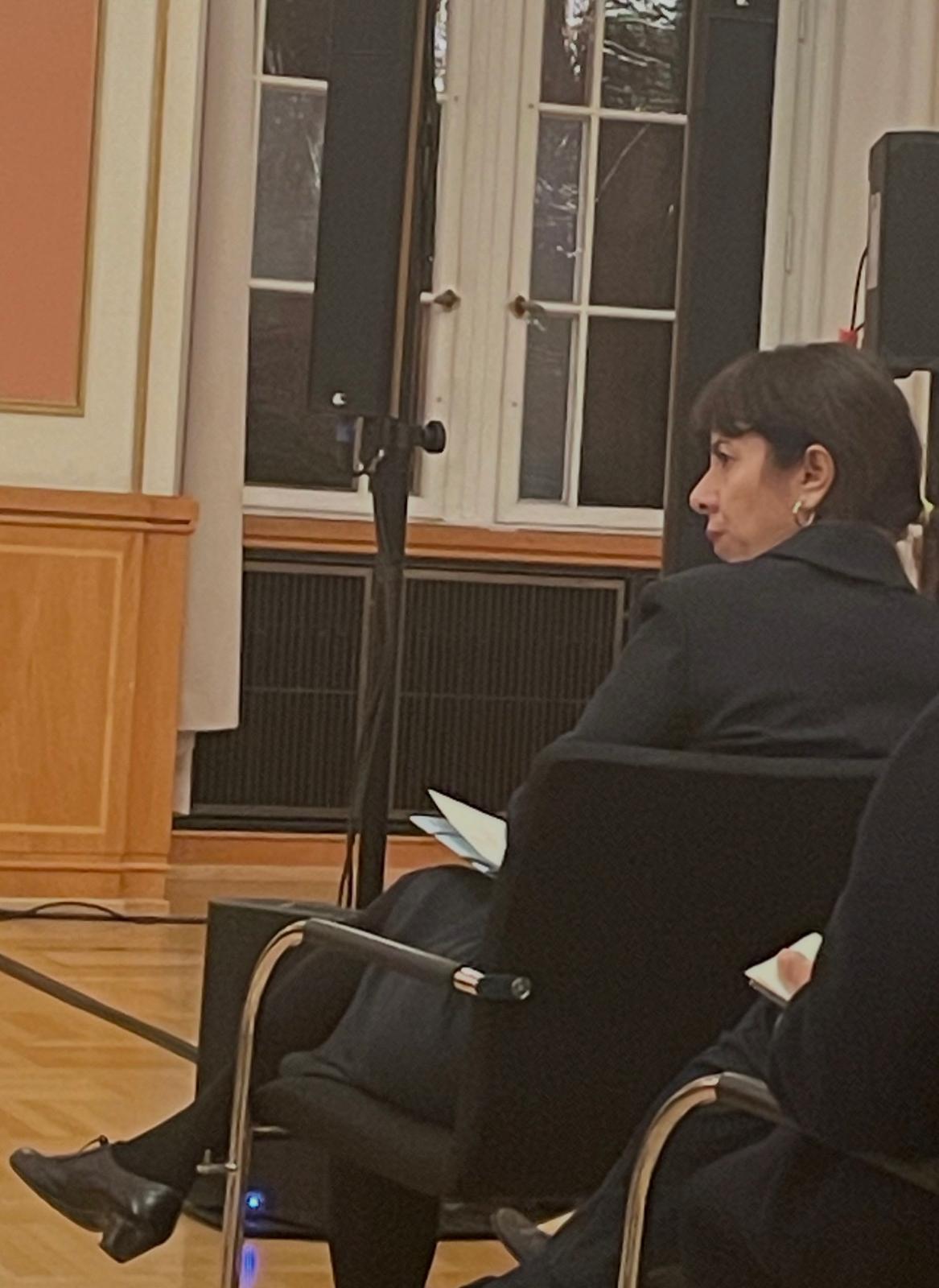
At the ceremony on Friday evening, the Turkish community had the Red City Hall firmly in its grasp, albeit in a relaxed atmosphere. Only a handful of non-Turkish guests (such as diplo.news) were present as countless life stories were shared during the reception that followed in the Wappensaal.
ekö