Germany and “The Infatuation with the Problem”
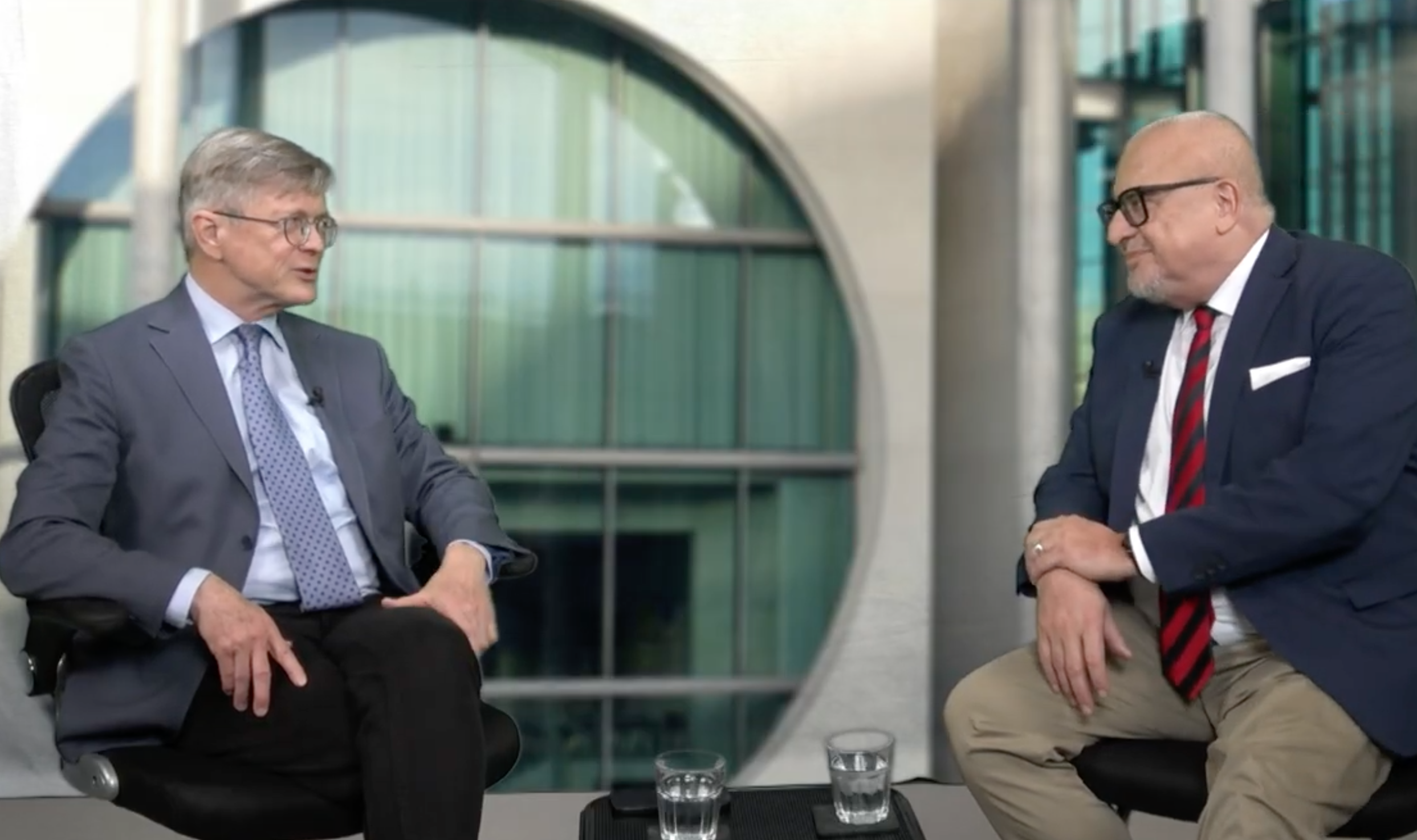
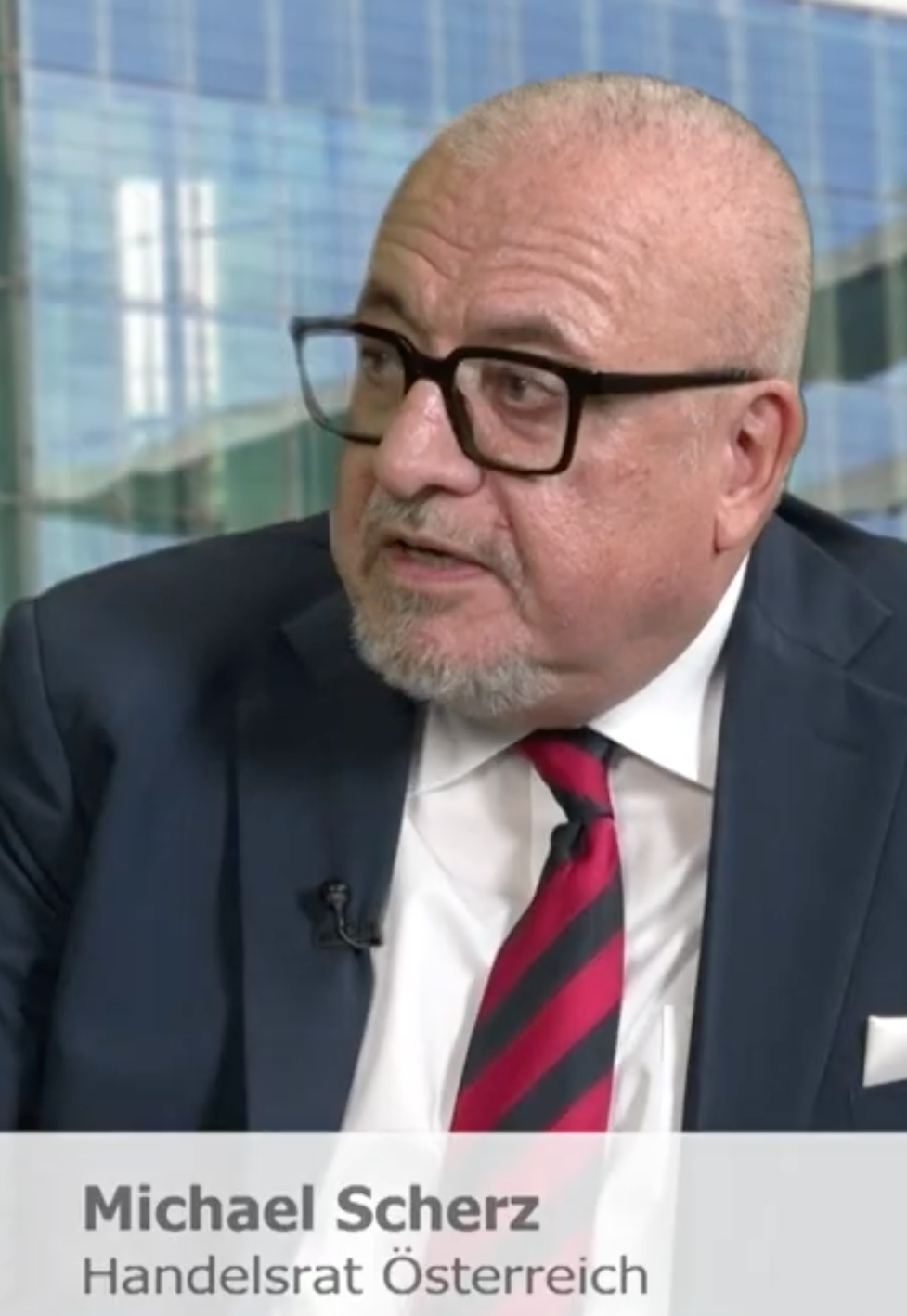
Austrian economic diplomat Michael Scherz has spent a total of twelve years of his forty-year career working in Germany. On the TV Berlin talk show diplo.international, he takes stock of bilateral trade relations and analyzes economic developments in Germany. diplo.news summarizes the conversation.
Mr. Scherz, you are now leaving Germany. Your successor was previously the Austrian Trade Commissioner in Vietnam. Moving from Vietnam to Berlin takes some getting used to. How do you explain the German mentality to him? Is there anything you never understood about this place?
Yes: the obsession with problems. There is a strong appetite for problems here, whereas we Austrians take a more pragmatic approach. Some things simply cannot be changed. We move on and try something else. There is a very strong focus on problems here. And a little more optimism wouldn't hurt either.
Regarding German-Austrian economic relations: We are living through a crisis, and Germany is in a recession. It was always said that when Germany catches a cold, its smaller neighbors like Austria get very sick. We aren't there yet, but what is the situation like today?
Yes, that has always been said. We did experience a certain decoupling in the early 2010s, when Austria was doing better than Germany. But I am not so pessimistic about the medium- and long-term prospects of the German economy. We are in the midst of a massive transformation process in every area. The entire German economy, especially energy-intensive sectors like the automotive industry or mechanical engineering, is struggling significantly. As a major supplier, we are heavily affected by this.
On the other hand, a great deal of new development is taking place in Germany. One should keep in mind that it is not just a few sectors that are in decline, but that we as Austrians have particularly good opportunities in Germany's key future industries.
Of course, there is a need for action, especially in reducing bureaucracy—something that has been discussed for decades. However, I believe in the innovative power of the German economy. That said, Brussels often makes things much more difficult. For example, the Supply Chain Due Diligence Act—despite its good intentions—is absurd. We are not alone in the world. We are in international competition with China and the U.S., and we are making ourselves less competitive. This makes it all the more difficult to keep up. We need to play on a level playing field with others, ensuring fair competitive conditions. We must be careful that the Chinese do not flood the European market with high subsidies in the automotive industry and distort it completely.
Often, such regulations from Brussels are well-intentioned but unrealistic, truly difficult to implement, and distort competition. In Germany, people are ambitious and want to do even better than what Brussels prescribes.
The rhetoric about reducing bureaucracy gives the impression that it’s not actually reaching the lower levels and isn’t being implemented. It would be very helpful if we could really open the windows wide and let the fresh air in. There’s still a lot of potential—especially in the social welfare systems, in funding programs, and so on—to bring a breath of fresh air here. Sometimes you come across regulations that are truly baffling.
Please explain to us: What exactly does a Commercial Counselor do?
We try to revitalize bilateral economic relations, support companies, and remove obstacles. We provide platforms for companies to do more business in Germany and find the right partners. In general, a great deal goes into promoting Austria's image as a business partner for Germany.
Like Germany, Austria has a large network of embassies around the world. But the Austrian business community, which you represent, also has a vast diplomatic network—even larger than that of the Federal Republic of Germany.
We are represented in nearly 70 countries around the world, always operating as a commercial section within the Austrian diplomatic mission—that is, the embassy or consulate general. We consider it very important to stay closely attuned to the economic pulse of each country where we work so that we can gather as much relevant information as possible.
The secret to success in our profession is definitely the network. That is the decisive factor, even though much can be handled digitally today. Artificial intelligence promises many simplifications, but a personal network is a unique selling point for economic diplomacy. When you know each other, you talk to one another in a completely different way. AI cannot fully replace that.
Does your profession have a future in general?
I believe so. The economic prosperity of a small economy like Austria's depends heavily on its international presence. Of course, the job profile is changing. When I look back, in Bucharest we were still using telex machines and sending yellow strips to Austria at 5 p.m.
But our organization is still in high demand today. We support approximately 60,000 Austrian companies every year. In Germany alone, there are 6,000 served by our offices in Düsseldorf, Munich, and Berlin.
Finding new talent is becoming increasingly difficult because young people are already familiar with the world. In the past, people used to take on such careers to get to know the world. Would you advise young people to apply?
Absolutely. Back then, my main motivation was also to get out into the world. Before that, I had only been to England and once to the USA. That was it. Today, 25-year-olds apply who have already been all over the world, often for months or even years. That has changed, but it is still a highly interesting career with a future, even if it isn't very family-friendly. It requires a high degree of flexibility from one's partner, who has to make certain compromises.
How are German-Austrian economic relations developing?
With its accession to the EU, the opening up of Eastern Europe, and the introduction of the euro, Austria has made massive gains in international competitiveness. Thanks to its EU accession, Austria has become one of the world’s top exporting nations. That’s something to really let sink in.
The Austrian economy earns six out of every ten euros abroad. We are Germany's seventh-most important trading partner. When you look at the scale of the countries in the top 10, we are by far the smallest, yet we are so strong. We are also helped by the strong integration in tourism, where Germans get to know and demand many products in the food and beverage sector.
We also share with Germany a strong sector of small and medium-sized enterprises (SMEs) that still account for a relatively high share of production. In Germany and Austria, manufacturing still accounts for 20 percent of gross domestic product, whereas in most European countries it accounts for only 10 percent or even less. We rely heavily on goods production and services.
Added to this is the phenomenon of many niche world champions—companies that almost no one knows about, yet are global market leaders in their industries—such as track-laying machines (the world’s longest rails come from Austria) or machines that make waffles.

It is said that Austria is further ahead than Germany when it comes to digitalization. And the Germans even admit it.
Germany is certainly exceptionally well-positioned when it comes to the digitalization of industry. Where Germany has weaknesses is in the digitalization of public administration. Austria is indeed further along in that area.
Do you get the impression from other foreign colleagues stationed in Germany that they’re frustrated by German bureaucracy?
Our relationship is privileged because we know each other very well. In Germany, you don't have to spend a long time explaining what Austria is. That is our advantage. We have a different way of interacting with one another, which gives us good access that others have to work much harder to achieve. Every now and then, colleagues ask if they can tag along and do something together.
In total, you spent twelve years posted in Germany. When, where, and how was that?
From 2011 to 2017, I was stationed at the Consulate General in Munich, where I was responsible for Bavaria and Baden-Württemberg. Austria plays a very important role in these influential states in the south. We are among the top partners of these states—especially Tyrol, Salzburg, and Upper Austria, as well as Bavaria, Vorarlberg, and Baden-Württemberg. Since September 2020, I have been based in Berlin, from where we handle all other federal states as well as nationwide affairs.
In which other countries have you been posted?
My career began in 1985 in Romania, back under President Ceaușescu. Subsequently, I served in Jakarta, Johannesburg, Paris, and New York as a trade attaché, and later as a trade counselor in Sarajevo, Padua, Munich, and Berlin. In the beginning, there was a peculiar practice that no longer exists today: you were sent to other locations to cover for colleagues on vacation. If a colleague in Kuwait or Lagos was on holiday, one of us younger staff would be sent there. That is how I ended up spending three weeks in Lagos and five in Kuwait. Of course, that hasn't happened since the advent of the mobile phone.
Where was it most challenging?
It is challenging everywhere. It was particularly interesting for me to set up our office in Sarajevo after the Dayton Peace Agreement (1995). I went there without ever having been to the city before. I was well-briefed and checked into two rooms at the Holiday Inn in Sarajevo—the famous yellow building in the city center—using one as an office and the other for sleeping. That was on a Sunday evening. I was the only guest that night, as everyone else arrived on Monday and left on Friday.
Those five years in Sarajevo were a fantastic time because things were on a steep upward trajectory immediately after the war. And as everywhere in Western and Central Europe, Austria was one of the most important partners. We were the largest trading partner after Germany, but the largest investor, even ahead of Germany.
But Germany, too, faced very specific challenges; at times, we were in a state of perpetual crisis. This showed that even in our countries, where everything had been going so well, it could suddenly all come to an end. We were already happy if things stagnated or grew slightly. That feeling intensified even further in Berlin.
To put it pragmatically: what is actually the difference between a trade attaché, a commercial counselor, a trade commissioner, etc.? Are these just different titles for the same thing?
Attaché is the lowest rank in the diplomatic hierarchy. That is what you start as. Then you become a counselor—either an economic or commercial counselor, depending on how a country is structured. But in principle, it’s always the same diplomatic title.
A lot is done for them on the German side. There’s an association of commercial counselors who visit businesses or trade shows. But we ourselves are present at almost every German trade show with Austrian companies. At the world’s leading trade shows, we’re also represented with group booths featuring a unified Austrian design. This is more cost-effective for the individual companies when they arrive the day before the show and find everything set up just as they ordered.
How is a trade commissioner integrated into an embassy? They don't work for the Ministry of Foreign Affairs, after all.
They are a full member of the embassy, similar to the defense or military attaché, who is also dispatched by a different ministry. The trade department, with its ten employees, has its own floor in the embassy.
We meet every week for a briefing at the embassy, or up to five times a day if the situation calls for it. In this major weekly meeting, everyone reports their observations from their respective fields—economy, science, culture, or the military. We work together very pragmatically, trust one another, leverage each other's strengths and networks, and engage with them collectively. We see ourselves as "Team Austria." But to the outside world, the ambassador is the head.
Following this interview with diplo.international, Dr. Michael Scherz retired, handed over his office to Stefan Stantejsky—previously Austria's trade delegate in Vietnam—and moved back to Austria.
ekö
.jpg)