A legacy of the Hungarian Revolution
By Milán Dóka
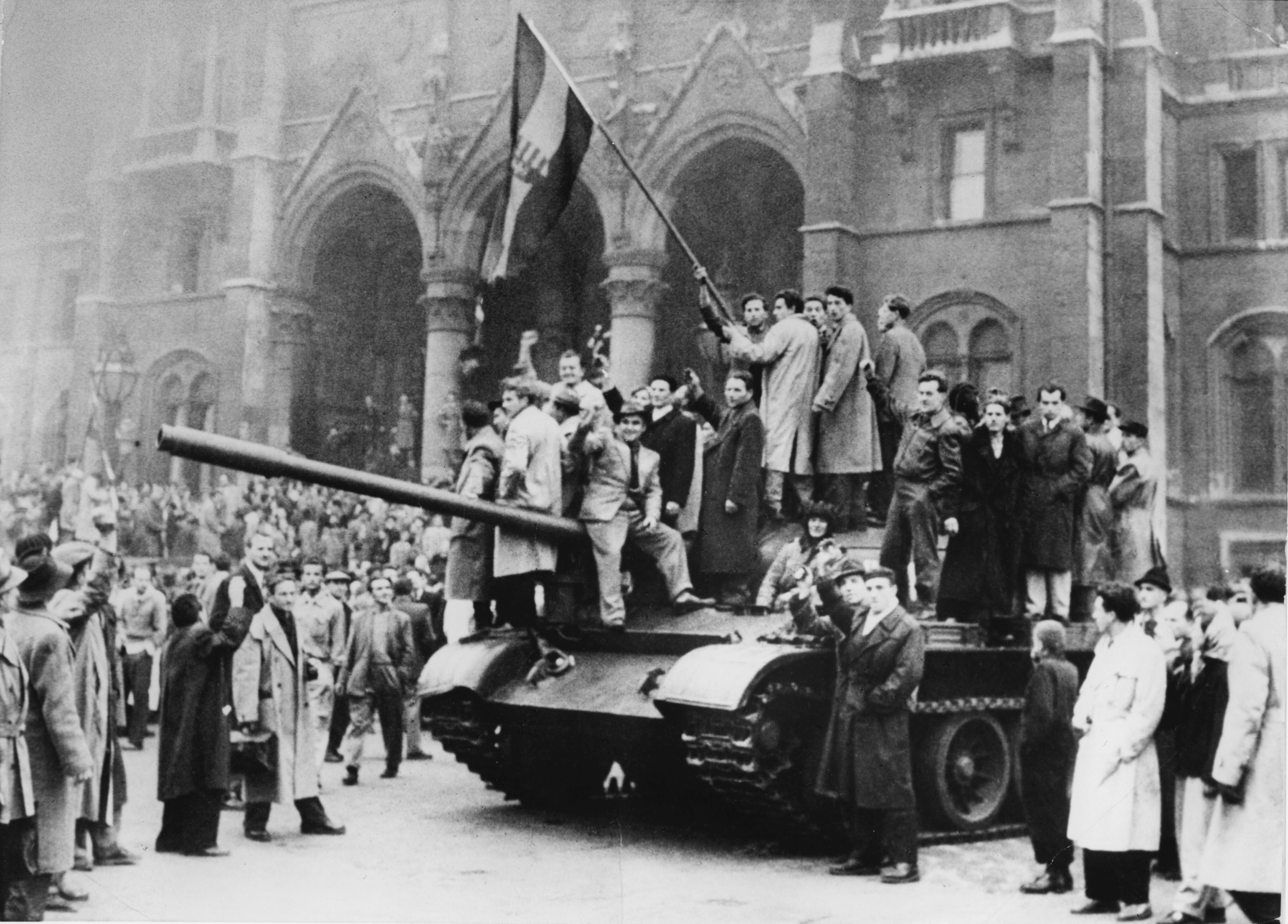
Ever since the 20th Congress of the Communist Party of the Soviet Union in the spring of 1956, at which Nikita Khrushchev condemned Stalin’s crimes and his cult of personality, tensions had been simmering amongst Hungary’s intellectuals and students. Whilst a tentative thaw was beginning in Moscow, they were forced to witness how the old Stalinists were still clinging to power in Budapest. On 23 October, the universities in Budapest called for peaceful demonstrations, albeit with highly explosive demands: the withdrawal of Soviet troops from Hungary, the establishment of a multi-party system, and the reinstatement of the reformist communist Imre Nagy as head of government. Shots were fired that very night; the next day, the first Soviet tanks rolled in. By 11 November, the insurgents had been defeated; some 3,000 people had been killed and thousands injured. More than 200,000 Hungarians fled to the West, and the leaders of the protests, including Imre Nagy, were executed. A dark period of arrests and even greater state control began.
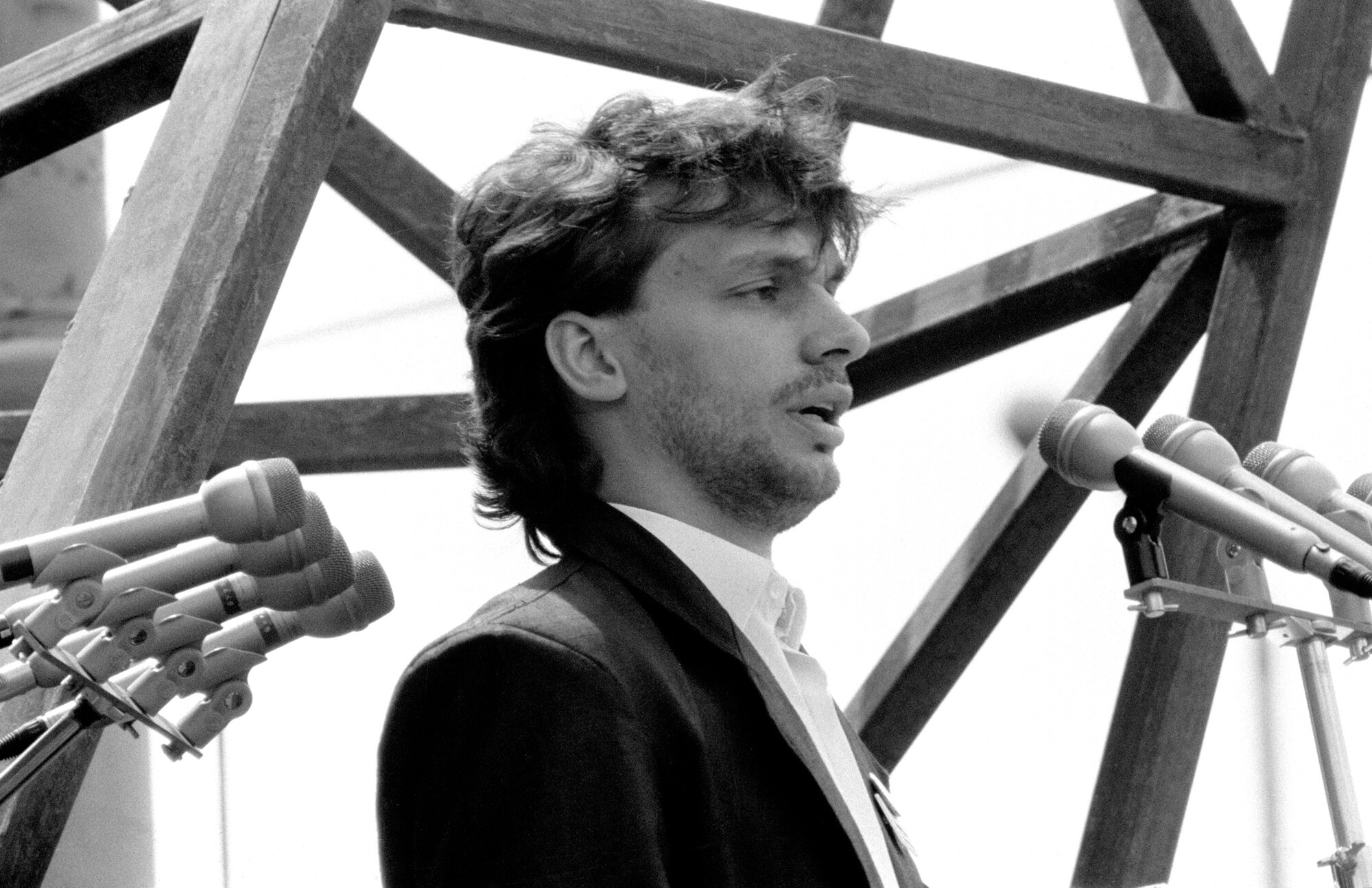
This tragedy on the world political stage continued to shape the protest movements in Eastern Europe for many years afterwards, and remains an integral part of Hungarian politics to this day. For some, it also marked the start of a political career. This was the case for the young Viktor Orbán, who, as chairman of the Alliance of Young Democrats, commemorated the uprising against communist oppression at Imre Nagy’s reburial in 1989. “If we do not lose sight of the ideals of 1956, we can elect a government that will immediately enter into negotiations on the immediate start of the withdrawal of Russian troops,” he declared to the assembled crowd on Heroes’ Square in Budapest. Orbán’s speech carried great symbolic significance; at the time, many regarded him as a beacon of liberal hope. Anti-communism and his relationship to the legacy of 1956 have shaped his entire political career.
This makes his stance on the Russian-Ukrainian war seem all the more contradictory: Kyiv is waging the very same war of defence that the Hungarians had attempted to wage in 1956. “You’re jumping on the Ukrainians’ bandwagon and not standing by the Hungarians! You want a pro-Ukrainian government and you want to funnel Hungarians’ money into Ukraine – that is the truth!”, Orbán shouted at protesters during the election campaign in March. Conversely, hundreds of thousands of people, in protest against Orbán’s system, adopted one of the most emblematic slogans of the 1956 Revolution: “Ruszkik haza!” – “Russians, go home!”
Orbán has been voted out of office, and his successor, Péter Magyar, clearly intends to do away with his predecessor’s legacy. Will Orbán’s political career come to an end – of all times – in the 70th year of the Hungarian Revolution, right back where it all began? Or, following his defeat in April this year, is there still a way back to power? This is one reason to retrace the path of this controversial politician once more. How did the once anti-communist, anti-Soviet liberal become, within three and a half decades, the architect of an illiberal state and one of the West’s most vocal critics? And what actually drives him?
From liberal to conservative
There is broad consensus that Orbán is one of the greatest political talents of his generation and has repeatedly demonstrated an instinct for which political wave he needed to ride. Many therefore regard him first and foremost as an opportunist who even subordinates his ideology to political victory. A former party colleague, however, regards Orbán as a deeply ideological politician despite his pragmatism. István Hegedűs, who was a member of Fidesz until 1994, is convinced that at the time of his 1989 speech, Orbán genuinely believed in liberal democracy, he says in an interview. Later, he even became vice-president of the Liberal International.
Hegedűs sees a key to Orbán’s ideological shift in the conflict with the Alliance of Free Democrats (SZDSZ), which was also liberal in orientation but comprised older and more experienced democrats. Whilst the two parties were working closely together, Orbán increasingly felt that the SZDSZ wanted to dominate his party. Fidesz began to consciously distance itself and gradually shifted to the right. As early as 1994, Orbán described himself as a conservative. At the same time, according to Hegedűs, he developed a strong sense of mission – the conviction that the liberal order needed to be reshaped and that he himself could politically lead this change of era. Later, this aspiration took concrete form in the proclamation of the ‘illiberal state’.
From consolidating power to a culture war
In Orbán’s view, there are no independent media, no independent intellectuals and no independent business circles: everyone belongs somewhere. According to political analyst Nóra Schultz, this has always caused him a certain amount of frustration, which in turn gave rise to his ambition to build up his own economic, media and intellectual power base. The first signs of this were already apparent during his first term in office from 1998 onwards. It was not without reason, according to Schultz, that he was given the derisive nickname ‘Viktator’ even back then.
However, the expansion of the system accelerated after 2010, when Orbán’s party, Fidesz, secured a two-thirds majority in parliament. For many years, two external sources provided the system with financial leverage: European Union funds and cheap Russian energy. Orbán and his associates restructured the electoral and institutional systems whilst, at the same time, using EU funds to create an economic elite aligned with them. The system functioned much like a mafia family: at the very top was the head of the family – Orbán – followed by the family members, the oligarchs and the local power brokers. The Prime Minister supplied them with state funds and EU money; in return, they channelled a portion of this back to the family. The family, in turn, legalised the theft and secured its own hold on power in many instances through laws it had specifically created. It is not without reason that the term ‘mafia state’ has become established in Hungarian public discourse.
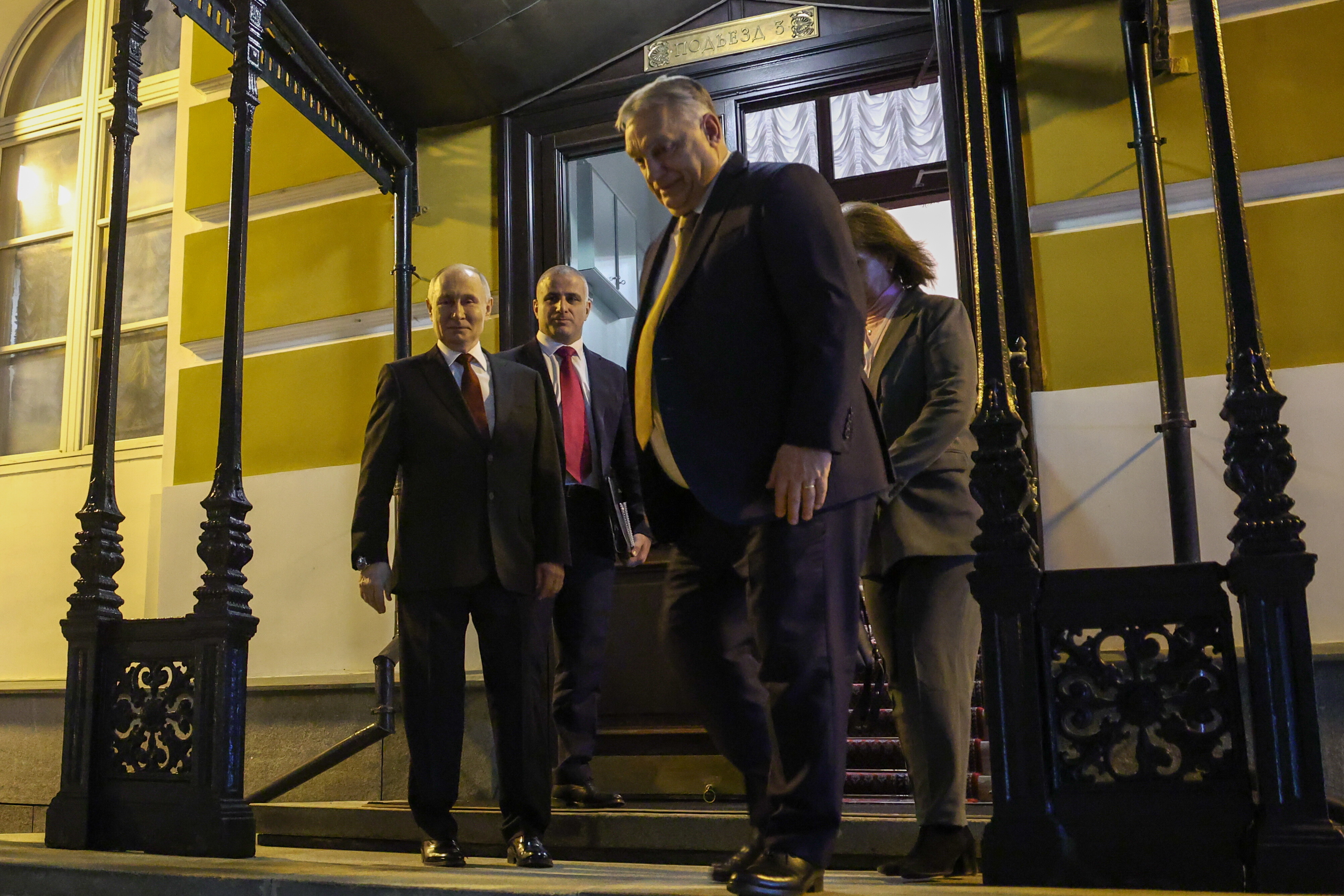
However, Orbán did not only expand his power; he also became increasingly embroiled in an ideological battle against the liberal elite, whom he detested. In 2014, he proclaimed the ‘illiberal state’, and the 2015 migration crisis reinforced his conviction that the liberal world order was in decline and that his time had come. He sought to present himself as one of the leading figures in a global political upheaval, whilst at the same time forging ever closer ties with authoritarian leaders such as Vladimir Putin. In doing so, he did not simply wish to copy Eastern systems in Hungary: rather, according to his own vision, he wanted to become one of the pioneers of a transformation of Western democracies. Dániel Hegedűs, deputy director of the Institute for European Politics, does not attach such great significance to ideology. He does, however, agree that Orbán also sought to exert pressure on the European Union through his ‘opening to the East’. In his view, Brussels recognised this too late and failed to resist it decisively for far too long.
The downfall
The decline of the Orbán regime, which had won the 2022 election with a two-thirds majority, began in 2024. It was then that it emerged that the former deputy director of a children’s home in Bicske had been pardoned. He had been convicted of attempting to cover up sexual abuse at the facility. The scandal struck a particularly sensitive nerve for a ruling party that presented itself as family- and child-friendly. From that point on, Orbán’s luck seemed to run out: next came the rise of Péter Magyar, economic difficulties, and further failings in the child protection system – and Orbán failed to provide a convincing response to any of it.
In this year’s election, Orbán was no longer able to reposition himself politically. Even the election campaign, which relied on fears of war and an anti-Ukrainian stance, failed to deliver the hoped-for success. According to observers, he simply lacked any alternative political vision. However, he did not go so far as to completely abolish political competition, for example by banning or eliminating the opposition. For the political analyst and election campaign adviser Dávid Dorosz, Orbán was, after 16 years in government, simply politically – and presumably also physically – exhausted – hardly surprising after such a long time in power. Dorosz saw the clearest sign of this at the campaign rally in Győr mentioned at the outset, when Orbán angrily confronted the demonstrators. By that point, according to Dorosz, he must already have realised that his opponent Magyar’s lead was virtually insurmountable.
The party colleagues and analysts interviewed also agreed that Orbán – given his own interests – made a serious strategic error by leaving the electoral system unchanged. Had he opted for a more proportional system, he could have prevented his defeat from handing his opponents a two-thirds majority – and thereby possibly ensured the survival of his system. It is impossible to say with certainty why he chose not to do so. Dorosz, however, also sees this as a sign of political exhaustion.
Is a comeback still possible?
Orbán’s chances of a political comeback are not only diminished by the scale of his defeat. A rule introduced by the new government limits the Prime Minister’s term of office to two parliamentary terms, meaning that Orbán could not currently be re-elected. Changing this rule would require a two-thirds majority in Parliament – which makes his return even less likely.
Following his defeat, the former Prime Minister also largely disappeared from the public eye. Although he has since announced his comeback on several occasions, this has so far been limited to speeches at a few events and the odd Facebook post. According to Dávid Dorosz, Orbán does not currently know what his next move should be. He is therefore playing for time – a strategy that can, however, only be sustained for so long. Meanwhile, his supporters are turning away from him. Many feel let down by both the election result and the disappearance of the ‘boss’. Fidesz now stands at 22 per cent in the polls – which, according to political scientist Schultz, is still a substantial voter base. However, as Schultz points out, ‘there are no Fidesz voters, only Orbán voters’. Without Orbán’s return or a fundamental overhaul of the party, it is therefore questionable whether Fidesz can continue to represent these voters politically.
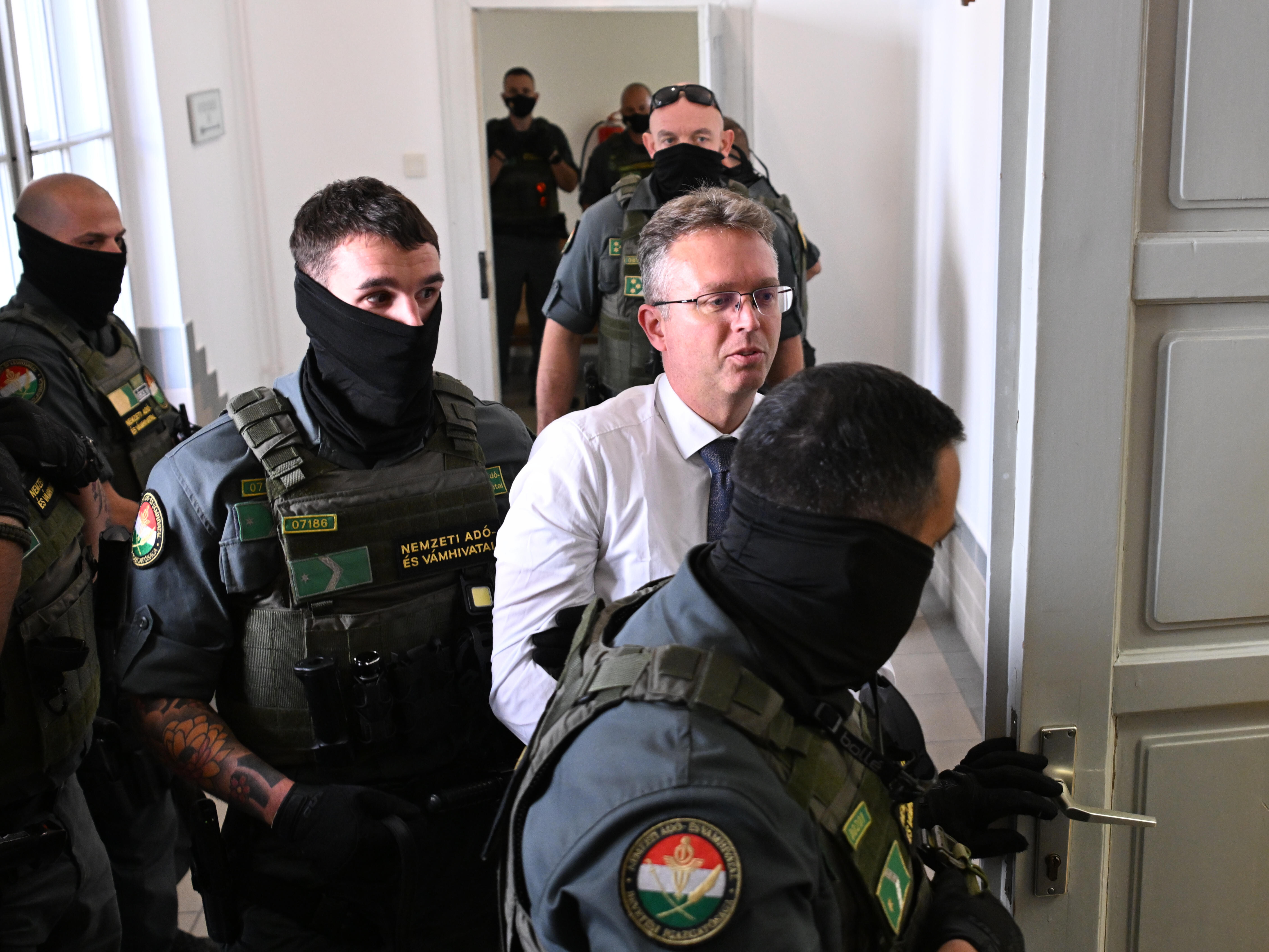
For Orbán, however, this is no longer simply a matter of a political comeback. His successor, Magyar, has announced a political and legal review, and the authorities have since launched investigations into several figures with links to the Orbán era. Two former ministers have already been taken into custody. Two ongoing investigations could even lead to the former Prime Minister himself. One case concerns the unlawful detention of Ukrainian money couriers in Hungary, which, according to the information that has emerged so far, Orbán may have personally ordered. The other case relates to grants totalling around 46 million euros from the National Cultural Fund, which are suspected of having been used to finance party-political purposes. The former Minister of Culture in the Orbán government is already in pre-trial detention in connection with this matter.
23 October 1956, a national holiday in Hungary, whose historical legacy has shaped Orbán’s relationship with politics. The young anti-communist who raised his voice against Soviet oppression has now become a former prime minister and a failed party leader. His supporters are dwindling, his system is currently being dismantled, and in the face of legal proceedings, even he can no longer feel safe from prosecution and arrest. The revolutionary cry “Ruszkik haza!” rings out louder than ever. Yet this time it does not come from Viktor Orbán himself, but is directed against him. In the 70th year of the Hungarian Uprising, it seems more realistic that Orbán will be brought to justice than that he will return to power.