Garden Diplomacy Under the Protection of Shamans
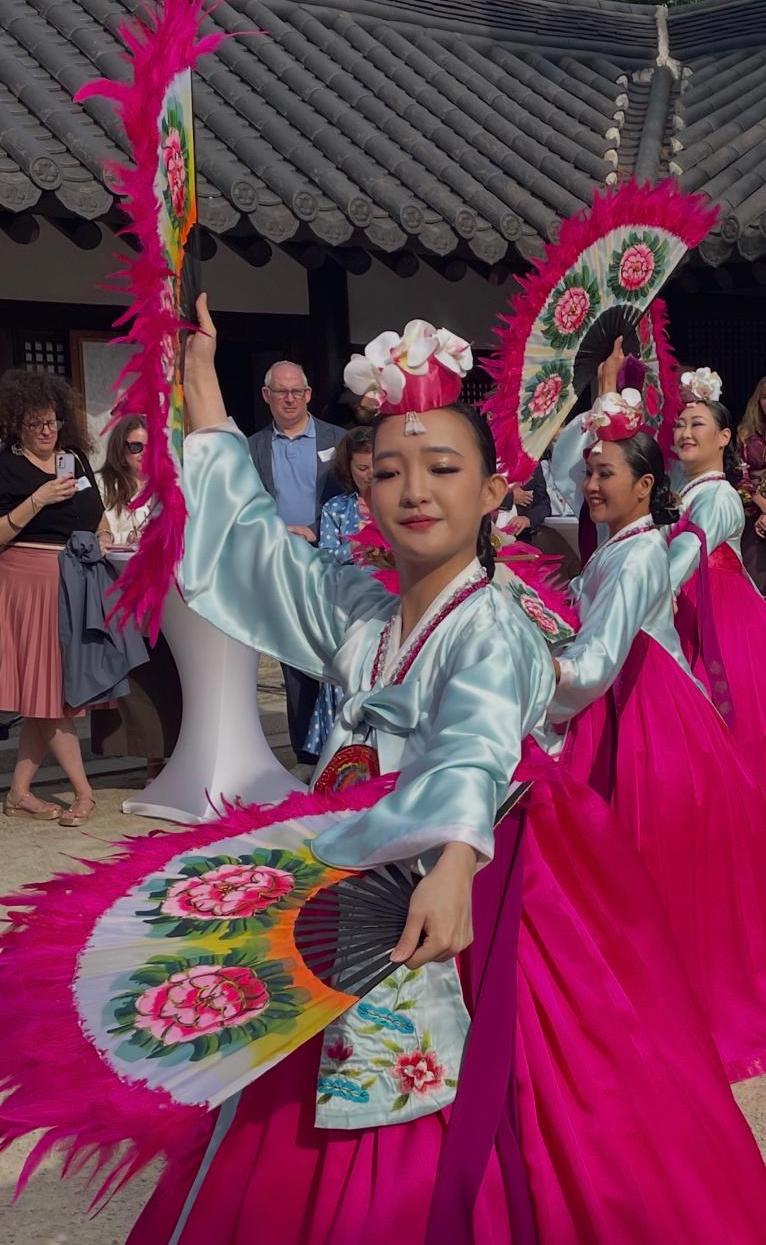
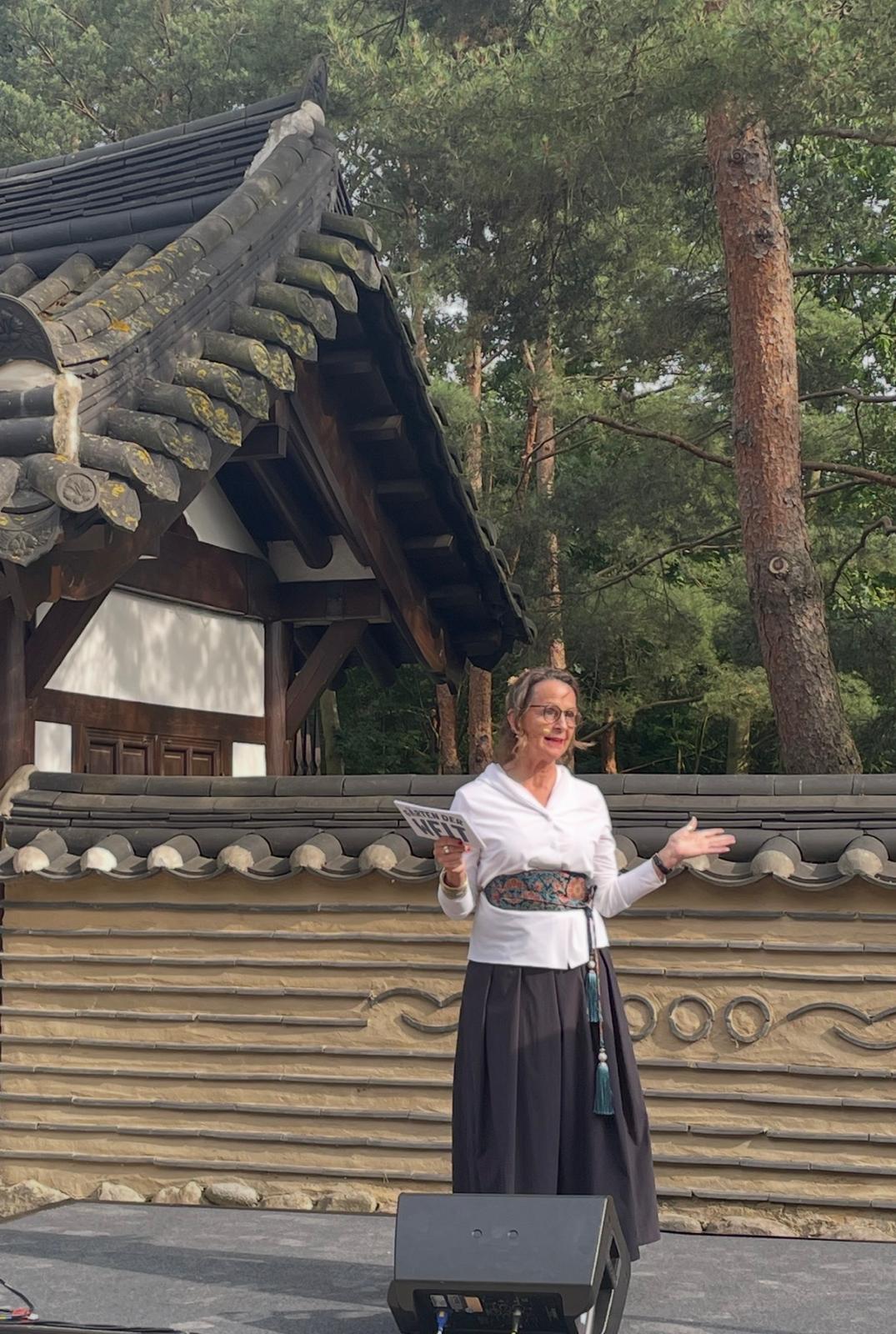
Does modern diplomacy need a touch of shamanism? The ambassadors who accepted the invitation to the Korean Garden on Sunday probably overlooked the wooden figures, totem and spirit poles of shamanic culture set up at the edge of the garden, which are meant to help people convey their wishes to the upper worlds and protect them from disasters. Whether shamans can be used in diplomacy as messengers for wishes and as protection against evil has not been proven. In any case, that was not the main topic when numerous ambassadors—including the heads of mission from Korea, Qatar, South Africa, Ecuador, Chile, Vietnam, and several others—attended the reception at the Korean Garden, one of the most beautiful gardens in Berlin-Marzahn’s “Gardens of the World.”
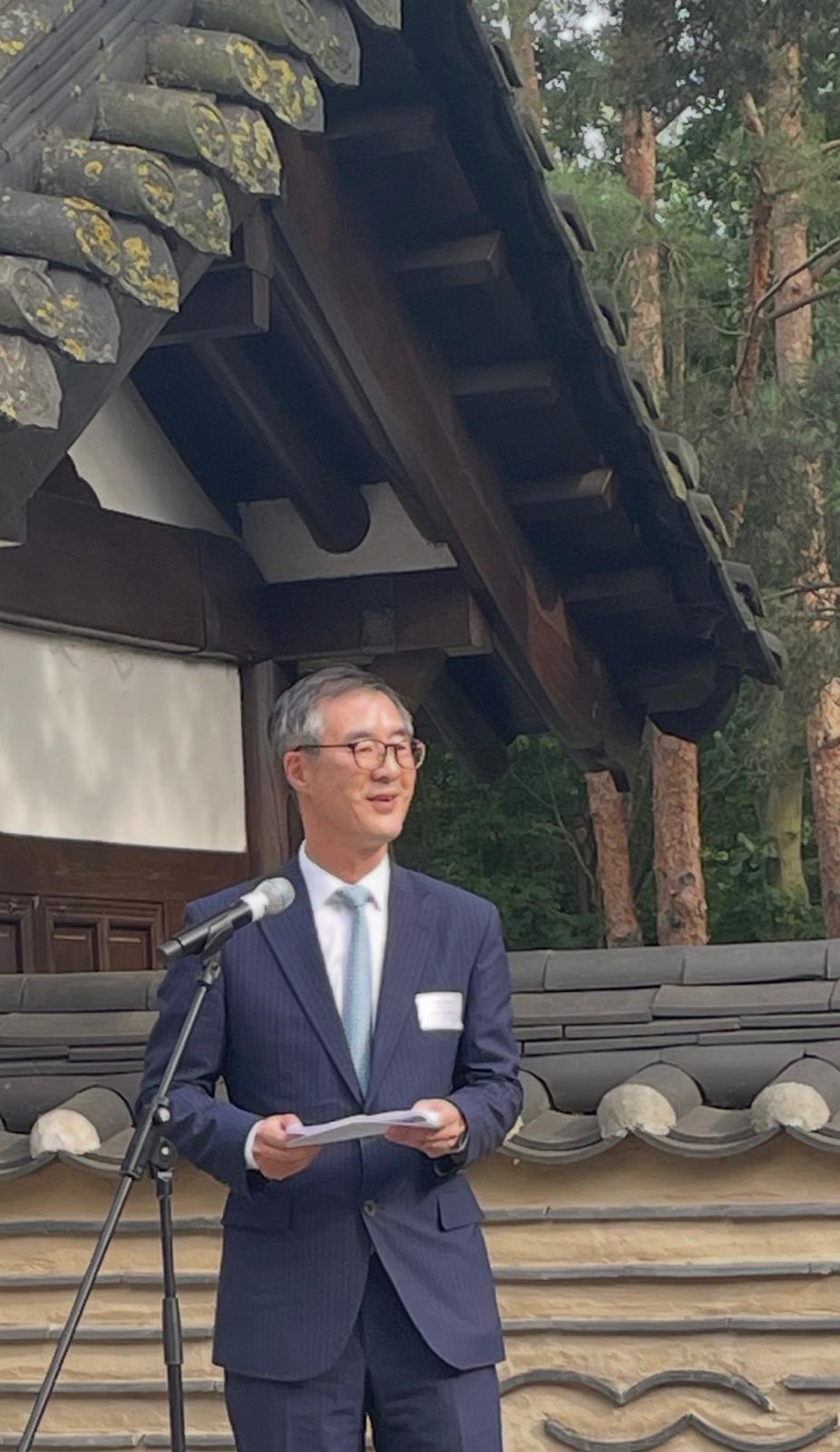
The main topic was an anniversary. The Korean Garden is twenty years old. That was reason enough for the Republic of Korea and Grün Berlin GmbH to celebrate this harmonious symbol of 140 years of diplomatic relations.
The Korean Garden was opened in 2006 as a joint project between the cities of Seoul and Berlin. South Korea’s Ambassador Lim Sangbeom highlighted the garden’s authenticity. This is because not only were Korean landscape architects, carpenters, and other craftsmen flown in from Korea, but the original wood and building materials—which were worked using traditional craftsmanship techniques—as well as the works of art also came from Korea. Thus, the Korean Garden is not a copy or an interpretation of Korean garden art, but a thoroughly authentic Korean garden.
Ambassador Lim explained that the historic Dokrakdang and Gyejeong complexes in Gyeongju served as models. They embody the harmonious blend of nature, architecture, and Korean philosophy. Visitors are meant to feel transported back to the Joseon Dynasty, which lasted 500 years—and to associate Korea with more than just K-pop or K-dramas.
The garden was originally a gift from the capital, Seoul, to Berlin. Unlike with other gardens around the world, Korea had covered all the costs itself. It serves not only as a retreat for inner balance but also, in a sense, as a mirror of the universe. Incorporating elements of Confucianism, Buddhism, and shamanic culture, the complex embodies profound philosophical symbolism. In other words: the perfect place for relaxed “garden diplomacy” and international encounters.
Local political figures also delivered welcoming remarks, including the mayor of the Marzahn-Hellersdorf district, Nadja Zivkovic (CDU); State Secretary Andreas Kraus (CSU) from the Senate Department for Mobility, Transportation, Climate Protection, and the Environment; Christoph Schmidt, managing director of Grün Berlin GmbH, and “Park Ambassador” Beate Reuber also spoke; she still remembers how exciting the creation of the gardens was. That’s because the Koreans who were flown in created their garden in a very mysterious way.
Next year, the Gärten der Welt will celebrate their 40th anniversary. They were founded—under a different name at the time—in 1987 in the GDR. They are the world's only garden complex of this kind.
ekö