Get off the bandwagon, get off the moral high ground
Europe faces the challenges of an era-defining transformation. It must stand its ground against a revisionist, imperial Russia and China’s quest for global dominance. It is striving to establish a sufficiently balanced partnership with the United States. At the same time, European democracies must guard against authoritarian-nationalist tendencies arising from social upheavals.
Germany, in particular, was unprepared for these changes, having indulged in the “peace dividend” following reunification and the expansion of both NATO and the EU. Within a rules-based international legal order, it focused on acting as a security “free rider” for the U.S., conducting profitable business in all directions—even from a lofty moral pedestal.
With the return of brutal power politics—marked by the war in Ukraine and Donald Trump’s “America First” policy—Germany has been forced into a “turning point” whose implementation is pushing the country to its limits, and not just mentally. Compounding this are a period of economic stagnation at home and a democratic center losing support, while the fringes are becoming increasingly radicalized.
The federal government recognizes these challenges, is confronting them, and is striving to address them. This applies to the “European pillar” of NATO and the EU as well as to long-overdue structural reforms. The latest reform program, which has yet to be implemented, is “a step in the right direction.” Support for Ukraine must also be secured for years to come, and dependence on the Chinese market in high-risk sectors must be reduced.
Given its relative economic strength and central location, Germany is obligated to assume greater responsibility. Added to this is the military component resulting from the burden-sharing in the conventional domain imposed by the U.S. This inevitably provokes reactions, even to the point of reawakening the ever-simmering “German question”—especially among its neighbors France and Poland, but also among the “smaller” EU partners.
In exercising its influence, Germany must demonstrate particular sensitivity and bear in mind that the geostrategic and geoeconomic foundation of its international position and the protection of its interests lies primarily within the Europe of the EU. As arduous as this may seem, it requires Germany’s full commitment to the gradual deepening of the unification process, the consolidation of the integrated foundation consisting of the single market, the euro, and Schengen, the strengthening of European institutions, and respect for European law.
Anyone who, out of a lack of time and impatience, believes today that Europe can only be advanced through cooperative frameworks of intergovernmental collaboration (such as the small groups E3 or E5)—or who even seeks to impose national border controls in violation of European law—runs the risk of provoking backlash and contributing to the undermining of the European project!
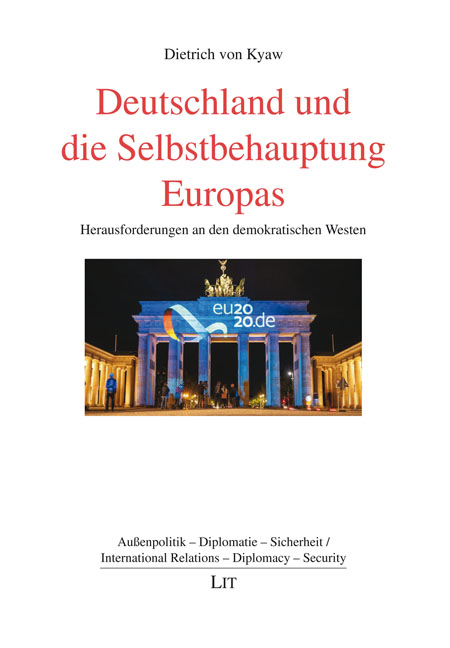
Germany would be well advised not to lose sight of the fundamental goals of its European policy: to keep the EU capable of acting, with the single market as its indispensable “life insurance”; to develop it further in a step-by-step, deepening manner; to move forward in the area of security policy with groups of willing partners; and, in doing so, to always take into account the long-term interests of the entire Union. The great challenges of our time can only be overcome collectively within a close-knit European alliance! At the same time, this approach can also help to reaffirm the United States’ interest in the transatlantic alliance. Whether the U.S. can overcome its neo-isolationist phase also depends on Europe’s usefulness as a partner to be taken seriously.
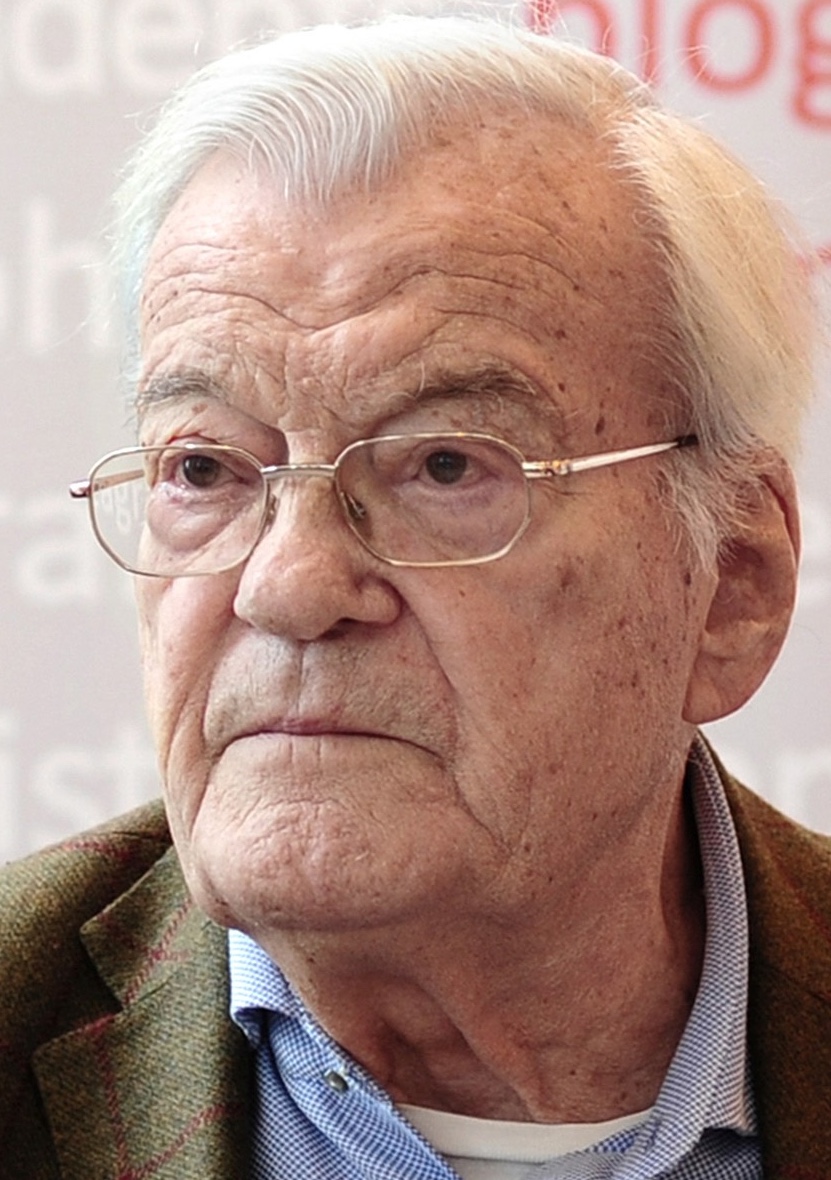
The author, Ambassador (ret.) Dr. Dietrich von Kyaw, former Permanent Representative of Germany to the EU, is the author of the book "Deutschland und die Selbstbehauptung Europas" (LIT-Verlag Münster/Westf. 2022) and a columnist for diplo.news.
.webp)