Trump’s Major Iran Debacle
Column by Michael Backfisch
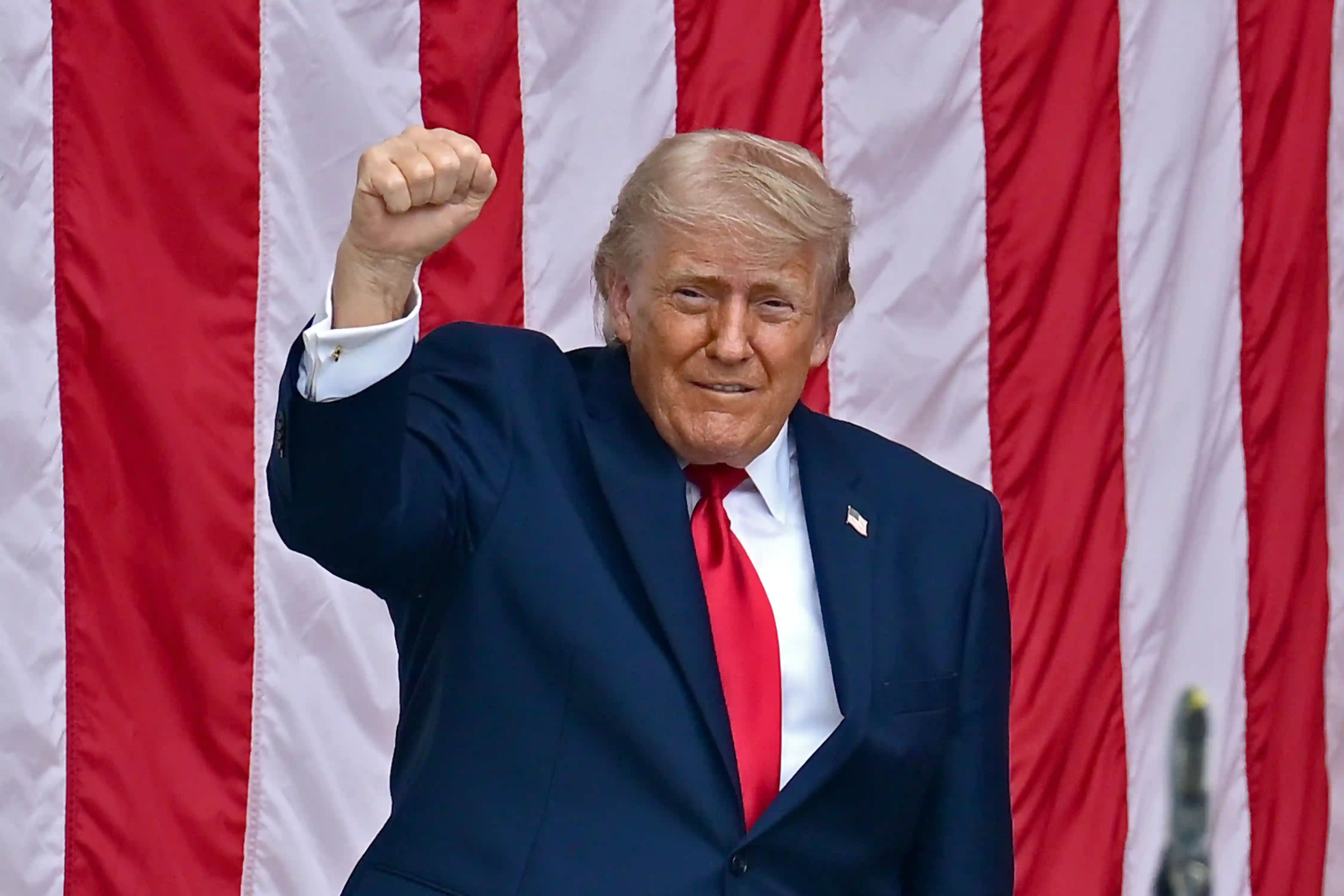
Donald Trump is repeatedly referred to as the most powerful man in the world. But this is a fiction. The U.S. president may command the most powerful military on the planet. However, superiority in terms of weaponry and personnel cannot be translated into political influence, let alone dominance.
The crux of the dilemma: Trump lives in a parallel world based on illusions. The president believes he is the master of the universe and all governments must dance to his tune. He is driven by a medieval principle of power: that threats lead to submission. “There will be no deal with Iran except unconditional surrender,” he thundered as recently as early March.
Trump’s lust for power is fueled by what he perceives as quick victories. During the Twelve-Day War in June 2025, the U.S. Air Force’s bunker-busting bombs inflicted massive damage on three Iranian nuclear facilities. Since the mullah regime did not retaliate, Trump saw himself as the victor. In the surprise operation carried out in Venezuela in early January, the elite U.S. unit Delta Force kidnapped President Nicolás Maduro. His successor, Delcy Rodríguez, cooperated and opened the country’s oil industry to American investors. The president experienced his “I came, I saw, I conquered” moment. Julius Caesar in Washington.
But Trump's muscle-flexing isn't working in the current conflict with Iran. In talks with the regime, the president is pursuing an erratic course that constantly changes. A week and a half ago, he threatened: “The clock is ticking for Iran, and they better move quickly, or there will be nothing left of them.” Last Saturday, he pulled out the olive branch. He emphasized that a framework agreement had been “largely” negotiated. Final details were to be announced “shortly.” A day later, Trump hit the brakes again. He had instructed his people “not to rush the deal, as time is on our side.”
Back and forth. The American has no concept, no plan, no strategy. It raises the suspicion that Trump, who spent many years in the reality TV entertainment business, wants one thing above all else: to constantly generate headlines. He runs a sensation-seeking machine designed to keep the public constantly on the edge of their seats. It’s about effects, not results. This suits Trump’s egomania. But that is not politics.
The White House chief is gravely mistaken when he claims that America—and not Iran—has all the time in the world. The truth is: The mullah regime is dragging out negotiations with Washington because it knows that Trump is under pressure and must deliver results. Currently, both sides apparently only have the will for a basic agreement on a 30- to 60-day ceasefire. The starting point: The Strait of Hormuz, which is vital for oil trade, is to be opened, and the U.S. blockade of Iranian ports is to be lifted. But even here, the devil is in the details. For instance, Tehran wants to collect fees from every ship for so-called “navigation services,” which Trump rejects. His core demand—restrictions on Iran’s nuclear program—is to be discussed only later.
Trump’s original war aims have largely evaporated. The president had allowed himself to be persuaded by Israeli Prime Minister Benjamin Netanyahu—based on misguided assumptions—to carry out joint airstrikes against Iran. Netanyahu’s flimsy, theoretical logic: destroy Iran’s missile program, kill the Supreme Leader, spark popular uprisings, bring about the collapse of the regime, and install a secular president. A cascade of self-delusion reminiscent of U.S. President George W. Bush’s naive idea of creating a democracy at the push of a button with the 2003 invasion of Iraq.
What Trump and Netanyahu completely misjudged was the resilience and willingness to escalate of the Iranian regime. In a situation of existential threat, Tehran's political leadership did not shy away from closing the Strait of Hormuz and holding the global economy hostage. It will not relinquish this leverage even in the event of new conflicts. It will not hesitate to torpedo the Gulf states’ model of prosperity and set the Middle East ablaze should Trump and Netanyahu launch another large-scale attack on Iran. It will do anything to ensure the survival of the regime. According to U.S. intelligence assessments, Iran still possesses around 70 percent of its missile arsenal, underground silos, and hundreds of speedboats. Whereas during the era of Ali Khamenei, pragmatic conservatives such as Security Council Chief Ali Larijani were still at the helm, the current power elite consists of a close-knit clique of radicalized military officers and intelligence agents from the Revolutionary Guards. It is stronger and more prone to violence than before.
It is surprising that Tehran seems to be setting the agenda in the current talks. The regime repeatedly puts forward its maximum demands, such as the lifting of sanctions, the return of frozen funds abroad, or an end to the war in Lebanon. Earlier this week, Trump attempted to demonstrate strength by ordering airstrikes on Iranian missile launch sites and boats—allegedly mine-laying vessels. But he knows: if he escalates his attacks, he risks Iranian retaliatory strikes. Global markets would go haywire.
The Iranians are well aware of Trump's domestic political constraints. His approval ratings are in the basement. The Iran war has driven up inflation and gasoline prices. The majority of Americans do not want a military confrontation with the Mullah regime. The midterm elections for Congress will take place in early November. If the Republicans lose one of the two houses, Trump will barely be able to pass important legislation. The president wants to turn the tide of public opinion, which is currently unfavorable to him, with mega-events. From June 11 to July 19, the world will gather for the World Cup in the U.S., Canada, and Mexico. It is meant to be a global festival of good cheer. Trump wants to turn the 250th anniversary of American independence into a gigantic display of patriotism.
For these celebratory events, a continuation of the war with Iran would be poison. The leadership in Tehran knows that Trump needs a quick resolution. They hold the upper hand. If Trump manages only to reopen the Strait of Hormuz, he would have merely restored the status quo ante. That could hardly be sold as a victory. For anything else, the Iranians will demand a high price. It is quite possible that the end result will be a flawed agreement that falls short of the 2015 nuclear deal negotiated during the Obama era. But even today, the consequences of the war that began with such fanfare are a massive embarrassment for Trump.
.webp)