Islamabad: Framework Agreement Takes Effect “Immediately”
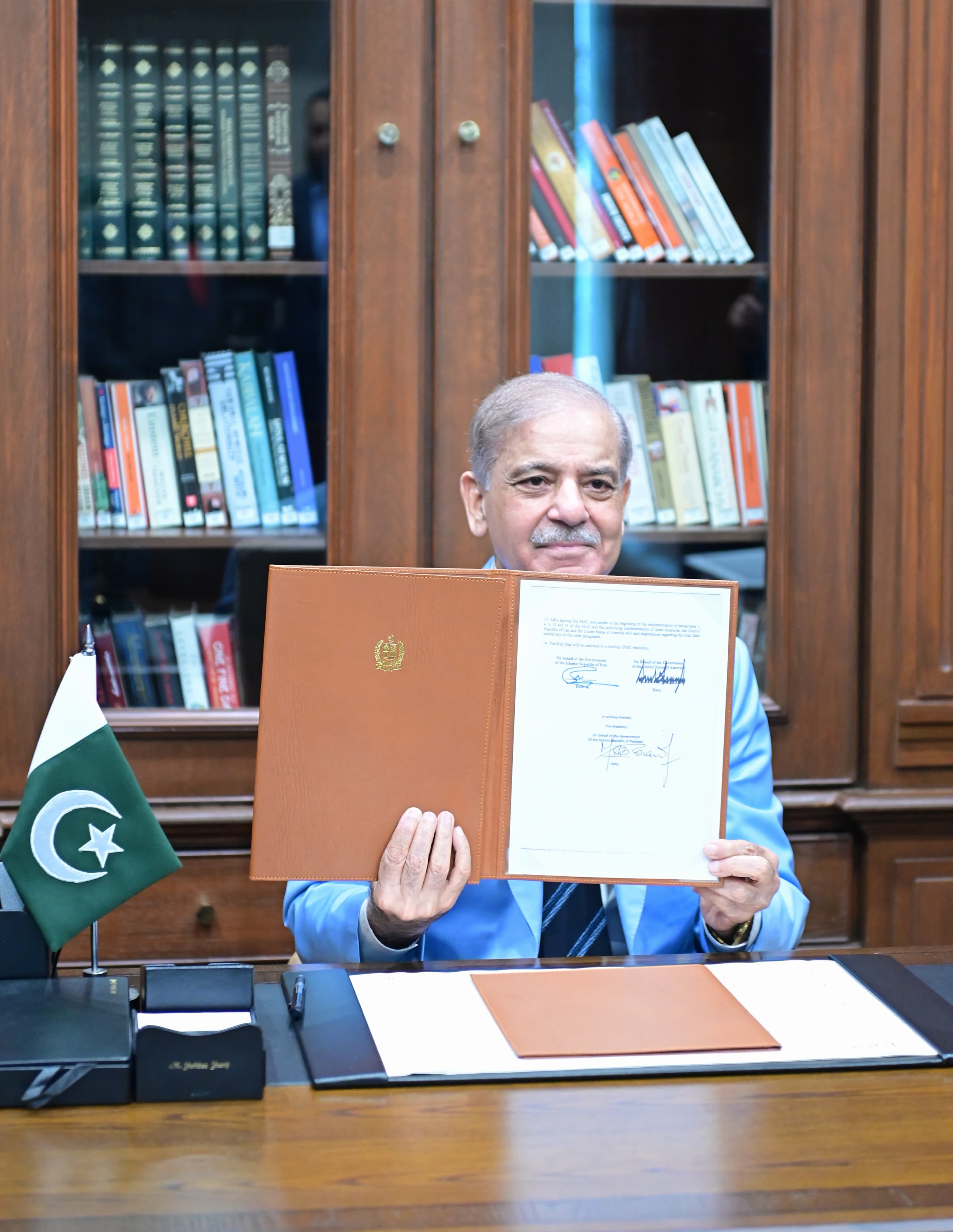
Until now, Qatar had been the best-known mediator between geopolitical adversaries, including in the current Iran-U.S. standoff. This time, however, Pakistan also played a decisive role in defusing tensions and finalizing the framework agreement for signing.
It was with evident pride that Pakistan’s Prime Minister Muhammad Shehbaz Sharif presented the results of these diplomatic efforts late Wednesday night in the capital, Islamabad. The head of government signed the so-called Islamabad Memorandum of Understanding (Islamabad MoU). While U.S. President Donald Trump signed the framework agreement in Versailles and Iranian President Masoud Pazeshkian signed it digitally from a great distance as opposing parties, Sharif signed the document in Islamabad in his official capacity as mediator.
According to mediator state Pakistan, the framework agreement between the U.S. and Iran will take effect “immediately” upon signing. Tehran will therefore reopen the Strait of Hormuz without delay. The U.S. will lift the naval blockade of Iranian ports, the Pakistani prime minister announced.
In addition, the Swiss Foreign Ministry announced that the first negotiations on a lasting peace agreement are scheduled to begin this Friday. According to reports from Bern, the plan is for the U.S. and Iran to meet on Friday together with the mediators Pakistan and Qatar, as well as other participating countries.
ekö
.JPG)