Immigration Policy: Return Centers Outside the EU to Be Finalized by Year’s End
.jpg)
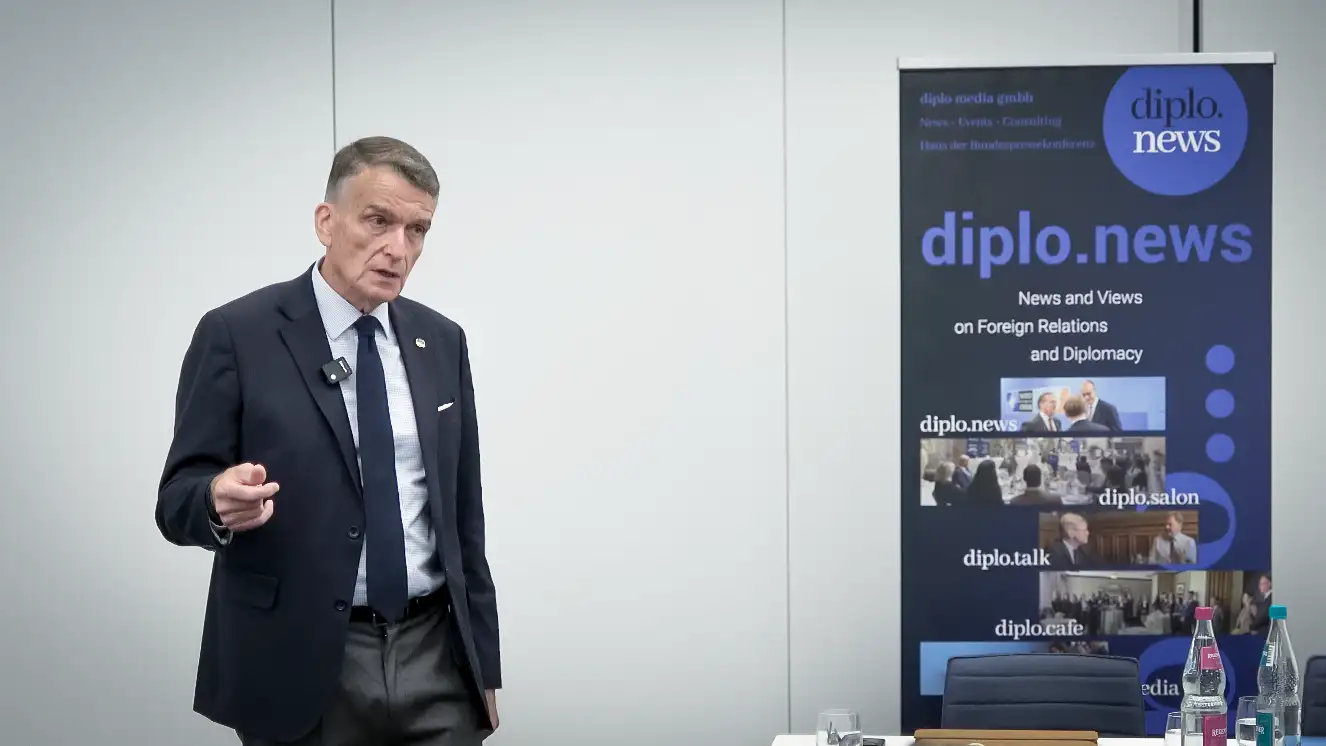
“Our clear goal is: We want to be in control of our own house again,” said Interior Minister Gerhard Karner (ÖVP) after talks with his German counterpart Alexander Dobrindt (CSU) on Wednesday in Berlin. Both ministers believe they are well on their way to achieving this and see themselves as driving forces within the European Union—and they cited specific figures.
Karner reported on the first half of the year, noting that there had been 7,000 “deportations.” These deportations were offset by 5,000 asylum applications—“in other words, a net outflow of immigrants.” This trend must be secured for the long term. To achieve this, the government is also exploring new legal options.
According to Karner, there are 100,000 Syrians living in Austria; the cases of approximately 13,000 of them are being reassessed. Protection status has been downgraded for 4,000, and 2,000 have left Austria. The return assistance of 3,000 euros for the period from July to September is also helping in this regard.
Karner also mentioned figures regarding family reunification: In the first half of 2024, 6,000 people entered the country through family reunification. Of these, 80 percent came from Syria, and 80 percent ended up in Vienna. This led to a massive need to set up temporary housing units and caused a rise in juvenile crime. By comparison, in the first half of this year, only 55 people came to Austria through family reunification.
The suspension of family reunification will be replaced in the fall by a quota “that will be very, very low in Austria,” according to Karner, “because the relief on the system is not yet what we want it to be.”
According to Karner, the border in eastern Austria has been particularly affected by illegal border crossings, especially in Burgenland. In 2022 and 2023, there were periods when up to 3,500 illegal border crossings occurred per week. That number has since been reduced to five people per week.
Dobrindt also cited figures showing how illegal migration at the Austrian-German border had been reduced. In 2025, 595 human traffickers were identified. Border controls will continue to be conducted flexibly so that traffickers cannot predict the situation.
"Return hubs" as a priority
According to the ministers, the priority is the return centers, though information regarding them is being strictly withheld. Discussions are currently underway with potential partner countries outside the EU that are willing to establish a "return hub." Neither minister was willing to even hint at where these return centers might be located during the press briefing. However, they expect negotiations to be concluded by the end of the year and deportations to these centers to begin next year.
Austria and Germany view themselves as pioneers at the European level when it comes to "a consistent, tough, and fair asylum policy," as stated right at the start of the meeting.
Both countries were the first EU member states to resume deportations directly to Syria and Afghanistan. In addition to Austria and Germany, the group of countries implementing these measures also includes Denmark, the Netherlands, and Greece.
Karner then traveled on to Dublin for the informal meeting of EU interior ministers. Discussions at the European level will continue there on Thursday.
ekö

.webp)