"The current U.S. administration has made everyone vulnerable."

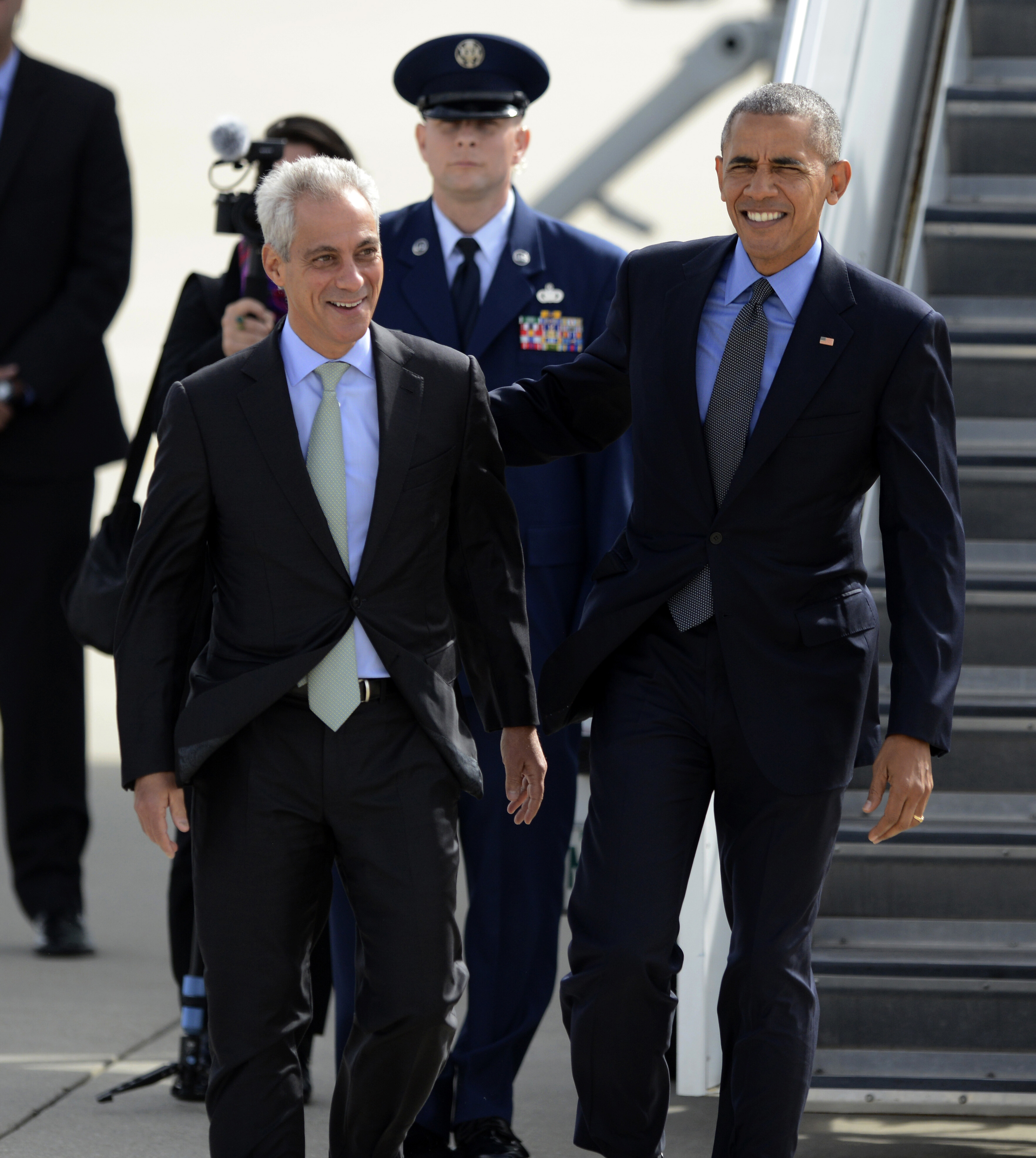
During his visit to Germany, former US President Barack Obama’s chief of staff, Rahm Emanuel, advocated for essentially reinventing NATO as an alliance. In light of a “weakened, humiliated Russia,” the alliance should shift from collective defense to collective deterrence, he said at a joint event hosted by the Aspen Institute and the Bertelsmann Foundation over the weekend in Berlin. Emanuel also served as an advisor to Bill Clinton, was the long-time mayor of Chicago, and most recently served as ambassador to Japan. According to the New York Times, the 66-year-old is currently exploring the prospects of a U.S. presidential run in the 2028 election.
The war against Ukraine was Moscow's attempt to stop NATO's expansion. Instead, he argued, NATO’s border has extended with Finland’s accession; influence in the “near abroad”—that is, countries such as Armenia or Kazakhstan—and its presence in the Middle East have been lost or reduced; and the economic situation has deteriorated. “If you know anything about Russia’s history, you know that Russia will not lick its wounds but will strike back.” NATO, however, is not prepared for that moment.
Therefore, as many people and as much military equipment as possible should be deployed to Eastern Europe as a deterrent as part of a forward defense strategy. In addition, a sort of division of labor should emerge within NATO, with the U.S. handling space and cybersecurity and Europe handling conventional defense. Emanuel also called for greater cooperation in deterring hybrid attacks and in research to shake off technological dependencies on China or Russia.
Europe has become complacent because it relied on America, the Democrat said. But the US has also made Europe complacent and dependent, just as it has most Asian states, which have neglected their own economic and military capabilities as a result. Japan is the US's most important pillar in the Indo-Pacific. “And what is the United States currently doing to assure Japan that it is not on its own when dealing with China?” The current U.S. administration is making a big mistake by making everyone vulnerable. “Our job is to encourage people, to give them self-confidence, and to inspire them to rise above themselves.” It is the Democrats’ task to quickly regain trust after the 2028 election.
Emanuel, whose father fought in the Israeli War of Independence and who had advised U.S. President Clinton during the Oslo Accords in 1993 and later, informally, during the Camp David Accords process, also described his relationship with Israeli Prime Minister Benjamin Netanyahu. He said he had told Netanyahu very early on that the settlement policy in the West Bank would perpetuate the conflict with the Palestinians and drive Israel into isolation. Netanyahu subsequently called him a “self-hating Jew.”
Democrats for a "23-state model"
In Emanuel's view, the Hamas attack on Jewish settlements on October 7, 2023, was intended to destroy the idea that Jews and Palestinians could ever live side by side. What he resents most about Netanyahu, he said, is that his approach to the war in the Gaza Strip—without a plan for the aftermath—helped Hamas isolate and delegitimize Israel. “But a country with nine million inhabitants cannot survive in the long run without Europe, the U.S., or the ability for its sports fans, scientists, and businesses to travel there.” In the Democrat’s view, one solution could be a “23-state model”—that is, recognition of Israel by the 22 member states of the Arab League and recognition of Palestine as a sovereign nation.
Emanuel’s criticism of Israel reflects the mood within the Democratic Party, where the left wing in particular is showing increasingly clear sympathy for the Palestinians and, for example, is calling for an end to arms deliveries to Israel. With about four months to go before the U.S. midterm elections in November, the Democrats are struggling to define their party’s political profile, including on foreign policy.
Although all reputable polls in the U.S. currently predict that they will be able to shift the balance of power in both chambers of Congress in the midterms, the party cannot count on it. In the House of Representatives, the Democrats hold 212 seats and the Republicans 218; in the Senate, the ratio is currently 47 to 53 seats. Many party members are calling for a more aggressive approach in the power struggle with the Democrats. “Our party has become intellectually complacent,” Emanuel said. “We have to prove that we can fight for America, not just against one man.” Donald Trump will be gone one way or another.
gd


.webp)