Change of Power in Serbia After Record Voter Turnout – Vučić Admits Defeat
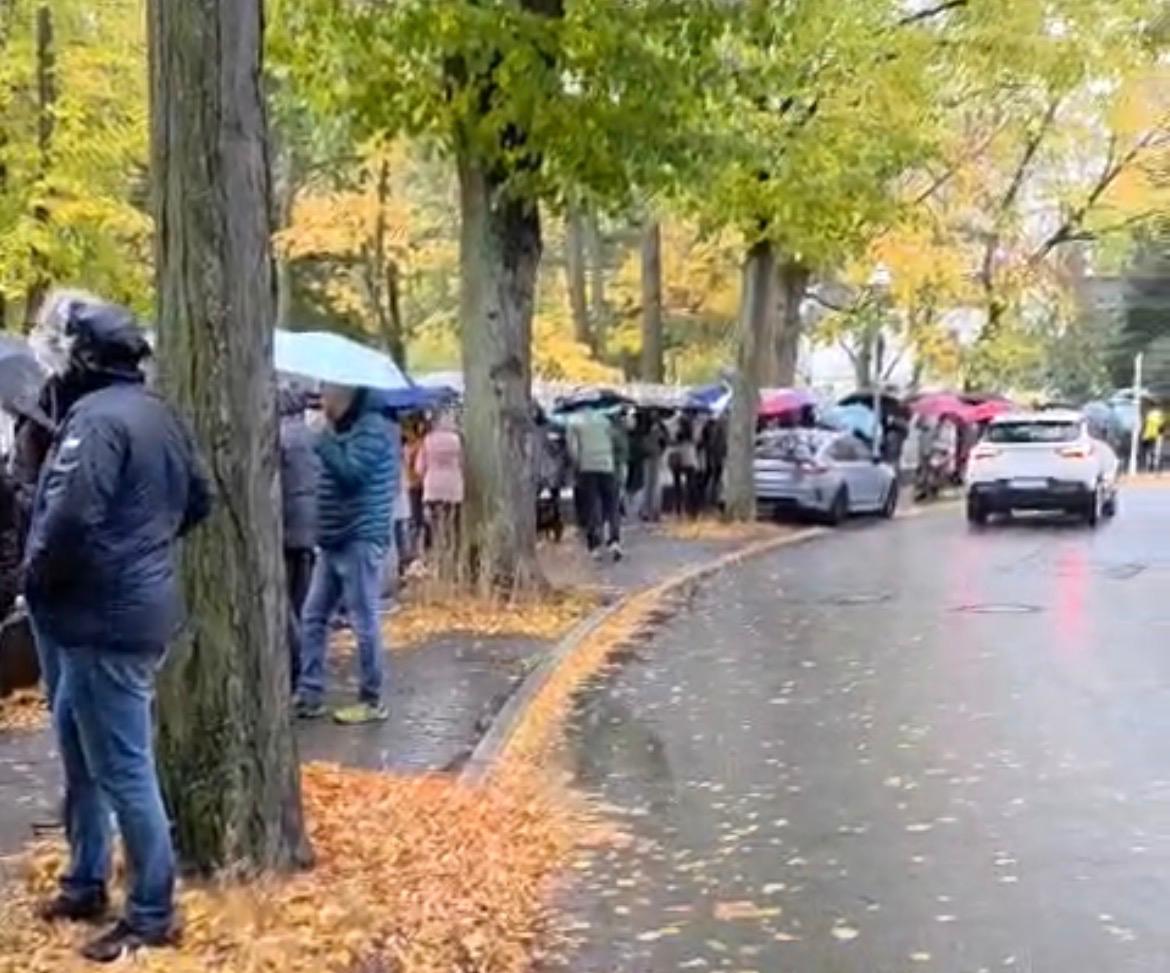
Signs of a shift in sentiment were already evident: As early as Sunday morning—election day—voter turnout was unusually high—not only in Serbia itself, but also at polling stations in Serbian embassies around the world. In Berlin, the area around the embassy on Taubertstraße resembled a sea of umbrellas. The crowd was enormous, even though it was raining heavily.
In today’s early parliamentary elections, 6.4 million eligible voters were called upon to fill the 250 seats in the National Assembly. Tension was fueled by the race between the ruling party (the Serbian Progressive Party, SNS) and the new Student Movement, which has been protesting against corruption and abuse of power for the past two years. For the first time in twelve years, there could be a change in power.
At the end of September, Vučić resigned from his post as president so that he could assume the office of prime minister if his party won the election. His second term as president would have ended in May of next year; he would not have been allowed to run for re-election.
Protests following fatal accident in Novi Sad
The Student Movement emerged from the protests that broke out after the concrete canopy at Novi Sad’s main train station collapsed following a three-year renovation. Sixteen people lost their lives in the collapse, which occurred on November 1, 2024, in Serbia’s second-largest city. The government was blamed for corruption, questionable deals with Chinese construction companies, and negligence in public construction projects. The protests evolved into a nationwide movement against the abuse of power. Today’s election is therefore also seen as a vote on the country’s future course and how to address the allegations of recent years.
High voter turnout could be decisive for the outcome. In particular, the mobilization of young people and supporters of the protest movement is likely to play an important role.
Relations with the EU remain an issue
Serbia’s foreign policy is also a key focus. The country has been a candidate for European Union membership since 2012 and is conducting accession negotiations with Brussels. However, it has caused irritation within the EU due to the close ties it maintains with Russia and, most recently, its public honoring of convicted war criminal Ratko Mladić.
Vučić’s resignation as president means another important election is on the horizon. A new president is to be elected by the end of the year, which could fundamentally change the country’s political landscape within a few months.
Polling stations closed at 8 p.m. this Sunday. By late evening, the Student Party’s victory was confirmed, and Vučić conceded defeat.
ekö