Negotiations on the New EU Budget: “Not at Any Cost by the End of the Year”
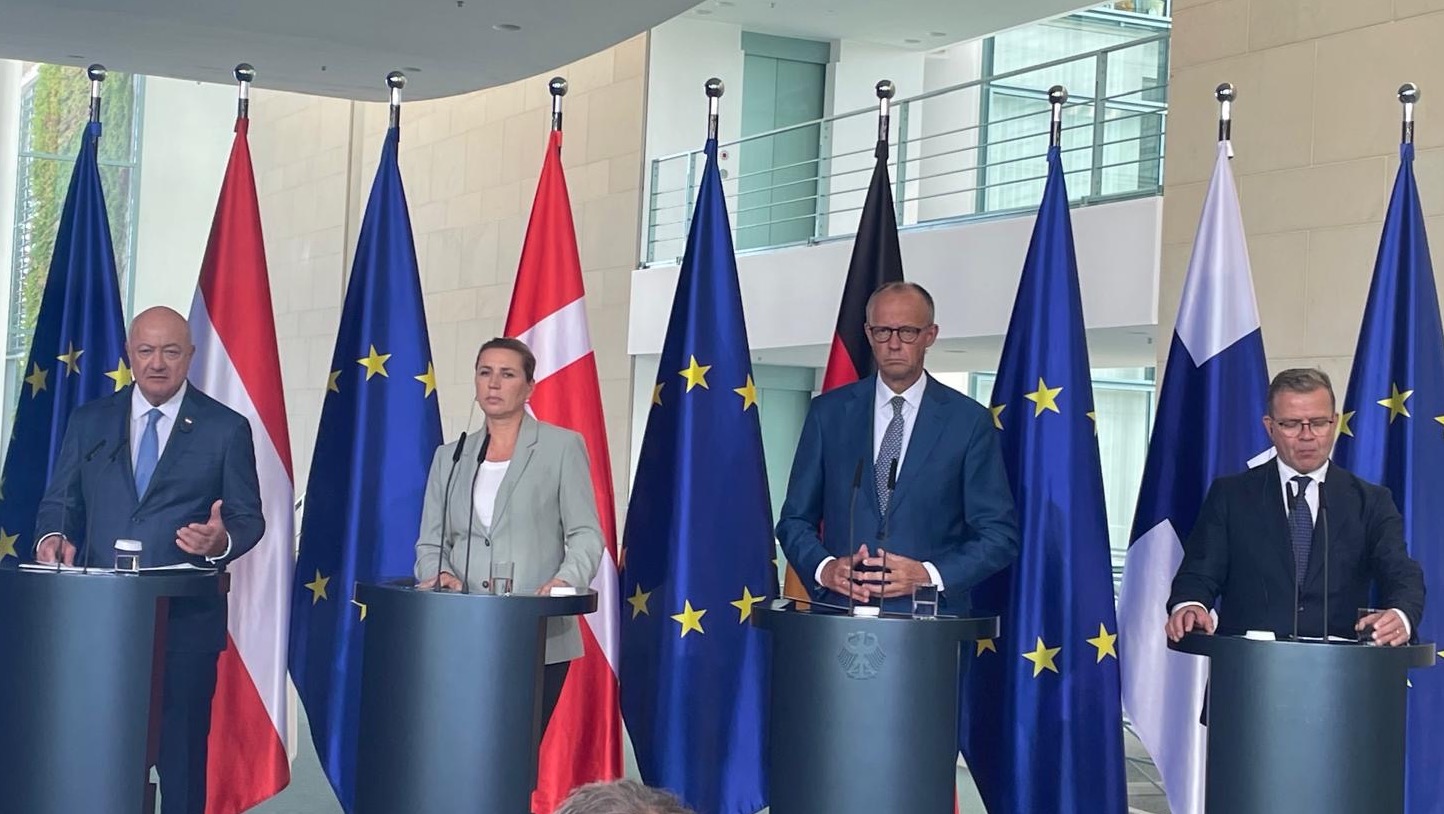
The group of EU net contributors now says it does not want to conclude negotiations on the multiannual financial framework by the end of 2026 “at any cost.” The heads of government of Germany, Austria, Denmark, and Finland announced this on Thursday afternoon at the Federal Chancellery in Berlin.
The group of net contributors accounts for 40 percent of the EU budget and 70 percent of EU aid to Ukraine. “We are not stingy,” said German Chancellor Friedrich Merz, but he added that a budget increase of around 60 percent was unacceptable. Danish Prime Minister Mette Frederiksen added that the budget must be better prioritized. Above all, European security, border controls, and migration policy must take precedence.
French President Emmanuel Macron, the second-largest EU net contributor, was not present at the meeting in Berlin. According to Chancellor Merz, however, close coordination with him had taken place beforehand. The fundamental position that the European framework cannot be expanded exorbitantly while national budgets must be consolidated is also clearly shared with France.
The fact that the net contributor countries Sweden and the Netherlands participated in the meeting at the Chancellery only via video link was said to be of no significance. Elections are coming up in Sweden, and the Netherlands is currently busy with its own budget negotiations, it was reported.
Two Trillion Euros Is Unacceptable
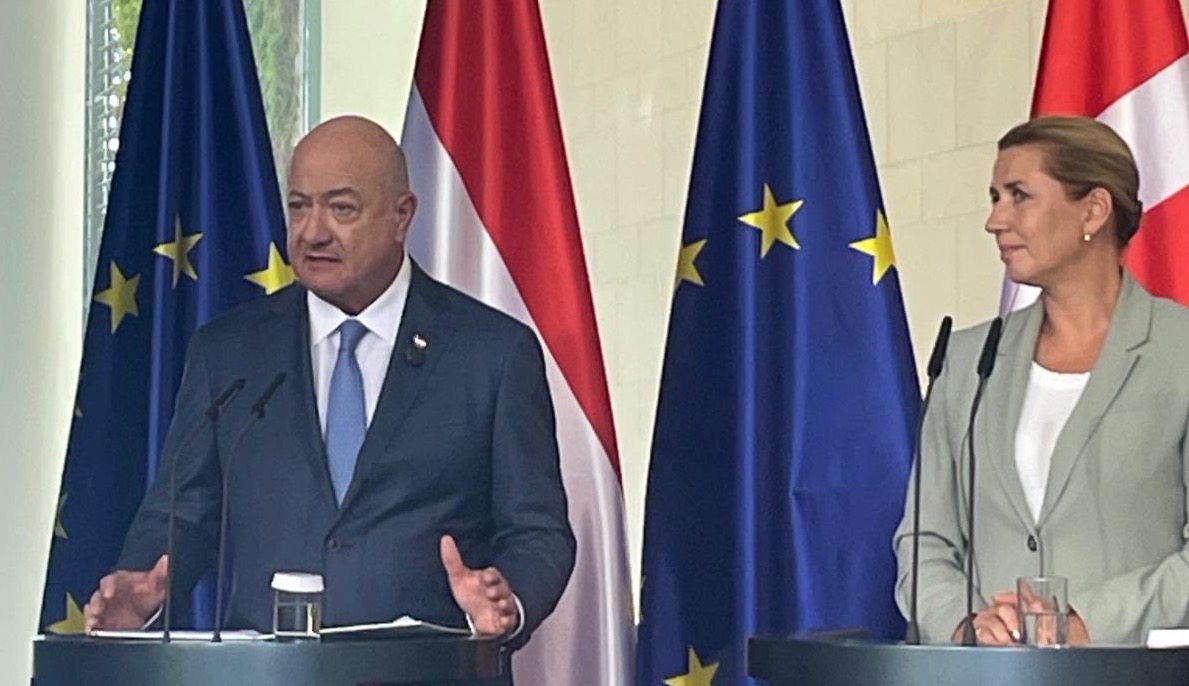
All parties involved wanted to conclude these negotiations by the end of the year. “If we want to achieve that, the Irish EU Council Presidency must present a proposal to that effect.” When asked what would happen if the negotiations were not finalized by the end of the year, Austrian Chancellor Christian Stocker (ÖVP) told diplo.news: “The worst-case scenario would be that the negotiations simply continue next year. And the best-case scenario would be that we actually manage to get it done this year.” Both are possible and depend on “how quickly we can achieve a significant reduction in the total budget and how quickly we can prioritize where we want to spend the money.”
Stocker emphasized: “There is a difference of more than 600 or 700 billion euros between our current budget and what is planned. This increase to just under two trillion euros cannot be explained even by new responsibilities, because we have also been assigned additional national responsibilities and must make our national budgets more efficient, streamline them, and in some cases even reduce them. The same applies to the European Union.”
He noted that no one understands why 2,500 additional positions are being added to the already well-staffed Brussels bureaucracy, while many EU countries are cutting staff in their own administrations.
"We are not the EU's ATM"
“The net contributors are not the EU’s ATM,” Stocker was quoted as saying. The group, which has just come together—now expanded to include the Netherlands and Sweden—contributes 40 percent of the European Union’s total financial resources. “This shows that we are not running away from our responsibilities.” However, he added, problems cannot simply be solved with money. That doesn’t solve a single problem.
“I’ll say it quite openly: The current proposal is unacceptable to Austria in its present form. We’re still talking about a budget of nearly two trillion euros. I cannot, will not, and will not explain to the people of Austria that Brussels is debating the largest budget in history while we at home have to tighten our belts.” The total budget must be substantially reduced—“by hundreds of billions of euros!”
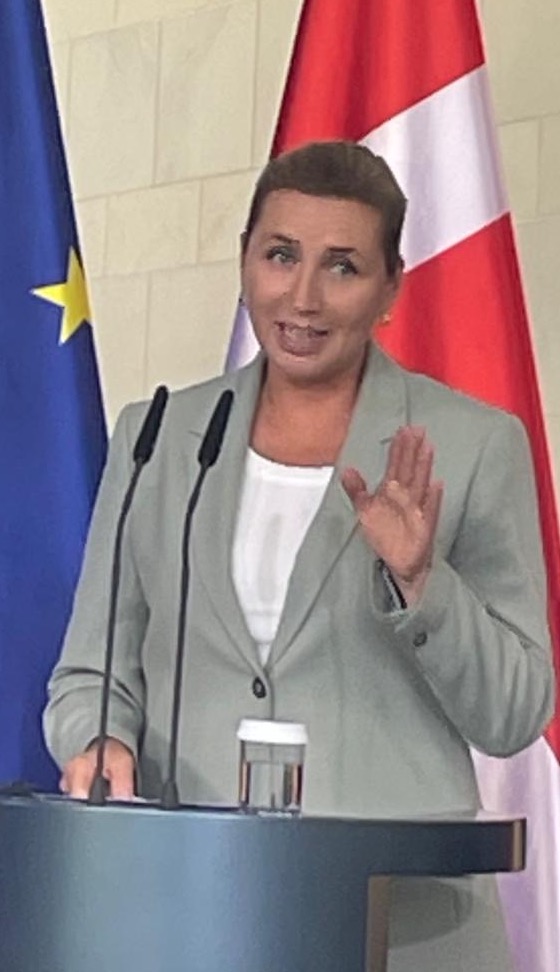
Stocker: "We are not here to say no, but to work together to formulate a better yes." Frugality is not a contradiction to European ambition—it is a prerequisite. "If the Austrian budget were to suddenly increase by 60 percent, the European Commission would immediately take a keen interest and come knocking the very next day..."
Solidarity and fairness should not be a one-way street. Every euro allocated in Brussels has first been hard-earned in Vienna, Berlin, The Hague, Copenhagen, Helsinki, and Stockholm.
Merz visibly smiled when his guest from Vienna said: "We need to settle the bill with the landlord, not just with the guests." It is not about having less Europe, but about using every euro more purposefully. A strong budget is not automatically the largest budget. "What we need are real priorities, more efficiency, and substantial reductions—in both programs and the Union's own administrative expenses. More Europe is not created through more money or more bureaucrats, but through better decisions," Stocker concluded.
Ewald König

.webp)