How Baku is preparing for its World Forum on Intercultural Dialogue
_p012_BAKU%2C_FIRE_TEMPLE.jpg)
The 7th World Forum for Intercultural Dialogue will take place from October 27 to 29, 2026, in the capital of Azerbaijan. The country’s unique geographical location as a crossroads has fostered a distinctive tradition of peaceful coexistence, Ambassador Nasimi Aghayev told reporters in Berlin. “Different peoples, religions, and cultures have been coming together here for millennia.” The country’s historical role as a hub on the Silk Road has shaped exchanges between civilizations. He cited numerous historical examples to illustrate this—such as the fact that Azerbaijan was one of the world’s first early Christian countries. The ambassador emphasized that all religions are treated equally and that no religious community is favored or disadvantaged.
Religious diversity with roots dating back millennia
Even before Islam became the majority religion in the 7th century, the territory of modern-day Azerbaijan was home to various faith communities. Traces of Zoroastrianism are still visible today. Near Baku lies the historic Ateshgah Fire Temple, which served as a place of pilgrimage for centuries. Even today, Parsis from Mumbai and other parts of India travel to Azerbaijan annually to perform religious rituals. For many members of this faith, the temple holds a spiritual significance similar to that of the Kaaba for Muslims.
Christianity has a particularly long history in Azerbaijan. The Apostle Bartholomew is said to have arrived in the region in the first century to spread the Christian faith. The first Christian churches were built during this period, some of which have been preserved to this day.
The year 313 marked a historic milestone: What was then known as Caucasian Albania—a historical state in the territory of present-day Azerbaijan, not to be confused with modern-day Albania in the Balkans—declared Christianity the state religion. This made it one of the world’s first Christian states. Even after Islam became the dominant religion in the 7th century, Christian communities persisted and continued to develop.
Judaism is just as deeply rooted in Azerbaijan. According to the ambassador, the first Jewish communities arrived in the Caucasus via ancient Persia around 2,000 years ago. They settled primarily in the mountainous regions of the country and are therefore still known today as Mountain Jews.
This community belongs to the Mizrahi Jews, whose roots lie in the Middle East and who migrated eastward after the destruction of the Second Temple in Jerusalem. Today, about 20,000 Jews live in Azerbaijan.
Sunnis and Shias in one mosque
Today, about 95 percent of Azerbaijan's population is Muslim. 70 percent are Shia and 30 percent are Sunni. According to the ambassador, the country is particularly notable for the fact that Shias and Sunnis do not practice their religion separately, but often together. One example is the Heydar Mosque in Baku, the largest mosque in the country, where Shia and Sunni clerics take turns leading Friday prayers. Sunnis and Shias pray together there. The Friday prayer is led on a weekly rotating basis by a Shia and a Sunni imam. “What is happening here is unimaginable in many other parts of the world.”
In the ambassador's view, religious harmony is an important prerequisite for security and social development. For this reason, Azerbaijan places great importance on the consistent separation of religion and state. As a secular state, the country sees this as a pillar of its independence and a tool in the fight against extremism and radicalization.
Swabian traces in Azerbaijan
In Germany, the history of the Württemberg Swabians in Azerbaijan is barely known. About two centuries ago, in 1817, Pietist families from Württemberg emigrated to the South Caucasus. The settlers founded towns with German names like Helenendorf or Traubenfeld, built churches, and left their mark on the region's architecture. Many of these structures have been preserved to this day and are part of the German-Azerbaijani cultural heritage.
The German architect Nikolaus von der Nonne also left a lasting mark. As Baku’s city architect, he combined European architecture with Oriental elements, which was well received by the locals. His buildings continue to shape the city center to this day.
Secularism as a foundation
The ambassador described Azerbaijan as a unique model for multiculturalism that has existed for centuries. The country's history is an example of the peaceful coexistence of different religions and cultures. The centuries-old tradition of religious diversity is secured by the state's consistent secularism. By bringing its own experiences to the global stage, Azerbaijan has become the initiator of increasingly influential initiatives such as the Baku Process and the World Forum on Intercultural Dialogue.
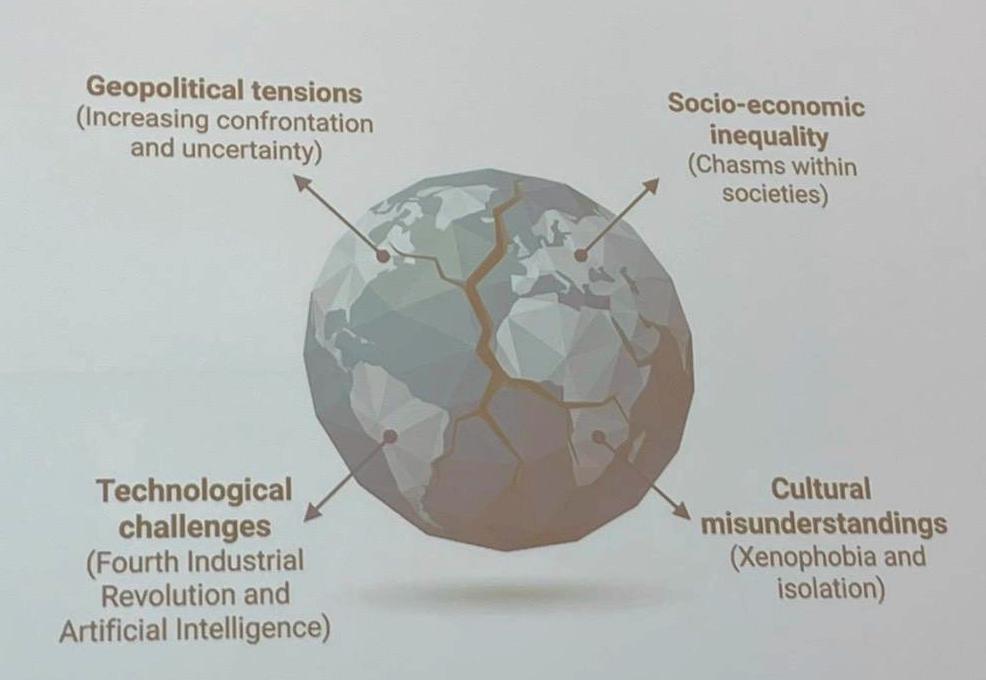
Isa Mammadov, head of the Azerbaijani Cultural Center in Berlin, presented the Baku Process and the upcoming 7th World Forum on Intercultural Dialogue, which will take place in October. Founded in 2008, the Baku Process has developed into an influential global platform for strengthening intercultural dialogue. The main event is the World Forum on Intercultural Dialogue, which has been held every two years since 2011. So far, more than 10,000 participants from 180 countries have come together across six forums. Aiman Mazyek, former chairman of the Central Council of Muslims in Germany, emphasized that organizing this forum during such a difficult time is an important international achievement.
ekö