The German Council on Foreign Relations Will Be Led by a Co-Leadership Team Going Forward
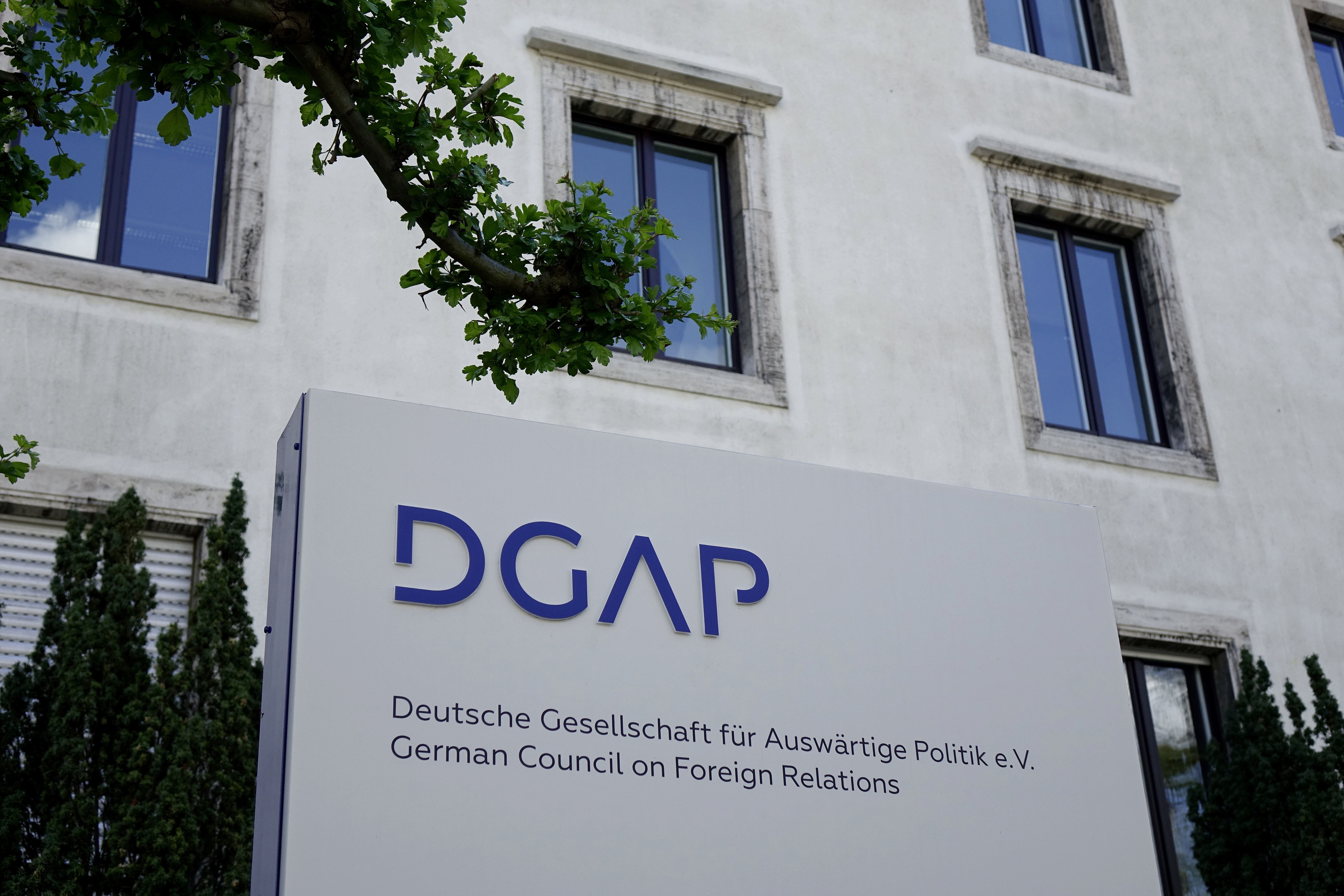
The German Council on Foreign Relations (DGAP), one of the country's largest foreign and security policy think tanks, is getting new leadership. The current Otto Wolff Director of the DGAP, Thomas Kleine-Brockhoff (66), is stepping down from the role after two years for health reasons, according to a press release. Starting October 1, Kira Vinke (38), head of the Center for Climate and Foreign Policy, and Patrick Keller (48), the current deputy director and head of the Center for Security and Defense, will lead the institution. Both are expected to retain their current responsibilities.
Vinke is a member of the German government's Advisory Board for Civilian Crisis Prevention and Peacebuilding, where she served as co-chair from 2018 until January 2025. From 2014 to 2022, she worked as a junior researcher at the Potsdam Institute for Climate Impact Research. Among other works, she authored the book "Sturmnomaden - Wie der Klimawandel uns Menschen die Heimat raubt" (Storm Nomads: How Climate Change Is Robbing Us of Our Homes).
Political scientist Keller has served as head of policy and communications for the German Aerospace Industries Association, a speechwriter for CDU defense ministers Ursula von der Leyen and Annegret Kramp-Karrenbauer, and vice president of the Federal Academy for Security Policy. Thomas Enders (67), president of the think tank since 2019 and former head of Airbus and EADS, emphasized that this new appointment also marks a generational shift at the DGAP. He noted that Kleine-Brockhoff had stabilized and advanced the institution during a difficult period.
Under the leadership of the former Die Zeit journalist, the DGAP opened a series of new research and advisory fields. As a senior fellow, the U.S. specialist will continue to work for the think tank. However, this move was not entirely voluntary, Kleine-Brockhoff explained in a personal message to members. He is following urgent medical advice to reduce his workload following heart surgery. The DGAP is undergoing a process of modernization and therefore deserves leadership that is fully dedicated to this task.
The reforms encompassed the DGAP's finances, administration, and intellectual backbone. During his tenure, 40 new institutional partners were secured and two new research centers—for defense and Europe—were revitalized. Two more, focusing on India and tech, are currently being established. He will continue to support the areas of foreign policy analysis and strategy. “So the time for farewells has by no means come. Rather, it is time for a new beginning with a changed division of roles.”
The DGAP was founded as a think tank in Bonn in 1955—modeled after the Council on Foreign Relations in New York and Chatham House in London—with the goal of bringing together politicians, entrepreneurs, media figures, and diplomats in discussion forums. One of its most well-known directors was political scientist Karl Kaiser, who significantly shaped foreign policy research in Germany and currently conducts research as a visiting professor at Harvard University. The organization is funded by federal grants, corporate donations, and membership fees.
gd
.webp)

%20(1).webp)