Finland as Europe’s Model for Security and Resilience

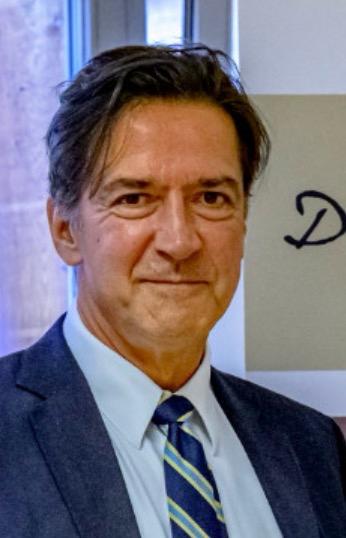
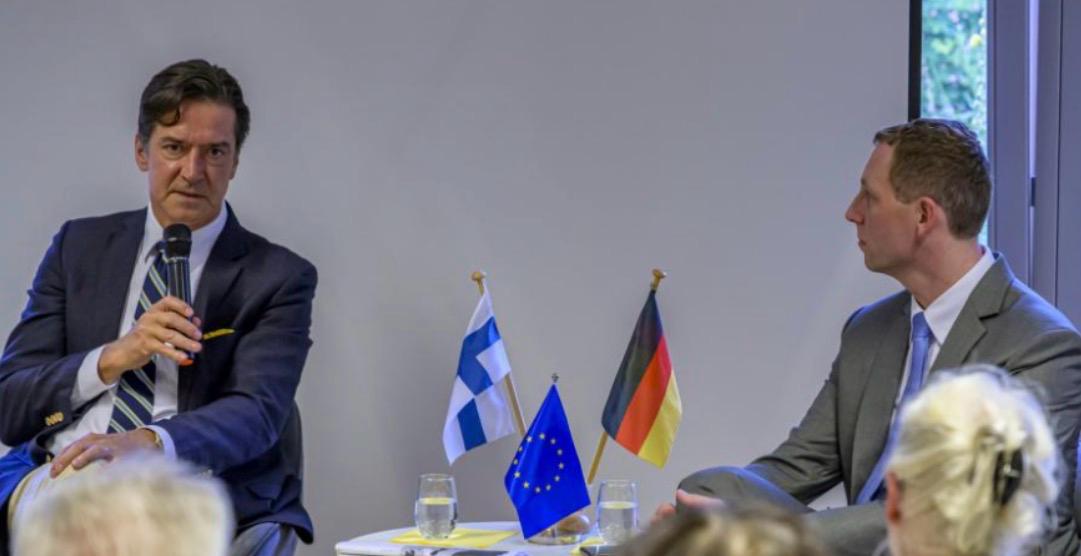
Since joining NATO in 2023, Finland has become a key pillar of the European security architecture. Finland’s security strategy was the main topic of the “Diplomatic Salon – The World Visits Eberswalde,” a series of events organized by the Hoeck Foundation. This time, Finnish Ambassador Kai Sauer was the guest speaker.
The Recipe for Comprehensive Security: What Germany Can Learn
When Finland joined NATO in 2023, the country suddenly became the focus of European security policy. However, the true strength of the EU’s northernmost member state does not lie in modern weapons systems, but is based on the concept of comprehensive security.
Finland has never abolished compulsory military service. In peacetime, 12,000 active-duty personnel are on duty. In the event of war, 280,000 soldiers can be mobilized at short notice. A total of 870,000 reservists are available—out of a population of just 5.6 million. Security does not begin with the military, the ambassador said, but is a matter for society as a whole.
The border with Russia is 1,343 kilometers long, winding through forests and waterways. It runs through bodies of water and forests. It is currently closed. The Finnish government justifies the closure by stating that Russia is engaging in hybrid warfare and smuggling migrants without valid documents into the border area between the two countries.
In addition, Helsinki consistently invests more than two percent of its gross domestic product in defense. By 2029, defense spending will even be increased to three percent.
Resilience as a National Culture
Cyberattacks, disinformation, sabotage of critical infrastructure, or the instrumentalization of migration—Finland views all these threats as part of a unified security landscape. This is why the government, armed forces, municipalities, businesses, academia, and civil society work closely together. The goal is to ensure the state remains functional even in times of crisis. “We have a long tradition of a society-wide approach to security and preparedness,” said Ambassador Sauer. “All threats are taken into account.”
The ambassador particularly highlighted "psychological resilience." Finns know how to behave in a crisis. "In Finland, the preparedness and crisis resilience of citizens are at a high level. There is a shared culture of readiness based on deep trust in the authorities." Citizens are the backbone of this readiness, Sauer noted, adding that preparedness is built during "normal" times.
Security Through Mass Communication
This includes strong promotion of media literacy. “In Finland, the media are organized as part of the businesses relevant to security of supply under the National Authority for Security of Supply, within a forum where private companies and the government work together on mass communication security.”
In addition, there are the National Security Training Programs: In three-week courses, representatives from the government, public administration, and the private sector are trained to develop a shared understanding of security policy. Trust in state institutions is considered a security resource. Added to this is something that is less pronounced in other countries: an unwavering will to defend the nation.
Shelters for Almost Everyone
The Finnish security model also includes very practical precautionary measures. There are 54,000 shelters nationwide that can accommodate 4.8 million people. Critical infrastructure companies are also systematically incorporated into security planning.
With Finland and Sweden’s accession to NATO, the strategic importance of the Baltic Sea has also changed, Sauer explained. Undersea cables, energy connections, and shipping routes are now a greater focus than ever before. At the same time, Finland sees itself as a bridge between the Baltic Sea and the Arctic, a region of growing geopolitical importance.
The Q&A session, moderated by host Martin Hoeck, focused primarily on a comparison between Finland and Germany. However, future-oriented topics such as a potential rail connection between Berlin and Helsinki were also discussed. The ambassador explained the plans for the European rail link Rail Baltica as well as the long-term vision of a rail tunnel between Tallinn and Helsinki, which would connect Finland even more closely to the European rail network in the future.
ekö
.webp)

%20(1).webp)