Kurdistan Seeks German Investors: “You Should Come as Soon as Possible”
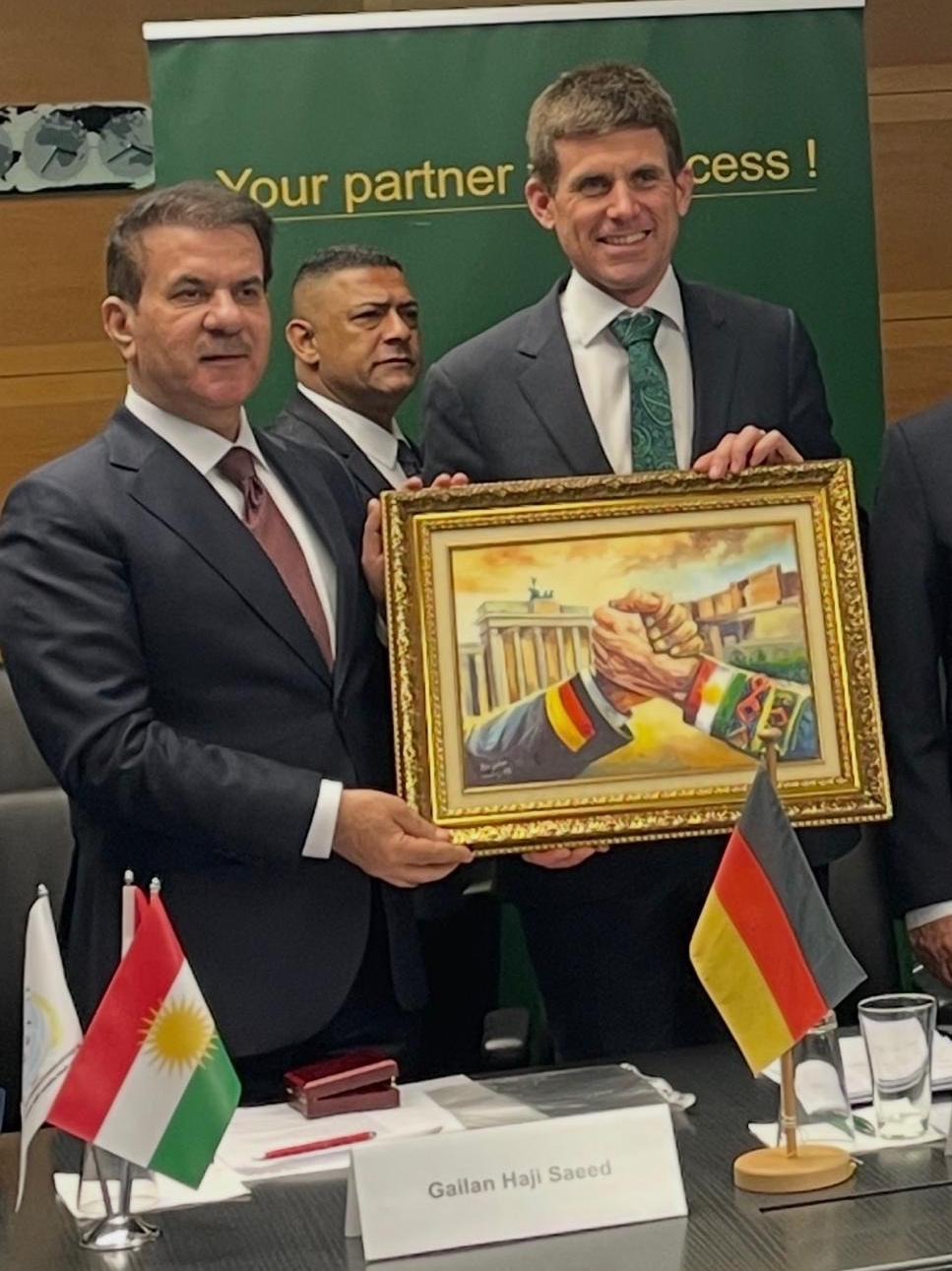
The Iraqi economy currently depends almost entirely on the oil industry and is extremely vulnerable to global market prices for oil and natural gas. Kurdistan is seeking its own new paths and is eager to establish partnerships with Germany.
The Kurdish Chamber of Commerce and Industry (KFCCI) traveled to Germany with a 40-member delegation of businesspeople and officials. At a full-day event organized by the Near and Middle East Association (NUMOV) in Germany, the delegation sought closer economic ties with Germany and invited businesspeople to visit Kurdistan.
German businesspeople should not only know the region from television news reports but should also be able to see for themselves that it is a safe environment. If people only think of war and other problems when they hear the news, the situation is quite difficult to explain. Only by visiting the region can one get a clear picture, and that perception will change 180 degrees. “We even advise you to visit us as soon as possible. Germans, in particular, need to gain their own experiences by traveling here. We have great confidence in the German economy.”
FlyErbil, an airline founded ten years ago, stands out for its numerous direct flights from Germany to Erbil: daily from Düsseldorf; every Monday from Berlin; every Saturday and Wednesday from Stuttgart; every Sunday, Monday, and Wednesday from Hanover; every Sunday from Frankfurt; every Thursday from Munich; and every Monday and Wednesday from Cologne.
There are differences in the regulations compared to the laws of the central government in Baghdad. According to the central government, company founders can hold only 49 percent of the shares themselves and must bring local shareholders on board to hold 51 percent of the company’s shares. In Kurdistan, however, investors can hold 100 percent of their shares. “Of course, this all operates under the umbrella of Iraqi law, but our conditions are better and we are more flexible.”
The delegation’s goal is to establish many long-term partnerships between Germany and Kurdistan and to open up new markets. The visit to NUMOV brought together numerous industries, ranging from cheese to kitchen design, from medical devices to steel, and from fire extinguishers to compressors. The discussion, moderated by NUMOV Chairman Philippe Steiner, served to identify specific areas for cooperation and establish direct business contacts.
Marcus Knupp of German Trade and Invest (GTAI) reported that the war in the Gulf is slowing Iraq’s economic development. In figures: Growth was minus 1.5 percent in 2024, minus 2.2 percent in 2025, and minus 14.2 percent this year. The country is expected to make up for this in the future: economic growth is projected to be 16.5 percent in 2027, 4.7 percent in 2028, and 3.2 percent in 2029.
Exports from Kurdistan consist almost exclusively of oil and gas. A tiny portion (0.2 percent) consists of cooking oil, fruits, and nuts.
Most exports go to Asia (73 percent), followed by Europe (13.6 percent) and Arab countries (7.4 percent).
Imports from Germany include machinery, technical equipment, and vehicles. However, there is still significant room for growth: they account for only 2 percent of Kurdish imports. The majority comes from China, followed at a considerable distance by the United Arab Emirates and Iran.
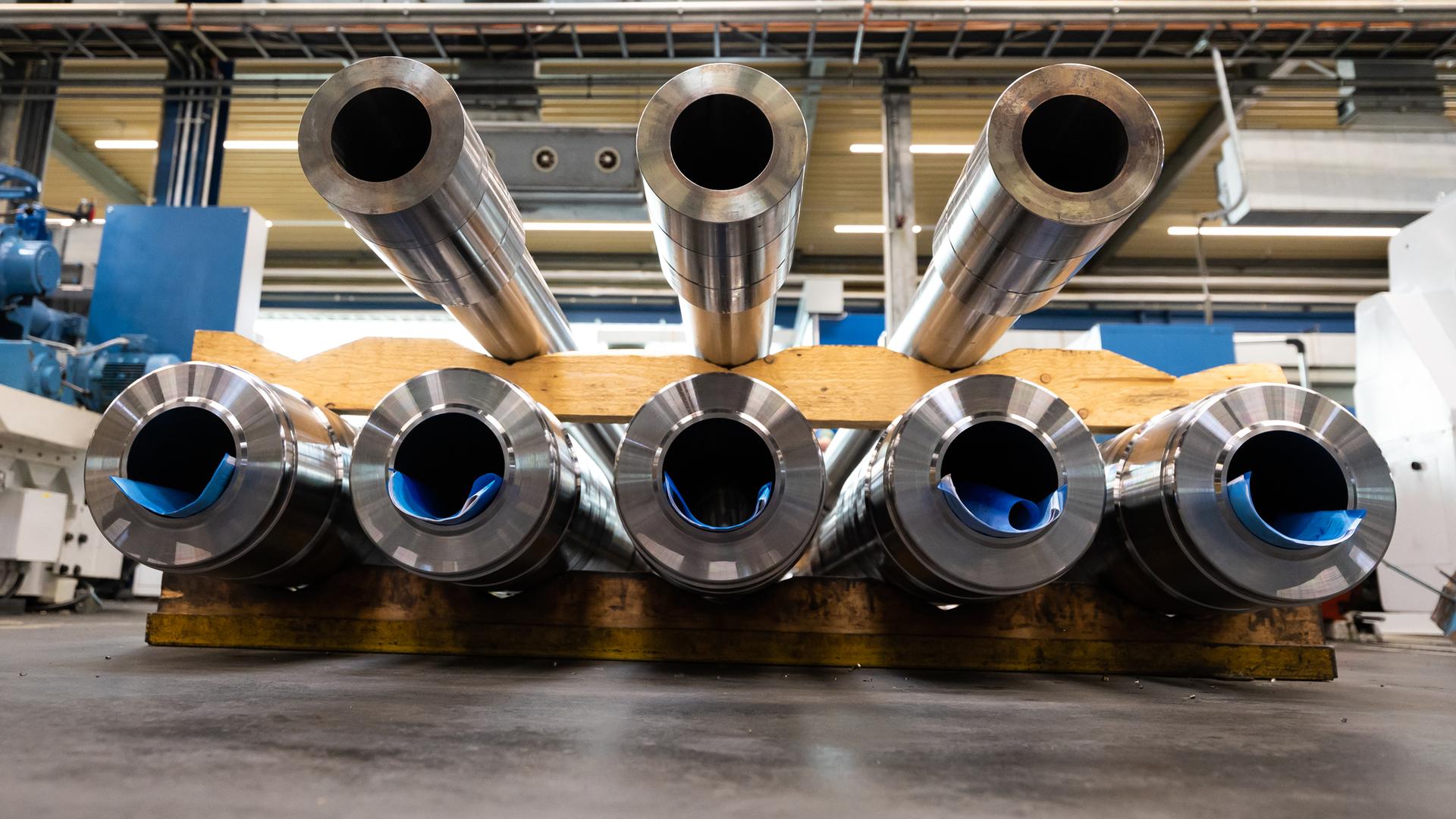
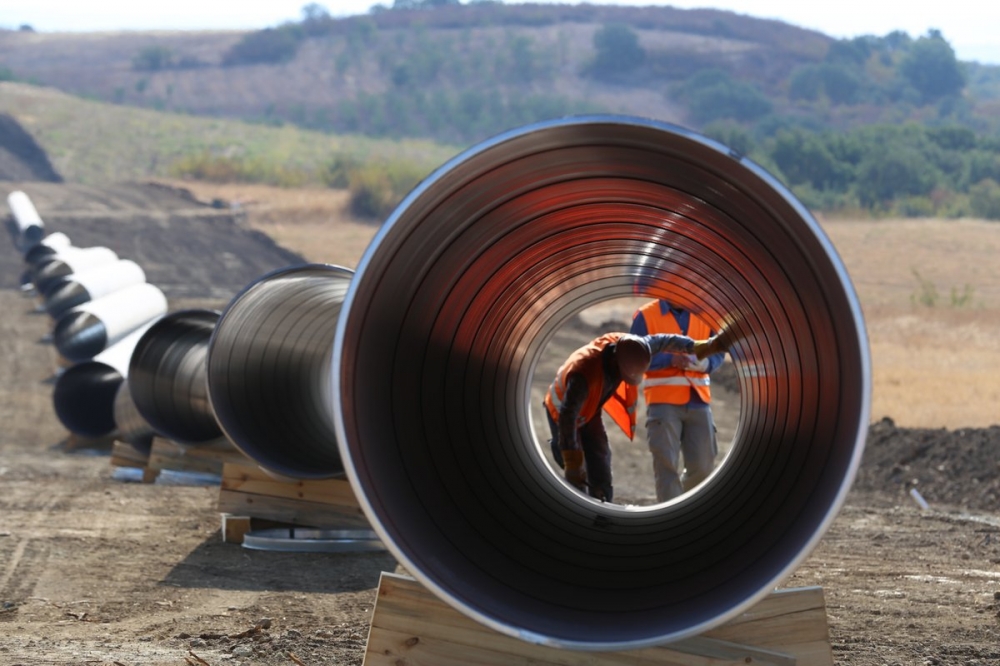
The most important investment projects at present are new pipelines for alternative export routes for oil and gas; furthermore, the expansion of the four ports of Khor al-Zubair, Unm Qasr, Al Faw, and Basra; and, finally, the modernization of the railway system. In addition, there are projects in agriculture, logistics, the food industry, and tourism.
Igor Sufraga of Euler Hermes AG explained the possibilities offered by export credit guarantees using the example of a solar park in Egypt, with a total investment of 76 million euros.
The Kurdish delegation also made stops in Italy and the Netherlands during its tour of Europe, but emphasized in Berlin: “Germany is particularly close to our hearts. For us, Germany is the heart of Europe.”
Iraq is generally a country full of possibilities. “But the Kurdistan Region offers particularly promising opportunities for German companies,” summarize the organizers of Numov. The Iraqi Embassy was represented by Chargé d’Affaires Ali Galaly, and the Kurdish Chamber of Commerce by its president, Nawzad Ghafour.
Germany was one of the Kurdistan Region’s most important allies in the fight against the Islamic State (IS) and maintains close ties with the Kurdish Regional Government. In 2009, Germany opened a Consulate General in Erbil as its diplomatic mission. Erbil is also home to a Goethe-Institut, an information center of the German Academic Exchange Service (DAAD), a German school, and a representative office of the German Society for International Cooperation (GIZ). The number of Kurds living in Germany is estimated at between half a million and one million.
ekö