Romano Prodi: Europe needs to think big and to overcome national vetoes
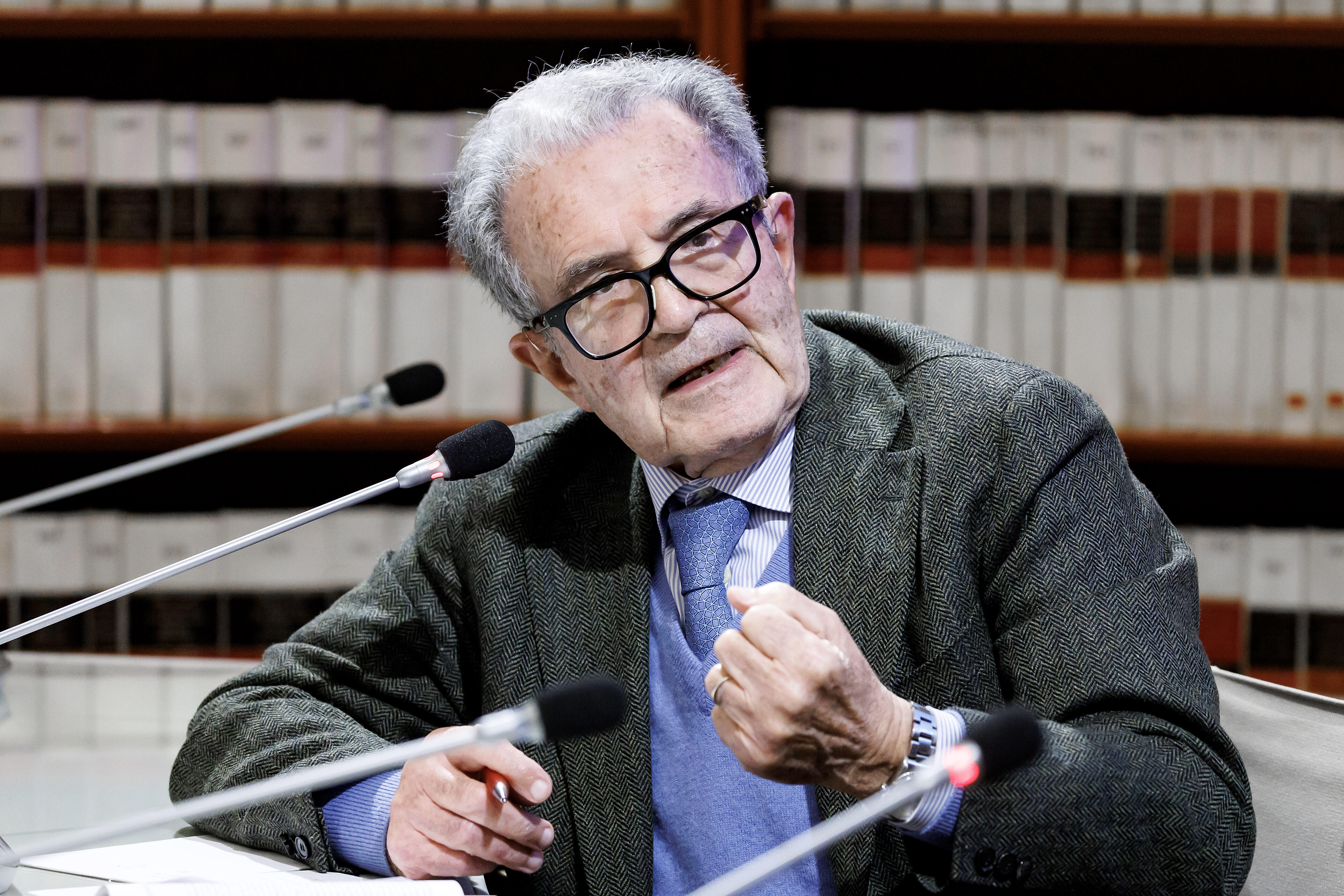
Focus Europe Italy, a partner of diplo.news, interviewed Professor Romano Prodi – President of the Foundation for Cooperation among Peoples, former President of the European Commission and former Prime Minister of Italy – on the international situation after the attack by Israel and the USA and the responses of Iran and prospects for Europe. Faced with a complex situation, Prodi asks for a fundamental change to enable Europe to act: overcome unanimity and national vetoes.
How do you see the prospects for Iran and the Middle East after the attack by Israel and the United States and the killing of Khamenei and several other senior Iranian leaders?
Let me start by saying that I first went to Iran in 1978, when the Shah was in power, to give some lectures at the University of Tehran. I noticed a total, deep, universal hatred of the Shah on the part of everyone. I thought there would be a Marxist revolution. Instead, there was a revolution that led to total authority, the likes of which I have never seen in my life: religious authority first and foremost, but one that completely controls the country militarily, economically and culturally.
Now the supreme leader has been killed, who was not only a political leader but also the religious leader of over 200 million faithful people. When Kofi Annan and I went to visit the supreme leader at an interfaith conference, we found him in a small room with a wooden bed, a wooden table, a wooden chair, and nothing else. We had to stood up, to emphasize the incredible nature of this regime, which was extremely harsh and at the same time had an almost metaphysical religious character.
Now, the change that the Americans and Israelis want to make will be very complicated, precisely because of the complexity of the situation compared to others. It is not a simple replacement of a leader as it was in Venezuela. Furthermore, we need to understand why Iran has also launched attacks against Arab countries, even if they are clearly directed at American military bases.
It seems that Israel and the United States now have absolute power in the Middle East. This will be a problem in the future because, even if the governments of the surrounding Islamic countries are able to reach agreements with Israel – and I hope they will – it will be very difficult for the peoples of the region to accept Israel's overwhelming power over the entire Muslim world, both Shia and Sunni. So, unfortunately, I fear very serious conflicts in the future, hopefully not terrorism. While I do not expect major upheavals in the oil sector in the medium term, there will probably be short-term destabilization, perhaps even with very high prices.
Does this conflict further worsen the international situation and exacerbate Europe's need for security? How could a true European defence system be achieved?
I have some fairly simple theories, but they are quite difficult to implement. Europe has always moved forward with a two-piston engine: France and Germany, with Italy playing a very important role in shaping the final decision. I don't think of my country as an engine, but historically it has been decisive in decisions. And the division of labour was that France was in charge of foreign policy – because of its veto power in the UN and its nuclear weapons – and Germany was in charge of the economy.
But now everything has changed. Germany has put on the table – in a single day, with 80% of the country in favour – a defense budget that is more than double that of France. Hence, the French may still have technological superiority and nuclear weapons today, but only for a few more years. There is a risk here of a one-dimensional Europe, and that is a serious problem for France, and for everyone.
So, if we want a common defense, the wonderful thing would be for France to make its nuclear weapons and its right of veto at the UN available to the Union. France, which is now losing a lot of power, and Europe would gain greatly from this. And we would be confident that Germany's objective strength would not cause any problems for the EU.
However, this is unlikely to happen. So, it will be partial cooperation with progress in industrial cooperation. But even this will be complex, because it is precisely in the military industry sector that the greatest disagreement between France and Germany is ongoing, concerning the new generation aircraft. The two leading countries cannot agree on the most expensive weapon. So, unless these leaps forward, which require strong leadership, take place, the European army will come about through slow, complicated progressive cooperation – but let us hope that it goes ahead.
We will be left with 27 defense ministers and 27 chiefs of staff with a coordination that, among other things, involves an increase in military spending that is not matched by a simultaneous increase in military efficiency. Because today the risk is Russia. But the German budget alone is higher than the Russian defense budget. Therefore, if we were to unite even minimally, we could all spend decently and be quite confident that Russia would not make a move. With the current state of uncertainty, however, we are spending more and being less effective.
What reforms would be necessary to overcome the current weakness and cacophony and have a genuine European foreign policy?
The legal instrument and immediate and necessary condition for resuming decision-making is the end of unanimity. With unanimity, which is the most anti-democratic instrument that exists, Europe cannot decide anything. You can see how aid to Ukraine, which was initially approved in general terms by everyone, is now being blocked by Hungary, because a single vote against is enough to block everything.
The new development is that Merz has suddenly declared himself in favour of possibly abandoning unanimity and of a possible greater agreement on the points I described earlier. However, this is accompanied by statements by Merz on defense and the economy in which German leadership is continually emphasized. This raises the suspicion that the abolition of unanimity is intended to create a German-centric coalition that could be the reference point for Europe. I am not saying this as a fact, but as a reflection on the statements I am hearing.
After the presentation of the Letta, Draghi and Niniisto reports, there was much discussion, but little implementation. What are the prospects and urgent needs for reviving the competitiveness of the European economy in this phase of international tensions, tariffs and uncertainty?
The reports by Letta and Draghi are formidable tools. Draghi's report for its comprehensiveness, Letta's for the concrete suggestions it offers. I hope that with the end of the unanimity I mentioned – or at least with the crisis of unanimity – we can finally speed up the process. We need European momentum. These reports are indispensable, extremely useful, steps forward, but in the face of the opposition that continually arises, we need a surge of emotion in Europe.
We need leaders who will carry it forward as a key element for our future, for our survival, for our lives. We need a renewed sense of emotion about Europe, as there was in the first generation, but also later, which I experienced when the euro was created and enlargement took place, which provoked emotion because they were profound decisions, about something that was part of their lives, and so people sided with Europe because they saw the future.
It is difficult to take an emotional stance in favour of Europe for a difference of 0.5% in interest rates or for debt sharing, even though these things are necessary. When we were building the euro, I was Italian Prime Minister, so I worked hard to get Italy in. The German Confederation of Industry issued a strongly worded statement against the euro. A few hours later, Helmut Kohl, who was strongly supported by them, made a wonderful statement in favour of the euro. I called him and he explained me: “I want the euro because my brother died in the war.” It was not a technical response, or one that paid attention to small details, but emotion and the desire to do something great, something different from the past.
Either we decide that building something new means doing something great and different from the past, or we will take small steps forward, but we will then have the growth of those who do not want Europe. Because the anti-Europeans – falsely and in violation of history – bring back the myth of the past, patriotism, nationalism, that is, they refer to an emotion. And we cannot pit a technical issue against emotion.
Speaking of emotions, as President of the Commission, you led the last major enlargement, which was experienced as the reunification of Europe. How do you see the prospects for future enlargement to the Western Balkans, Ukraine and Moldova, and possibly Turkey, which remains in the background as a candidate country?
When we worked on enlargement – the only successful case of exporting democracy, because democracy is exported not by imposing it, but when others ask for it – we patiently discussed every piece of legislation with all the parliaments for two years. At that time, I was given a solemn informal commitment that we would also change the way the European institutions work, i.e.that we would work by majority vote, moving beyond unanimity.
So, I want enlargement, and I made a personal commitment at the time to the republics of the former Yugoslavia and Albania, because the Western Balkans are part of Europe by definition. They pose few problems, accounting for 1-2% of European gross domestic product. However, it will honestly become complicated if we do not move to qualified majority voting, because with more than 30 Member States it will become even more difficult to decide unanimously. So that is the first task.
Then there are specific problems for Ukraine, Moldova and Turkey. Moldova has a part, Transnistria, under strict Russian control and Russian-speaking, and therefore presents a few more problems. Russia can oppose Ukraine admission only to a certain extent, but a certain relationship with Russia will be necessary. In my experience, but those were different times, when enlargement took place, as President of the Commission I had an ongoing dialogue with Russia because eight countries previously belonged to the Soviet Union. Putin's position was not opposed to the enlargement of the European Union, but of NATO, which he did not want on his borders. If a truce were reached, this discussion could perhaps be resumed for Ukraine.
However, enlargement to Ukraine poses other problems because it is a country with a huge, wonderful agricultural area. If we kept the agricultural policy as it is today, half of the funds would go to Ukraine and there would be opposition from many other countries, as we saw with Mercosur and French farmers. Starting with France, Poland and those who currently receive a lot of aid. So, it is not just a question of relations with Russia and the political framework, but also of changing the current economic rules.
The case of Turkey is different. From the outset, there was a coalition in favour of Turkey's accession, but it was very cautious. As President of the Commission, I said on Turkish television that it would take 20 or 30 years, because history weighs heavily, but that a process had begun. Now, this prospect is much more distant, because Turkey has changed. Not only because of Erdogan's growing authoritarianism, but because Turkey has become a regional power with a totally different foreign policy that is very much at odds with Europe.
Could differentiated and multi-speed integration – which is manifesting itself in various formats, from the coalition of the willing to the E6, the six largest European economies – be the way forward?
Multi-speed integration is an indispensable path if we want to move forward, given the constraints I have described. Europe has a vision of being a peacemaker, so I proposed that, alongside the European Union, both provisionally and as a gamble on the future, we created what I called the ring of friends, meaning that all countries bordering the European Union could individually have a direct and privileged relationship with the Union, diversified for each country, but in such a way as to create the ring of friends, in an innovative international system. Unfortunately, it has now become the ring of enemies, and rebuilding it is difficult. However, if today France, Germany, Italy, plus Spain and Poland, proposed to create something stronger in common, other countries would follow. As with the euro, which we started with 11 countries and now we are 21.
Four years of Putin's invasion of Ukraine have not been enough to push Europeans towards European defense and political union. Do you think that the joint pressure – albeit in different ways – from Putin, Trump and Xi Jinping will succeed in pushing us in this direction?
The conditions were already there with the war in Ukraine. The problem is us. Let's decide to make big plans because then the citizens will follow us. But look at Merz and Macron: one day they shake hands, the next day they wink at each other, the next day they argue on the aircraft. To get married, you have to love each other.
According to Eurobarometer, about two-thirds of European citizens would like a European defense and political union. Is the problem the lack of adequate leadership in Europe today?
Yes. And the fact that everyone prioritizes their own domestic politics. When I said to France, “Excuse me, but why don't we put nuclear weapons and the right of veto at the UN at the service of everyone, so that you too can benefit, brothers?”, their answer was no, because that would favour Le Pen. But every bold proposal made for the future favours Europe. Just as our founding fathers did. They learned the most tragic lesson from the war – and we don't need to learn that lesson that way – and they understood that building the future depended on changing course. Let's work to improve the current relationship between European countries, but let's try to think big, because big decisions require big plans.
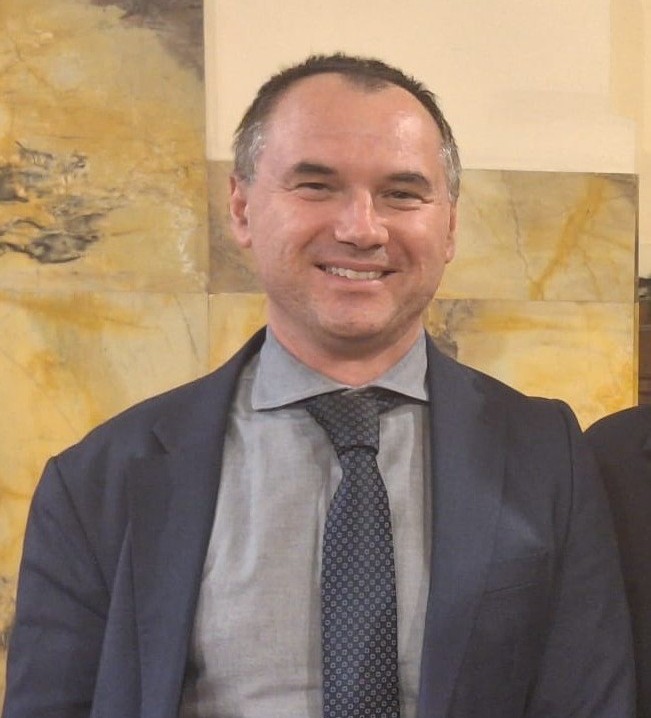
Roberto Castaldi is an associate professor of political philosophy at eCampus University in Italy and also director of the International Centre for European and Global Governance (CesUE), a spin-off of the Scuola Superiore Sant'Anna in Pisa. He was the head of Euractiv Italia for many years and is now director of Focus Europe Italy, a partner of diplo.news.
%20(1).webp)