War clouds in the Middle East - Trump's reckless maneuver
By Fariborz Saremi and Mirko Wittwar
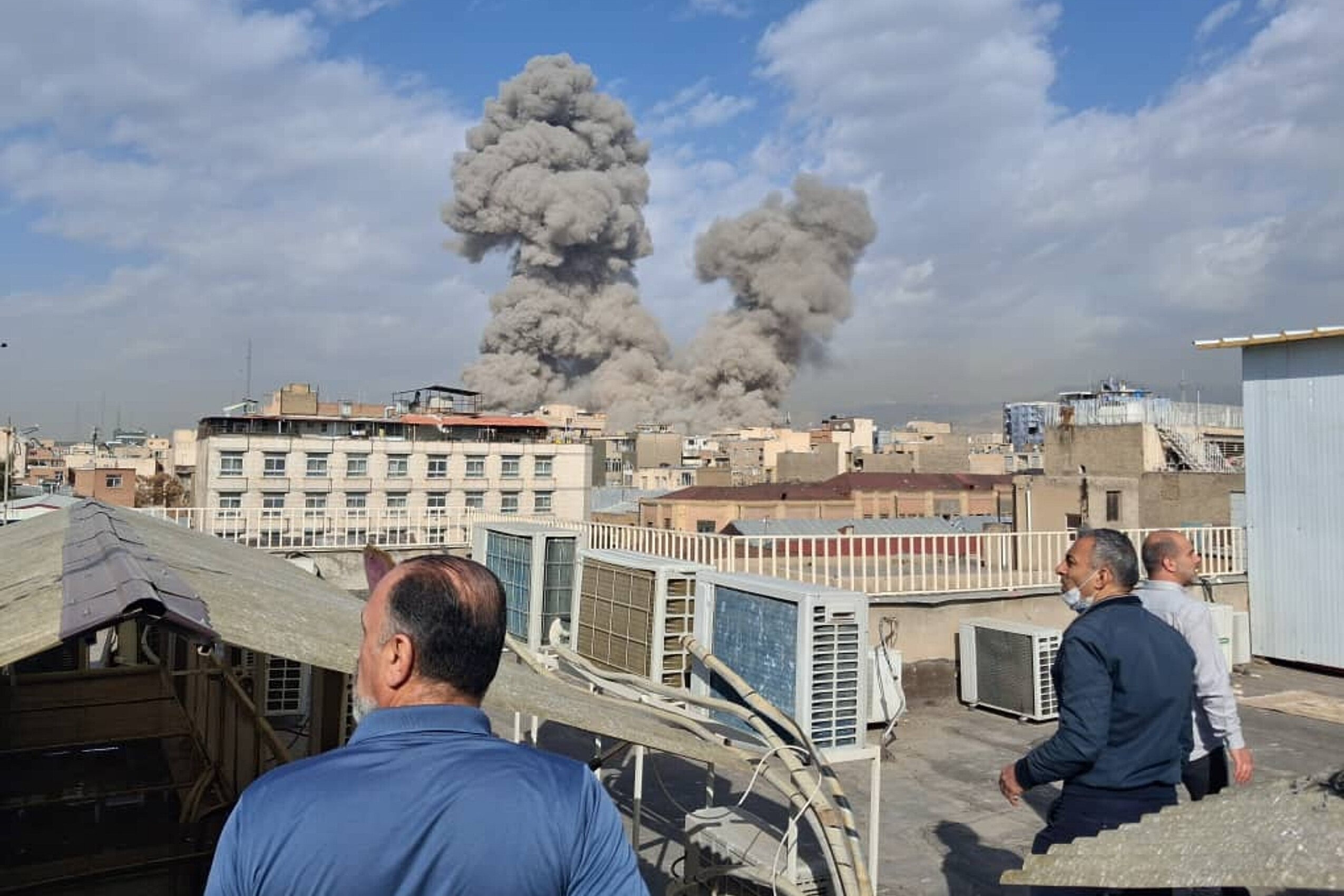
Trump clearly imagines his attack on Iran as an operation that is supposed to be similar to the one against Venezuela, albeit on a much larger scale — a hard, quick blow that causes the regime to relent in the short term. This is also supported by the fact that he has not even bothered to seek the approval of Congress for a war, as required by the Constitution. In the case of the action against Venezuela—more a large-scale commando operation than a war—Congress accepted Trump's approach for precisely this reason. If Trump also achieves a comparable success in the case of Iran, he can hope that Congress will remain silent this time too.
However, it is unlikely that things will take such a course. The initial decapitation strike, which was intended to eliminate the Iranian leadership to such an extent that the regime would collapse, has not yet achieved its objectives—at least as things stand at present. The regime was forewarned and moved its most important leaders to safe locations, not all of which are likely to be known or are so well fortified that they cannot be easily destroyed. In the summer of 2025, Israel was able to eliminate key members of the Iranian leadership in the first hours of the war without decisively weakening the regime.
A replacement for Khamenei has long been ready
Even if Ayatollah Khamenei, the “Supreme Leader” of the Iranian Revolution, were to be eliminated in an attack on his residence, this would probably only lead to him being quickly replaced. Given Khamenei's advanced age and his reportedly fragile health, it can be assumed that a replacement has long been waiting in the wings. The same is likely to apply to other areas of the regime: Israel succeeded in killing the leader of the Revolutionary Guards, Hossein Salami, for example, but he was replaced at short notice and the Revolutionary Guards have lost none of their effectiveness since then.
If the regime does not fall in the next few days, it will do everything in its power to escalate the war as far as possible.
- The Strait of Hormuz is already out of action for oil exports, as several shipping companies and oil producers have announced that they will not be transporting any more shipments there for the time being. It is to be expected that Iran will soon announce the closure of the Strait of Hormuz, which would bring the majority of oil supplies from Arab countries to a complete standstill. The recent Iranian maneuvers there (including the short-term closure of the Strait of Hormuz) were a clear, deliberate signal.
- The Houthis in Yemen have already announced that they will once again take action against shipping in the Red Sea.
- Iran is massively attacking US bases in the region and Israel.
- In a further step, the Iranian-oriented (mostly Shiite) militias in the region are likely to be mobilized to cause as much unrest as possible.
The leadership in Tehran has announced this, and it is also in line with the situation in Iran: Precisely because the regime has its back to the wall in foreign policy, it must prevent giving the impression that it is being bossed around by Trump at all costs. Instead, it must show strength if it is even to be taken seriously in the region.
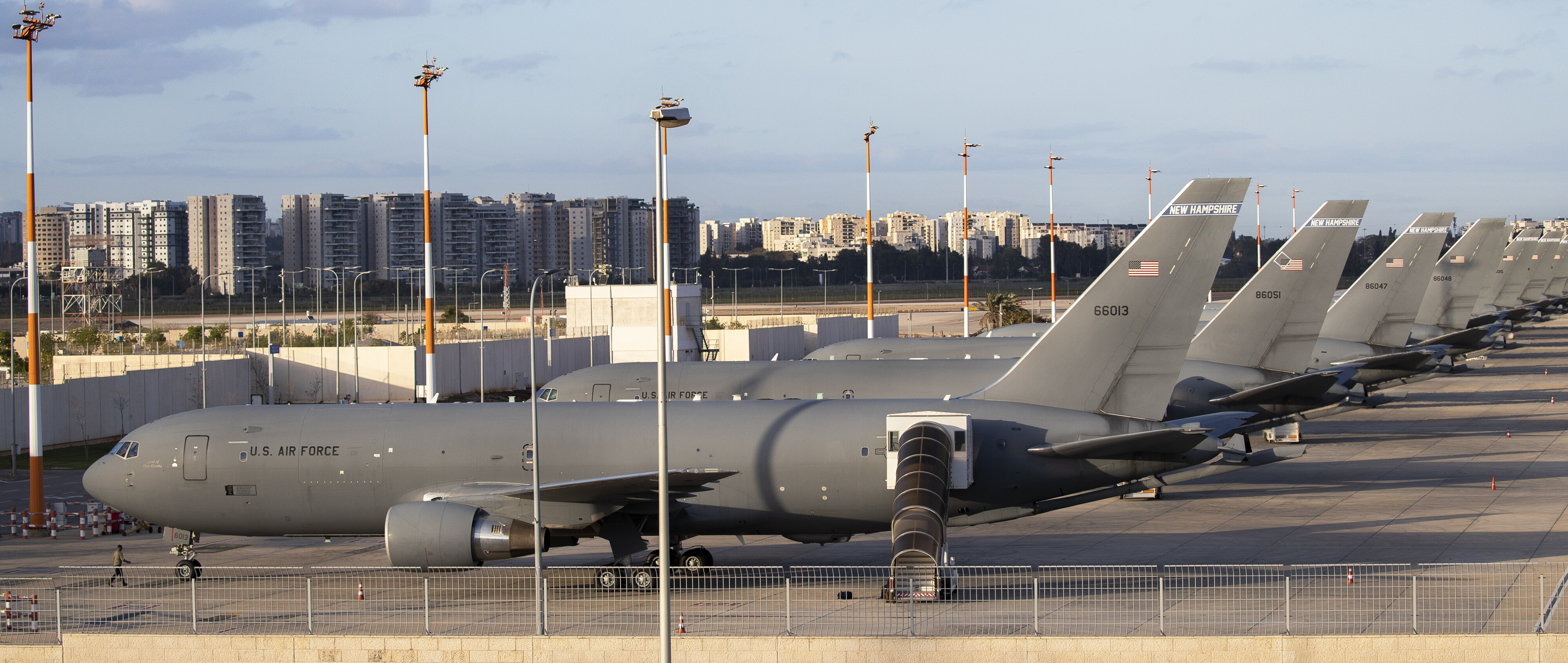
Iran has recently pursued a dual strategy: On the one hand, Tehran tried to show a willingness to negotiate in principle (without serious concessions) in order to gain time and delay a US attack as far as possible. On the other hand, reciprocal to Trump's intention of a brief, decisive strike, they will now try to prolong the conflict as much as possible by expanding the war.
Given this situation, an American-Israeli attack on Iran poses a considerable risk, not only to the global (economic and political) situation, but also to Trump's presidency. Oil prices will rise significantly, which will reignite inflation in the US, which has recently fallen unexpectedly. In addition, rising oil prices will significantly affect the already struggling global economy, and thus also that of the USA. From Trump's point of view, this is a very worrying development for the upcoming midterm elections in November, as US voters are very focused on the economic development of the USA, not least by the cost of living – an issue that has already cost Trump a lot of support.
The biggest risk, however, is that the US could become involved in a prolonged war in the Middle East unless the Iranian regime collapses immediately after the initial strikes. After the long military engagements in Iraq and Afghanistan, American society is decidedly weary of war, and both the opposition and large sections of his own supporters and voter base will accuse Trump of breaking his word. He owes his election as president not least to his promise not to embark on any more foreign military engagements.
On the other hand, having made his demands on the mullah regime so clear, Trump cannot simply back down. In particular, his reputation as someone who secures the US's position as a world power through military strength would be significantly damaged. Having failed to achieve diplomatic success, he had little choice but to follow up the military threats of recent weeks with action. Given that his political opponents already accuse him of allowing himself to be stalled too much by Russian President Vladimir Putin – which might be justifiable in the case of a major nuclear power – he could not, in his view, tolerate the Islamic Republic of Iran's stalling tactics under any circumstances without appearing weak. American voters would not have forgiven him for this either.
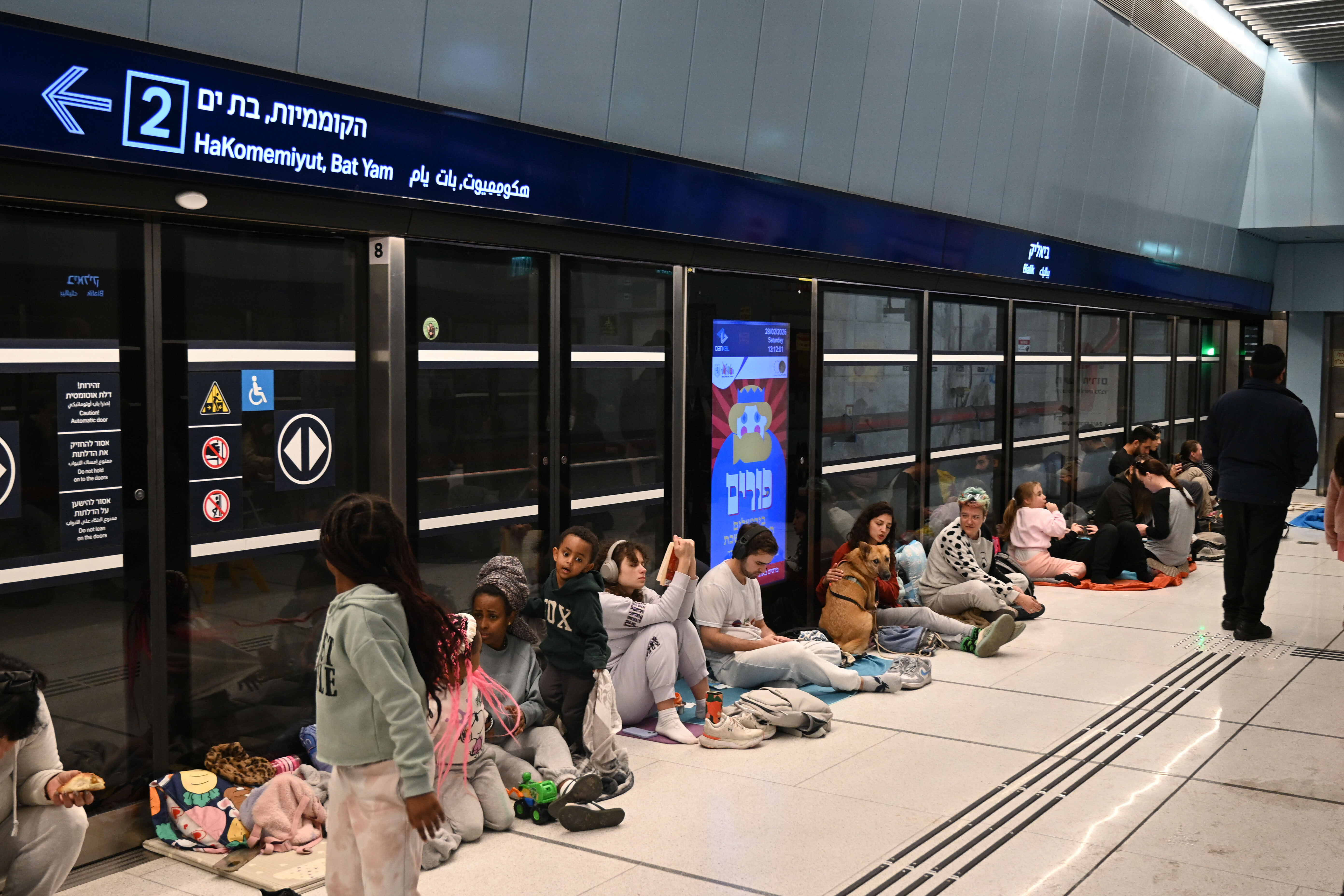
Another significant factor is Israel. Once it became clear that the summer war of 2025 had not achieved any lasting results, the Netanyahu government wanted to wage another, this time final, war against its arch-enemy Iran, but in light of the experiences of the summer, not without the US. Iran's arsenal of drones and missiles had proven surprisingly effective in 2025, pushing the Israeli defense system to its limits.
Iran's hope of winning over the Arab states by involving Israel in the attacks, thereby conjuring up a common enemy in the form of “Israel,” does not seem to be paying off. In view of Iran's counterstrikes, including in Arab states, there are currently signs that the Gulf states are closing ranks against Iran. Saudi Arabia, for example, has expressly assured the United Arab Emirates of its solidarity. One person was killed there on Saturday. Rockets flew over several Gulf states. An explosion was heard on the famous Palm Island in Dubai on Saturday evening. Nor has there been any serious protest from Arab states against the American-Israeli attack. Even the criticism from Oman, which most recently acted as a mediator in the American-Iranian nuclear negotiations and can rightly feel betrayed and abused as a useful idiot, sounded more resigned than indignant.
A prolonged war means breaking promises made to American voters.
Trump is hoping for a short war with maximum results. It is more likely that even in the case of a purely air war, and with the continuation of Iranian attacks on regional U.S. bases, it will not pass without American casualties. The U.S. government has already acknowledged this possibility. In addition, it cannot be ruled out that the mullah regime may persist over a longer period of time. In this case, the war would not even achieve tangible results, unless at least the verifiable complete destruction of Iran's nuclear capacity was achieved, which, based on the experience of the 2025 summer war, is anything but certain. In this case, public opinion in the USA will turn even more strongly against a president who has already been weakened domestically.
However, Trump now has no choice—he must see this through to the end. Abandoning the operation without tangible—and proven—results would not only be embarrassing from his point of view, but he would also be accused of sacrificing or at least putting the lives of American soldiers and citizens at risk without achieving anything in return. Trump has gotten himself into a dilemma that can only be resolved with a lot of luck: only if, contrary to expectations, he succeeds in bringing the mullah regime to its knees within the next few days, or weeks at most, can the US president portray this war as a success. If he fails to do so, he will have embroiled the US in a prolonged war in the Middle East, contrary to his campaign promises, which the American public has extremely unpleasant memories of from the recent past. This will cost him further support among voters.
Furthermore, it is to be expected that the longer the military conflict lasts, the more pressing the issue of the lack of congressional approval will become. Apart from the expected political and economic turmoil in the region and worldwide, this could lead to a government or even a constitutional crisis in the US.
The authors: Dr. Fariborz Saremi is a political analyst, lives in Hamburg and is coordinator of the Iranian National Unity Movement. Mirko Wittwar has a doctorate in scientific literature, analyst and Israel book author


.webp)