80 percent of Syrians in Germany are expected to return home
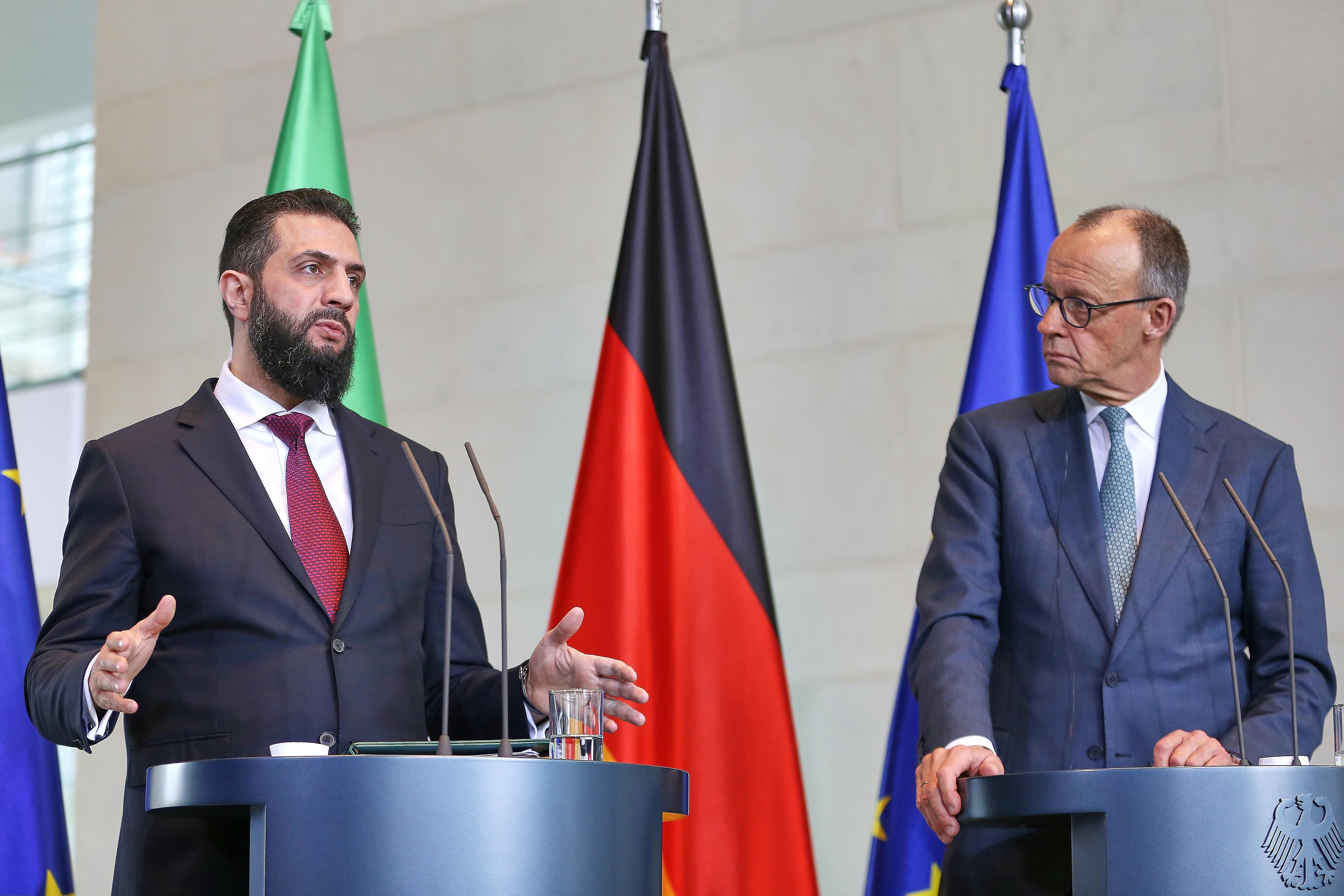
Chancellor Friedrich Merz (CDU) urged the return of Syrian refugees to their home country during the first state visit by Syrian Interim President Ahmad al-Sharaa. Merz said at a joint press conference in Berlin that conditions in Syria had improved significantly, and that the need for protection must therefore be reassessed. "This also means that anyone who no longer has a right to stay will have to leave Germany. “ To achieve this, cooperation with Syria and a reliable ”return option" are necessary, first and foremost for those who have abused German hospitality and failed to abide by the laws. Over the next three years, according to President al-Sharaa’s wish, 80 percent of the more than one million Syrians should return.
The returnees could make a significant contribution to reconstruction with new ideas and experiences gained over the years in Germany and around the world. Merz spoke of an ambitious joint work program for reconstruction and return, as well as a joint task force involving, on the German side, the Ministries of the Interior and Development Cooperation, as well as the Chancellery. It should implement the program. In the coming days, a delegation from the Federal Government will travel to Damascus. al-Sharaa emphasized that both states see Syrians in Germany as a major “asset” that can be used for various projects.
The chancellor refrained from criticizing the controversial head of state and former Islamist leader, whom critics accuse of violating human rights. “Create space for all Syrians in the new Syria, regardless of their religion, ethnicity and gender,” he simply addressed al-Sharaa with a warning. Success is all the more important in view of the consequences of the Iran War. If the war develops into a major regional conflict, it could weigh even more on Germany and Europe, as severe as the recent COVID-19 pandemic. Al-Sharaa said they were observing the military escalation with great concern and strongly condemning the Iranian attacks on Arab brother nations, as well as the Israeli attacks on Syrian territory. Israel is occupying new territories in Syria, and this does not meet moral and legal standards. When asked about the rights of members of various ethnic groups and religious denominations in Syria, he assured that his government intends to enshrine the rights of all Syrians in a new constitution.
During a roundtable discussion with German business leaders in the morning, al-Sharaa strongly promoted investments by German companies to rebuild his country. “The destruction caused by 14 years of civil war is immense,” he said in the Weltsaal at the Federal Foreign Office. “But this is not the end of the story; it is a new beginning.” Syria has not only improved the legal framework for foreign investment but is also a safe haven for supply chains disrupted by the Iran-Iraq War. Goods could be transported quickly and safely to Europe via the Mediterranean without having to cross the Red Sea or the Strait of Hormuz.
The interim head of state identified energy supply, residential construction and rail transport as key areas of the reconstruction. Syria is also an attractive tourist destination. “We want to leave the difficult times behind us and catch up with the rest of the world,” he emphasized at the start of the talks, which were attended by Foreign Minister Johann Wadephul (CDU), Minister of Economic Affairs Katherina Reiche (CDU) and around 40 representatives of German companies. Investors could also draw on the skills of the Syrian diaspora—the largest in Europe. Wadephul pledged assistance with the country’s reconstruction. “We stand by Syria’s side. The Syrians deserve a chance, and Germany will help them make the most of this opportunity.” He sees a strong role for Germany in the reconstruction effort. Syria has great potential and is also a strategic hub between Europe, the Gulf states, and the Indo-Pacific.
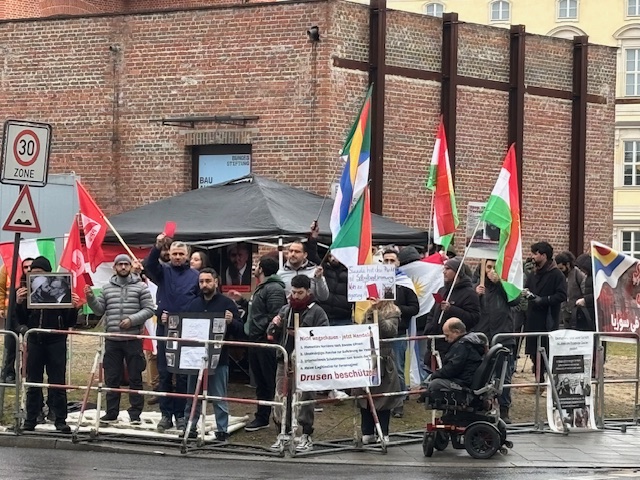
The CDU politician praised the al-Sharaa government for not allowing the conflict in Iran to spill over into its own country. “Continue down the path of compromise, coming to terms with the past, and reconciliation.“ Outside the Foreign Office, a small group of Druze demonstrated against the visit of the Syrian, who had once led the al-Nusra Front, an offshoot of al-Qaeda. The demonstrators demanded an investigation into crimes that had occurred even under his government. During the visit, a high security level 2 was in effect, with extensive roadblocks and a large number of police officers. Several demonstrations for and against al-Sharaa had been announced.
Participants in the roundtable included Siemens Energy and Siemens Healthineers, the building materials company Knauf, the construction equipment manufacturer Liebherr, and the Megger Group, a company specializing in energy system monitoring. Several agreements were signed, including one between Knauf and the Syrian side regarding gypsum mining. The two countries have established a German-Syrian Economic Council. The Syrian Minister of Disaster Management and Emergency Relief, Raed al-Saleh, requested assistance in clearing unexploded ordnance and rubble, in part to restore agricultural land to use. “Terrible accidents happen every day.” Al-Saleh emphasized the political unity of the country, which is fragmented along ethnic and religious lines. The goal of the government, formed a year ago, is to create a homeland for all Syrians, without discrimination. His cabinet colleague, Economy Minister Mohammad Nidal al-Shaar, explained that Syria wants to rebuild not only its infrastructure but also trust.
gd