Pandora's box
Column by Michael Backfisch
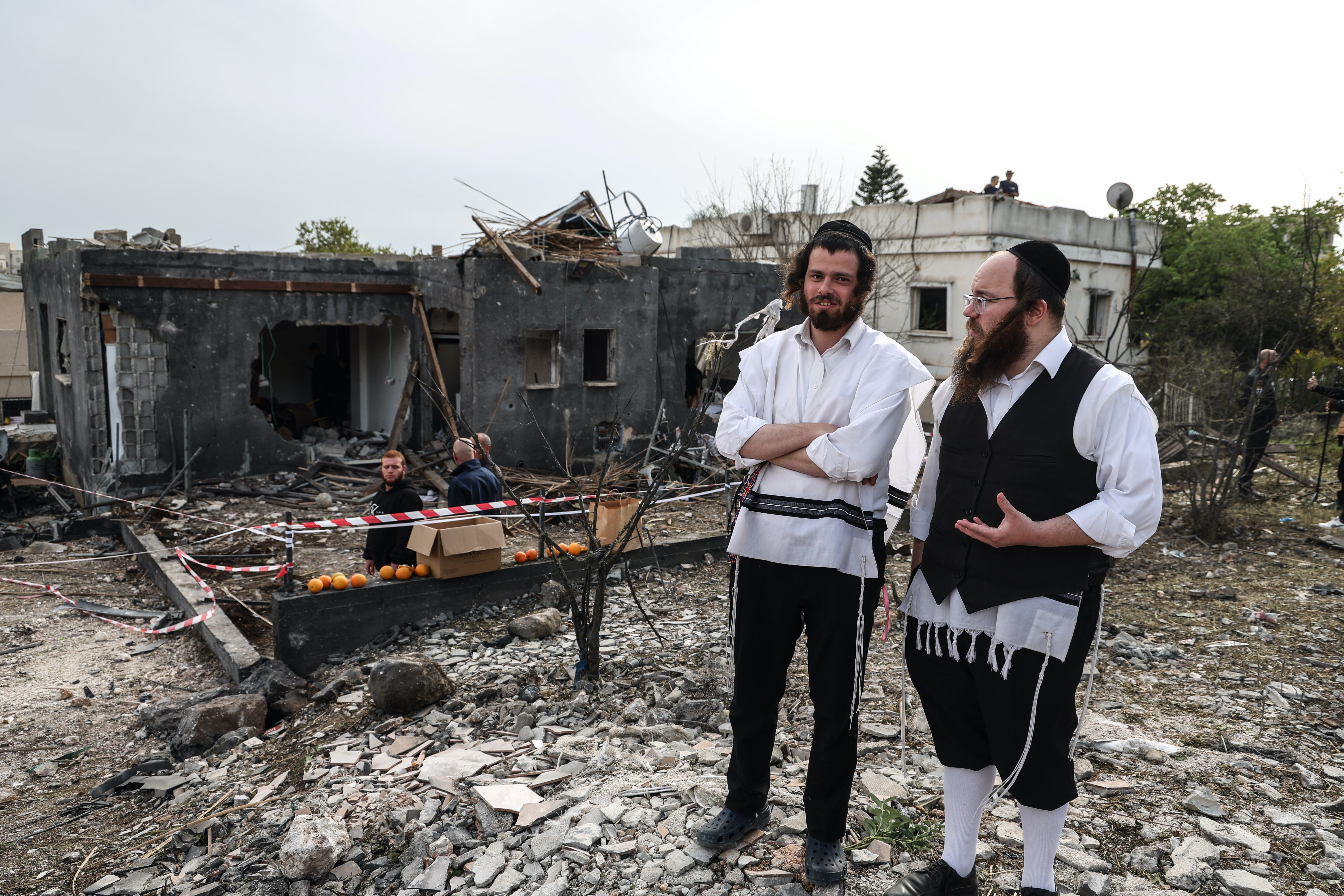
Around two weeks after the start of the war in Iran, it must be said: US President Donald Trump and Israel's Prime Minister Benjamin Netanyahu have opened Pandora's box. They are targeting the Islamic Republic with massive air strikes, yet the noble goals have not been met. The people did not rise up. The mullah regime is still intact. Supreme Leader Ali Khamenei may have been killed, but his son Mojtaba may be taking an even tougher course than his father. Yes, it's true: nuclear facilities and missile launching pads were reduced to rubble. But Iranian drones continue to set fire to oil warehouses and refineries in the Gulf States. Tankers are burning in the Persian Gulf. Skyrocketing oil prices feed fears that the global economy could be strangled.
The Iranian regime has been preparing for this scenario for years. In times of existential threat, it relies on brutal escalation. It poisons relations with its Gulf neighbors and takes the global economy hostage. It is therefore all the more astonishing that Trump and Netanyahu have criminally underestimated the resilience of the Iranian power apparatus. The system cannot be toppled by targeted killings. The all-powerful Revolutionary Guards, the security apparatus, and the Shiite clergy are deeply embedded in state institutions and a segment of society. The regime does not collapse like a house of cards with the decapitation of a single leader.
Trump had the illusion that he could deliver a quick victory in Iran to his voters back home. Intoxicated by the lightning-fast military operation and the ousting of Venezuela’s president, he thought Tehran would play out like Caracas. Since the president sees that his calculations aren’t working out, he changes his war aims for Iran almost on a daily basis. Sometimes he calls for a popular uprising, sometimes the end of the nuclear weapons program, sometimes the destruction of the missile arsenal. Sometimes he threatens “unconditional surrender,” sometimes he envisions a deal with the mullahs. The latest twist in this carousel of narratives is Trump’s statement that the war in Iran could end “soon.” He claims there is “practically nothing left” for the U.S. to attack.
To this day, the White House chief has not formulated a coherent plan for what he hopes to achieve in Iran. He acts erratically and on impulse. His policy, it seems, is driven by the sensationalism of reality TV. The main thing is to be in the headlines every day. The main thing is to keep announcing supposed victories. In doing so, Trump operates with an absolutism of assertion, following the motto: “Two plus two equals five, because I say so.” It is a staged sense of urgency.
But Trump's course is detached from reality. The American-Israeli attacks on around 6000 targets in Iran have led to major destruction. And the collateral damage is getting higher and higher. According to the “New York Times,” a mistake by the American armed forces led to a rocket attack on an Iranian girls' school with more than 150 dead. This is the preliminary finding of a U.S. military investigation. The “black rain” that fell on Tehran after the bombing of oil depots is certainly not the help the demonstrators had hoped for during their protests in January.
War, the overthrow of the mullahs’ regime, and the total annihilation of the enemy become his obsession. Not only the attacks on targets in Iran, but also the strikes in Lebanon are carried out with a destructive force that drags large segments of the civilian population to their deaths. Gaza, bombed to ruins, now resembles a lunar landscape. For Netanyahu, the more than 70,000 Palestinians killed are a necessary cost in the fight against the Islamist Hamas. The end justifies the means. Israel is currently proceeding with the same bulldozer-like approach in its campaign against the Shiite Hezbollah in Lebanon. Around one million people are already fleeing. Parts of Beirut resemble Gaza. When Hezbollah fighters hide in a high-rise building and use residents as “human shields,” the building is blown up anyway.
It is legitimate—and not open to criticism—for an Israeli prime minister to want to protect the Jewish state and safeguard it from annihilation—the mullahs’ vision has not changed. But when the number of civilian casualties becomes disproportionately high and the war descends into an endless cycle, the goal becomes morally questionable. Military analyst Amos Harel of the Israeli newspaper “Haaretz” comes to the following conclusion: “A few months ago, Netanyahu described Israel as a modern Sparta. But to preserve its militaristic identity, Sparta needs permanent military tensions—of a kind that would also allow its ruler to remain in power, regardless of the price the country must pay for it.”
There is good reason to suspect that Netanyahu is keeping Israel at war with Iran, Hamas, and Hezbollah in part to delay his corruption trial. The same applies to an investigative commission tasked with uncovering his failure to prevent the Hamas invasion on October 7, 2023. Anyone who finds this too cynical does not know Netanyahu. Yet his calculation to secure re-election this year by positioning himself as the war prime minister and supreme protector of his country could pay off. In opinion polls, around 80 percent of Israelis support Netanyahu’s war against Iran.
But the Iranian regime cannot be bombed into oblivion. To ensure its survival, the regime is relying on asymmetric warfare. Fully aware that Iran is hopelessly outmatched by the U.S. and Israel in terms of conventional military arsenal, the leadership in Tehran is seeking salvation in targeted terrorist attacks on the oil infrastructure in the Gulf states. It is playing on the fear of persistently high oil prices, which would inevitably lead to a global economic crisis. The aim is to build international pressure for a ceasefire.
Certainly: The mullah regime pursues an aggressive, anti-Israel policy abroad and rules domestically with extreme repression and brutal police violence. Its current blackmail tactics in the Persian Gulf are ruthless and reprehensible. But it is the logic of asymmetric warfare against which Trump and Netanyahu have no strategy. The Americans should have been aware of this danger since Vietnam, if not sooner. Back then, National Security Advisor and later Secretary of State Henry Kissinger said: “The guerrillas win if they don’t lose. The conventional army loses if it doesn’t win.”
Trump, however, is under time pressure. If the U.S. military remains entangled in the mess in the Gulf for too long, the Republicans will very likely lose the midterm congressional elections in November. By then, at the latest, the president would be a “lame duck.” That is why Trump feels compelled to declare his “victory” beforehand. He will sell the massive weakening of the regime in Tehran and the extensive damage to Iran’s missile arsenal and nuclear facilities as a triumph. “Mission Accomplished”—that’s the line for the home crowd.
Trump could likely have achieved all of this at a much lower cost. Just a few days before the airstrikes began on February 28, Iran’s Foreign Minister Abbas Araghchi had made far-reaching concessions to U.S. Special Envoy Steve Witkoff regarding his country’s nuclear program. According to a report in the “New York Times,” Tehran was reportedly prepared to suspend uranium enrichment for three to five years and only resume it afterward in a consortium with Gulf states under international supervision. This would have involved low-level enrichment in the single-digit range exclusively for civilian nuclear energy. In addition, the door would have been open for U.S. companies to invest in Iranian oil and gas facilities.
Given the current chaos, with no end in sight, it can be said: It would have been more promising to continue negotiating with Iran. First, Tehran would have had to be forced to accept drastic restrictions on the nuclear issue that would rule out the development of nuclear weapons. After that, the focus would have had to shift to reducing its missile stockpiles. That would have been an intelligent, targeted policy without setting the Persian Gulf ablaze.
.JPG)
.jpg)