Macron: The Dying Swan
Column by Michael Backfisch
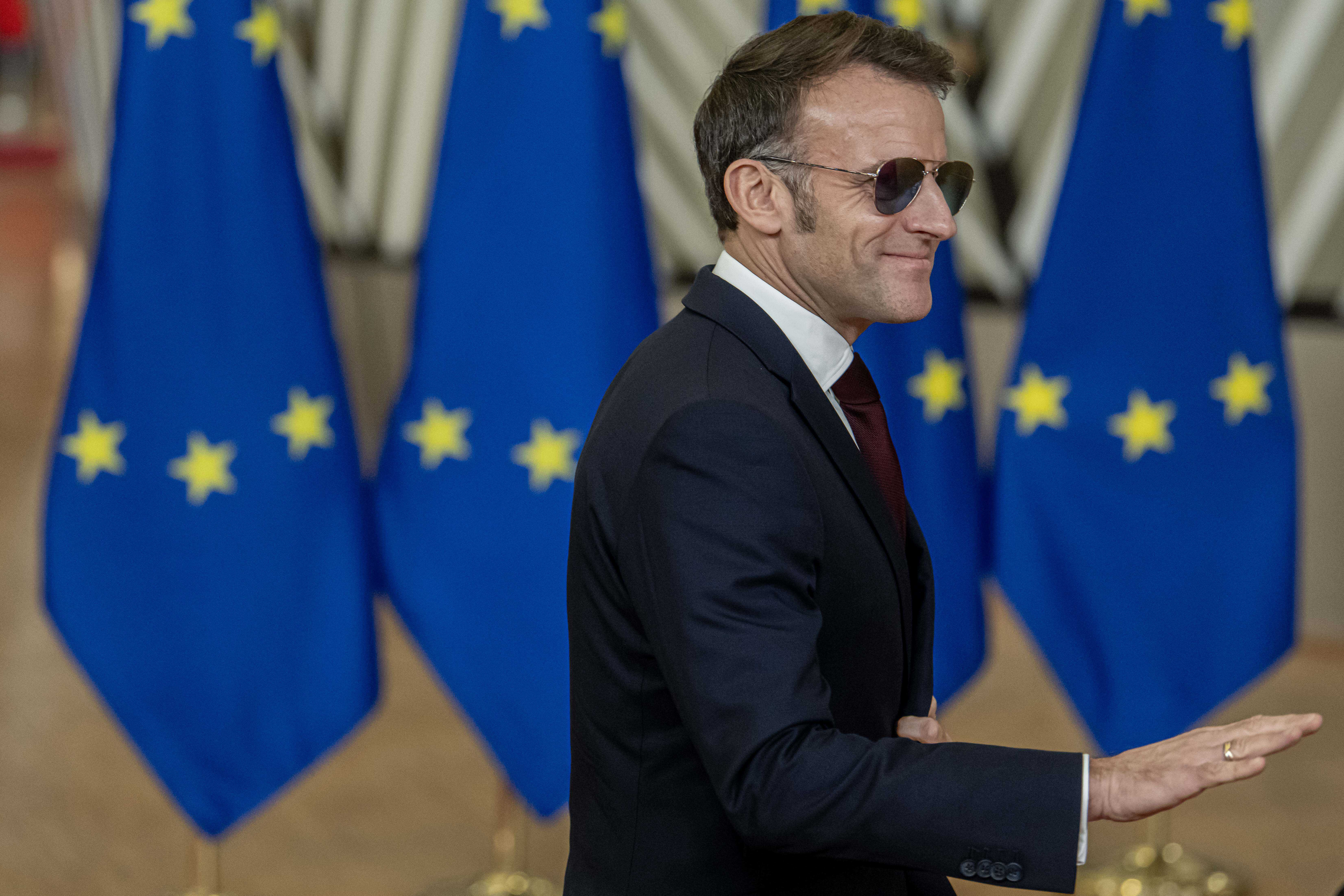
There he is again: Emmanuel Macron, the bold European visionary, the taboo breaker. The man with sparkling rhetoric and sometimes disruptive zeal for reform. “If we do nothing, Europe will be swept away in five years,” France's president predicted in an interview with six European newspapers. The words have an apocalyptic undertone. They resemble his grim warning about the “brain death” of NATO, which he already voiced in 2019 in view of doubts about America's loyalty to the alliance during US President Donald Trump's first term. Behind Macron's current wake-up call is a passionate plea for a united and powerful EU that is not crushed between the geopolitical heavyweights of the US, China, and Russia. The French head of state is calling for a super-Europe with shared debt in order to free up money for investment in key sectors such as defense, green technologies, artificial intelligence, and quantum computers.
Macron is strong in his visions of future. In his Sorbonne speech in September 2017, he already advocated for a “sovereign Europe” that is increasingly emancipating itself from the US. The post-war German federal governments did not have such strategic foresight. Since Chancellor Konrad Adenauer's decisive move toward Western integration, they have clung to their “big brother” in Washington. At the latest after Trump's first entry into the White House in 2017 and his already apparent distancing from the “obsolete NATO,” alarm bells should have gone off in Berlin as well.
Macron's weakness, however, lies in the difficulties of implementation. There are problems with practical implementation and organizing support. It is doubtful whether Brussels' XXL bureaucracy, with its Kafkaesque jumble of rules and regulations, can kick-start Europe's economy. Companies would be better served if energy prices and taxes were low, government regulations were kept to a minimum, and labor costs did not jeopardize international competitiveness. The fact that Macron did not discuss his latest initiative with the German government is another shortcoming. Resistance to Eurobonds remains strong there. Germany's hyper-indebtedness for the benefit of Europe cannot be enforced in domestic politics.
The Frenchman’s about-face on Russia policy is spectacular, too — but it probably hasn’t been fully thought through. Macron, who had long accused Russian President Vladimir Putin of a lack of will for peace, is now calling for direct talks. He emphasized that Europe cannot delegate discussions with Moscow to the Americans. "It must be possible to resume dialogue with Russia. Why? Because on the day we have peace, that peace will also affect Europe." The president's suggestion that there should not be too many interlocutors is revealing. He presumably sees this primarily as a diplomatic stage for himself as an interpreter of Putin. He has already sent his foreign policy advisor Emmnanuel Bonne to Moscow for explorations — much to the Kremlin's delight. But the crucial question is: What is there to discuss with Putin? Europe will only be taken seriously as a negotiating partner if it meets as many of Russia's maximum demands as possible and makes even more concessions than Trump. However, this is not acceptable to the majority of the community. Macron runs the risk of falling into a strategic trap in his attempt to raise his own profile.
A good year before the end of his presidency, Macron is once again going full throttle. His foreign policy initiatives are effective, but they seem to be driven by despair. In May 2027, the new president will move into the Élysée Palace. According to the French Constitution, it is the end after two terms of office. In view of the political expiration date and an extremely poor domestic political record, Macron's appearances are somewhat reminiscent of the famous ballet solo “The Dying Swan” by Russian-American choreographer Michel Fokine. Lots of flapping wings, lots of pathos and – yes – a certain amount of grace before the end.
Yet Macron seemed tailor-made for the role of mountain climber. When he was elected head of state in May 2017 at the age of 39, many saw him as a beacon of hope. His youthful freshness and his image as a career changer made him popular. The French have long had little regard for their political class, which is often derided as paralyzed and inefficient. The fact that Macron, a trained investment banker, had been Minister of Economy under the lackluster President François Hollande for two years before his candidacy was forgiven. He left the Socialist Party and founded his own movement, “En Marche.” The new man in the Élysée promised to subject France to a reform turbo and break up the traditional left-right scheme.
The start was promising. At the beginning of his first presidency in 2017, Macron tackled some hot-button issues. He pushed through the dismantling of regulations for companies, more flexible working hours, and a relaxation of employment protection laws in order to give the economy a boost. The head of state was riding high, but failed to get the population on board with his course. In the media, he was referred to as “Jupiter” due to his aloofness and distance. The arrogance took revenge. In 2018/19, the yellow vest protests flared up as Macron wanted to push through higher taxes on gasoline and diesel for his energy transition. His government had criminally underestimated the fact that many people, especially in rural areas, were dependent on cars and were suffering from the avalanche of costs.
The president made a serious strategic error when he dissolved the National Assembly after the landslide victory of the right-wing populist Rassemblement National (RN) in the European elections in June 2024. Macron's party suffered a crushing defeat in the parliamentary elections in July. The left-wing alliance and the RN triumphed. The president was politically weakened and faced a blockade by left-wing and right-wing populists. In the period that followed, one short-lived government followed another. The prime ministers were no longer able to push through solid budgets. The national debt rose rapidly. The country came close to joining Italy and Greece as deficit sinners. The pension reform, which included a logical increase in the retirement age due to demographic developments, had to be abandoned halfway through. Macron lacked support in parliament. The far-right and far-left parties continued to heat up the political climate. They sense their chance for the presidential election in spring 2027.
At the Munich Security Conference this weekend, Macron will once again sing the praises of Europe with verve. He will raise the question of the community's existence. In view of pressure from America, Russia, and China, his alternative is: deeper integration or decline. It is likely to be a flamboyant appearance by a man who started out as a political high-flyer but failed in practice.