Hungary's foreign policy faces a possible restart
Analysis by Milán Dóka

Parliamentary elections are due in Hungary on April 12. For the first time in 16 years, there is a real chance that Viktor Orbán and his government will be voted out of office. The challenger is Péter Magyar, the former husband of the former justice minister in Orbán's government – and until two years ago he himself was a part of the wider circle of the ruling Fidesz party.
According to polls, Magyar's party, TISZA (Tisztelet és Szabadság — Respect and Freedom), is ahead of the governing parties by six to eight percentage points, and in individual surveys even up to ten percentage points. Against this background, the question is what Europe — and Germany in particular — could expect from a new Hungarian government.
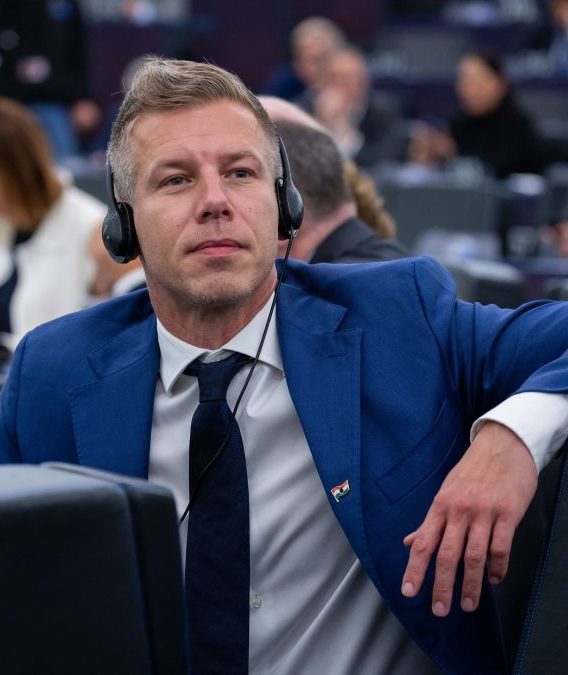
In just two years, Magyar built a kind of people's party out of thin air, which voters from both the right and the left political spectrum have joined. However, based on his statements to date and his political socialization, it is clear that he would continue to pursue right-wing conservative policies even if there were a change of government. This is also supported by the fact that TISZA's MEPs belong to the same European People's Party faction that Fidesz was a member of until its departure in 2021.
What would be the differences with Viktor Orbán?
From the European Union's perspective, maintaining unity and the ability to act is currently the central challenge. In a situation where Europe is simultaneously confronted with security threats from Moscow, economic pressure from Beijing, and increasing uncertainty in transatlantic relations, a united front appears more important than ever. This is precisely where Orbán's government was seen as a problem by many partners: with repeated vetoes and confrontational rhetoric, Budapest undermined European unity in the eyes of numerous EU states. In contrast, TISZA's messages to date clearly emphasize that Hungary's place is in the Western alliance system. The “swinging or pendulum politics” between power centers often described in recent years is to be replaced by a predictable, alliance-oriented foreign policy.
Since the ruling parties are focusing their election campaign heavily on portraying Péter Magyar as “warmongering” toward Moscow and “submissive” toward Kyiv, TISZA must tread carefully with pro-Ukrainian messages. However, it sent a clear signal with the appointment of its designated foreign minister: Anita Orbán—who is not related to the prime minister—is a graduate of the renowned Fletcher School in Boston and was also a member of the then-existing transatlantic wing of Fidesz.
Back in 2008, she warned that Russia would use energy as a geopolitical weapon, and today she continues to advocate diversification. She considers the current government's basic assumption that Hungary cannot reduce its dependence on Russian gas to be a mistake. At the same time, she strives for a relationship with Russia based on mutual respect, transparency, and the renunciation of opaque backroom deals—as she believes other EU states practice.
In view of the deteriorating economic situation, one of TISZA's main goals is to attract EU funding to Hungary, which has been frozen since 2022 due to concerns about the rule of law. In return, the party promises constructive participation in EU affairs.
The foreign policy aspirant formulated the goal as follows: The “EU26” should become an “EU27” again. However, constructivity does not mean the complete abandonment of national interests. A TISZA government would also take a hard line on certain issues, similar to the current government. The decisive difference would likely be in style: instead of the conflict-seeking diplomacy associated with Foreign Minister Péter Szijjártó, a more sober, results-oriented foreign policy could take its place.
The least change is expected in migration policy. Hungary is currently paying around one million euros in fines every day for failing to implement EU rules on asylum and migration. Nevertheless, TISZA has signaled that it would maintain the border fence in the south and reject any mandatory EU redistribution quotas.

China will also remain a key factor for any future Hungarian government. In many analyses, today's Hungary is considered one of Beijing's closest partners within the EU. Economically, Budapest continues to have a strong interest in good relations with China: numerous Chinese players have settled in Hungary's heavily automotive-oriented economy in recent years – not least against the backdrop of the transformation to electromobility and the difficulties faced by German manufacturers.
TISZA has so far been cautious in its statements on China. It is likely that under its leadership, a certain degree of trade policy pragmatism can be expected, combined with greater transparency, stronger security policy scrutiny, and closer coordination with Western partners.
The Visegrád Group is likely to be revived
The high priority of agricultural policy for Magyar's party was also clearly visible in the European Parliament. TISZA MEPs supported a judicial review of the Mercosur agreement—even though their party family, the EPP, rejected it. From TISZA's point of view, the agreement would disadvantage Hungarian farmers. It even accepted internal party sanctions in order to delay its entry into force.
Finally, a TISZA government would attempt to revive the Central European alliance system, in particular the Visegrád Group. Relations between the Orbán government and Poland have deteriorated significantly; Magyar's first foreign trip as prime minister would therefore symbolically lead to Warsaw. With Slovakia led by Robert Fico and the government of Andre jBabiš in Czechia, coordination would probably be more complex. However, according to the designated foreign minister, repairing neighborly relations would be a high priority.
Overall, there are many indications that Hungary would pursue a more pragmatic foreign policy in the event of a change of government – with a clear representation of Central European interests, but less demonstrative special role and confrontational rhetoric than in recent years.
Milán Dóka is a freelance Hungarian correspondent in Germany