Europe’s Future Depends on Africa: Not just rhetoric!
By Chionye Hencs Odiaka
The phrase “Europe’s future lies in Africa” is often dismissed as a polished slogan, pleasant, inclusive and politically fashionable. Yet beneath its rhetorical appeal lies a hard strategic reality. In an era shaped by demographic imbalance, energy transition, geopolitical competition, and climate pressure, Africa is no longer Europe’s periphery. It is becoming central to Europe’s long term economic vitality, security and global relevance.
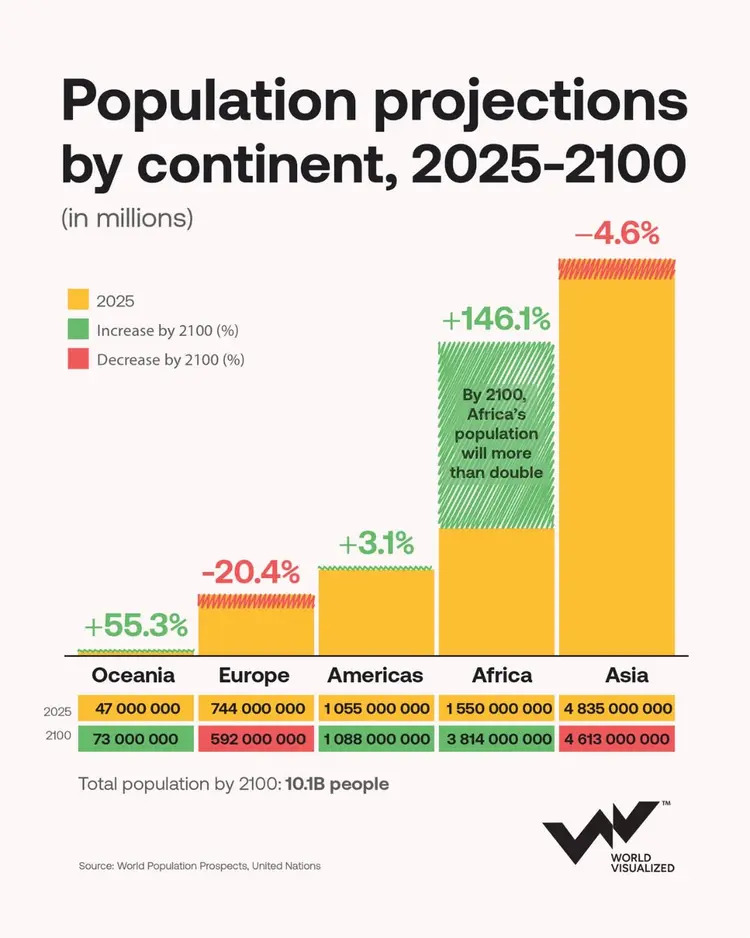
Demography alone makes this interdependence unavoidable. Europe is aging rapidly. Fertility rates across much of the continent remain well below replacement level, shrinking the workforce and placing growing strain on pension systems and public finances. Africa, by contrast, is the youngest continent on Earth. By mid-century, one in four people globally will be African. This is not merely a demographic statistic, it is a structural shift. Europe’s future labor supply, consumer base, and innovation ecosystem will increasingly depend on how constructively it engages Africa today, through education partnerships, skills mobility, and legal migration pathways rather than reactive and securitized border policies.
Energy transition is another area where Europe’s future is inseparable from Africa’s. As Europe moves toward carbon neutrality, Africa’s vast renewable energy potential becomes indispensable. The ontinent holds over 60 percent of the world’s best solar potential and possesses critical minerals such as lithium, cobalt and rare earths, materials essential for batteries, electric vehicles, and green technologies. Without secure, diversified, and ethical access to these resources, Europe’s green ambitions risk remaining aspirational rather than achievable.
However, realism demands more than access. A future-oriented partnership must move beyond extractive arrangements toward joint value creation. Africa’s resources should not simply power Europe’s transition while leaving local economies underdeveloped. Sustainable cooperation means investing in local processing, infrastructure, skills, and technology transfer, ensuring that Africa’s green assets also fuel African industrialization and employment. Anything less risks reproducing historical patterns that generate instability and resentment, outcomes that ultimately rebound on Europe itself.
Economically, Africa represents one of the world’s last major growth frontiers. Rapid urbanization, a rising middle class, and the gradual implementation of the African Continental Free Trade Area are laying the foundation for a vast integrated market. For Europe, facing slow growth, labor shortages, and supply-chain vulnerabilities, Africa offers not charity but opportunity. Strategic investment in African manufacturing, agribusiness, digital infrastructure and energy can create new markets for European firms while supporting sustainable development on the continent.
Security considerations further reinforce the realism behind the phrase. Instability in the Sahel, North Africa, and the Horn of Africa does not remain confined. Terrorism, organized crime, irregular migration, and energy insecurity cross borders with ease. Europe’s security architecture, therefore, cannot be separated from Africa’s stability. Decades of externally driven military interventions have shown their limits. A more effective approach lies in supporting African-led security frameworks, strengthening governance, addressing youth unemployment and building resilient institutions. Stability in Africa is not an act of altruism, it is a strategic investment in Europe’s own security environment.
Migration, often portrayed in Europe as a crisis, is another illustration of structural interdependence. Migration is not a temporary anomaly but a feature of a globalized world marked by inequality and climate disruption. Africa’s development trajectory, whether it generates opportunity or exclusion, will shape migration flows far more decisively than fences or deterrence policies. In this sense, Europe’s future quite literally lies in Africa’s economic and social outcomes. Supporting job creation, education, and climate resilience in Africa remains the most effective long-term migration strategy Europe can pursue.
There is also a broader geopolitical dimension Europe can no longer ignore. Africa has become a central arena of global competition, with China, Russia, Turkey, and Gulf states expanding their influence. Europe’s historical presence, often burdened by paternalism and selective engagement, is no longer guaranteed. Africa’s 54 votes in international institutions matter. Africa’s strategic alignments matter. Europe’s future global influence will depend on whether it treats Africa as an equal partner rather than a secondary concern.
A Clear Policy Imperative:
If Europe truly believes its future lies in Africa, it must anchor that belief in policy. A decisive step would be the creation of a long-term EU-Africa Green Industrial Partnership Fund dedicated not merely to resource extraction, but to co-financing renewable energy infrastructure, local mineral processing plants, vocational training centers, and technology transfer hubs across African states. Such a fund should prioritize joint ventures, local value addition, and measurable employment outcomes. By tying Europe’s green transition to Africa’s industrial transformation, this approach would convert rhetoric into structural interdependence, reducing migration pressures, strengthening supply-chain security, and deepening strategic trust simultaneously.
Even on a geological timescale, Africa and Europe are converging. The African tectonic plate continues its slow movement toward the Eurasian plate, a reminder that the connection between the two continents is not only political and economic, but also physical and enduring.
So, is “Europe’s future lies in Africa” merely a marketing slogan? Only if Europe continues to speak the language of partnership while acting defensively and selectively in practice. Taken seriously, the phrase captures a profound strategic truth. Europe’s demographic sustainability, energy transition, economic renewal, security environment, and global standing are increasingly shaped by Africa’s trajectory.
The choice before Europe is clear, invest now in a fair, forward-looking partnership with Africa, or confront a future defined by crisis management, declining influence, and missed opportunity. Europe’s future does lie in Africa, but only if Europe has the courage to meet Africa as a partner, not a problem.

%20(1).webp)