A crash course in world politics: Mega and Maga messages, election campaigns, and foresight
By Gudrun Dometeit
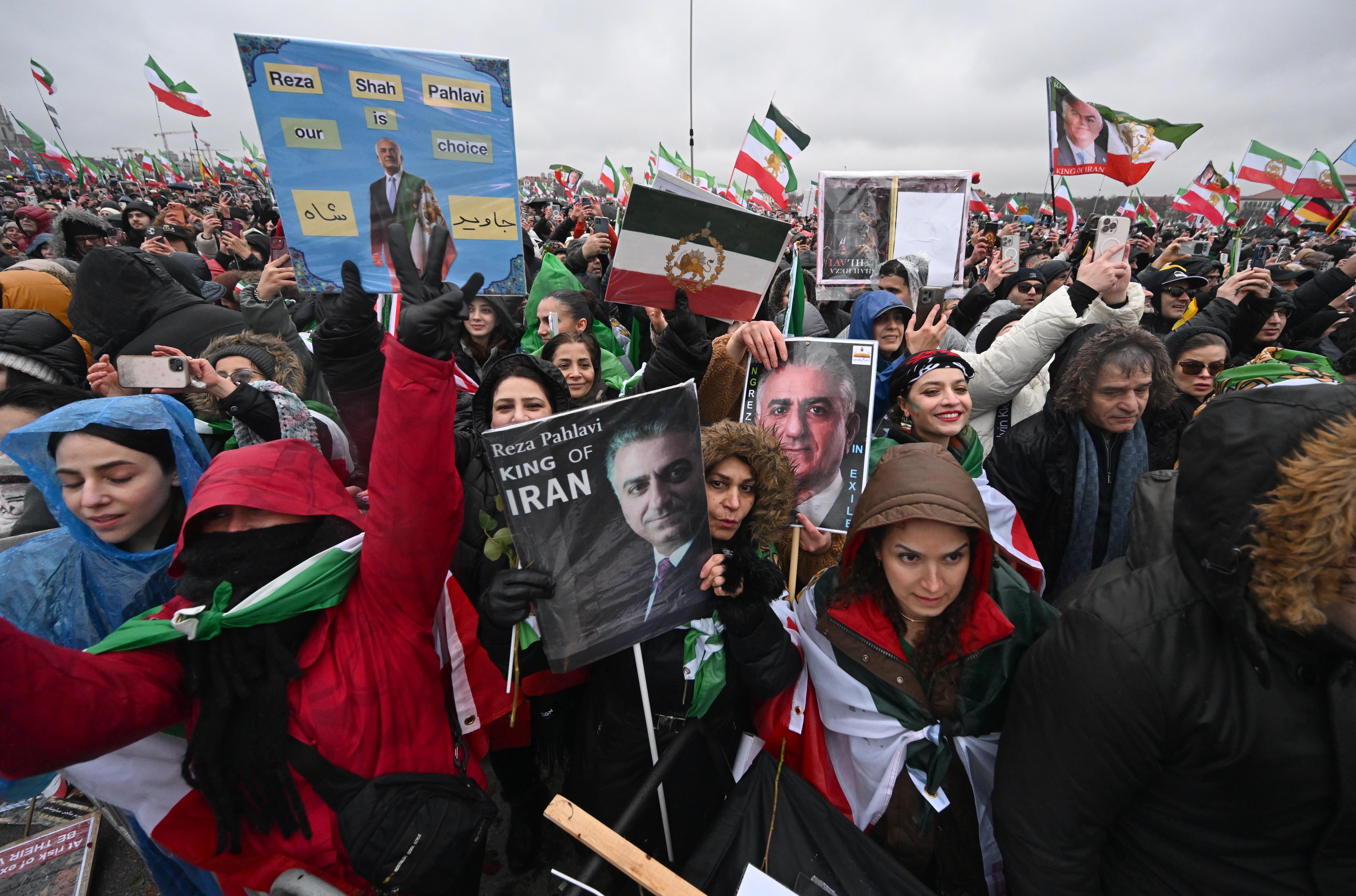
Not far from the Bayerischer Hof, a few meters outside the barriers where the police are preventing anyone without permission from entering the illustrious grounds of Munich's luxury hotel, a young Iranian woman has taken up position. It is a strategically clever move, because many participants in the Munich Security Conference have to pass her on their way to venues outside the hotel. She waves the former national flag of Iran with a lion and sword, holds up a photo of the eldest son of the Shah, Reza Pahlavi, and a sign that reads: “A targeted military strike against (religious leader) Khamenei and the Islamic Revolutionary Guard Corps – for security and peace in the world – that is a global obligation.” She says she traveled from Toulouse especially to ask the international community for support for regime change. Pahlavi should pave the way for democracy in Iran. “After that, we'll see who wins the elections.”
Shortly after the one-woman protest, according to police reports, 250,000 Iranian exiles demonstrated in the center of the Bavarian capital against the mullah regime over the weekend. Pahlavi also called for help from US President Donald Trump, who had promised his compatriots that “help was on the way.” The former crown prince designate, who lives in the US, is not without controversy, but he has rallied a considerable portion of the Iranian opposition around him. In fact, a second US aircraft carrier, the USS Gerald R. Ford, is now on its way to the Gulf region and is expected to arrive there in about ten days. Security experts do not rule out the possibility that Trump could then launch a US military strike against Iran in two to three weeks. The nuclear negotiations between the US and Iran, which continued this Tuesday, did not result in a breakthrough.
The nuclear agreement with Iran was once concluded with a great deal of patient diplomacy, but now Trump has torn it apart and we have to start all over again, former Secretary of State Hillary Clinton complained in Munich. “Without a negotiation process, however, this seems pretty primitive to me. What exactly are the goals you want to achieve? “The democrat therefore considers the diplomatic efforts to be unsuccessful. “The probability that the US will attack (Iran) is greater than that it will not attack.”
All in all, it is a dramatic situation which, depending on the extent of the US strike, could shake not only the Middle East and is reason enough to discuss it in detail at an international security conference – even without an official Iranian delegation, which had been disinvited due to the brutal crackdown on thousands of demonstrators. Instead, one topic dominated the minds of the approximately 1,000 participants: transatlantic relations and the state of Europe.
What sticks in the mind from a conference where there is much talk but nothing is decided, where a chance conversation sometimes becomes a symbolic political act—such as a meeting between Friedrich Merz and Hungarian opposition leader Péter Magyar—and which some regard as a seismograph for the state of the world. Here is a selection of personal impressions, snippets, and key statements from a speed dating event with 2,700 bilateral meetings alone—without any claim to completeness.
Self-assurance
That was it, the European “Yes, we can moment.” Or perhaps the verbal embodiment of the slogan “Mega – make Europe great again,” which a French conference participant consistently presented to his fellow discussants on his baseball cap for three days. Whether it was EU Commissioner Ursula von der Leyen or Poland's Foreign Minister Radosłav Sikorski, there was repeated talk of a sovereign Europe, a powerhouse, a sleeping giant, the right to sit at the negotiating table with the US as now almost the sole sponsor of Ukraine in its fight against Russia. “Let’s provide a positive image of ourselves, and let’s be proud of ourselves,” said French President Emmanuel Macron as motivator-in-chief. Some painted a completely exaggerated picture of Europe as an aging continent, as slow, overtaken by history, overregulated, hostile to innovation, overwhelmed by migrants and restricting free speech.
A psychologist would probably call it the J.D. Vance trauma, which still torments most EU heads of government following the rumbling criticism from the US Vice President at the security conference last year. A deep wound – treatable only through self-care and acknowledging one's own feelings. No name was mentioned more often than this one, and no question was asked more often than whether US Secretary of State Marco Rubio would be as gruff as Vance at this year's event.
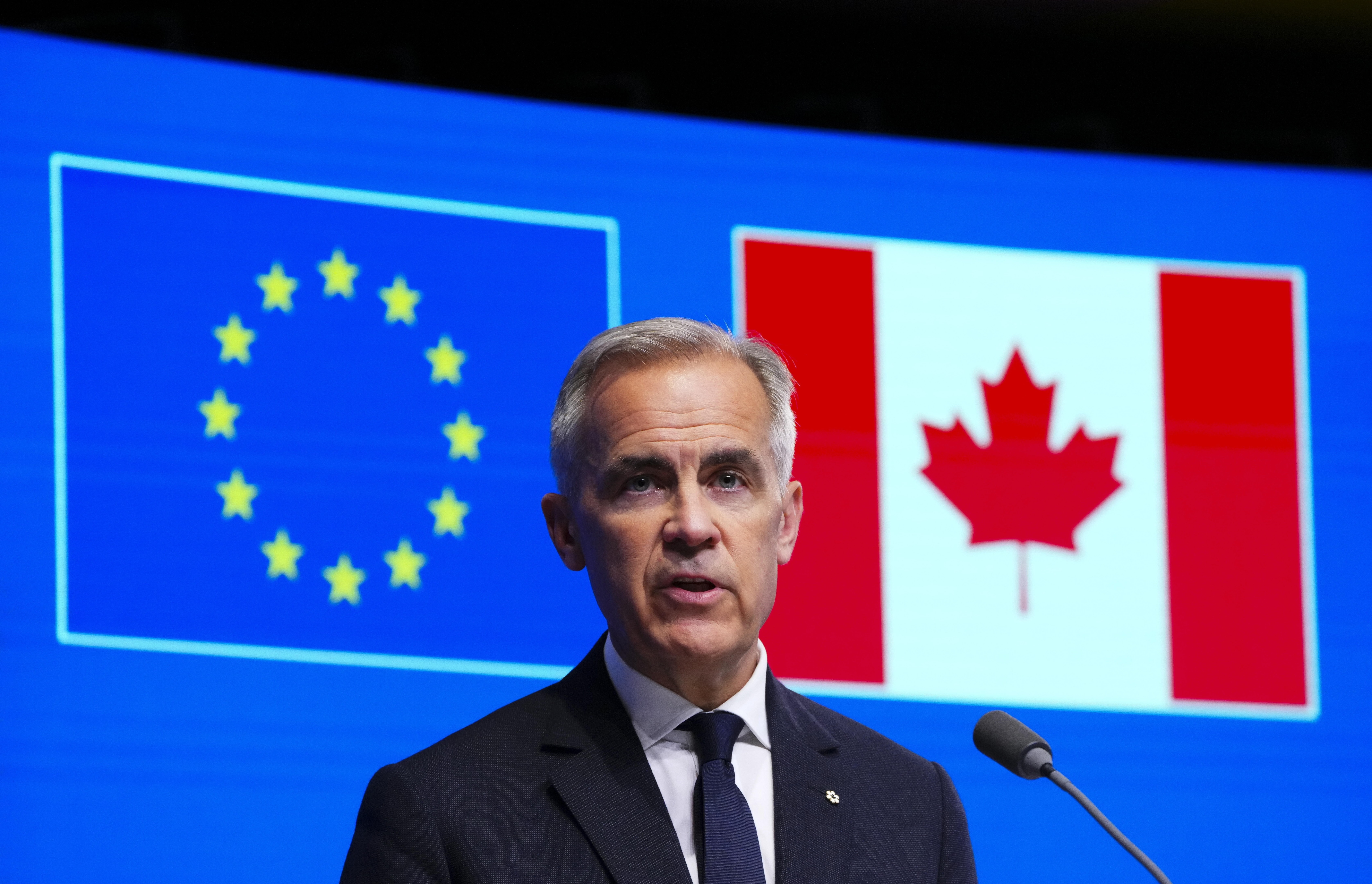
According to Macron, it would be a serious mistake for Europe to start doubting itself now. Where others have threats and doubts, he sees hope and strength. “Europe is a radically original political construction of free, sovereign states. We conjured together centuries of rivalry and war to institutionalize peace through economic interdependence.” He considered it a sign of independence that in January, the so-called coalition of the willing – the EU plus Canada and Australia – had agreed on future security guarantees without the US. “We respect the USA, but we also want to be respected. ”
Federal Chancellor Friedrich Merz (CDU) also wanted to shake things up, with a mixture of self-confident self-criticism, clear differentiation and an offer to revive the much-broken transatlantic relationship, at least on a factual level. “We are not at the mercy of this world. We can shape it,“ Merz said combatively. Germany has often criticized and reprimanded in its foreign policy, but has not worked on the means to remedy the situation. The EU's gross domestic product is almost ten times higher than Russia's. And yet Europe is not ten times stronger than Russia. ”Our military, political, economic, and technological potential is enormous. But we are still far from exploiting it to the extent necessary."
Europe is now developing a roadmap for a strong, sovereign continent, a European pillar in NATO. According to Merz, he has started talks with Macron about a European nuclear deterrent. The chancellor also highlighted Ukraine policy as a success. “We have imposed unheard losses and costs on Moscow. And if Moscow finally agrees to make peace, it will also be for that reason, because this is an expression of European self-assertion.” Europe has nothing in common with the culture war waged by the MAGA movement in the US. Freedom of speech ends when that speech is directed against human dignity and the constitution. Europe does not believe in tariffs and protectionism, but in free trade. It stands by climate agreements and the World Health Organization. And even the US reaches the limits of its own power when it acts alone. “NATO is not only our competitive advantage, but also yours, dear American friends.”
Political pro Clinton, now professor of international politics at Columbia University, recommended that Europeans show much more opposition. The current US administration has broken down the principles of successful diplomacy, which consists of a mixture of threats and firm agreements. “We are undermining our alliances.” Donald Trump's unpredictability, however, only works if the other party does not know the answer to it. The discussion about Greenland showed that a clear stance can achieve something. In a new book (“Inside the Situation Room”), Clinton examines the psychology of political decision-making processes, how feelings of threat arise, the influence exerted by advisors, and why groupthink is dangerous. Among the attentive listeners at the book presentation was FDP MEP Agnes Strack-Zimmermann, who afterwards had her picture taken with the prominent Democrat.
Noble civilization
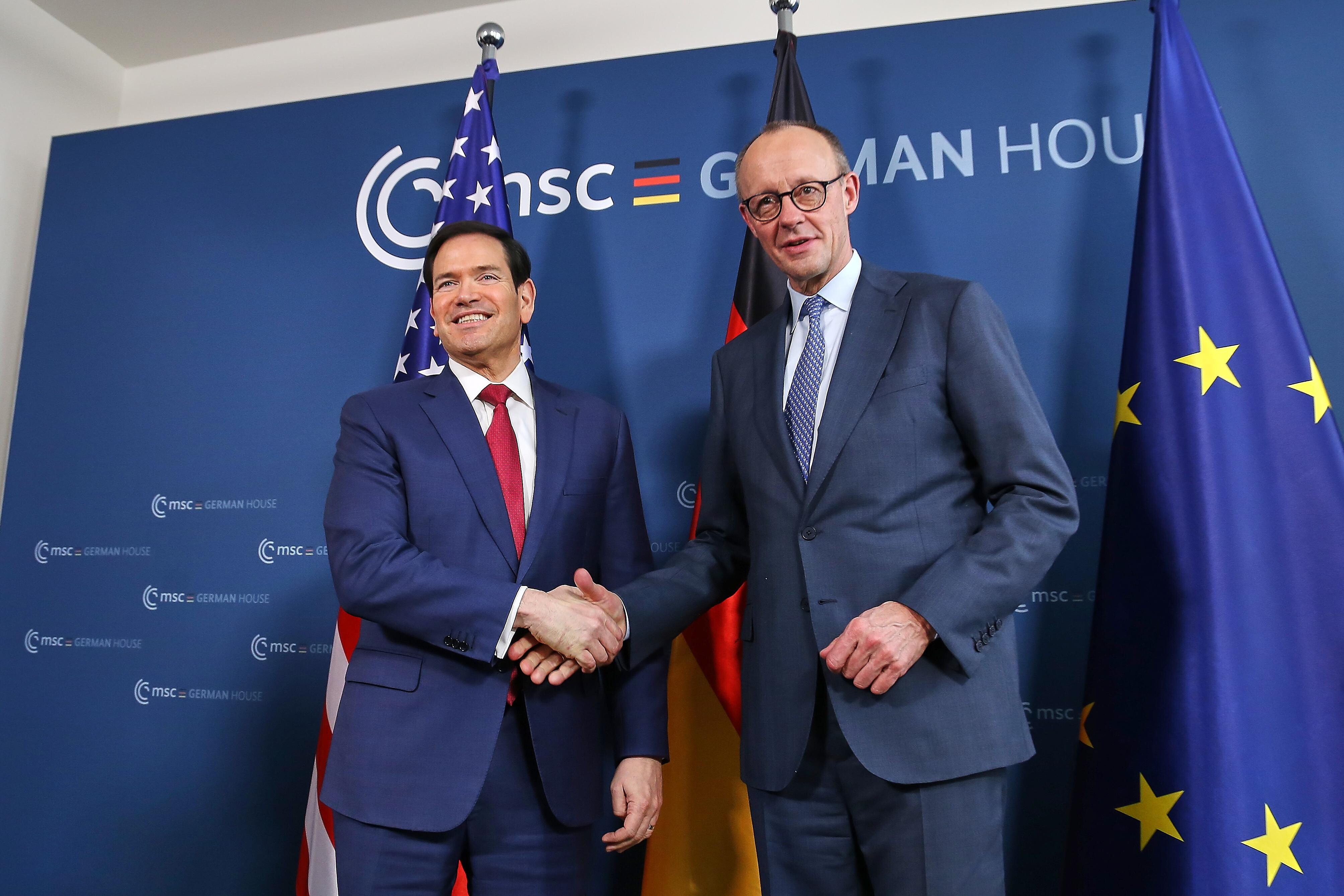
Thank goodness, most people thought, at least there was no scandal! Others gave Marco Rubio, US Secretary of State and National Security Advisor, a standing ovation after his appearance. Out of a sense of duty? After all, the US delegation also included staunch Trump supporters.Some, such as EU Foreign Affairs Representative Kaja Kallas, seemed—judging by their serious expressions—to immediately grasp the enormity of thRubio described the same fundamental cultural change in the US as J.D. Vance had done a year earlier – only more elegantly, more charmingly, rhetorically more brilliantly, but with similarly categorical statements. He flattered the Europeans, the “esteemed allies and oldest friends” who produced Mozart, Beethoven, da Vinci and the Beatles, and reminded them of America's European roots. “We will always be a child of Europe.” Europe and the US are part of Western civilization. However, Rubio sees its existence threatened by an “unprecedented wave of mass migration,” a “dogmatic vision of free and unrestricted trade,” the outsourcing of sovereignty to international institutions, and a climate cult.climate cult.
The US wanted allies who were proud of their culture and heritage, who understood “that we are heirs to the same great and noble civilization.” “And that's why we don't want allies to rationalize the broken status quo instead of dealing with what's needed to fix it. Because we in America have no interest in being polite and ordinary administrators of the managed decline of the West.” The US did not want an alliance that perpetuated the view that the Western way of life was just one among many and that sought permission before acting.
That was a tough pill to swallow and, so to speak, an intellectual interpretation of Trump's erratic politics. “Don't be lulled by sound,” warned a US Democrat in conversation, criticizing identitarian ideas. “Rubio is something like the wolf in sheep's clothing.” What the 54-year-old definitely meant was that if Europe did not join in the cultural change, America would do it alone. “Nothing is better after this speech. The major differences of opinion remain,” commented former Swedish Prime Minister Carl Bildt.
This does not bode well for the period after Trump either. Unlike the almost 80-year-old Trump, whose second term of office is ending in three years, Rubio and Vance still have a political career ahead of them, and both are said to be interested in running for president. Anyone hoping that the two former “No-Trumper” will then revert to being affable supporters of Europe could be disappointed. Interlocutors at the Bayerischer Hof thought this was rather unlikely because both Republicans lack their own power base and are, at least for the time being, dependent on the arch-conservative Maga movement.
Law of the Jungle
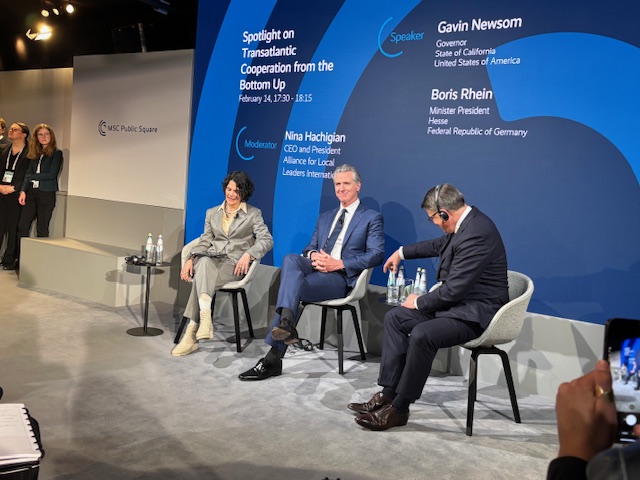
After the elections is before the next elections. The midterm elections in the US, in which the entire House of Representatives and part of the Senate are re-elected, cast their shadow ahead. The Democrats, long low in the polls and without a charismatic leader, took the opportunity to campaign a little. Gavin Newsom, governor of California and a potential presidential candidate, for example. Trump, he railed, is one of the most un-American presidents ever elected to this office, a foreign body. The law of the jungle reigns in American politics. Masked security forces are now even patrolling the streets of sunny California. “Trump is also the most corrupt president; he's not interested in politics, but in making profits.”
But Newsom is convinced that Trump will suffer a bitter defeat in the midterm elections and that his customs policy will be overturned by the Supreme Court. He believes that current policies are widening the gap between rich and poor. For the first time in history, 30-year-olds in the US are worse off than their parents. He believes that the MAGA movement will not survive without Trump and that some Republicans are already turning away from him. His message in Munich: to tell everyone that this political development in the US is only temporary and will change if the Democrats win.
Alexandra Ocasio-Cortez, member of Congress and a figure of hope for the left wing, also assured that a lot would change after her party's success in the midterm elections. Congress would then resume its supervisory functions and the US would become more globally engaged. The Democratic Party is shocked by the destruction of transatlantic relations. Domestically, Trump is in the process of cutting research spending, “the very thing that made us great.” The trip by the young congresswoman with Puerto Rican roots was obviously intended to gain experience on the international stage.
Acceleration
Speed - this was perhaps one of the most frequently heard buzzwords this weekend. It is essential in space, in the pursuit of economic competitiveness and digital sovereignty, and especially in defense, when it comes to coordinating European industries or restructuring the German armed forces. Military historian Sönke Neitzel criticized that the latter must finally improve its decision-making and process speed significantly. The Bundeswehr can of course fight, but the question arises as to whether it is also capable of responding quickly to new technological, political, and military developments. “If, for example, telephone contacts with the US were to be cut off in the event of war, would Europeans be able to wage an air war over the Baltic states on their own?”
Even US business representatives were concerned that Europe, with its long decision-making processes, could be crushed between faster-moving powers such as the US and China. The EU must therefore introduce its own digital currency as quickly as possible. Greater personnel exchange between politics and business, particularly in Germany, would ensure greater pragmatism and speed. Speaking of long decision-making processes: Instead of discussing the abolition of the unanimity principle in foreign and security policy even longer, as a Polish diplomat suggested in one of the short talks on the corridor, it would be better to discuss the extension of exceptions, which can be decided by a majority. “Otherwise, you just lose time, because the unanimity principle must also be abolished unanimously.” This is currently considered out of the question, partly due to resistance from Hungary. In some EU circles, there are hopes that the national conservative Viktor Orbán will be replaced in the parliamentary elections in April – while Rubio pledged his support for him on Tuesday.
Strategic Capability
In times when there is no longer a single arms control treaty, when ambitions to acquire nuclear weapons are growing worldwide, and when Russia has fallen out of the collective security system, one would think that an international security conference would also address the issue of a secure tomorrow and strategic questions that go beyond ammunition deliveries to Ukraine and ceasefires. “Should we accept the use of long-range missiles near our borders? Should we accept Russia's interference in our neighborhood? What does arms control look like in the age of drones? Can agreements be reached to limit missiles in Europe while China has become a factor in arms control? And what about the nuclear field, where New START, the last remaining treaty between the US and Russia, has now been terminated?" These are questions posed by French President Macron, always good for intellectual reflection, if less so for practical implementation. He did not receive any answers. He complained that Europeans had never been involved in negotiating any of these treaties. He said he had learned about the end of the INF Treaty from the newspaper. “We must be the ones to negotiate this new security architecture for the future of Europe, because our geography will not change. We will live in the same place with Russia and with the Europeans, and I do not want these negotiations to be organized by anyone other than the Europeans.”
However, as previously suggested by Macron, no one currently wants to talk to Russia. Neither about Ukraine, nor about future security arrangements. The unanimous opinion among Europeans is that it makes no sense because Moscow has no interest in ending the war, but instead continues to focus on wearing down Ukraine through widespread bombing. Only secondary sanctions and tougher measures against Russia's shadow tanker fleet could therefore bring movement to the deadlocked negotiations between the US, Ukraine, and Russia. However, there were no proposals as to how Europeans could actually return to the negotiating tables of world history, whether in resolving the Ukraine conflict or in the Gaza or Iran negotiations. The impression is that the Europeans themselves do not yet know. The spirit of optimism is there, but the journey itself is arduous.
.webp)