Alarmism is misplaced
By Michael Däumer
1. Greenland, the Arctic, and the new geopolitics: Overrated or a strategic turning point?
At first glance, the current debate about Greenland seems overheated. Threats from Washington, frantic summit diplomacy in Davos, new European strategic promises—all of this fuels the impression of an escalating crisis. German Foreign Minister Johann Wadephul recently warned against overdramatization. Indeed, the question arises as to whether this is an overestimated problem or a harbinger of profound geopolitical shifts in the Arctic.
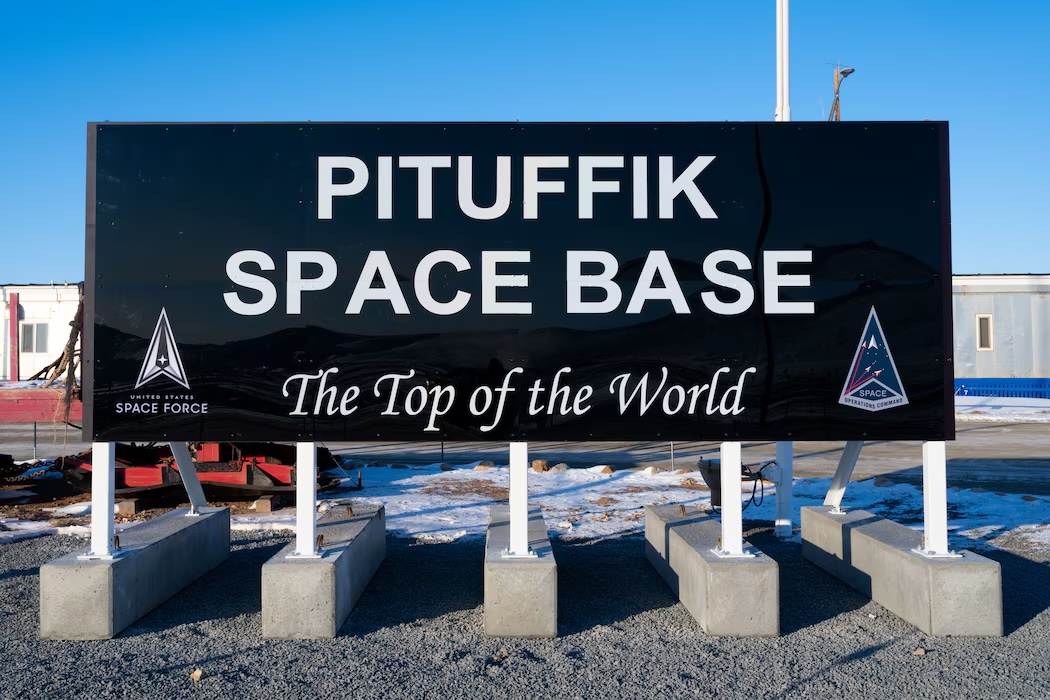
In the short term, the military situation in Greenland is stable. The US has had military infrastructure there for decades, currently concentrated at the Pituffik Space Base. Russia has intensified its military activities in the Arctic, but these are primarily focused on its own coastal area. There is no immediate military threat scenario for Greenland or Europe. In this narrow sense, Wadephul is right: acute alarmist rhetoric is misplaced.
At the same time, it would be a mistake to dismiss the debate as mere Trump-style provocation. The Arctic is structurally developing into a geopolitical core area—due to climate change, new sea routes, resource issues, and its growing importance for early warning, missile defense, and satellite systems. The escalation is less a crisis than a consolidation of long-term trends.
2. What could an EU Arctic Strategy look like?
Against this backdrop, the comprehensive EU Arctic security strategy announced by EU Commission President Ursula von der Leyen in Davos is a long overdue step. Until now, the EU has had a political presence in the Arctic, but its strategy has been fragmented. National interests—such as those of Denmark, France, or Germany—dominated without being embedded in a coherent security policy concept.
A credible EU strategy would have to combine three elements: firstly, security policy capacity, secondly, economic and infrastructural investments, thirdly, clear political solidarity with Arctic partners — in particular Greenland and Denmark. Von der Leyen's explicit emphasis on Greenland's non-negotiable sovereignty is therefore not a symbolic act but a necessary political signal.
3. A dedicated European icebreaker fleet: Realistic or symbolic politics?
The announcement of a separate European icebreaker fleet seems ambitious, but it is not entirely unrealistic. Several EU states already have relevant maritime competencies, but mostly organized in a civil or national way. Building a joint fleet would take years, require significant investments and would have to be politically coordinated.
In the short term, an operational EU icebreaker fleet is unrealistic. In the medium to long term, however, it could become a central component of European presence and crisis response capacity in the Arctic in the Arctic—less as a military instrument and more as an infrastructure and sovereignty project.
4.Is US national security in the Arctic really under threat?
The US justifies its increased interest in Greenland on the grounds of national security. This argument is not entirely unfounded, but it is often exaggerated. Russia is modernizing its nuclear second-strike capability, while China is showing growing interest in Arctic routes and technologies. For the US, Greenland is therefore primarily an early warning and sensor space, not primarily a staging area.
The threat is strategic and technical, not territorial. It is about missile defense, satellite control, and information dominance—less about classic military confrontation.
5. What is the “Golden Dome” announced by Donald Trump about?
In this context, there is the discussed plan to station parts of the US “Golden Dome” missile defense system on Greenland. This is not a single system, but an integrated architecture of sensors, interception and communication components. Greenland's geographical location makes it particularly suitable for this purpose.
Politically, this plan is sensitive because it involves Greenland even more closely in global strategic rivalries – but legally, such a deployment would only be possible with the consent of Denmark and Greenland.
6. Is the US interest in Canada also linked to the desire for greater control of the Arctic?
US interest in Canada is closely linked to the issue of the Northwest Passage. While Canada regards these as its own inland waters, the USA sees them as an international waterway. Due to continuing differences on this issue, the USA has not ratified the 1982 UN Convention on the Law of the Sea (UNCLOS). However, as the ice recedes, this route is becoming significantly more important for trade and the military. From a US perspective, Greenland, Canada and Alaska form a coherent strategic area in which issues of control, transit and deterrence are being renegotiated.
7. Will Iceland be next?
Due to its location in the North Atlantic Ocean, Iceland remains of high strategic relevance, particularly for maritime and air surveillance. Unlike Greenland, however, Iceland is sovereign, a member of NATO, and politically well integrated. It is therefore not a realistic target for similar debates, but will certainly become more involved in Arctic security considerations.
8. How must Germany change its Arctic policy?
For Germany, the question arises as to whether the 2024 Arctic guidelines are sufficient. They mark an important step forward, but remain deliberately non-binding. In view of the new dynamics, Berlin will have to define its role more clearly: as a security policy supporter of the European Arctic presence, as an economic partner of Greenland, and as a diplomatic actor in Western cooperation formats beyond the blocked Arctic Council.
A revision of the guidelines is therefore less a question of if, but of when.
9. Conclusion
The Greenland debate is neither mere overestimation nor an immediate crisis. It is an expression of a strategic shift in which the Arctic is transforming from an area of cooperation to a key geopolitical region. The challenge for Europe—and for Germany in particular—is to respond strategically rather than reactively.
Michael Däumer is an advisor on Arctic security issues and former German representative on the Arctic Council at the Federal Foreign Office (2014-2018)

.webp)

%20(1).webp)