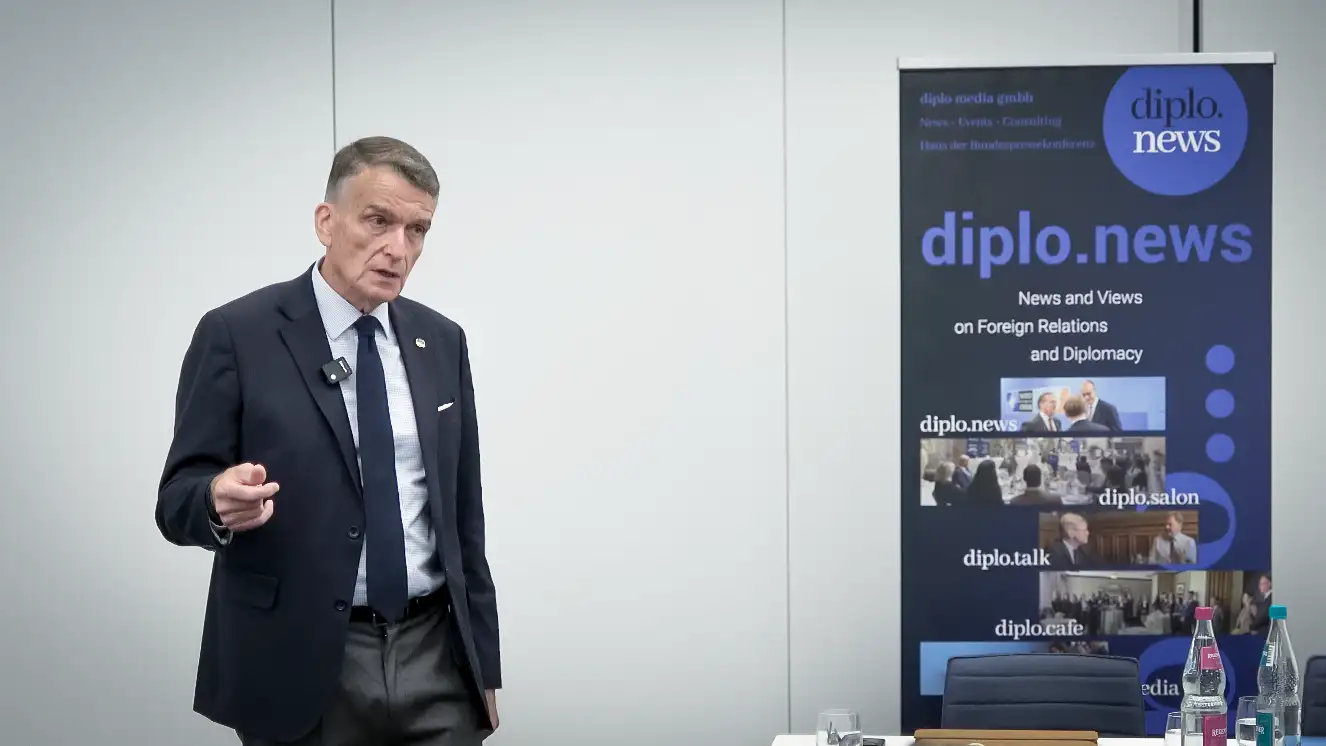
General Yadlin: It is about creating the conditions for regime change in Iran
Interview by Gudrun Dometeit
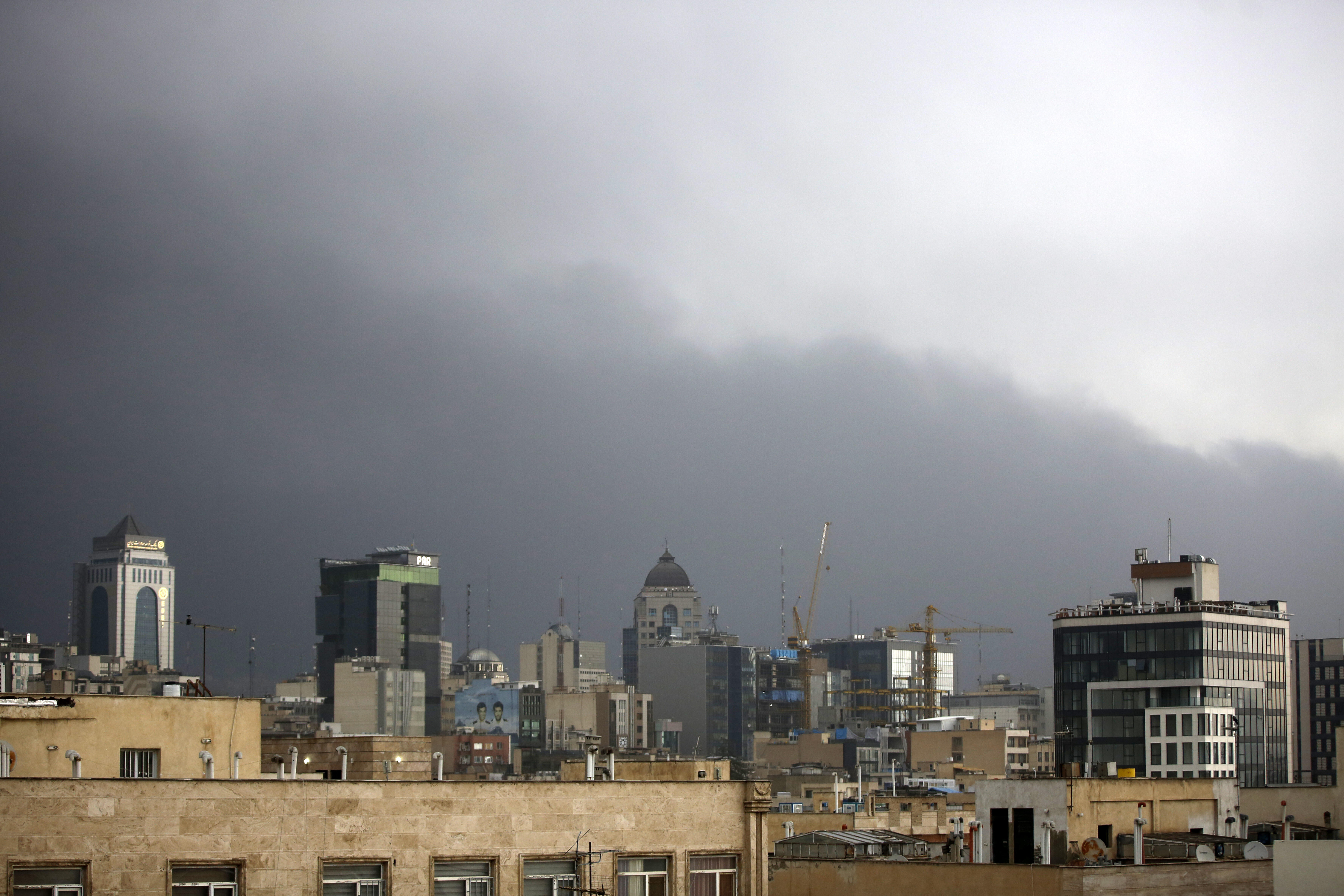
General Yadlin, are we witnessing the beginning of a conflagration that threatens to spread beyond the borders of the Middle East and even further? Considering the Iranian attacks on Cyprus and Turkey, the sinking of warships in the Indian Ocean by the US Navy, the blockade of the Strait of Hormuz, and the threats against Israeli embassies and US facilities—is the conflict spiralling out of control?
No, not at all. The core of the conflict is the Islamic regime, which has threatened the Middle East with nuclear weapons, ballistic missiles, drones, proxy wars, and terrorism. After the US attempt to reach an agreement failed, the US and Israel decided to resolve this problem militarily. What we are seeing is Iran's attempt to make the rest of the world feel the consequences. In my view, however, they are proceeding counterproductively. Instead of pushing the US to end the war, the Gulf states themselves will enter the conflict. Because Iran is terrorising the civilian population in Abu Dhabi, Dubai, Manama, Doha, Riyadh—basically, the Sunni Arabs in the Gulf who have tried to remain neutral. They wanted to deter the Americans from going to war and instead pursue a policy of détente with Iran. Instead, Tehran has pushed them into a position where they will join the campaign. Many of Iran's missile attacks are incomprehensible: Why are Turkey and Azerbaijan being targeted? Even countries that oppose the American actions are now at least participating in the defense against Iran. Therefore, I don't believe this will become a regional or global war. Iran is being pushed back at a pace it cannot sustain for long. I think it is trying to achieve a better position for a ceasefire and the resumption of negotiations.
So, militarily speaking, does Iran stand no chance against the combined forces of the US and Israel?
In a symmetrical war, certainly not, but the Iranians usually boast of their asymmetrical capabilities. The drones, which are also being used in Ukraine, small missiles against the American navy – such asymmetric tactics are ineffective. They don't create a critical mass that would even suggest the possibility of a war ending before the actual war aims are achieved.
Your assumption that there won't even be a regional war – how does that square with the reports that the US and Israel have asked the (Iranian) Kurds in Iraq for help? And that they are allegedly preparing a ground offensive in Iran?
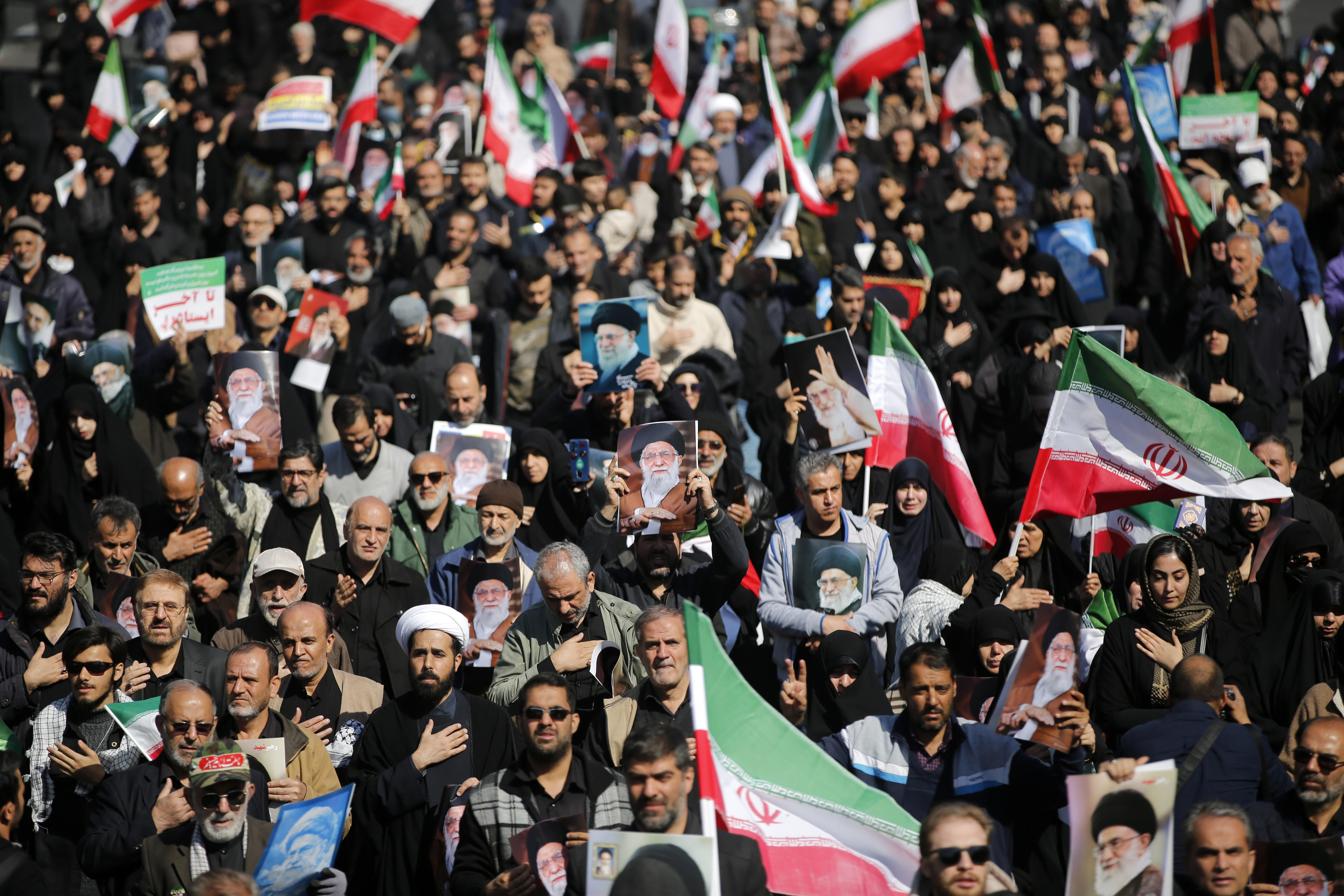
This isn't a regional war. On the contrary, it's a missing piece of the puzzle in the attempt to overthrow a regime. A regime can hardly be overthrown by bombing from the air. You need ground troops for that. Neither Israel nor the US wants to send ground troops. This isn't Germany in 1945, nor is it Iraq in 2003. Change here will only come about through an internal uprising. Unfortunately, the Iranian people's uprising was crushed by the regime in January. 30,000 people were massacred. Consider, however, the collapse of the Assad regime. Ahmed al-Sharaa, then known as the rebel leader Abu Mohammed al-Juliani, came from the Idlib province and effectively seized power within the Assad regime. Of course, there are differences. The Iranian regime is still more powerful than the Assad regime once was. Iran is also a much larger country, and the Kurds are not supported by the Turks. But this may well be the beginning of a regime change. Incidentally, neither President Trump nor Prime Minister Netanyahu has defined the goal of their regime change campaign. Rather, it is about creating the conditions and weakening the Iranian regime to such an extent that an internal overthrow is facilitated, or that the country is no longer capable of inflicting harm, terror, and instability on the Middle East.
Does this mean that there has been a request from Israel and the US, and that the Kurds will actually send ground troops into Iran?
The only ground troops capable of overthrowing the regime should come from Iran. And there are three minorities there that the regime has mistreated: the Kurds in the northeast, the Baloch in the east, and the Iranian Arabs in the Southwest. I suspect all these groups are receiving outside support and are trying to weaken the regime.
You recently said in an interview that cooperation between Israel and the US, and between the CIA and Mossad, has never been as close as in this war. Could you elaborate on that? What exactly does this cooperation entail?
It is the first time in Israel's history that we are going to war with a superpower. And not just with any superpower, but with the world's most powerful superpower. In 1956, during the Sinai conflict, we had a kind of alliance with Great Britain and France. This time, however, everything is different. There is cooperation and strategic alignment between the two heads of state, President Trump and Prime Minister Netanyahu. The strategy is also coordinated at the highest military level – by Israel's Chief of Staff, General Eyal Zamir, the US Chief of Staff, General Caine, and the commander of CENTCOM (responsible for the Middle East, East Africa, and Central Asia), Admiral Charles Cooper. Israelis and Americans are planning together, drawing up war plans, and dividing up the tasks: You target these objectives, we target that group. You take care of this geographical sector, we take care of another. It's as if two branches of the same army are working together. And even at the tactical level, our pilots can communicate with the American pilots. They can exchange situational awareness of the battlefield. This has never happened before. It works exceptionally well and will continue to do so in the future.
Did the cooperation begin as early as June last summer with the first attacks by the US and Israel, and does it also include tasks related to the social unrest in Iran in January? Were they part of the plan?
Strategic cooperation between Israel and the US dates back to the 1980s. Back then, however, it was primarily cooperation in defense against ballistic missiles, drones, and other attacks on Israel. This time it's different. As you mentioned, it's also a covert operation, essentially aimed at destroying Iran's nuclear program and ballistic missiles. It's as if we act together on every mission—not just the politically correct ones. Unlike the summer operation, which Israel initiated and which the US didn't object to, this time we started together, and I think we'll finish it together as well.
How was it possible to eliminate the Iranian leadership so quickly and precisely? Without sources close to the Iranian leadership, that wouldn't have been possible, would it?
This demonstrates the efficiency and high quality of Israeli intelligence sources, which are not limited to human sources. The ability to pool all sources allows for the real-time control of munitions launch. I'm not sure many armies are capable of doing that—targeting the supreme leader, 40 of his top executives, and the military leadership within a minute. That's an enormous achievement from an intelligence, operational and strategic perspective.
You mentioned regime change as the objective of this war. However, there are many different explanations of what is being sought. Are the American and Israeli objectives different, or do they match?
They match. And it's remarkable how closely they align, because I've already mentioned two objectives for this war: First, to reduce Iran's ability to inflict damage through ballistic missiles, nuclear weapons, drones, and proxy wars. This is where success can be measured. Iran once possessed 2,500 ballistic missiles. They now have approximately 50. In the case of regime change, it's more difficult. As long as the regime doesn't collapse, you don't know how much you've weakened it. No one can predict regime change with a universally applicable formula. No one predicted the collapse of the Soviet Union or the Shah's regime, or the end of the Mubarak or Assad regimes. Therefore, we must be considerably more modest here. We must weaken this regime and hope that it will be changed from within. Because we will not invade Iran.

Amos Yadlin is considered one of the most influential security advisors in Israel. He flew numerous missions as a fighter pilot, including in the Yom Kippur War, Iraq, and Lebanon, and was military attaché at the Israeli Embassy in Washington. From 2006 to 2011, he headed his country's military intelligence service. In 2015, he became politically active in the center-left Zionist Union alliance, which had earmarked him as defense minister. Through the consulting firm MINDISRAEL, which he founded, Yadlin advises politicians and the military on issues relating to Israeli security policy.

%20(1).webp)