Scenarios for an end to the Iran War
By Fariborz Saremi and Mirko Wittmar
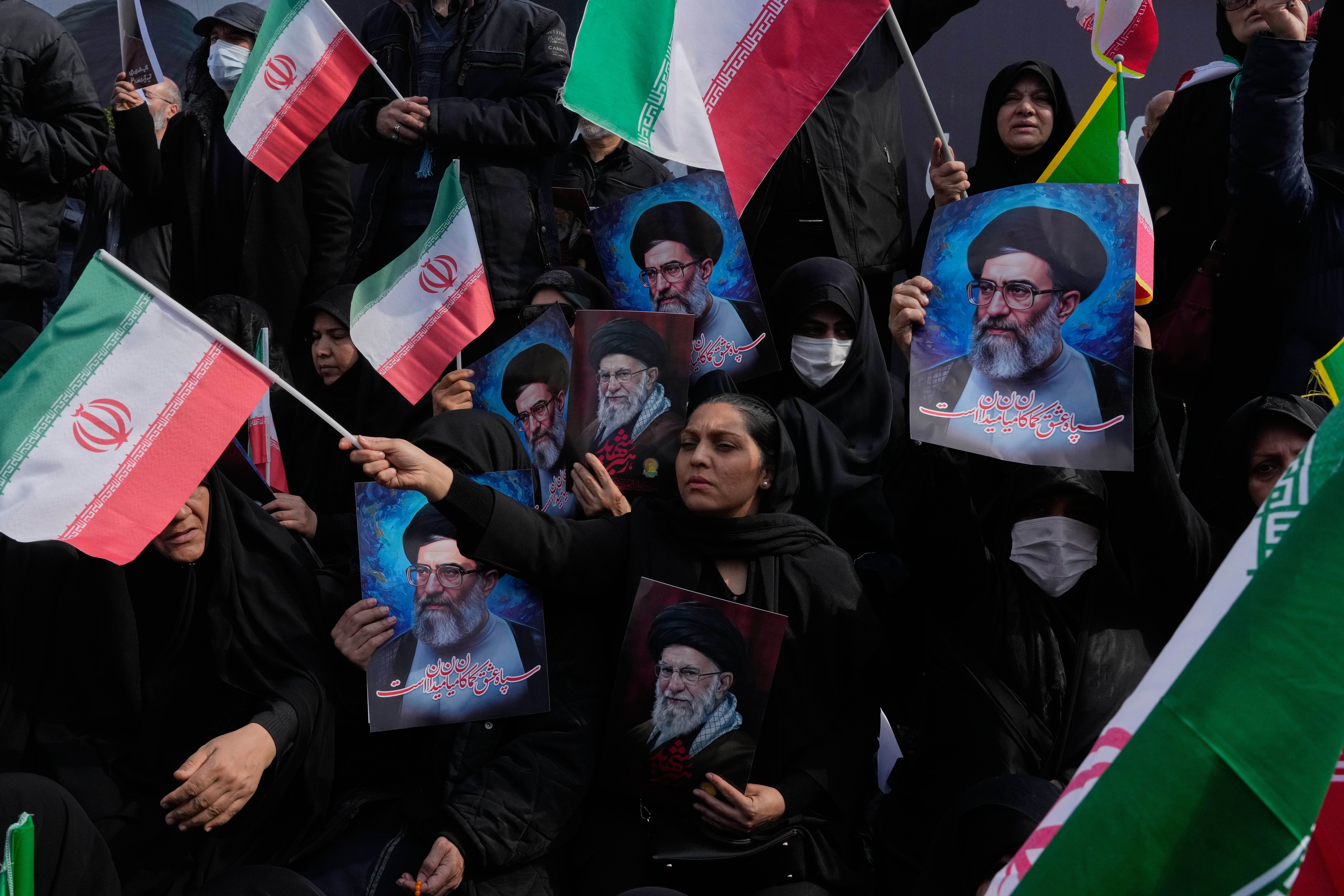
A decapitation strike, such as the one carried out by Israel and the USA against the Iranian leadership, serves one purpose: to paralyze the enemy by suddenly eliminating its leadership to such an extent that it is no longer capable of organized resistance. This goal has clearly not been achieved; the war is taking longer than expected. Even though it was possible to eliminate revolutionary leader Ayatollah Ali Khamenei, the Minister of Defense and a whole series of leading members of the security and armed forces, it is clear that the Iranian regime is still functioning and is capable of severe counterstrikes. This raises the question of what scenarios are conceivable for the end of the war and the future of Iran at this point in time.
A regime fall after prolonged military conflict? Rather unlikely
If the attacks on Iran continue at this level of intensity, sooner or later the structures of the regime will be destroyed to such an extent that it will no longer be able to hold on against the will of the population. In this case, the war would indeed end with the fall of the regime. This would be a possible, albeit extremely optimistic, scenario. This is by no means expected in the immediate future, but at best in the medium term — within months rather than weeks. And it is not certain that the US and Israel will be able to maintain their military operations for that long.
It is already clear that the global economy will suffer significant damage. The closure of the Strait of Hormuz, which has resulted in approximately 20% of the world's crude oil and liquefied gas no longer reaching the market, has led to a significant increase in oil and gas prices, accompanied by considerable volatility. This applies in particular to US President Donald Trump, who cannot afford higher inflation or a slump in the economy domestically. In view of significant increases in fuel prices in the USA, it is becoming apparent that such a development has already begun, and it is therefore conceivable that Trump will end the war without having achieved his proclaimed goals, as long as he can find a way out that allows him to save face. Pressure from the Gulf States could also contribute to this if they get the impression that their economic interests are being affected too much. The US president's recent statements that the war is “very complete” point in this direction.
The fact that Trump does not necessarily want to see the regime overthrown in every case is also evident from his claim to have a say in the installation of a new leadership, openly alluding to Venezuela. There, he obviously doesn't care that the regime, which is hated by the population, continues to have power as long as it acts in his interests. Furthermore, the war against Iran has a natural limit in that the ammunition supplies of the US and Israel are finite. In the summer of 2025, in the final days of the war in Israel, the supply of interceptor missiles was running low. Some Iranian missiles reached their targets because the Israeli air defense was forced to decide which attacks it would intercept and which it would not. Trump assures us that the US has “infinite” supplies and is in a position to continue the attacks for as long as it wants, but this should be seen as typical Trump bravado. Information from the Pentagon shortly before the war began indicated that ammunition supplies are significantly limited.
If this scenario is true, the war will end without a clear outcome, but will have caused enormous damage worldwide. Should the US and Israel nevertheless continue the war in the long term, mobilizing all their reserves and disregarding the economic and political consequences, Trump would face considerable problems with the American people, whom he once promised to withdraw from all wars and not to engage in new ones.
If, contrary to expectations, the mullahs' regime were to fall, the majority of the Iranian population would probably want a democratic system as an alternative. To achieve this, however, the supporters of democracy would first have to overcome the resistance of the remnants of the regime, who would not simply give up without a fight. Some kind of revival of the protests of recent years would be essential, which would have to prevail against a military apparatus of oppression that has been crushed and is no longer capable of organizing itself. Leading figures from civil society must organise a transition to repair the worst damage from war and create the atmosphere for a pluralistic political culture. The son of the Shah, who was overthrown in 1979, Reza Pahlavi, would be a possible candidate—he has strong support among exiled Iranians and has also gained popularity within Iran in recent months, but he receives little support from the US government. The history of such upheavals also shows that personalities who are popular and influential at the outset only play a lasting role in exceptional cases, and that instead, people emerge whom no one had expected.
The continued existence of the regime and the so-called moderate forces
What happens if the regime in Tehran survives this war? Trump would agree to this if 1) the economic and political costs of continuing the war became too high for him, 2) leaders came to power whom he could portray as moderate, and 3) Iran at least officially renounced its nuclear and ballistic missile programs and gave up its support for proxies in the region. It is questionable whether this is more than a theoretical option. In order to find a halfway decent way out that would allow him to save face, Trump would have to be able to point to the last two points as successes. It is highly unlikely that the regime would agree to this. The appointment of Mojtaba Khamenei as successor to his father, Supreme Leader Ayatollah Khamenei, suggests that hardliners from the Revolutionary Guard are currently in the ascendancy. Under no circumstances are they likely to even pretend to go along with Trump's ideas.
Another obstacle would be Israel. In contrast to Trump, the government there is very serious about overthrowing the regime, which it considers an existential threat in all its conceivable forms. And probably rightly so: experts outside Israel point out that there are no truly “moderate” forces within the mullah regime, only more or less pragmatic or fanatical technicians of power retention. The actual character of the regime cannot be changed as long as it exists. Accordingly, Israel would hardly agree to an end to the war without a clear outcome and could also count on the backing of the US administration. The Heritage Foundation, represented within the Trump administration by influential chief of staff Steven Miller, stands firmly behind Israel.
Not all coups are the same
A coup by parts of the armed forces would also be conceivable. The Revolutionary Guards could seize power if they had the impression that the current leadership was willing to yield or was unable to successfully wage the war. In this case, the clergy would be disempowered, but otherwise nothing would fundamentally change — the repression would continue, and actual power would remain largely in the hands of the same people, as the Revolutionary Guards are already one of the decisive forces in the country.
However, this would differ from a coup by the regular armed forces. Since Iran has universal conscription, the army is composed of all sections of the population, with only the higher officer ranks likely to be loyal to the regime. Since the 1979 revolution, the army has been regarded as a source of uncertainty, which is why the Revolutionary Guards were explicitly established as an ideologically reliable counterweight to it. A successful coup by the regular security forces could therefore well lead to fundamental changes. However, any such attempts would meet with decisive resistance from the Revolutionary Guards, making civil war more likely than a successful military takeover in this case.
The civil war scenario and long-term instability
It cannot be ruled out that, although the mullahs' regime may fall, it will not be replaced by a stable democratic government in the short or medium term, but that Iran's state functionality will instead be jeopardized. Iran is home to a number of ethnic groups, including the Azeris (oriented towards Azerbaijan), the Baluchis (oriented towards Baluchistan on the territory of Iran and Pakistan), the Kurds in the northwestern border area with the Iraqi Kurdish regions, but also Arabs, who, as Sunni Muslims, have always been viewed with suspicion by the Shiite theocracy. The largest of these groups are the Kurds, whose aspirations for autonomy or independence have already made them the target of brutal repression on numerous occasions.
An overthrow of the regime could encourage the Kurds to intensify their efforts for autonomy or independence. Civil war cannot be ruled out, especially if other ethnic groups join the fight. The US government is apparently already in contact with armed Iranian Kurds in northern Iraq to persuade them to intervene against the regime. In an extreme case, the disintegration of Iran along ethnic fault lines with far-reaching consequences for the long-term stability of the region cannot be ruled out – a fear that is taken very seriously by the Gulf states and one of the reasons why they were against this war.
According to estimates, around 20-25% of the Iranian population currently continues to support the regime. These people would not simply disappear after his fall, but would be hostile to any other government because of their religious fanaticism, but also the loss of privileges. Building on remnants of the Pasdaran (Revolutionary Guards) and the Basij (volunteer militias), this could lead to a terrorist campaign that would seriously destabilize society and state in the longer term, similar to the situation in Iraq.
The targeted weakening of the repressive apparatus
The only reasonable strategic goal of this war is to overthrow the mullah regime. If the regime survives, it would restore its capabilities and continue its previous course both internally and externally, including the nuclear weapons program, which, following the current attacks, would be seen as the only guarantee of survival. However, the US government does not seem to be fully aware of this, as evidenced by the incoherent, sometimes contradictory statements coming from Washington. The US president's official statements no longer mention regime change, which was still being talked about at the beginning of the attack. Instead, he seems to prefer a variant of his Venezuela action. He has stated that establishing democracy in Iran is not his priority and that he would be happy to see the religious regime continue, as long as it cooperates with the US. However, he had described Mojtaba Khamenei as an unsuitable candidate before his appointment.
Now that the mullah regime has not collapsed at the first attempt, the US clearly has no clear idea of how the war could be ended or what purpose it is supposed to serve. Instead, the time frame varies depending on the commentator. Initially, there was talk of one to two weeks, then four to five weeks, but now some in Washington are mentioning 100 days or September of this year as the time frame. Trump himself now wants to end the war “soon,” according to the latest turnaround.
The situation in Israel is different. There, the government and military clearly and consistently refer to the overthrow of the regime as a war aim. They know that a large part of the population supports them in this. Military actions also seem to be in line with this war aim. Recent analyses have shown that security apparatus institutions such as the police, Pasdaran, and Basij are now being targeted. The aim here is clearly to destroy or at least weaken the infrastructure of repression in order to give the population opportunities to take action against the regime. There are serious and justified doubts that the mullah regime can be eliminated by air strikes alone. However, the destruction of the repressive apparatus and a subsequent renewed uprising by the population currently seems to be the only way to overthrow the regime. This is a very vague hope, but otherwise it is difficult to see how this war could come to a meaningful end.

%20(1).webp)