The Special Criminal Court in the Central African Republic: “Is it worth it?”
By Stefan Schlotter, judge at the Special Criminal Court in Bangui
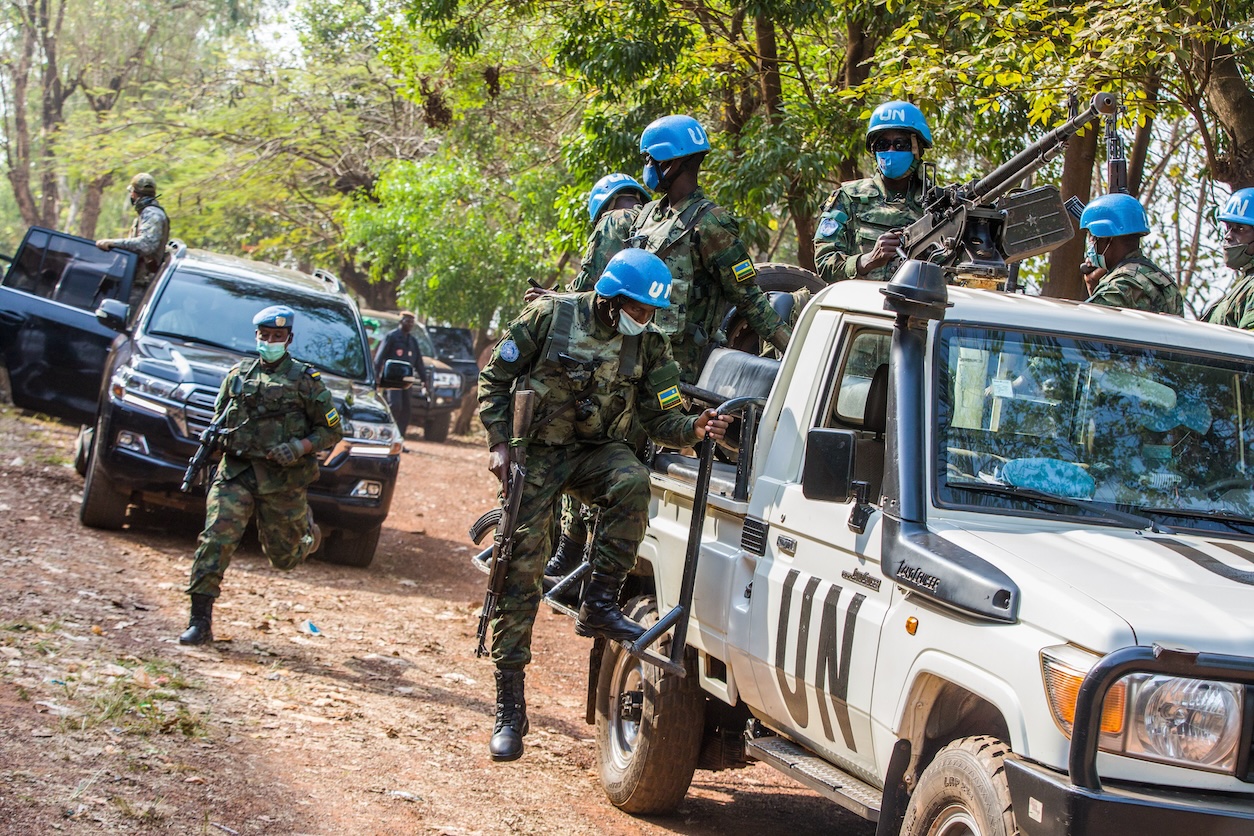
The Central African Republic has been suffering from civil war for years, which has not only driven hundreds of thousands of people into neighboring countries, but has also led to brutal murders and rapes in their own country. The conflicts between countless rebel groups are not only motivated by religious reasons—the hostility between Christians and Muslims—but also by the struggle for raw materials such as gold, diamonds, and uranium. Their exploitation benefits international corporations or individual clans, but contributes little to the national economy. According to the World Bank, around 70 percent of the 5.6 million inhabitants live below the poverty line. Since 2025, a United Nations blue helmet mission with around 18,000 military personnel, police officers, and civilian staff has been attempting to contribute to the pacification of the country. Meanwhile, all UN peacekeeping missions are facing a 15 percent budget cut this year. (ed.)
In February, the UN Administrative and Budgetary Committee will discuss, among other things, the continued financing of the peacekeeping mission in the Central African Republic. Indirectly at stake is the fate of a small but effective hybrid court. This is an opportunity to take a closer look at the Cour pénale spéciale (CPS). “Is it worth it?” This question is almost always raised when I talk about my work as a judge at this court in Bangui, the capital of the Central African Republic. The question rarely refers only to my personal decision to hold this office, but aims at something more fundamental: Can such a special criminal court really make a difference in a country marked by poverty, violence, and fragile statehood? Or is it a well-intentioned but ultimately ineffective symbol?
What is the CPS?
On June 3, 2015, the then transitional government of the Central African Republic established the CPS through an organic law (“loi organique”) and on the basis of a UN Security Council resolution to prosecute genocide, crimes against humanity, and war crimes committed in the country since 2003. The court is a response to a spiral of violence since the 2000s, to coups and fighting, particularly between the Séléka and Anti-Balaka militias, in which massacres, systematic rape, and expulsions were part of everyday life. A key insight from these years is that impunity alone generates future violence: those who could kill with impunity yesterday feel secure in their actions tomorrow.
From 4 to 11 May 2015, the “Bangui Forum on National Reconciliation” brought together over 600 representatives from civil society, politics, traditional communities and religions to discuss the prerequisites for comprehensive peace. Prior to that, representatives of ten rebel groups and the government had already signed a preliminary peace agreement on April 23, 2015. The working group on the “Justice and Reconciliation” of this so-called “Bangui Dialogue” recommended mechanisms of transitional justice. Specifically, a special criminal court was to be established locally, which would be closer to those affected than the distant International Criminal Court (ICC) in The Hague.
Twelve international, 13 national judges
The recommendations were implemented, and with the support of the United Nations, the CPS was created: it is the highest court in the Central African Republic, embedded in the national judiciary. It is staffed by twelve international and 13 national judges, three national and three international prosecutors and investigators. It applies national criminal law, which sanctions the core offences of genocide, aggression, war crimes and crimes against humanity, and in doing so comprehensively refers to the provisions of the so-called “Rome Statutes.” At the same time, international standards apply in addition, insofar as national regulations are incomplete or contradictory. The jurisdiction of the CPS complements that of the ICC, which also deals with crimes in the Central African Republic, but only prosecutes a very limited number of suspects who bear outstanding responsibility.
Proceedings against “key perpetrators”
Proceedings before the CPS follow the local investigative model based on French law, with a special prosecutor's office, investigating judges, preliminary proceedings, main hearings, and an appeals chamber. The focus is on proceedings against “key figures” — people who have played a special role in chains of command and power structures, not just top leaders.
In addition to proceedings against, for example, former President François Bozizé, against whom an international arrest warrant has been issued, generals, local commanders, and the heads of detention centers and camps that had been converted into torture chambers are also under investigation. This breadth is important: if only a few “minor” commanders were convicted while political and military leaders remained unpunished, the court would lose credibility. If mainly the leaders were prosecuted, the same would apply, and the population would then have to live with the knowledge that “the murderers are among us.”
Investigations at dangerous crime scenes with the help of MINUSCA
The fact that a court like the CPS can work at all is not self-evident in a country like the Central African Republic. The CPS is dependent on international support, in particular from MINUSCA, the United Nations peacekeeping mission for the Central African Republic initiated in 2014. In 2014, MINUSCA had already pledged its assistance in establishing a hybrid criminal court in a memorandum of understanding with the transitional government.
Since then, MINUSCA, in cooperation with the United Nations Development Programme and since October last year also with the EU (plus Switzerland), has provided not only a large part of the financial and technical support, but also concrete aspects: security for buildings and personnel, protection of witnesses, support of investigations in uncertain regions, logistical assistance when traveling to crime scenes and translation services. The staff of the Court's own police unit, the witness protection program and the academic staff are local and international employees of MINUSCA, which also recruits international judges and prosecutors. Without this “protective bell,” the work of the court — at least in the current security situation — would be difficult to carry out.
Not a political instrument of the United Nations
At the same time, the CPS must maintain its independence from all political and military actors; this also applies in particular to its relationship with MINUSCA. The Court of Justice must not be perceived as a political instrument of the United Nations. Cooperation with MINUSCA is therefore characterized by tension: MINUSCA's protection and resources are necessary to carry out investigations and main negotiations; at the same time, it must be clear to the outside world at all times that decisions of the court are made solely on the basis of the needs of the investigation, according to law and law and are not based on MINUSCA's financial situation or even political considerations.
Many observers initially accused the CPS of producing mainly paper and announcements. Setting up the court, recruiting staff, and developing security concepts did indeed take years. However, there are now visible results: in 2022, the first major trial began, in which militiamen were charged with war crimes and crimes against humanity in the villages of Koundjili and Lémouna.
The court convicted three defendants of war crimes and crimes against humanity, including murder, rape, displacement, and looting, thereby sending a clear signal: even in a fragile context, trials for crimes under international law can be conducted and concluded. This judgment is now final, as are two decisions on collective reparations in the same case.
Signals to potential perpetrators
Two further judgments have been handed down by the Trial Chamber; a trial is currently ongoing; three proceedings, including that against former President Bozizé, have been admitted to trial before the Trial Chamber. Further cases are pending at various stages; However, like the ICC, the CPS must also focus on flagship cases that expose structures and investigations in unstable regions, victims, and the general public.
The public can often follow proceedings in real time via live radio broadcasts, the leading medium in the region, while the press provides extensive and detailed coverage of the court's work.
Despite everyday obstacles such as fragile security for witnesses, hard-to-access crime scenes, weak infrastructure, limited resources and deep-rooted distrust of government institutions, the CPS has so far been able to live up to the hopes placed on it.
Three perspectives: Does this help the victims?
No verdict brings the dead back to life or heals trauma, and the amounts of compensation awarded so far remain modest in view of the suffering they have suffered. But criminal proceedings can clarify responsibility, give victims a voice and establish a public narrative that does not heroise violence, but criminalizes it. The fact that a person affected can tell their story in a court room in Bangui and that a perpetrator has to answer to a Central African court on the spot has special significance – especially in a country where impunity has long been the rule.
Does that do anything for the national judiciary?
The CPS is deliberately designed to be temporary; its mandates are measured in years, not decades. Its real legacy lies less in the number of judgments than in what remains: judges, prosecutors, defense attorneys, and investigators with knowledge of international criminal law and experience in complex proceedings; improved investigative standards; structures for witness protection and victim participation, standards and criteria for victim compensation, etc. If this knowledge “diffuses” into the regular justice system, if proceedings outside the CPS are guided by the standards it has developed, then the court will have an impact beyond its own lifetime.
Does that make a political difference?
No court can create peace alone; this requires security reforms, reconciliation processes and long-term development programs. Without credible prosecution, however, peace agreements lose acceptance too easily and quickly and risk their own claim to validity when the message to the next generation of militias is: “Anyone who is strong and important enough for the oft-invoked “political stability” remains unpunished. “The CPS is a building block in a larger structure — but it is the only component that consistently strives to end impunity.
Between symbol and model: The promise of CPS
Critics warn that, at the end of its mandate, the CPS could appear to be symbolically charged but largely ineffective in the everyday life of the population. This risk exists — in particular when funding expires before the second mandate is completed in 2028, when proceedings remain incomplete and therefore invisible, victim participation remains ineffective and the transfer of knowledge to the national judiciary fails. It is a risk that must appear more real than ever in view of the United States' withdrawal from direct funding of the court and the uncertain fate of MINUSCA, whose further financing beyond June 30 is being debated in the General Assembly's Budget Committee just these days.
On the other hand, there is a greater chance that the CPS will become a model: for criminal proceedings that are closer to those affected than purely international tribunals, while at the same time applying international rules and standards and thus demonstrating that these can be implemented in all their facets even under the most difficult circumstances and with a limited budget: the rule of law is not an unaffordable luxury that can only be applied in practice under regulated conditions!
However, it is crucial that the CPS is able to complete its mandate in a meaningful way: complete the ongoing processes, transfer the completed investigations to the Criminal Chamber and develop an orderly and sustainable exit strategy to transfer the pending proceedings to the ordinary judiciary. This, however, this requires continued support from the international community.
A piece of normality in a state of emergency
Whether this effort is worthwhile depends not least on our standards. Anyone who expects a court to heal all the wounds of a decades-long conflict in just a few years will be disappointed. On the other hand, those who recognize that every single indictment, every trial conducted in accordance with the rule of law, and every sentence effectively enforced creates a piece of normality in a country marked by states of emergency and leads to a transfer of knowledge—about fair trials, victims' rights, and reparations—will easily come to a different conclusion.
For me, the purpose of the CPS is precisely this: It is not a panacea, but a visible promise that the most serious crimes will not sink into oblivion and impunity. Delivering on this promise is worthwhile — for the victims, for the future of Central African justice and, yes, for all of us who work on this court.
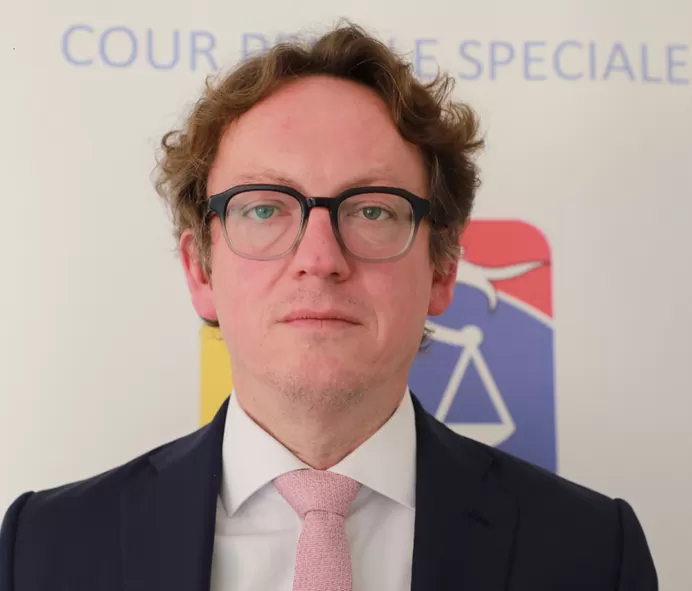
The author, Stefan Schlotter, has been an international judge of the Pre-Trial Chamber and ad hoc judge of the Appeals Chamber of the Cour Pénale Speciale in Bangui since 2024. He previously worked for over 15 years as a public prosecutor, judge and consultant at the Federal Ministry of Justice, Berlin, and as a lawyer in an international law firm.