“The reincarnation of the Dalai Lama will be the big topic in the coming years”
Interview by Gudrun Dometeit
A “dissident council” recently met in Berlin, which you chaired. What was that about?
More than 40 dissidents from around the world, including Mauritania, Somalia, Venezuela, Syria, Afghanistan, Azerbaijan, Russia, and Belarus, gathered to share their experiences. How can pressure be exerted on autocratic regimes? What can individuals achieve? How can other states help? The basis for this was my book on democracy in exile, which will be published soon. In it, I recommend that all exile communities, governments, parliaments, parties, or at least coordination offices be set up according to the Tibetan model so that they are prepared for regime change. The disunity among Iranian dissidents, for example, is also a problem for foreign governments: Who could actually succeed Ayatollah Khamenei if his regime falls?
How can the Tibetan model serve as a blueprint for others?
90 percent of exile groups fail due to disunity and lack of money. Their host countries often do not support them, or do so only insufficiently, because they fear misuse of funds. And autocrats usually rule because they succeed in dividing the elite. The only option for creating democratic conditions is to join forces and fight, to form a united front. But very often this does not happen. Unity does not mean ideological conformity, but it is essential to agree on a goal, i.e., first and foremost, the replacement of the regime. Perhaps it is still possible to agree on democracy or a secular system. But whether one is a monarchist or not, as in Iran, such questions are secondary and only confuse other states. When asked, the Tibetan government gives a unified answer.
But despite their unity, the Tibetans have not been very successful so far—at least, it has not led to any change in the political situation in China.
We don't know how it will end yet. Of course, we also have internal differences of opinion, but we have agreed on one voice that speaks for us.
Is such a government in exile also a kind of laboratory for practicing democracy?
Yes, we run our own schools, hospitals, monasteries. We have a bank and diplomatic missions all over the world. We work like a real government, and we do it fairly efficiently. Other exile communities often have problems representing the concerns of their own people. Sometimes there are lots of volunteer groups who all do the same thing in an uncoordinated way. We have covered the entire spectrum, whether foreign, financial, cultural, or energy policy, over the past 60 years. Venezuelans and Iranians do not have such knowledge because they have not formed a united front.
Does your advice fall on fertile ground?
I have spoken with Iranians, Afghans, Venezuelans, Cambodians. Many are interested.
There are currently many serious conflicts brewing in Ukraine, Gaza, Iran, and Venezuela. Donald Trump's policies are a constant topic of discussion. In contrast, China's aggressive policies in Tibet have almost completely disappeared from public perception. Do politicians even talk to you anymore?
I am not accusing anyone. After all, there is a real war raging in Ukraine, and what is happening in Gaza, Hong Kong, Venezuela, Iran, and Taiwan is all real and urgent. There have been ups and downs over the past 65 years, but we Tibetans remain well prepared. My Afghan friends are frustrated right now because they are no longer in the news. But the Tibetans will not give up. Whenever we reappear in the news, we will be ready with our entire infrastructure and our global network.
In the past, many prominent politicians and artists in the world demonstratively welcomed the Dalai Lama. Do they still do that?
It has become less common. The Dalai Lama has not traveled much in the past four or five years. With China's growing influence, especially economic influence, many have also withdrawn. Between 2000 and 2016, everyone wanted to do business with the country. However, with its so-called wolf warrior diplomacy, China has become increasingly aggressive, especially towards its neighbors, and Covid has probably permanently changed the once rather positive image of China. Even Germany now takes a realistic or skeptical view of the country. If you go to China now – as German Chancellor Friedrich Merz is doing these days – you do so on its terms. You submit, and China will take advantage of that. Beijing does not invite anyone who does not submit. Think of the German foreign minister, who was recently not received there.
Do you ask visitors to China to raise the issue of political prisoners from Tibet?
We ask them to draw attention to two things: One million Tibetan children are being indoctrinated with Chinese propaganda and language in boarding schools. They are being raised to become Chinese. The second concern relates to the Dalai Lama himself, who repeatedly makes it clear that his reincarnation will be born outside China in the free world. We are therefore urging European and American leaders to tell the Chinese that rebirth is solely a personal decision for the Dalai Lama. In order to remain a religious teacher, one must have freedom of religious practice. But in Tibet, practicing religion is not allowed. Even photos of the Dalai Lama are banned. How can one be reborn in a country where one's own photo is forbidden?
What exactly is reincarnation all about?
The current Dalai Lama is the 14th. So 14 times the Tibetans have searched for a new one, for the boy in whom we recognize the person of the Dalai Lama—it is the Buddhist concept of consciousness and karma.
But how do you find the new one?
You have to read the Dalai Lama's book “My Land and My People.” There is a chapter there about how the 13th found the 14th Dalai Lama — with the help of many spiritual rituals and practices. There are always several candidates, usually boys, two or three of whom are shortlisted through rituals and prayers. We continue this process until we can identify the Dalai Lama.
Is there already a shortlist?
Not yet. The current Dalai Lama must first pass away. Then the process will begin. But he has already taken steps to appoint a person or a selection committee from among his circle who will be responsible for the reincarnation process. China, on the other hand, has not authorized anyone to do so and is therefore not adhering to religious procedures.
What if China suddenly presents the Dalai Lama's reincarnation after his death?
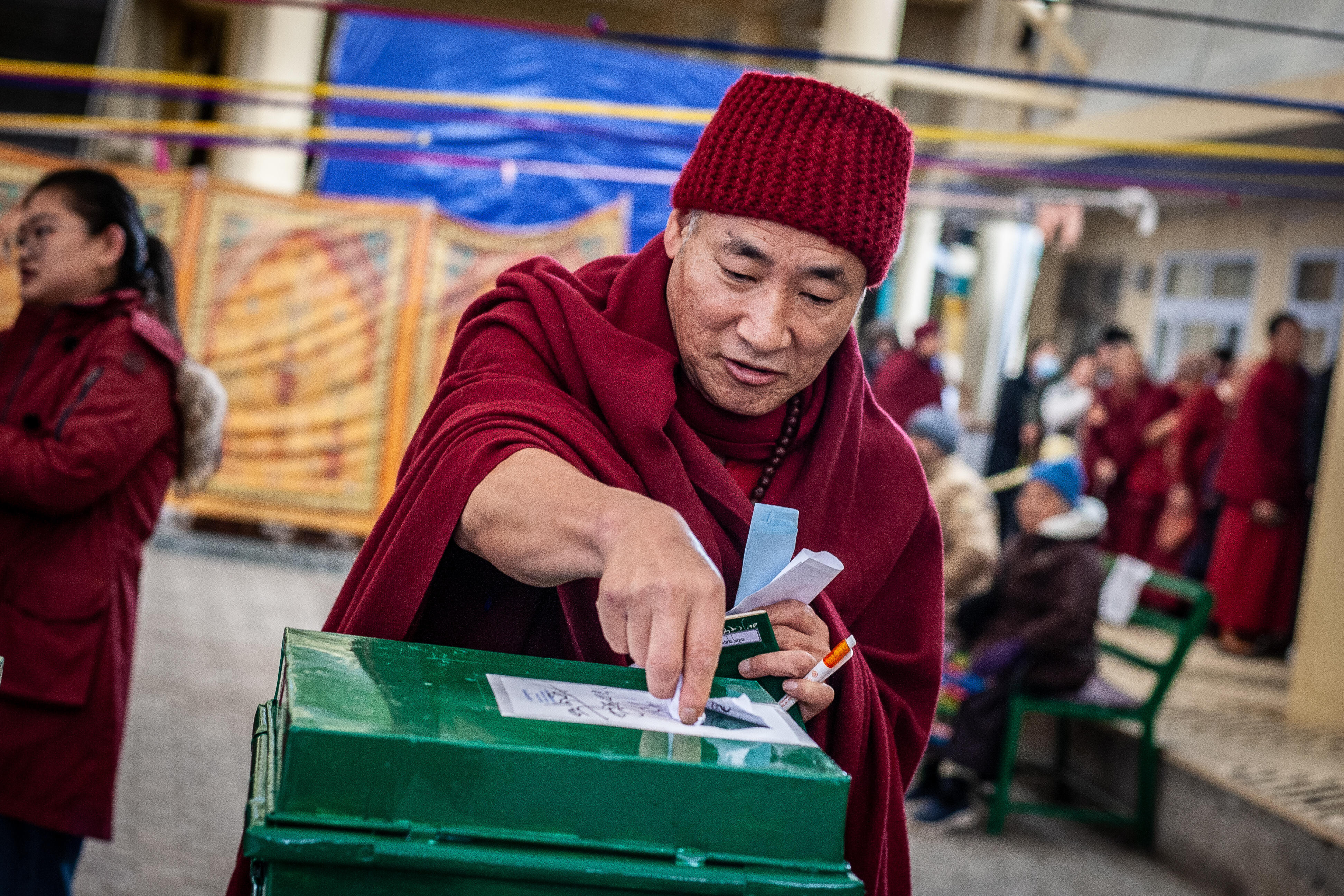
The Tibetans regard the question of succession as a spiritual and personal matter. And as one of faith. When the Dalai Lama sets the direction and the boy is finally found, we will follow him. No Tibetan and no Buddhist will recognize a fake Dalai Lama appointed by the Chinese government. The 11th Panchen Lama, whom the Dalai Lama had chosen (and who was to play an important role in reincarnation, ed.), was kidnapped and has been missing for 30 years. We have tried to find him; he is still in China, apparently moving from one military camp to the next. No one is allowed to meet or see him. But he is the chosen one. The Panchen Lama appointed by China, on the other hand, is irrelevant. The Dalai Lama has decided to be reborn outside of China so that he will not be kidnapped. We are trying to comply with this wish, but it is difficult because China will put pressure on countries such as Russia, Cambodia, and Laos to recognize its Dalai Lama. So far, however, none of these countries has invited the fake Panchen Lama.
So the next Dalai Lama could also come from Europe?
All places outside of China are good for us, at least from a spiritual point of view. But he must also be born in a safe place.
Does that mean you do not leave reincarnation to fate, but control the process?
We're not controlling this, it's up to the Dalai Lama to decide. But if you look at the story of reincarnations, then the next Dalai Lama will always be born where the previous one spent most of his time. The third Dalai Lama, for example, lived mostly in Mongolia, and the fourth was born in Mongolia. The current one has spent most of his time in India, so the probability that he will be reincarnated in India is high.
Then it would probably be difficult for Tibet if India and China were to get too close.
Since the clashes between India and China in the border region with Bhutan, Beijing has stationed troops there. The military border conflict in 2020, in which Indian and Chinese soldiers died, has permanently damaged relations. In the Kashmir conflict, China also supports Pakistan, while India supports Kashmir. In any case, China will exert political and economic pressure to harm us. Therefore, Nepal or Cambodia may not be safe enough for us. But at the end of the day, the Dalai Lama must decide. He is fully aware of the complex geopolitical situation.
What problems does the Tibetan movement face?
China exerts influence at many universities worldwide through its Confucius Institutes. The Free Tibet movement has succeeded in getting some of them closed down through its protests. Chinese students are often incited by their embassies to put pressure on us to stop our activities. Last October, I was supposed to give a lecture at the Harvard Club of France. The club's president had to change the venue ten times because the event kept getting canceled because of me. In the end, a Christian college agreed to host the event. The address was not announced until 24 hours before the lecture began because there were fears that the Chinese embassy might have this venue canceled as well.
The US government has cut its global humanitarian aid. Does this also apply to Tibetans?
In 2020, Democrats and Republicans in Congress passed the “Tibet Policy and Support Act,” signed by President Donald Trump. And at the beginning of Trump's second term, despite the termination of USAid, our government in exile received almost all of its support, but recently the $7.5 million per year in aid was cut in half.
What is the humanitarian situation in Tibet at the moment? A few years ago, desperate monks protested against oppression by setting themselves on fire.
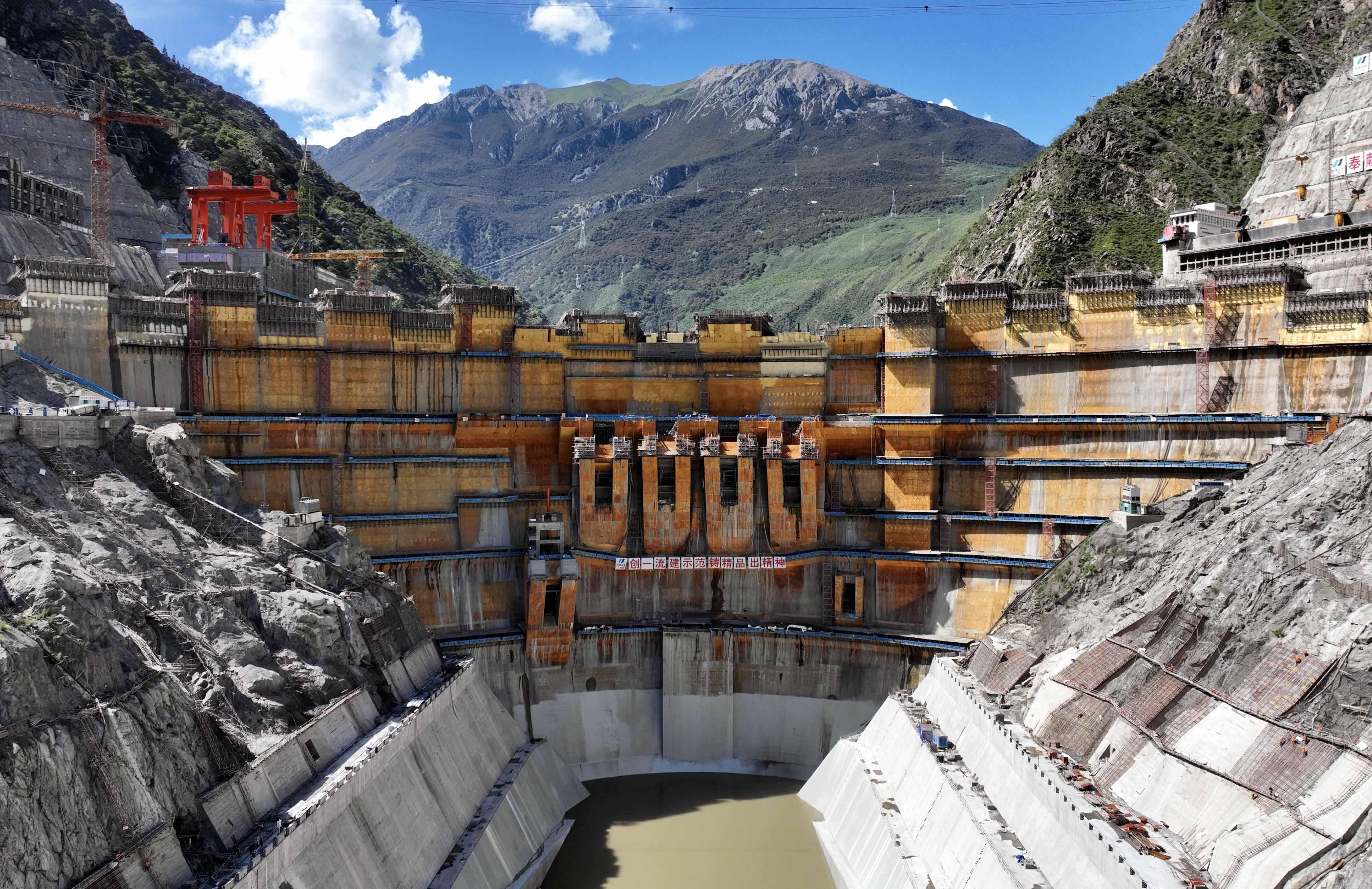
During my term in office, this happened 133 times. But since 2022, there have been no more. The Chinese government has taken tough action, including against the families of those who committed suicide and the villages they came from. I myself have appealed to the monks that they should live and fight. The self-immolations showed how unhappy people are about the repression. China is trying to “sinicize” Tibetan culture and Buddhism, as they say. Buddhism must be taught in Chinese. The worst is environmental policy. China has built around 300 medium and small dams in Tibet — to supply energy to Chinese factories and increasingly also for data centers. They are building the largest dam in the world on the Brahmaputra river between India and Tibet, right on the border, with a production capacity of 60,000 megawatts. This means violent expulsions of people and flooding of villages. China is also exploiting the wealth of critical minerals. 75 percent of its lithium reserves are stored in Tibet.
And that's why China is so determined to maintain control over the region?
Of course. It's also important to know that 90 percent of rare earths are located in inner Mongolia, and 40 percent of iron and oil are located in Xinjiang. And all of these regions follow the Dalai Lama, even in the Russian regions of Buryatia, Tuva, and Kalmykia. It's a veritable Himalayan belt with a large land mass. So if you control the Dalai Lama, you control this entire area.
You said that the Dalai Lama, who as a charismatic religious leader always attracted large crowds, hardly travels anymore. How do you spread your views and ideas now?
Well, it's a challenge. We all take on more appointments, but no one can replace him. Last September, for example, I was on the road for 23 days, mainly in India, giving lectures in seven states and meeting a lot of people. Other months are similar. I travel for one semester and write and teach for the other.
Is the government in exile planning a special campaign to attract more attention?
Everyone is preoccupied with the reincarnation of the Dalai Lama. This will be a major issue in the coming years because China sees it as a threat to its global interests. That's why we want to raise awareness and explain what the process means and how it works. We want to control the narrative—on social media, through videos, conferences, and opinion pieces. This needs to be organized. Incidentally, our organization is called “108” – we will have 108 exhibitions, videos, etc. It is a symbolic, sacred number in Tibetan Buddhism.
In 2023, there was a scandal involving the Dalai Lama after he kissed a boy on the mouth at a public event. How much did that damage your movement?
After the event, the boy's mother and grandparents thanked him for the meeting, and everyone applauded. No one thought anything of it. The Dalai Lama is always in the mood for jokes. He pinches the nose of anyone with a long nose and tugs at anyone with a long beard. We also considered the incident with the boy to be a joke. But 40 days later, Chinese YouTubers turned the hour-and-a-half meeting into a six-second clip and broadcast it together with pro-Russian YouTubers. It went viral, and no one checked who had spread it. Then the Dalai Lama's office made the mistake of publishing a letter of apology. Why apologize when nothing happened? That, in turn, made new headlines.
Have you changed your communication as a result? Have you lost followers?
Yes, you obviously have to be prepared for such incidents, for the fact that some people will exploit a situation for their own purposes. In the first week after publication, many people asked what was going on, but when we explained, they laughed.
How is the Dalai Lama's health?
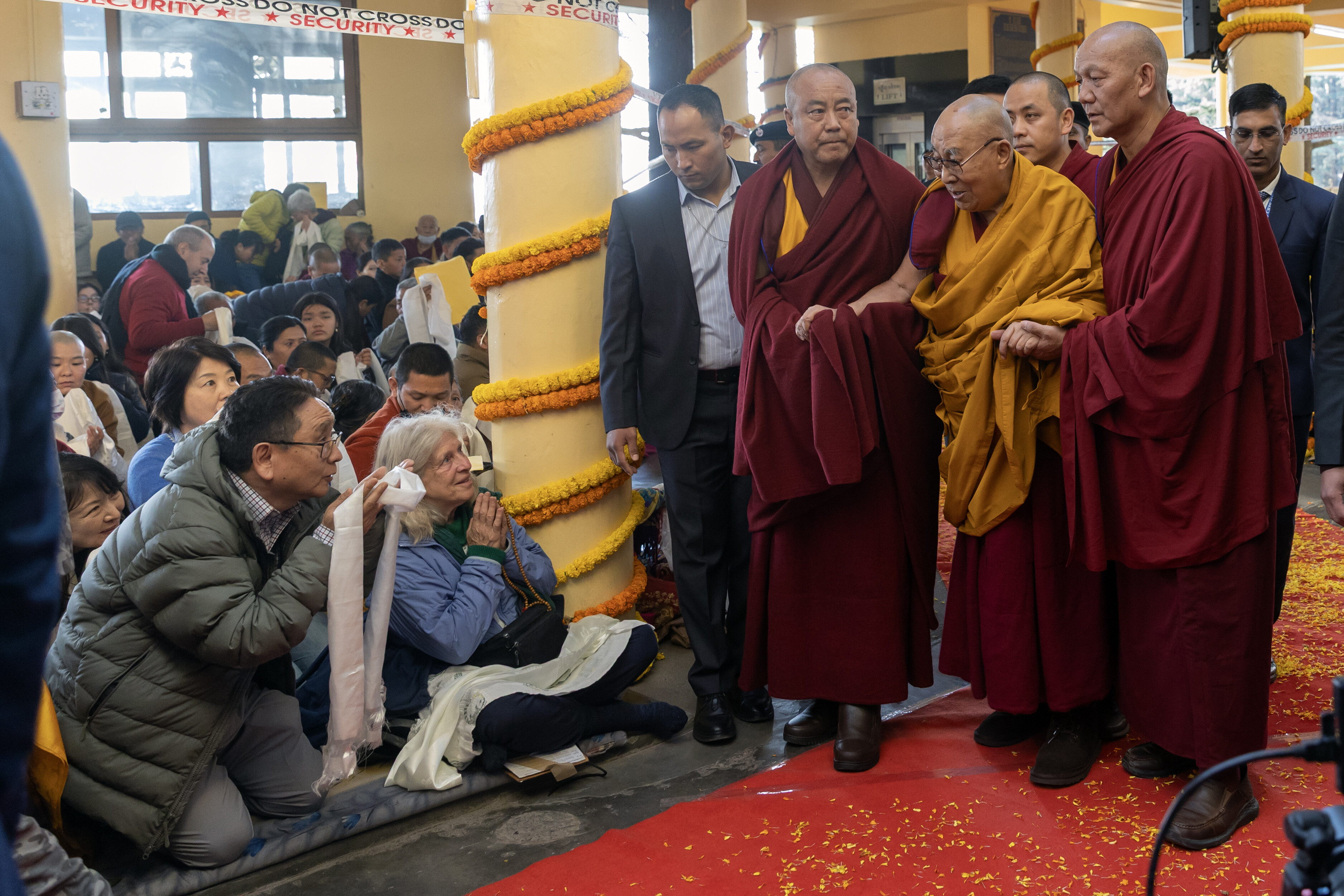
His Holiness is 90 years old, he has had knee surgery and walks slowly. And he's suffering from a minor hearing problem. But it still meets up to 300 people in one day. He just likes people.
He was, at least for a long time, a kind of religious superstar. What will the Tibetan movement do without him?
As I said, he is irreplaceable. All we can do now is take responsibility together. Incidentally, that is also his vision. That is why he established democracy in exile.
Could the next Dalai Lama also be a woman?
Technically, that would be possible, but since all previous men were men, the probability that the next one will also be a man is high. But we also know of female reincarnations.
Penpa Tsering, your successor as head of government since 2021, has just been re-elected. Will there be any change in the political course of the government in exile?
We will continue the “middle way” policy — which calls for genuine autonomy within China.

Lobsang Sangay led the Tibetan government-in-exile from 2011 to 2021. He succeeded the Dalai Lama as political leader, who wanted to focus on his spiritual duties. Sangay, a lawyer, teaches as a visiting scholar at Harvard Law School in Cambridge, Massachusetts. His new book deals with democracy education in exile. His articles appear regularly in US media such as the New York Times and the Wall Street Journal.
.webp)