Genghis Khan and a Sense of World History
Interview with Prof. Dr. Matthias Wemhoff, Director of the Museum of Prehistory and Early History at the State Museums of Berlin
By Ewald König
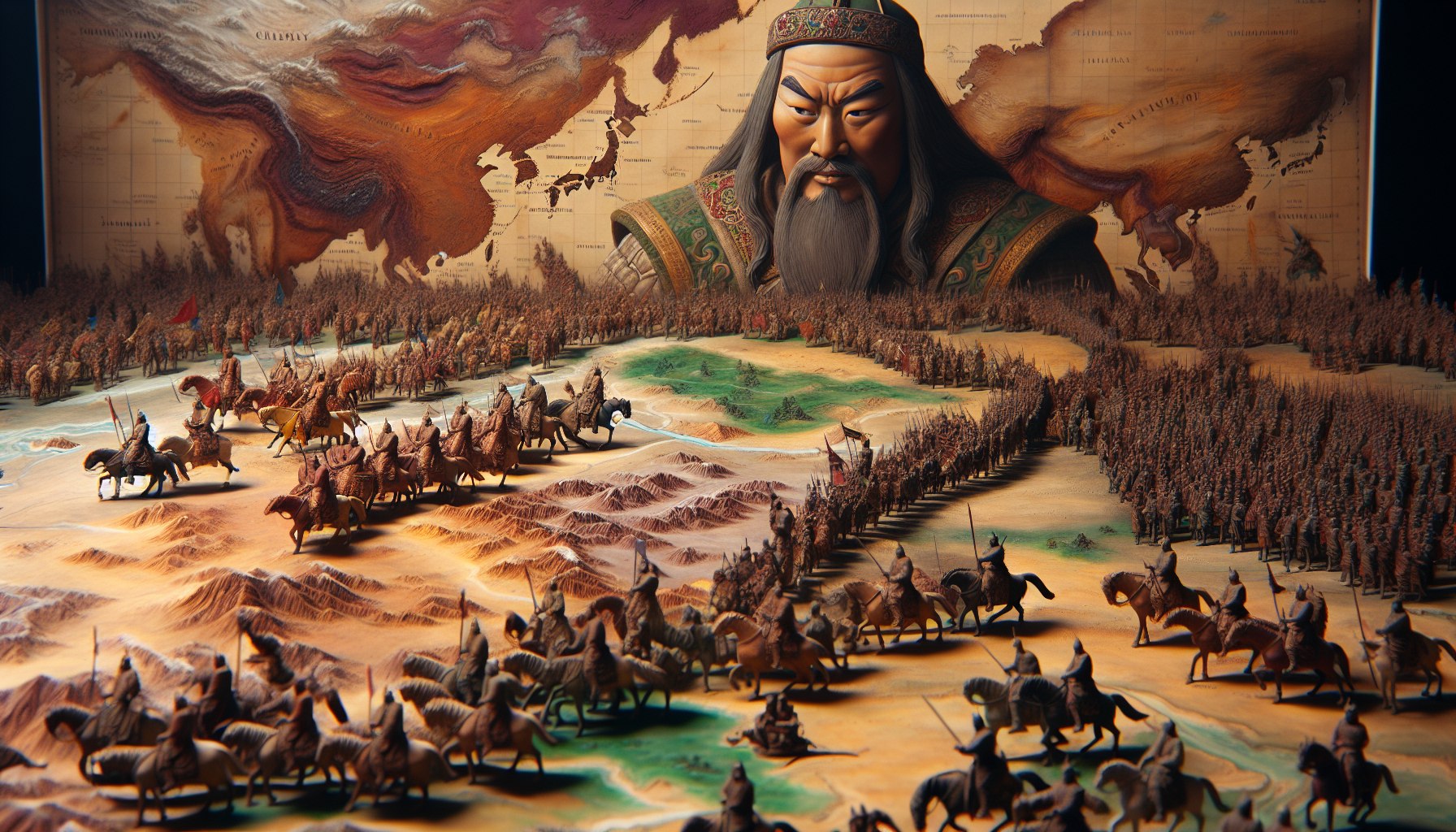
The year 2027 marks the 800th anniversary of Genghis Khan’s death. The Museum of Prehistory and Early History, part of the State Museums, is dedicating a major exhibition to him in Berlin. How did this large-scale project come together?
There’s a long backstory to this. In recent years, the Museum of Prehistory and Early History has had a strong focus on Central Asia. We’ve also long been focused on Russia, particularly on the issue of looted art and our collections in Russia.
This has led to various collaborations. In 2018, we organized an exhibition with Turkmenistan, and in 2022, one with Uzbekistan. Years ago, we had already considered—together with Russian colleagues—whether we should make the Mongol invasion of the West the theme of an exhibition. There are so many archaeological finds that allow us to provide concrete evidence of the Mongol invasion and their advance westward.
This led to the idea of organizing an exhibition directly with Mongolia to get to the bottom of this broader phenomenon—Genghis Khan and his heirs—and to trace this connection from Karakorum almost all the way to Berlin, specifically to Liegnitz, today’s Legnica near Wrocław.

How was this idea received in Mongolia?
When we first made contact with our Mongolian partners, everything developed very positively and quickly. In February 2024, I had the honor of accompanying Federal President Frank-Walter Steinmeier. There, in the presence of both presidents, we signed the agreement regarding the exhibition. This clearly shows that it is truly an important intergovernmental initiative.
How different are the German and Mongolian perceptions of Genghis Khan?
That’s exactly what this is about—a certain perspective and a look at Mongolian history from a German viewpoint. When you’re in Mongolia, you immediately notice how everything is connected to Genghis Khan—that he is the founder of the nation and the great national hero. You see the statue at the entrance to the parliament building. For the Mongolians, this holds immense significance.
From a European perspective, he and his successors are associated with an enormous threat. In any case, the Mongols have had a decisive influence on the course of world history. We still see the effects today.
What was the collaboration like with the museums in Mongolia?
We had excellent contacts from the very beginning. For several years now, the capital, Ulaanbaatar, has been home to the Genghis Khan National Museum. It showcases many outstanding objects that were previously scattered across various collections or had never been displayed at all. Holdings from other museums and the Academy of Sciences were brought together. The exhibition is very well designed from a museum perspective. We were able to clarify all our questions with the director in a focused manner and agree on a high-caliber list of loaned items. I must say, we were welcomed wonderfully.
What is the exhibition trying to tell us?
We begin with the situation in which the Mongols are standing right at the borders of the German Empire. They had formed the most powerful army of the time from the nomadic horsemen of the East Asian steppe: fast, unstoppable, and merciless. Word of the impending danger spread like wildfire and was interpreted as a divine warning: The Tatars are coming; the gates of hell have opened.
The archaeological findings are striking. One can grasp the destructive force the Mongols brought with them. There was no way to resist them. Even fortified settlements stood no chance in the long run. Many were abandoned outright, even when certain death awaited. By then, the Mongols had become highly skilled in siege warfare as well.
The Silesian knightly army was also routed in 1241 at the Battle of Liegnitz. As a result, the eastern parts of the German Empire were left unprotected. The entire course of medieval history could have unfolded differently had the entire army not withdrawn—first toward Hungary, pursuing the Hungarian king, and then back again because the Great Khan had died. This marked the westernmost point of their expansion. That’s how close the Mongols and Germans actually came to facing each other.
I find that astonishing, because in our minds Mongolia still seems infinitely far away, yet they created the largest empire in world history and ruled over a territory stretching 6,000 kilometers from Korea to Hungary.
I believe the exhibition will help visitors appreciate just how important events in the Far East are to European history. This is truly world history unfolding time and again—these movements from the East that have had enormous consequences throughout the centuries. The Mongols probably provide the best example of this. That is why we are featuring Genghis Khan and his origins.
The exhibition showcases artifacts from half a millennium of nomadic equestrian cultures in a diversity never before seen. Archaeological treasures from Mongolia are complemented by loans from Poland and Romania, as well as from the German Historical Museum, the Berlin State Library, and other collections of the State Museums.
How difficult were the negotiations for the exhibits?
After our site visits in Karakorum and following extensive travels, we had a challenging list of items to borrow. But our request was well received. We were granted permission to borrow all the high-profile pieces, so we knew early on what would be coming to Berlin in October 2026.
Do all the pieces come directly from Mongolia?
In some areas, the exhibition goes beyond the artifacts from Mongolia. After all, we wanted to bridge the gap up to this point. That means we’ve included many finds from Poland—where the presence of these Mongol troops is well documented—as well as from Romania, so that we can also adequately cover these later western campaigns. This has led to a truly exciting exhibition concept.
How many objects belonging to him personally will be on display?
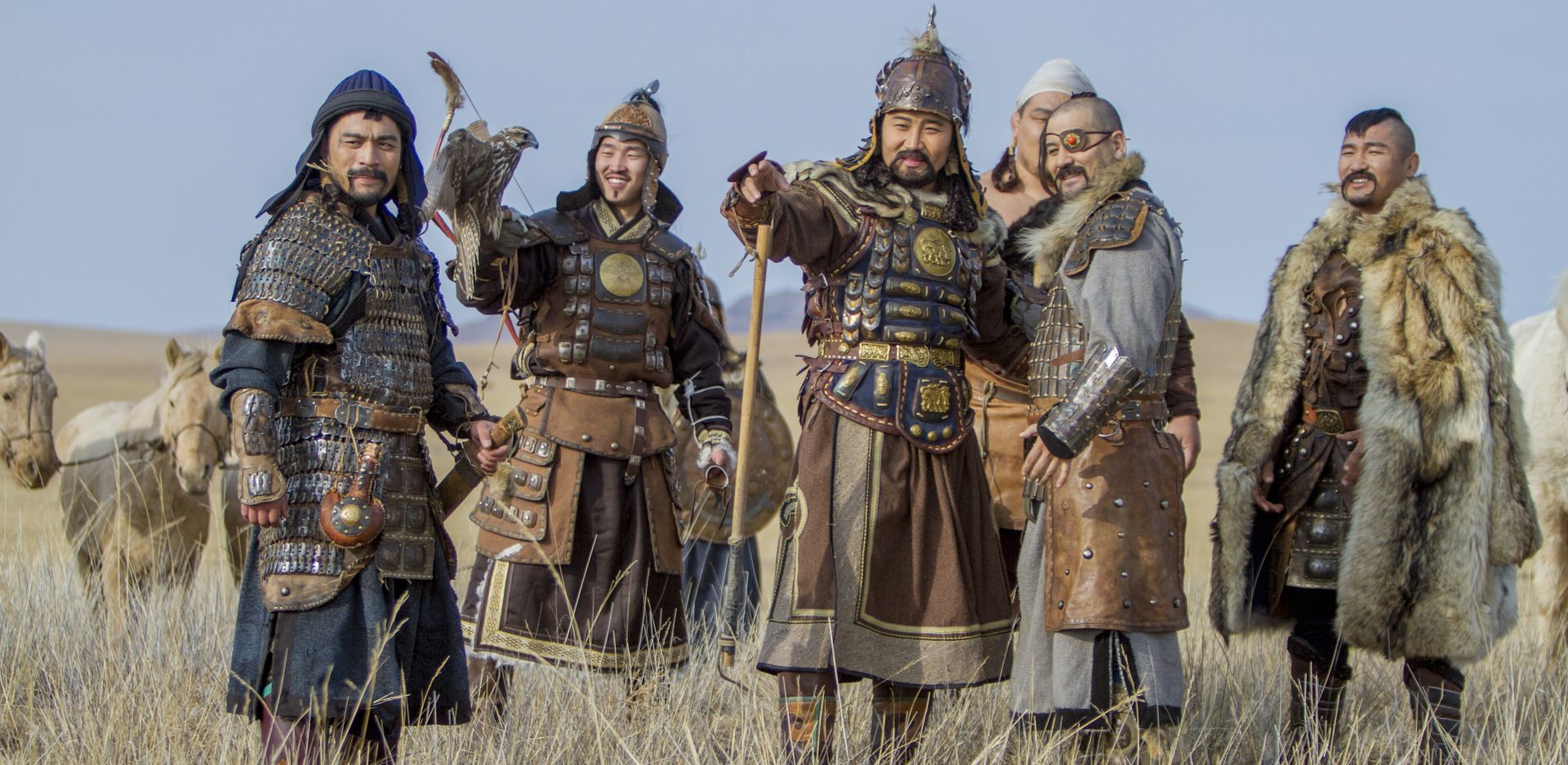
There are no objects directly associated with Genghis Khan. We have to rely on archaeological finds from the period, such as graves from the circle of the Genghisid family, whose grave goods give us an idea of the weaponry and clothing of the time. Richly furnished women’s graves have also been discovered in Mongolia, testifying to the great importance of women within these families.
There are impressive stone sculptures depicting nomadic rulers. We will be borrowing one of them—arguably the most beautiful—which will represent Genghis Khan in the exhibition.
How do you get a handle on a topic like this?
We explore their incredibly rapid expansion, their conquest toward China, and then their conquest toward Central Asia. And we show how this empire was built with great ruthlessness toward the population.
The Mongols brought about extreme changes in Eastern Europe and Asia and caused great empires to collapse in a very short time. The other side of the story, following the brutal conquest, is the very modern-seeming structure they gave their empire. The Pax Mongolica became an established term—the Mongol peace—which guaranteed safe trade across these vast distances, as well as the religious freedom that prevailed throughout the vast empire.
The trade routes, which were freely accessible under Mongol rule, accelerated trade and increased the exchange of goods. Many benefited from the rapid transit through the Mongol Empire. Northern Italian merchants, in particular, took advantage of this opportunity and thus expanded their position in Europe. The strengthening of the Mediterranean region is closely linked to the development of Mongolia.
We only touch on many other aspects briefly, even though they are also very significant. The Golden Horde shaped the history of Russia for centuries and isolated it from European developments.
When you began with the idea and the concept for the exhibition, there was no invasion of Ukraine yet…
No, there wasn't. We started back in 2014-2015.
… and no war in Gaza. Nevertheless, everything you describe sounds current, as if you wanted to illustrate the brutality with which the population was reorganized. One might think of the war in Gaza now. Or, regarding the expansion of Genghis Khan's empire, one might think of Putin. So all of this is coming to mind now, even though that wasn’t the intention?
Yes, the topics have gained a frightening relevance. Who would have thought that military expansion, the collapse of established great powers, and their lack of defensive capability would become so current.
The territory was home to vast, endless natural landscapes. How did that work?
Naturally, the empire was defined by green steppes, high mountain ranges, and vast deserts. The nomadic Mongols were able to adapt to all these diverse environments. You cannot simply view these immense territories through a European lens. Behind it all, there is always a strong individual providing the impetus. The empire’s greatest expansion, however, did not occur until the reign of Genghis Khan’s successors. They were able to build upon a foundation that was unparalleled. As soon as that strong leader is gone, the empire falls apart again, fragments, and is divided into separate principalities.
How did they manage such a gigantic expansion back then? What techniques did they have?
The backbone of the Mongol army is its cavalry. It differs from the heavily armored and rather immobile knightly armies of the West. The Mongols are fast, agile, and cunning. Time and again, they feign retreats and then annihilate the pursuing enemy with attacks from all sides. Added to this is the sheer volume of arrows fired. It is said that a Mongol horseman can fire up to 30 arrows per minute! That’s a veritable hail of arrows.
And how did they handle the logistics of such enormous territories?
They prepared themselves with very detailed logistics and extensive espionage. They interrogated prisoners and used the information they provided. But they also questioned envoys about their home countries. In addition, small strike forces would penetrate deep into unconquered territory and then report back to the military commanders.
You mentioned the rapid adoption of foreign technologies. Do you have an example?
Yes, they quickly adopted foreign techniques. They conquered China, including its numerous cities, and soon after, the vast urban complex that preceded modern-day Beijing. To do so, however, the nomadic horsemen first had to gain an understanding of siege warfare. The first time, they were completely at a loss as to how to conquer such a city; by the second time, they had already applied their first techniques. And the third time, they proceeded methodically. They had incorporated the best sappers into their army, built siege engines, and brought down the city walls by tunneling beneath them, hurling stone balls, and using incendiary devices.
Do you view the exhibition as a special cultural diplomacy mission?
Yes, that’s important to me: What we do involves a lot of cultural relationship-building, and it also has to do with diplomacy. When we started the project in Turkmenistan, it took years to establish a foundation of trust. But we want to build on that and organize another exhibition with Turkmenistan in 2028.
It involves a large Parthian royal treasure. In the 1930s, a well-stocked treasure chamber from the Parthian period was unearthed at an archaeological site in Nisa near Ashgabat. They found magnificent ivory rhyta—large, richly decorated drinking horns—of incredible quality. Some of these artifacts are in St. Petersburg, while others have remained in Turkmenistan. They are currently beautifully displayed at the National Museum in Ashgabat and have never been loaned out. We would very much like to present these finds in Berlin in 2028.
Isn’t it sad that major exhibitions often highlight tyrants, while those who engage in peaceful work are overlooked?
Today, archaeology records evidence of people from all levels of society, though those who possess and consume more have naturally left a larger footprint. Of course, periods of upheaval, war, and violence are often very clearly and extensively evident in the archaeological record. But there are also long periods of peace that led to the flourishing of cities and the development of the landscape, leaving particularly beautiful traces behind.
The same applies to the Mongols. A phase of expansion was followed by a phase of development and cultural flourishing, for example in the Ilkhanate, which existed in Persia and neighboring regions. From a palace there, we are displaying excavation finds preserved in Berlin that attest to cultural exchange.
Are there any exhibits in the Genghis Khan exhibition that are leaving Mongolia for the first time?
Yes, we have quite a few exhibits that have never been shown before. There are also some very recent archaeological finds. Which is really great.
We’re also trying to give visitors a glimpse of the country and convey something of its scenic beauty. We’re placing a strong emphasis on the city that is directly linked to Genghis Khan and his successors: Karakorum, the capital of the Mongol Empire in the 13th century, about which there are also travel accounts from Western envoys. It’s very revealing to compare these with the excavation findings from Mongolian-German research over the past two decades.
But they were nomads. Isn't it strange that nomads founded cities?
That’s a valid question. So is the question of what this city looked like. But nomads also need a meeting place for foreign envoys and merchants; they have to be housed and monitored somewhere. Where better to do that than in a city?
What significance does a city like this have in a nomadic way of life?
Even the royal court did not remain tied to the city for long. They visited it on fixed dates throughout the year. Charlemagne, for example, ruled his empire in a similar way. The Mongol rulers lived in large yurt camps outside the city and visited it only for receptions at the palace.
How are the archaeological sites represented in the exhibition?
We always start with sites where certain aspects stand out particularly clearly. Then we move on to the next site. So, like archaeologists, we try to piece things together and paint a specific picture. Sites like Karakorum or Karabalgasun—a large 9th-century Uyghur city complex—are particularly revealing in this regard.
At the city of Karakorum, we can then illustrate trade during the Mongol era, the international exchange of goods, as well as internal organization—such as the monetary system (the Mongols had already introduced paper money!)—or the issuance of passports, which guaranteed freedom of travel and support.
The Mongols possessed the ability to establish administrative structures for their vast empire. This included a collection of legal texts that, while often prescribing draconian punishments, nevertheless created a sense of security within the empire, ensuring that travelers could journey safely.
What fascinates me is the messaging system. The number of kilometers the riders could cover in an hour is incredible. To do so, they carried several horses with them, which they quickly switched between so they could reliably cover 100 or even 200 kilometers a day.
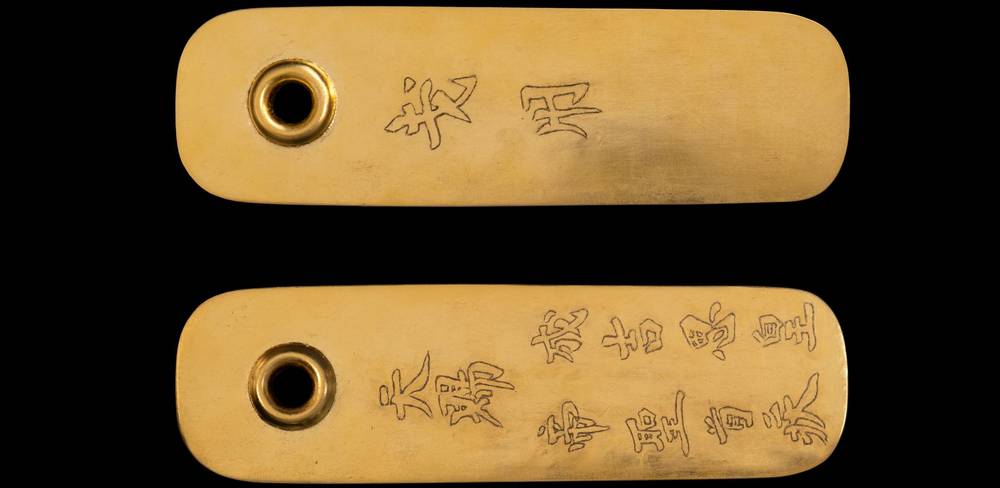
At the stations, the rider could immediately switch to the horse waiting there or hand over the message they were carrying. The messengers carried a special badge, similar to a modern-day passport. The badge entitled the messengers to access the best horses and, within the post station, to the best companions.
When can the exhibition be seen?
From October 21, 2026, to April 18, 2027, at the James-Simon-Galerie on Museum Island. It will be a major milestone in the relationship between the two countries. Federal President Frank-Walter Steinmeier will host Mongolian President Ukhnaa Khurelsukh for a state visit, and both will attend the opening.
The exhibition project is under the overall direction of Matthias Wemhoff, Director of the Museum of Prehistory and Early History at the National Museums in Berlin. The curators are Anton Gass, Heino Neumeyer, and Benjamin Wehry (Museum of Prehistory and Early History).
You can also read the preview report that was published on diplo.news last year.