A bit of peace
Column by Gudrun Dometeit
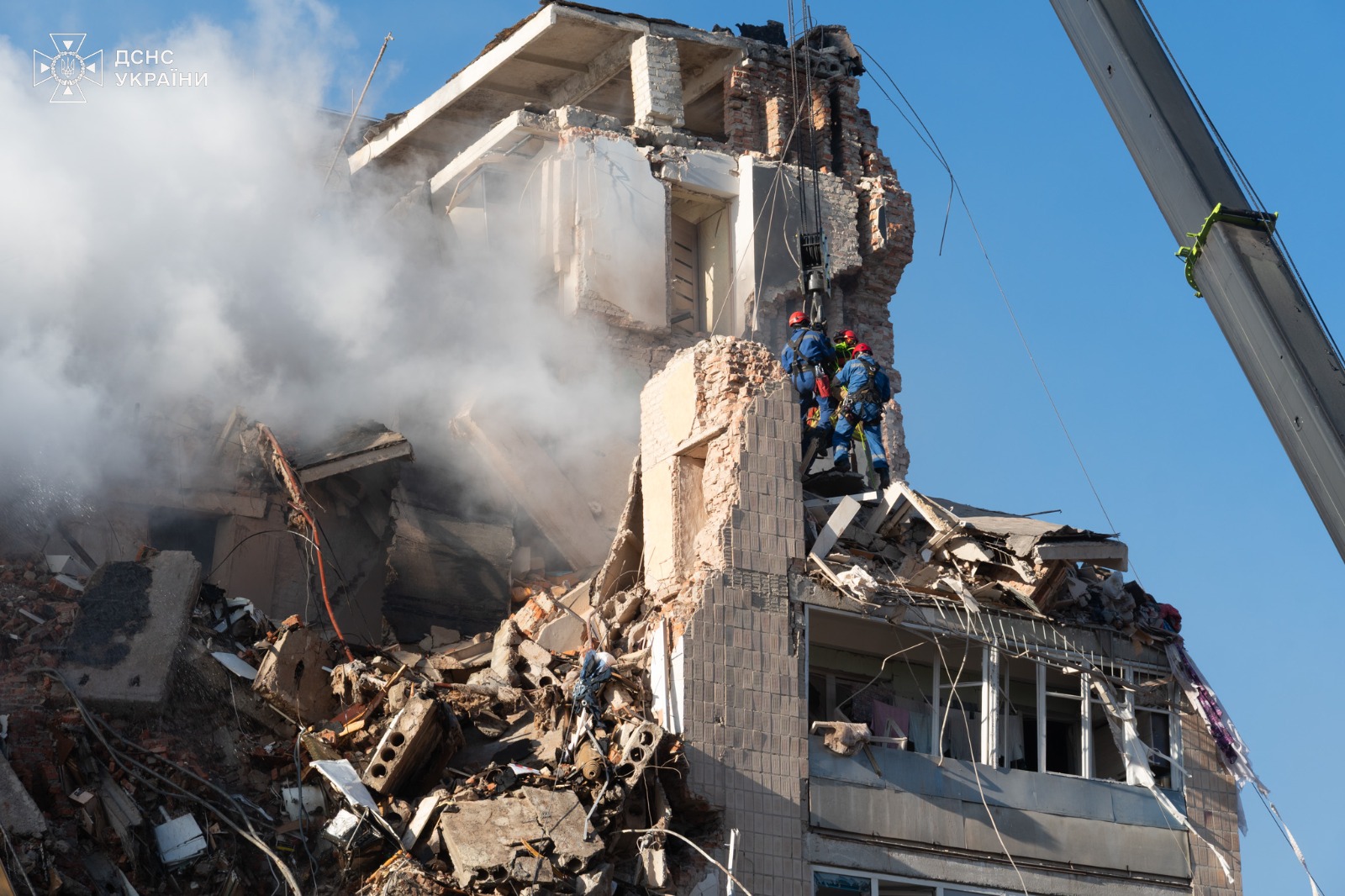
Is peace in Ukraine close? Finally, after 1,369 days of war, hundreds of thousands of injured and dead on both the Ukrainian and Russian sides, and destruction costing hundreds of billions? Is it “in the last two meters of the home stretch,” as Keith Kellogg, the US government's representative to Ukraine, put it?
One would like to believe that Donald Trump's so-called peace plan will bring the two warring parties, Ukraine and Russia, to the table to end the unspeakable bloodshed in the middle of Europe. And that it doesn't matter whether it's a complete peace plan, a collection of ideas, or a framework for negotiations that the Americans say is not set in stone. And that it doesn't matter whether the initiator is once again the grandiose, self-proclaimed angel of peace from across the Atlantic, who always thinks about business for himself and America in all his deals.
What is particularly important is the diplomatic momentum that suddenly seems to be entering the process of ending the biggest outbreak of violence in Europe since the Second World War. Perhaps it is a unique momentum, even in the longer term the last chance to put an end to dying. And to be honest, the indignation of European politicians, experts or media, who reflexively warn of a surrender of Ukraine or a dictatorial peace from warm meeting rooms or editorial offices, is downright cynical — at a time when, for once, it is not about arms supplies but about intensive diplomatic solutions.
Such reactions sound more like the offended liver sausage syndrome — because once again, the Europeans were not involved in the talks that have been going on between the USA and Russia for about a month and on which, according to information from Washington Post Ukrainian presidential adviser Andriy Ermak was brought in. It probably has to do not only with Trump's unorthodox negotiating style, as Germany's Foreign Minister Johann Wadephul said, that the Europeans played no role in this, but also because the Americans appear to be fairly low in their assessment of Europe's political weight and will to shape things. Talks between the USA and envoys from Germany (Chancellor Advisor Günter Sautter), France and Great Britain began in Geneva only on Sunday, during which the Europeans hastily voiced pro-Ukrainian positions.
Because, of course, the so-called 28-point plan is a long way from being ideal from a Ukrainian perspective. It demands the abandonment of the goal of NATO membership, the de facto handing over of the Crimean peninsula, the Donbass with Luhansk and Donetsk to Russia, the reduction of the army from now around 900,000 soldiers to 600,000. But at the same time, Kyiv should receive a security guarantee from the USA and Europe that is similar to Article 5 of the NATO Treaty and an assurance of its sovereignty. A “significant, deliberate and sustained armed attack” by Russia on Ukraine was regarded as an attack on the security of the transatlantic community and was met with adequate means, including military ones. It is basically the most important demand that Ukraine has made time and time again, as early as March 2022 shortly after the Russian invasion, when it offered neutrality in return for protection from Russia.
Anything else may actually be unacceptable for Ukraine, such as an amnesty for everyone involved in the war, i.e. even Russian President Vladimir Putin would not have to answer for the attack that violates international law. However, Ukrainian families whose relatives were killed, raped or abducted are demanding justice as compensation for the sacrifices they have made. They will also find it difficult to surrender territories that have cost so much blood to defend. The plan is for parts of Donetsk controlled by Ukraine to be transferred to a demilitarized zone that is to be under Russian administration.
According to surveys conducted by Kyiv International Institute for Sociology In September and October of this year, despite war fatigue, 54 percent of Ukrainians do not want to give up territory under any circumstances, even if that means extending the war. However, this majority was significantly larger at 87 percent in September 2022. Following initial statements from Geneva, the European negotiators essentially reaffirmed their position to freeze the conflict along the contact line and then leave the decision on territorial issues to sovereign Ukraine. In addition, the Ukrainian army should not be reduced to 600,000 but to 800,000, and that only in peacetime.
One can only hope that the Europeans will not block the chance of a ceasefire and perhaps a subsequent peace with unrealistic demands and let the momentum slip away. Should a Ukrainian-Russian agreement be reached, the Ukrainians will have the last word anyway. According to Trump's proposal, elections should take place 100 days after the conclusion, which were last held in Ukraine in 2019. He is thus following Russia, which has been calling for this for a long time, in the hope of a new Russia-friendly government in Kyiv. Because of a corruption scandal, which also involves Western payments, President Volodymyr Zelensky is under tremendous pressure anyway. So it could well be that the former actor might bring peace to his compatriots but lose his office.
.webp)