A controversial guest in Germany
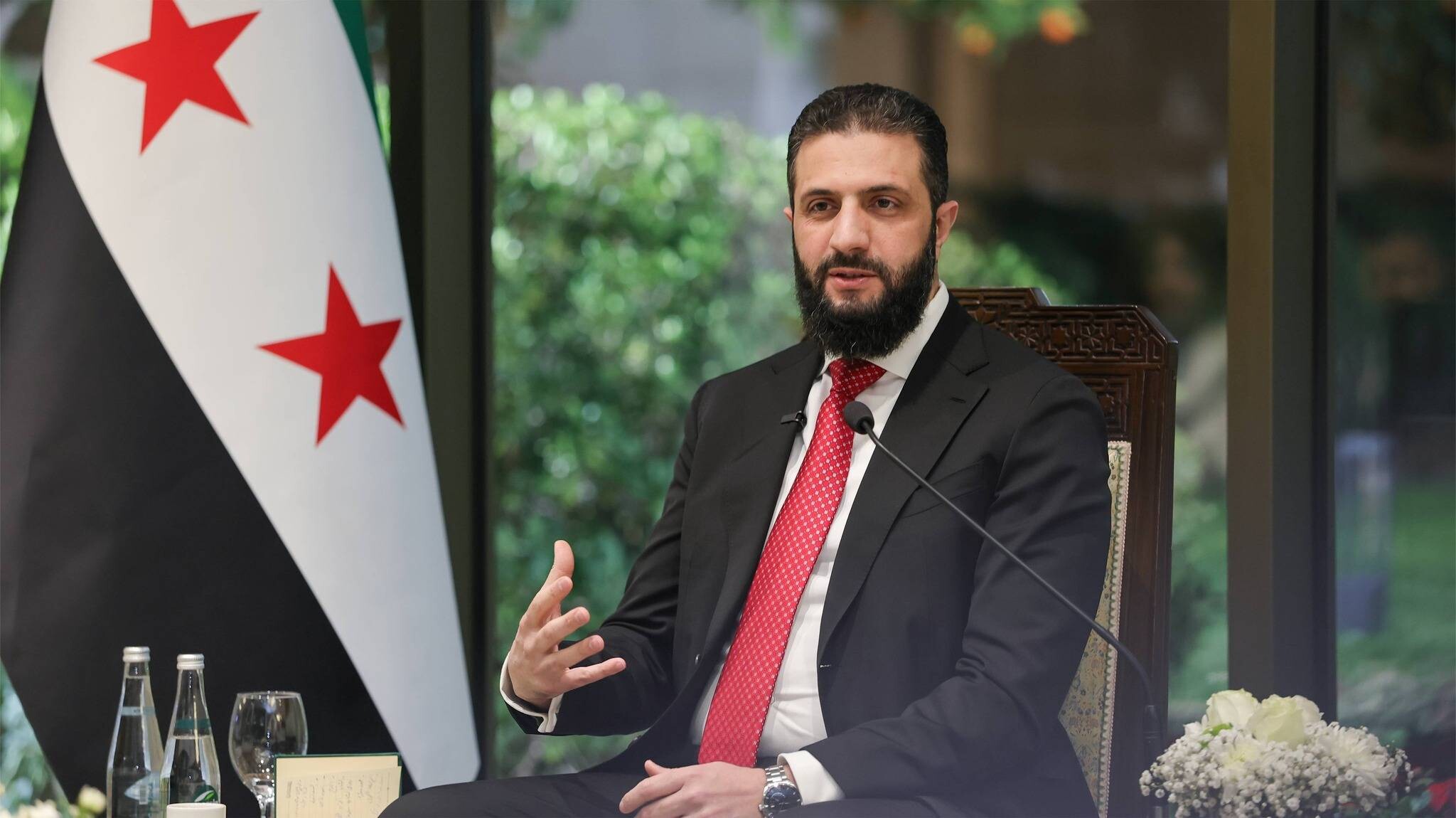
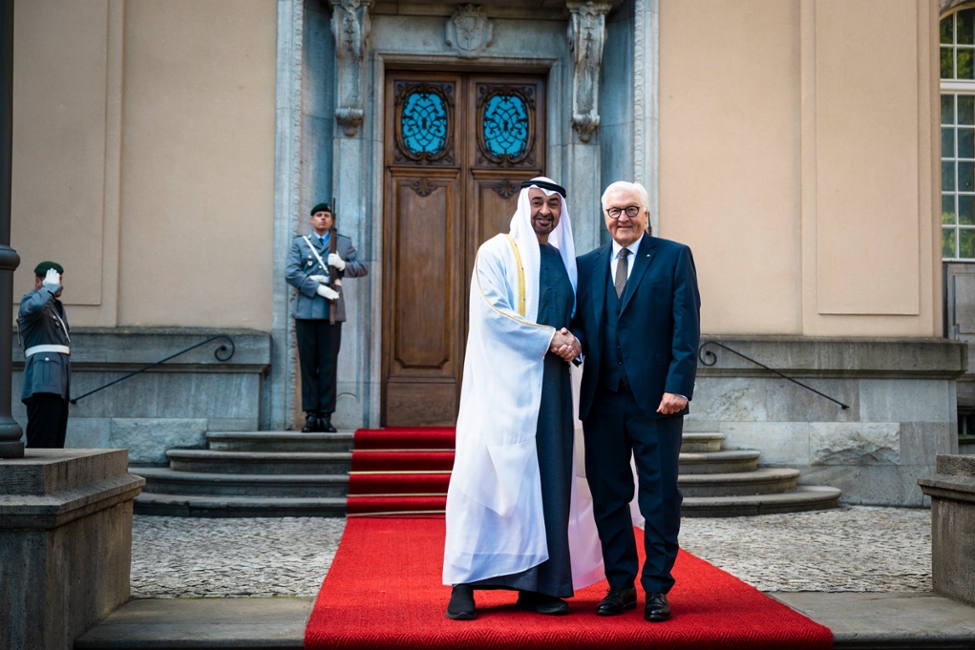
For years, he was considered one of the most influential Islamist leaders in the Middle East, Western governments regarded him as a terrorist, and the US administration had even offered him a bounty of ten million dollars. Now, Ahmad al-Sharaa, as interim president of the Syrian Arab Republic, will be an official guest of the German government this Monday. Chancellor Friedrich Merz will have lunch with him, and Federal President Frank-Walter Steinmeier will welcome him in the morning. Several ministers, representatives of business associations, and companies will discuss the reconstruction of Syria with al-Sharaa a year and a quarter after the fall of the authoritarian Assad regime, focusing in particular on energy supply and integration into the international financial system. It was al-Sharaa—whose nom de guerre is Abu Muhammad al-Jawlani—who, alongside the Islamist militia Hayat Tahrir al-Sham (HTS), overthrew dictator Bashar al-Assad in December 2024 and has since been attempting to establish a new order in the country.
Human rights groups accuse the 43-year-old of using brutal force against Syria’s ethnic minorities—such as Kurds, Alawites, and Druze—as the leader of HTS and, previously, the al-Nusra Front, a subgroup of al-Qaeda. It is said that al-Sharaa broke away from al-Qaeda in 2016. Nevertheless, in 2025, security forces from Damascus were apparently involved in massacres in the southern Druze regions or, at the very least, failed to prevent them. And earlier this year, government troops advanced into Kurdish regions in the northeast and displaced or killed local residents—in the midst of ceasefire negotiations. There are particularly strong protests against the visit from the Kurdish community in Germany—as there were in January, when a planned visit by al-Sharaa to Syria was canceled at the last minute for domestic political reasons. The community is resisting efforts to make a former jihadist socially acceptable. “Dear Federal Government: Are you out of your minds?!” writes activist Düzen Tekkal from the aid organization HAWAR.help on her X channel. Al-Sharaa must be disinvited, and in any case, more pressure must be exerted on him to improve the human rights situation. “No legitimization of or dirty deportation deals with war criminals!”
On Friday, government spokesperson Stefan Kornelius addressed journalists regarding criticism of the visit, pointing to Germany’s vital interests in the region. “Our interest is in seeing Syria rebuilt as a stable and prosperous nation, including with the help of the many, many Syrians who came here to Germany and Europe during the civil war and found refuge here.” Thus, one of the topics of the visit is likely to be the return or repatriation of Syrians to their home country. Around 950,000 live in Germany, where they fled before the civil war began in 2011. They are the largest group of refugees after Ukrainians. Around 10,000 were considered subject to mandatory departure by the end of 2025. A large proportion of Syrians have been granted protection status under the Geneva Convention on Refugees.
For returnees, however, the situation in Syria is far from easy—even though the U.S., the UN, and the European Union have now lifted most sanctions, including the bounty on al-Sharaa. Yet the security situation remains fragile: the terrorist group known as the Islamic State is still active, small arms are widely circulating in the country, and smuggling is rampant. Interference by foreign states, such as Israel’s airstrikes in the south, also does not contribute to stability. Israel has apparently expanded its control to the Golan Heights, which it captured from Syria in the 1967 Six-Day War. According to Muriel Asseburg, a Middle East expert at the German Institute for International and Security Affairs in Berlin, the government is striving to establish a monopoly on the use of force for a future unified national professional army, but is still in the early stages of this process. The integration of around 130 militias is largely complete. The integration of former defected Assad officers, however, is proving difficult, and reliable figures on the demobilization of Assad’s troops are also hard to come by. The military reconstruction is proceeding under the control of al-Sharaa’s HTS.
Asseburg sees opportunities for the German government primarily in economic reconstruction, in providing assistance to civil society—for example, in investigating human rights violations—and, in the future, in helping to establish a police force, that is, in the democratization of Syria. She believes that the transitional government’s vision is to create an authoritarian presidential state.
In contrast, according to André Bank of the German Institute for Global and Area Studies (GIGA), Interim President al-Sharaa is attempting to keep Syria, at least to a large extent, out of the conflict with Iran. The country is still less affected by the war between Iran, Israel, and the U.S. than other states. However, around 100,000 Syrians have already fled from Lebanon to Syria. Food prices have also risen for the approximately 26 million inhabitants, more than half of whom are already dependent on humanitarian aid.
gd