Caught in the Escalation Trap
Interview by Gudrun Dometeit
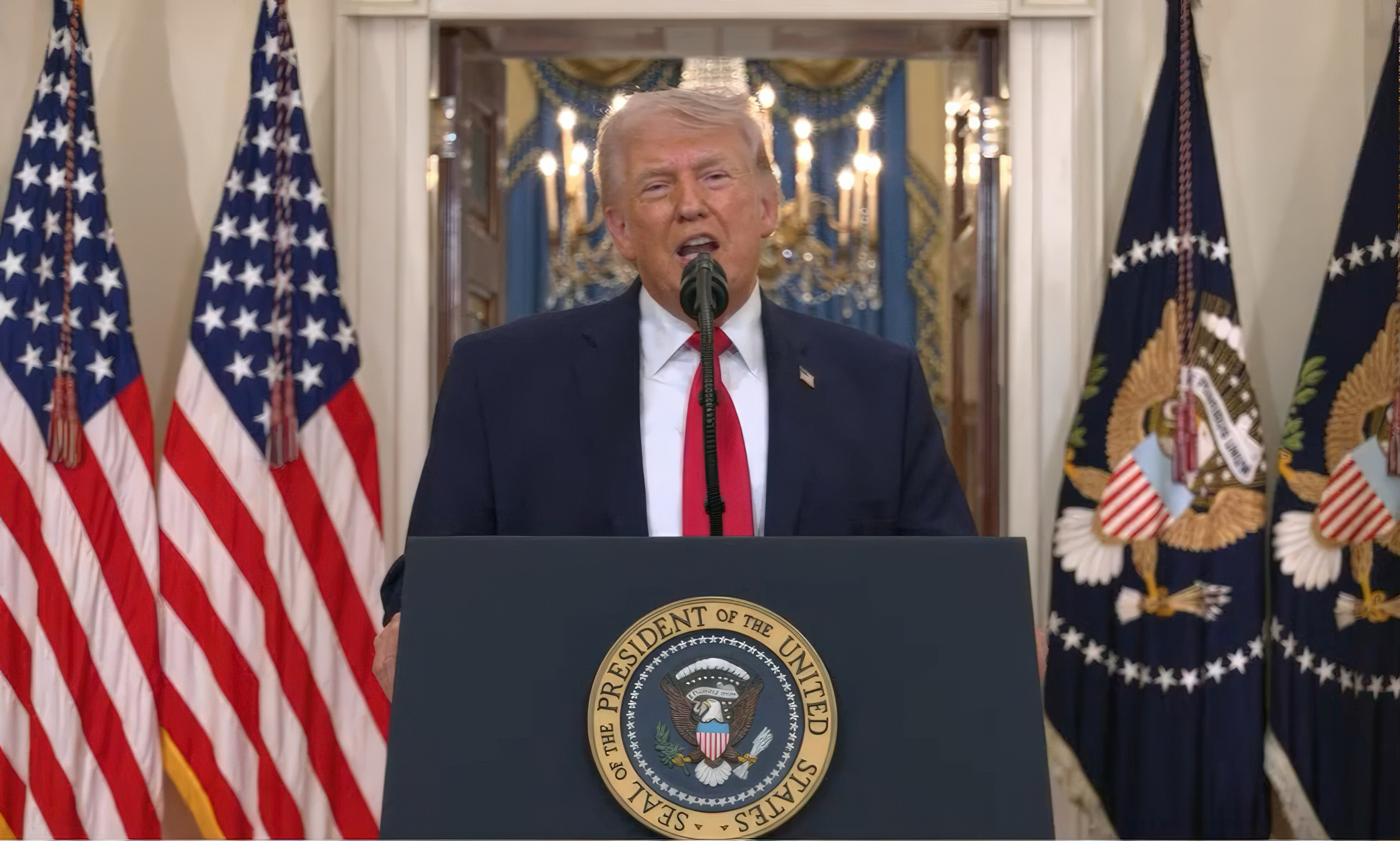
Are we currently witnessing the beginning of the end of NATO? Donald Trump is threatening to withdraw the U.S. or blackmailing alliance members by making U.S. support for Ukraine contingent on assistance in the Iran war. Even if the U.S. does not withdraw, doesn’t all of this undermine the U.S.’s credibility as a reliable NATO partner?
From a strategic standpoint, the Americans will never abandon Europe. They need Germany's logistical platform for global military interventions. Not only in Iran, it was also the case in all previous wars, in Iraq, Syria, Libya. The Ramstein US base is a key hub for the entire Middle East. You could set them up somewhere else, but that takes time. When Trump calls NATO a paper tiger, he’s mainly talking about better job sharing—and a higher European share of defense spending. A large part of this spending flows back to the USA through arms purchases. It's a tradition, by the way. During World War II, nearly 30 countries had agreements with the U.S. for economic and military aid against the so-called Axis powers (Lend-Lease Act of 1941), which was repaid down to the last penny, most recently in 2006 by the United Kingdom and Russia. This will continue in Europe if we do not take our security into our own hands.
But NATO is a defensive alliance that provides support to its members in the event of an attack. In Iran, however, the Americans themselves started a war that the Europeans are suddenly expected to take responsibility for. That reduces the very idea of NATO to absurdity. Wasn’t Chancellor Friedrich Merz’s statement that “this is not our war” meant to be understood in that sense as well?
That is true. The German rationale for NATO membership is, after all, that it is a defensive alliance and does not degenerate into a conduit for global American operations. There was no consultation with NATO regarding the Iran War, and the justification for a defensive war is far-fetched. But let’s recall NATO’s 1999 war against Serbia without a UN mandate. By strict standards, it was not in compliance with international law either, yet we supported it and even participated in the air operations. It was the first combat mission since World War II and is legally controversial because it was a war of aggression, much like the one in Iran. According to the Basic Law, this is prohibited for Germans. Although then-Chancellor Gerhard Schröder and Foreign Minister Joschka Fischer did not participate in the 2003 Iraq War, which violated international law, what many did not realize is that Germany provided the Americans with all the logistical support they needed. There have always been gray areas and temptations to use NATO for other purposes. This trend has intensified in recent years.
The question again: Are we seeing the end of NATO — at least as we know it?
The Americans could also arrange their military power projection from Europe on a bilateral basis, for example with countries in Eastern Europe. If U.S. troops were to withdraw from Germany, as recently demanded by AfD co-leader Tino Chrupalla, they would simply move to Poland. The U.S. may not necessarily need NATO, but it still needs geostrategic control over Europe. They will not give that up, if only because of Russia and China. If we want to be on equal footing, we Europeans must become more strategically autonomous and militarily stronger. We are miles away from that. In the wars in Ukraine and Iran, we play no role, either politically or militarily.
Security expert Claudia Major speaks of a “European Way of War.” And following Iran’s attack on the British military base in Cyprus, Article 42 of the EU Treaty—on mutual assistance—has once again come under discussion. Hasn’t something started to take shape here—especially when considering, for example, French President Emmanuel Macron’s recent proposals on nuclear sharing? They are significantly more concrete, and for the first time, there are discussions about them with Germany as well.
We will likely witness a European Way of War if, for example, we were to admit Ukraine into the EU. Many underestimate the binding effect of Article 42 of the EU Treaty. We would thereby bring the war with Russia to Europe. There is a high probability that we would trigger such a European war. I very much hope for a more sensible way of integrating Ukraine into Europe, perhaps through a privileged partnership, at least until we have a ceasefire and peace treaty between Ukraine and Russia.
In my personal assessment, the American nuclear umbrella has been and remains more fiction than reality. They will never go “all in” for Europe if the U.S. homeland could be compromised by nuclear retaliatory strikes from Russia or China. That is precisely why they are in the process of deploying their intermediate-range missiles, cruise missiles, and hypersonic weapons in Germany.
And France will never relinquish political control over the use of nuclear weapons. That leaves only Germany’s national path: its own nuclear weapons and deeper cooperation with France and the United Kingdom. However, I doubt that German nuclear weapons would gain majority support in this country.
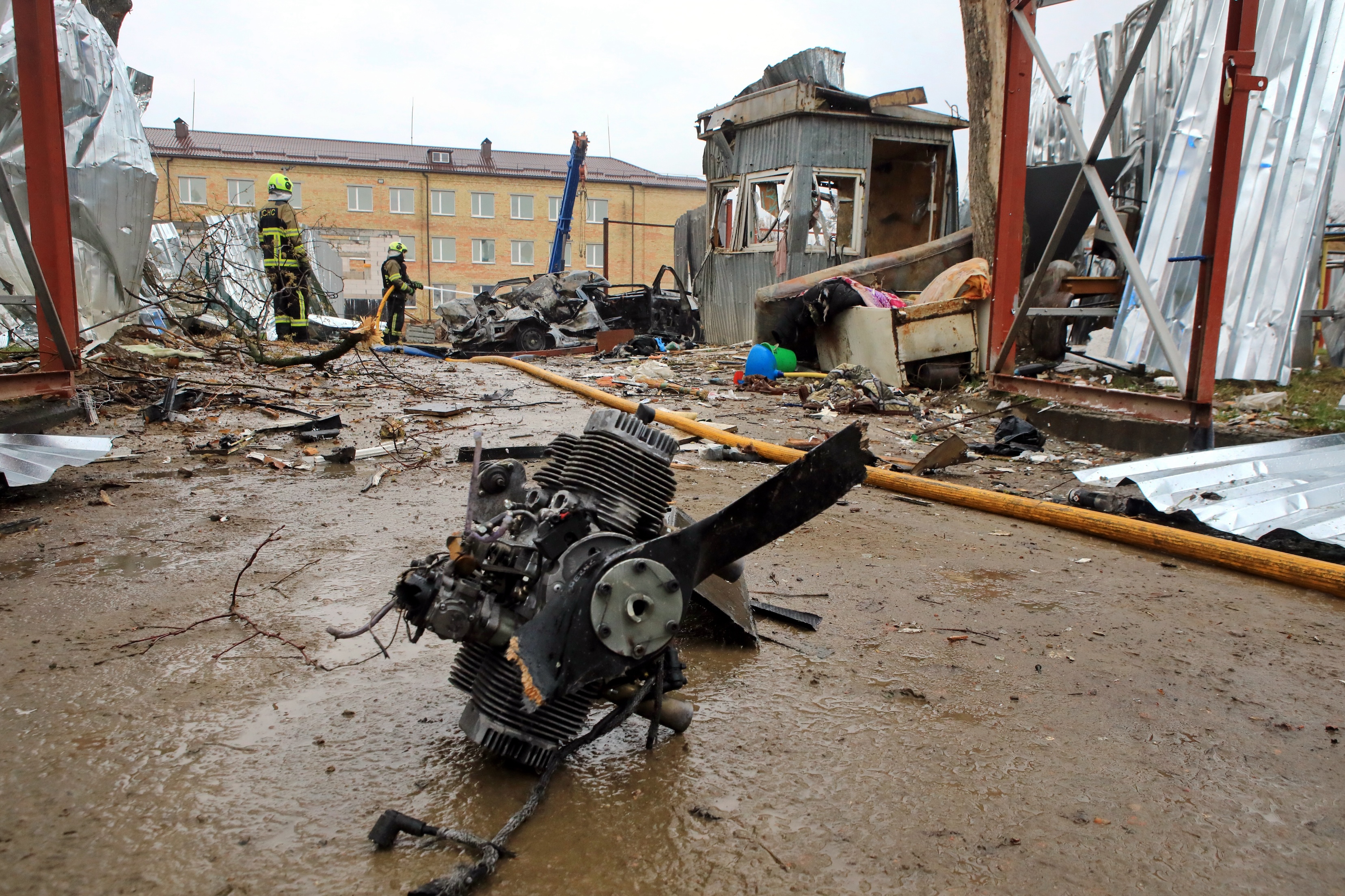
An Estonian security policy expert has once again spoken of a relatively high probability of a Russian attack on Germany. He claims that Germans are simply naive to believe that this will not happen. For the Russians, such an attack would be easy because, unlike Eastern Europeans, the Germans are not prepared for it. Is this scaremongering or an attempt to keep Germany on track when it comes to defense?
It is true that Germany has some catching up to do when it comes to its ability to defend the country and the alliance. And it is also right to restore the Bundeswehr to a state where one can even speak of combat readiness. An army that is not combat-ready is best dispensed with altogether. This does not preclude a simultaneous focus on political dialogue and the balancing of interests. But the widespread domino theory—first the Donbas, then all of Ukraine, and then NATO—is, in my opinion, far removed from Russia’s political intentions and, above all, from its military capabilities. In the fifth year of the war, they are struggling to even capture the Donbas. And after a ceasefire, significant military forces will remain tied down at the border with Ukraine. They currently have no capacity for other operations.
But Russia is, of course, preparing for a major war. NATO and Germany do the same. All you have to do is look at Germany's operation plan. However, if a European war were to break out, we would have done everything wrong politically from the perspective of German interests. From the U.S. perspective, it would be a rational option; from the German perspective, it would be disastrous. Due to our central geographical location in Europe, we’ve had a security problem for 500 years, ever since the Thirty Years’ War, when foreign powers fought on German soil. Nearly half the population was lost in that conflict. A war with Russia can only be prevented through strong deterrence capabilities combined with dialogue and the balancing of interests. The Americans have been talking to the Russians on all channels for a year and a half, while we pride ourselves on not talking to anyone.
What interest could Russia possibly have in attacking Europe?
Yes, none. That is absolutely contrary to Russia's interests. We have plenty of hotspots in the Baltic region, Kaliningrad, Moldova, and along the entire Ukrainian front line. Things could very quickly escalate into a full-scale war there. But regardless of the reasons behind it, Germany cannot want a European war with Russia. The Americans have waged and continue to wage plenty of wars, but not on their own soil since the Civil War. Our chancellors have always assessed the situation this way in the past and managed it well in their policies. In 1955, ten years after Germany’s war of annihilation against the Soviet Union, we became a member of NATO. That was a major blow from Moscow’s perspective. That same year, Adenauer flew to Moscow with a 150-member delegation and laid the foundation for German-Russian relations. That was brilliant. As difficult as it is now—from a German perspective, this is the only politically wise path, because Russia isn’t going to disappear from the map, but will remain a difficult, and therefore dangerous, neighbor even after the war in Ukraine.
So does the chancellor need to make a bold move?
I was in Bucharest with Chancellor Angela Merkel in 2008 when the issue of Ukraine’s admission to NATO was on the table—something she wanted to block at the time. But the Alliance decided otherwise. The Americans pushed for Ukraine’s military buildup; they maintained a permanent presence in the country through intelligence services and military advisers, and they were not uninvolved in the change of government in Kyiv. They are masters of regime-change operations. This has been scientifically analyzed in the U.S. and is simply an expression of their understanding of their role as a global power. I am not anti-American, but one must recognize this mechanism. The Russians still have a problem with this today when it comes to the post-Soviet space. They do not want Ukraine to be transferred from their sphere of influence to the West. From their perspective, they can no more allow this than the U.S. can allow a loss of control in Latin America.
Trump wants to end the war in Ukraine, not to strengthen Europe, but to weaken China, because he wants to break Russia’s alliance with Beijing. But we Europeans are dutifully continuing it, as if U.S. President Joe Biden were still in office. It would be wiser to use the window of opportunity until the U.S. midterm elections to support Trump’s ceasefire efforts rather than thwart them. Germany must take the lead here.
So, to find a solution to the war in Ukraine, do we need to take a closer look at its origins?
We certainly can’t ignore the background and pretend that the war began with Russian aggression. We have to acknowledge Russia’s concerns regarding Ukraine’s NATO membership and the deployment of Western troops there. Therefore, we should find a way to provide Ukraine with security guarantees while also taking Russian security interests into account.
Does that mean, in your view, there will be no peace unless Ukraine renounces NATO membership and cedes territory?
Yes, the Russians will not give up Donbass anymore. The question is whether or not the Ukrainians will voluntarily withdraw from the last remaining areas they have held. But as I said, I think it’s a shame that the Americans are negotiating this with Moscow and Kyiv behind our backs. Europe has sidelined itself from the political negotiations because it has taken a one-dimensional approach, focusing solely on Ukraine.
And how do we get back into conversation now? Should the chancellor travel to Moscow and talk to Vladimir Putin?
I don’t know if that would accomplish anything at this point. Germany is a lame duck in foreign policy—with regard to the Iran and Ukraine conflicts. Whether the chancellor goes to Moscow or not no longer matters. That’s the tragic part. I said very early on—and was heavily criticized for it—that there is no military solution to the Ukraine conflict. The situation is similar in the Iran war, by the way. Regime change from the air doesn’t work. And you can’t just occupy Iran militarily the way you did Iraq.
What, then, is the point of sending a third aircraft carrier and rapid reaction forces to the Persian Gulf? There is also talk of a ground offensive.
A large-scale ground war against Iran is not feasible. The country has a similar topography to Afghanistan, except that it is around three times as large. They do not have tribal warriors like the Taliban there, but organized armed forces and fanaticized, ideologically fixated Revolutionary Guards, which - much like the elite military units of the Third Reich - will fight to the last bullet. One would also have to muster hundreds of thousands of soldiers, from the Indo-Pacific region, for example. Nor can one simply fight the Strait of Hormuz free at sea without flanking land operations along a 2,000-kilometer coastline, or remove the mullahs from the country like Venezuela’s former President Nicolás Maduro to put them on trial in New York. That is exactly what U.S. Joint Chiefs of Staff Chairman Dan Caine told his commander-in-chief, Trump. That should be taken seriously. In general, military expertise should be taken more seriously.
Right now, the opposite seems to be the case. The Army chief has just been removed from office in the U.S. How do you interpret that?
There were apparently discussions about the role of ground forces. I suspect that was one of the reasons. It’s dangerous for Trump if he were to be drawn into a protracted war. That can happen quickly due to so-called “Pearl Harbor effects.” If, for example, an American warship were sunk, he would no longer be able to extricate himself from this conflict without a face-saving response. Then he would be stuck right in the middle of the trap of escalation. Most Americans are against the war. Even though the Israeli lobby in the U.S. still stands by Israeli Prime Minister Benjamin Netanyahu and Israel’s security is important. If Trump overreaches or can no longer extricate himself from the war with his dignity intact, his political fate is sealed. And so is that of the Republicans.
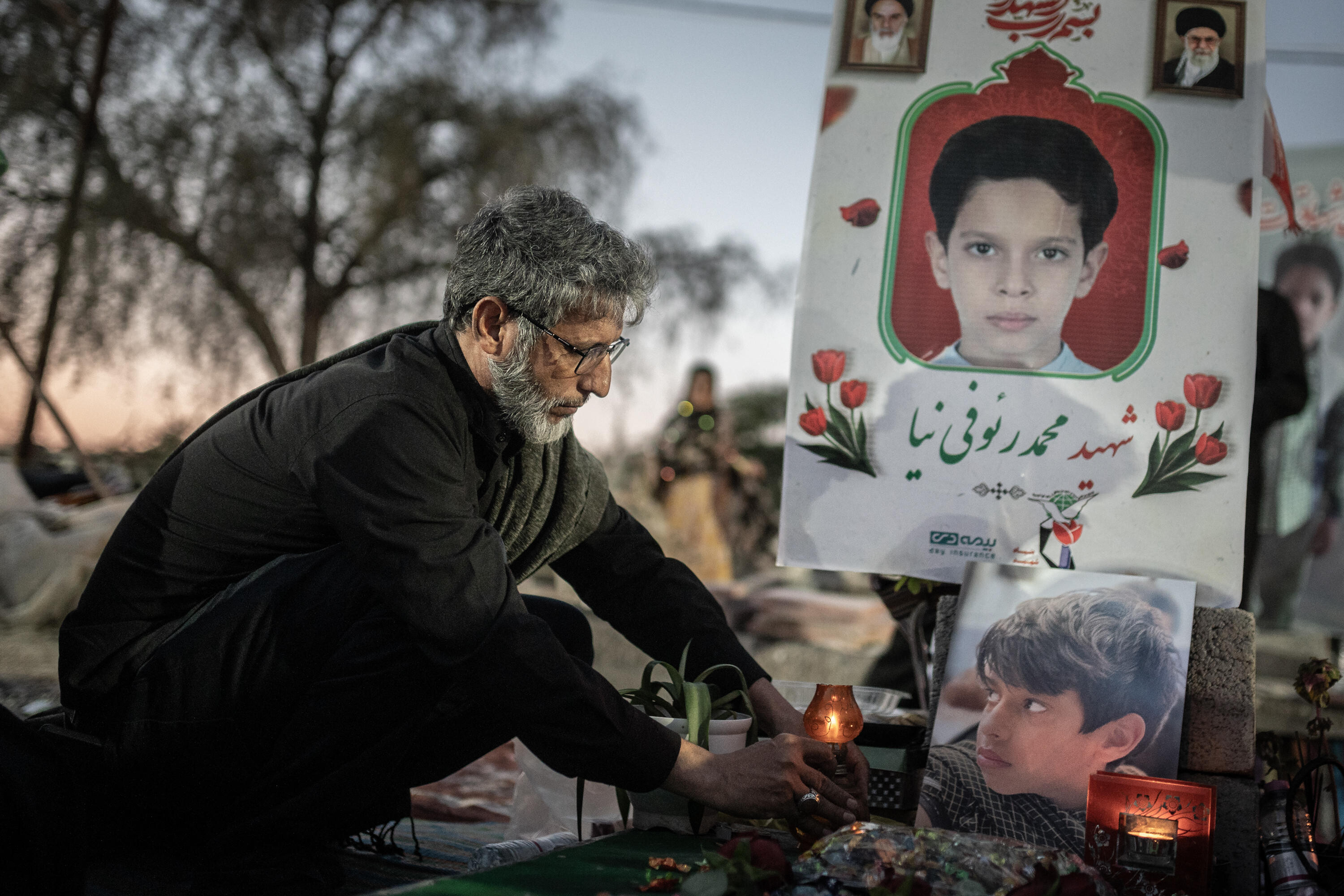
Were you surprised by Iran’s military strength? Now there are even reports that they’ve shot down U.S. fighter jets.
In Qatar, they took out a key U.S. radar station to blind them across the entire region. U.S. ammunition supplies, as well as its air defense and missile defense capabilities, are running low. They are already having to bring in systems from South Korea. The Iranian armed forces are, of course, technologically inferior, but I would think very carefully before invading the country. A ground operation would be disproportionate to the consequences, not to mention the refugee flows it would bring to Europe and the economic damage.
Former Iranian Foreign Minister Mohammad Javad Zarif has proposed a “sustainable” peace agreement between the U.S. and Iran, under which Iran would curtail part of its nuclear program and lift the blockade in the Strait of Hormuz, while the U.S. would, in return, lift sanctions. Could Trump agree to such a deal—against Israel’s will?
That is difficult. He must find a way that takes into account Israeli security concerns, but also Iranian interests.
In your opinion, what is the actual strategic goal of the Israelis? And why did the Americans really get involved in this war?
Israel’s strategic goal, particularly under Netanyahu, has been for decades to eliminate the country’s state adversaries. In the past, these were Iraq, Syria, and, to a certain extent, Libya. Iran is Israel’s last major, dangerous state adversary, and the goal is to weaken it to the point where it can no longer pose a threat. From a strategic perspective, things are currently going well for Israel. And unlike the Ukrainians, the Israelis have a strong security guarantee from the U.S. An attack on Israel is always also an attack on the U.S.
How is it that, globally speaking, diplomacy and dialogue have fallen so far behind the use of force? Militarization and rearmament are taking hold everywhere. According to SIPRI, global defense spending reached a record level of almost 3 trillion dollars in 2025. CDU politicians are now talking about the “naive belief” of contributing to world peace through talks.
From the perspective of German interests, we need a security policy that prevents war—not out of pacifism or idealism, but for reasons of realpolitik. A European war would destroy what we are trying to defend. Negotiating with the enemy rather than fighting—this remains the guiding principle of German security policy, an expression of realpolitik and our geostrategic position at the heart of Europe. Military strength does not contradict this at all; rather, it is an integral part of it. I find remarks by politicians who want to support Ukraine militarily by any means necessary and risk everything—even a European war—to be naive, or rather, grossly negligent.
CDU politician Roderich Kiesewetter speaks of an “extended self-defense” for Israel and uses this to justify a war with Iran.
In this context, the term is simply legally incorrect. Extended self-defense means that I can strike preemptively if an attack is imminent. This does not mean that the concept of self-defense can be expanded to the point where one can essentially do whatever one wants. But of course, Israel has legitimate strategic interests vis-à-vis Iran. Nevertheless, the actions of the U.S. and Israel are not in accordance with international law. Neither was the Iraq War, with its hundreds of thousands of deaths, nor is the Russian war against Ukraine. But it is a rather specious argument to say that the Americans and Israelis were defending themselves, while the Russians are the evil aggressors.
What consequences will the war with Iran in particular have for the U.S. as a global superpower? Will it strengthen the U.S., or will it weaken it?
China is currently playing a more constructive role alongside Pakistan, as they are trying to end the war as quickly as possible through negotiations. In the Middle East, the country has become a fairly significant player, partly because Beijing succeeded in mending the hostile relationship between Saudi Arabia and Iran and persuading the two states to resume diplomatic relations. China also needs the Middle East for economic and energy policy reasons. I believe this war, depending on how long it lasts, has the potential to mark the beginning of the end of America’s position as a global superpower. Intervention in Venezuela, threats against Greenland, Denmark, and Canada, then the attack on Iran. Many are wondering who might be next. America is in the process of jeopardizing its former credibility as a global power. Yet China actually wants to shape the world together with the U.S. rather than against it.
Certainly not with Europe… When exactly did the train leave the station for the Europeans? Why hasn’t it been able to play to its diplomatic strengths so far?
Former Israeli Prime Minister Shimon Peres once said: “There is no political leadership without risk.” We need people who can get things moving, who can bring about peace. That doesn’t happen on its own. I think of Moshe Dayan, a military idol of mine. He was a very tough general who, as Israel’s foreign minister in 1978, helped bring about the Camp David Accords. Or of Yitzhak Rabin, also a brave officer, who concluded the Oslo Accords with Arafat, a terrorist, in 1993 and paid for it with his life. Dayan, too, was fiercely attacked by his fellow generals at the time. But he had a principle: If you want peace, it’s not enough to talk to your friends. You have to talk to your enemy. That takes strength. Ronald Reagan, who called the Soviet Union the “Evil Empire,” ended the Cold War with Mikhail Gorbachev. My former boss, Angela Merkel—who has been heavily criticized for this—warned in Bucharest in 2008 that Ukraine’s NATO membership was a red line for Russia and would effectively mean war. With the Minsk Agreements, she tried to advance a political process. It didn’t work in the end, but at least she tried. To me, that is political strength.
We need political leaders who are willing to take risks, in the spirit of Shimon Peres. I don’t see any such leaders in Europe. I am not a pacifist, but I am opposed to senseless wars. And to me, the war in Ukraine is a senseless war in which an entire country is being sacrificed. I expect German politicians, in particular, to view the world primarily through the lens of national interests, just as Mr. Zelenskyy views the world from the Ukrainian perspective and Mr. Trump from the American perspective.
As a former advisor, you know Mrs. Merkel well. Would she still be a viable option as a mediator?
Angela Merkel no longer holds political office. She would need one to be able to mediate. I also don’t believe she would subject herself to that. We have always had a special relationship with Russia since the time of Adenauer, which is often disparaged today as the “Moscow Connection.” She would nevertheless remain important for our country. In the last traffic-light coalition government, she was cast aside, and this approach is being continued. That is not good for our country and should be changed.

Erich Vad, a historian with a Ph.D. and retired Brigadier General of the German Armed Forces, served as a department head at the Federal Chancellery and as secretary of the Federal Security Council. He is the author of the bestseller *Ernstfall für Deutschland: Ein Handbuch gegen den Krieg* (Emergency for Germany: A Handbook Against War) and, together with Klaus von Dohnanyi, *Krieg oder Frieden: Entscheidung für Deutschland* (War or Peace: A Decision for Germany).
.webp)