Kazakhstan's desire for stability
By Ramon Schack, Astana
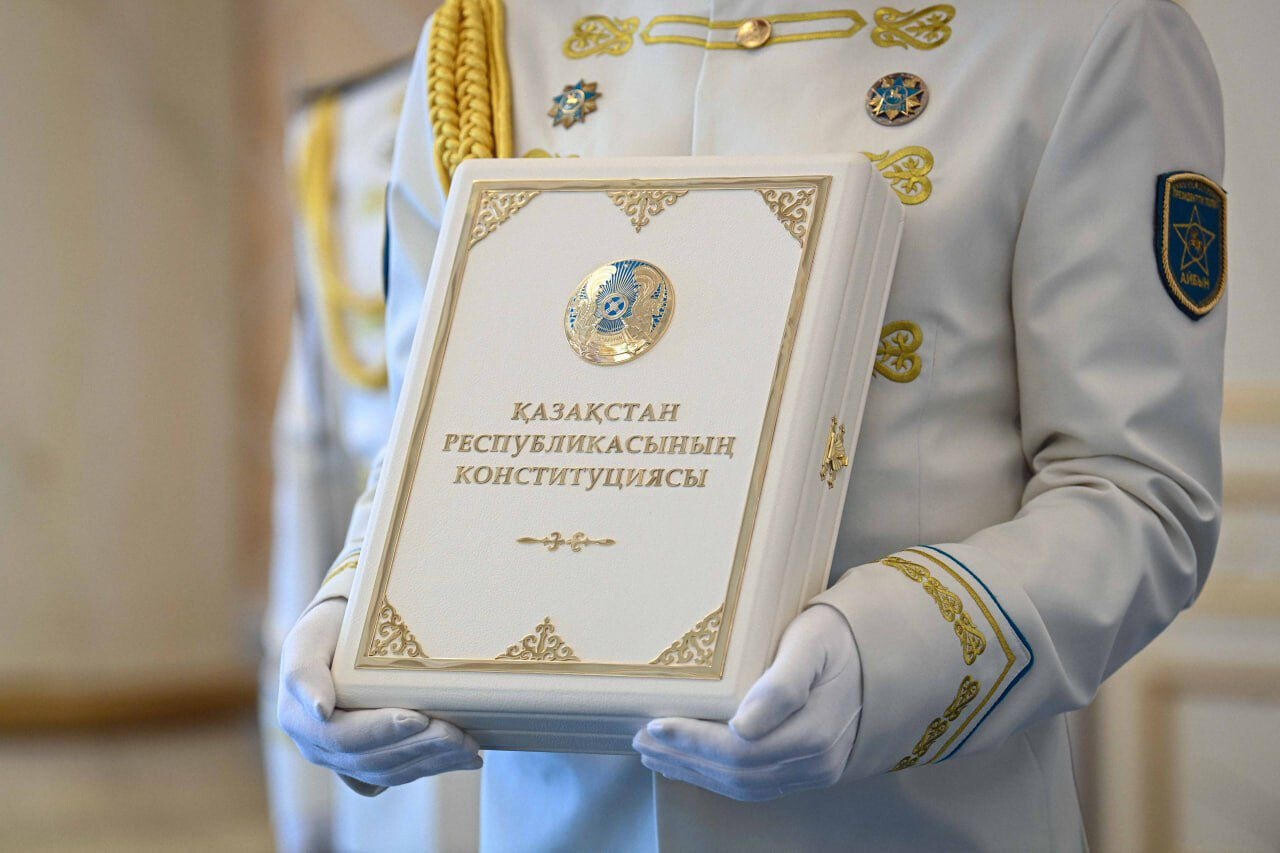
Since last weekend, Kazakhstan has had a new constitution, which the government says will bring more democracy to the Central Asian country. Critics, however, argue that it further strengthens the president’s already powerful position. About 70 percent of the 12.5 million eligible voters cast ballots in a referendum, and according to the official final results, 87.1 percent voted in favor of the reformed constitution. In the run-up to the vote, the government had encouraged the population of the world’s largest landlocked country and ninth-largest country overall to vote “yes” through a massive campaign.
In Qosshy, a rapidly growing suburb of the Kazakh capital Astana, the local school served as a polling station. The start of voting was slow at first, even though local authorities there, as elsewhere, sought to encourage voter turnout with activities and entertainment. Vendors had set up shop in front of the school building, offering drinks and fresh honey, while inside the polling station, musicians in traditional attire performed Kazakh folk songs. By early afternoon, the number of voters wanting to cast their ballots had grown. At 2:00 p.m. local time, voter turnout stood at 51.93%. The referendum was thus deemed to have been held. Almas Zheksenbekov, a media consultant, cast his vote accompanied by his young daughter. “Of course I voted ‘yes,’” the 38-year-old stated emphatically. “I have no problem with the fact that this strengthens our president’s position. Kazakhstan needs stability, especially given the political unrest and wars everywhere!”
President Kassym-Jomart Tokayev himself had previously emphasized that the adoption of the new Constitution was an important step towards strengthening democratic institutions, promoting the rule of law and modernizing government structures. The core elements of constitutional reform were presented at a meeting of National Kurultai on January 20. The government interprets the constitution as a conceptually new document that will consolidate the development of Kazakhstan’s political system. Over 80 percent of the previous articles have been amended. For example, the government expects the transformation of the previous bicameral parliament into a unicameral one to lead to more efficient decision-making processes, while domestic and foreign critics view this as a restriction of democratic powers. In the future, President Tokayev is also expected to have the sole authority to appoint the heads of the Central Bank, the secret service, and the Constitutional Court.
Experts point out that constitutional development in the former Soviet republic follows a process very similar to that seen in the so-called Tiger economies of East and Southeast Asia during the 1980s. As is well known, the rise of these countries did not take place within the framework of Western political models, but under the rule of autocracies and military dictatorships. The democratization processes did not begin until later. Officials in Astana emphasized that Kazakhstan’s current constitution dates back to the early phase of independence in the 1990s and has been amended several times over the past decades to adjust the balance of power between the president, parliament, and the government to new circumstances. Through greater citizen participation, Kazakhstan is also sending a signal to the international community that the country intends to reform and stabilize its institutional structures in the long term, according to sources close to the president.
Most Kazakhs seem to be accepting the political changes brought about by the new constitution with relative calm. The country's ongoing economic upturn and rising living standards may also dampen overly vocal criticism. In addition, the US-Israeli attack on Iran and its potential consequences for Kazakhstan concern most people here far more than the current process of domestic political restructuring. Iran, connected via the Caspian Sea, is the key transit country for Kazakhstan and access to the Persian Gulf. Through the North-South International Transport Corridor, which includes Russia, Kazakhstan and other Central Asian states, Kazakh companies, for example, bring grain to Iranian ports in the Gulf (e.g. Bandar Abbas).
Astana views the U.S.-Israeli attack on Iran with great concern, even though the country stands to benefit in the short term from the increased demand for its raw materials. Kazakhstan has already become one of Germany’s largest suppliers of raw materials. In January 2026, it exported approximately 310,000 tons of crude oil to Germany—significantly more than in January of the previous year. The oil is transported to Central Europe via the Transneft network, thereby also supplying the refinery in Schwedt, Brandenburg. The facility plays a central role in supplying gasoline, diesel, and heating oil to northern and eastern Germany, especially since Russian deliveries have declined in recent years.
The author, Ramon Schack, is a political scientist and freelance journalist based in Berlin who was traveling through Kazakhstan at the time of the referendum.
.JPG)
.jpg)