Kosovo's new government sees Euro-Atlantic orientation as the only option
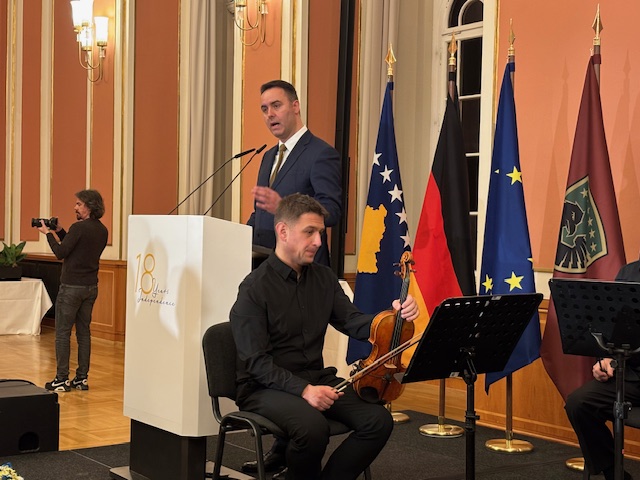
The new Foreign Minister of Kosovo Glauk Konjufca has described membership in NATO and the European Union as the only possible path for the young republic. At a reception at the embassy in Berlin's Red City Hall, Konjufca emphasized that the Euro-Atlantic orientation is not only a social consensus but also the logical culmination of the country's political and economic reform policy. The 49-year-old former Parliament Speaker was appointed Foreign Minister and Deputy Prime Minister of the new government under Albin Kurti just a few days ago. Like Kurti, he has been a member of the left-wing Levizja Vetevendosje party since its founding in 2004 as a civil rights movement.
Like Ambassador Faruk Ajeti, Konjufza emphasized Germany's special role in Kosovo's history. “Germany is not only a close friend, but also a traditional partner and historical ally,” said Konjufca. Back in the 1990s, it was the only country to provide a home for the Kosovar government in exile. Germany was also among the first states to recognize the Albanian-speaking republic, which had seceded from Serbia, as independent. The politician's first visit after his appointment took him to Munich, first to the Security Conference, and then on to Berlin.
Germany is also Kosovo's most important trading partner and, with 750 companies, the largest investor. With six consulates, his country maintains its largest diplomatic representation worldwide here. Around half a million Kosovars live in Germany; making it the largest diaspora of the country with 1.6 million inhabitants in Europe. The combination of a favourable business climate, a central geographical location and Europe's youngest population offers a wide range of opportunities for German companies. As a result, the economy has grown by an average of five percent over the past two years. In the packed ballroom of the town hall, Ambassador Ajeti praised Kosovo as a “true treasure trove of great music” and its culture as an “indispensable part of European culture.”
Konjufca also condemned Russia's aggression towards Ukraine. In such a conflict, it is impossible to remain neutral. “We stand together with Germany and other Western democracies on the right side of history. We stand on the side of freedom.” German reunification was not only a historic event for Germans, but also a symbol of hope for Kosovo and other countries that one day they would be united with the European family.
The Republic of Kosovo, initially an autonomous region in former socialist Yugoslavia, declared itself independent in 2008, but is still not recognized by some EU states, including Greece and Spain, as well as by Serbia, which regards Kosovo as part of its own national territory. In 1999, NATO troops led by the US intervened in the Kosovo War between Serbian paramilitary forces and the Kosovo Albanian liberation army (UÇK), allegedly because an ethnic cleansing of the Albanian-speaking, predominantly Muslim Kosovars was imminent. Since then, there have been repeated tensions in northern Kosovo over the Serbian minority.
gd
.webp)