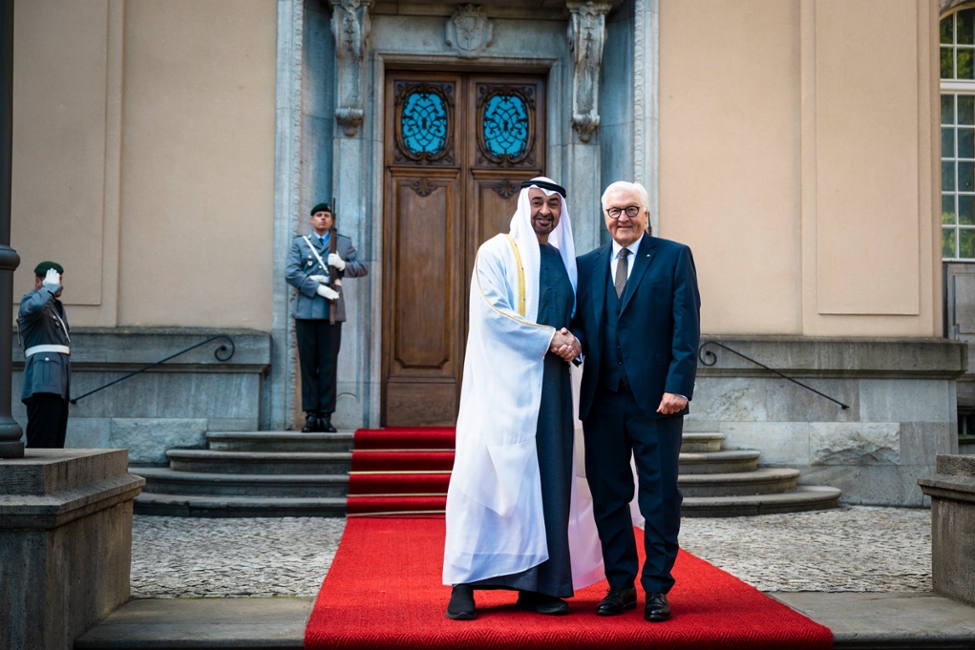
Power Struggle in the Shadows
By Lukas Stock
The sun slowly rises over the rugged mountains of Mukalla on the coast of Yemen. Smoke rises against the morning backdrop. It is the second-to-last day of the previous year, and the night before, there was an explosion in the city’s port. Television footage shows men on a red truck assessing the obvious damage caused by the explosion. In front of them stand neatly lined-up columns of pickup trucks and armored vehicles—many of them bent or burned out. A strike by the Saudi Air Force destroyed them.
Saudi Arabia later justified the bombing by claiming that the approximately 80 military vehicles, as well as weapons and ammunition, were transported by ship and were destined for the United Arab Emirates (UAE), which intended to use them to support separatists of the Southern Transitional Council (STC) in South Yemen. Abu Dhabi denied the allegations but offered to reconsider its role in Yemen. Rarely have the two Gulf states been so directly involved in a confrontation.
Even though the war between the USA and Israel against Iran is currently dominating the news from the Middle East, another conflict of power and influence between the leading powers of the Arab world, Saudi Arabia and the United Arab Emirates is simmering in the shadow of this war. And it is taking a particularly heavy toll on a country already ravaged by civil war, which ranks among the poorest nations in the world and is also a regular target of Israeli airstrikes. Yet both Riyadh and Abu Dhabi like to present themselves as global peacemakers. In the war with Iran, they are portrayed as victims of missile and drone attacks by the mullah regime and express shared outrage over the attacks on U.S. bases and infrastructure in their countries. In Yemen, however, the Saudis and the Emirates are intervening themselves—and, as the airstrike on the port of Mukalla demonstrates, with force if necessary.
The Republic of Yemen, which has a long border with Saudi Arabia in the north and with Oman in the east, has been at war more than half of the time since 1960 until today. Researchers describe the country, situated along key shipping routes, as a failed state. In this power vacuum, countries in the region have been competing for decades to assert their role as leading powers. This is not just about access to the Red Sea or the Arabian Sea, securing trade routes, or eliminating hotbeds for Islamists. Often, it is simply about power and spheres of influence. Thus, Yemen reveals who the current players in the Arab world are, who can afford to intervene and assert themselves—all at the expense of a starving and impoverished population. Today, the Gulf states, Israel, and Iran are fighting there. For a long time, it was Egypt that played out its leadership role in the region in the south of the Arabian Peninsula.
In the 1960s, President Gamal Abdel Nasser intervened in Yemen with tens of thousands of troops. He wanted to help rebels who shared his ideology. Their opponent was the king of Yemen, supported by Saudi Arabia at the time. But the Egyptians lost over 10,000 soldiers during the invasion and ruined their economy with high costs. Israeli researcher Jesse Ferris argues that the decline of Egypt as a central leading power in the Arab world began in Yemen; Nasser himself called Yemen “Egypt's Vietnam.” Just as guerrilla fighters wore down the Americans in the jungles of Vietnam, Yemenis familiar with the terrain wore down the Egyptian troops. His army, with its tanks, got trapped in Yemen's many mountain passes.
Nasser sought to divert attention from the crisis by deploying troops to the Sinai Peninsula south of Israel. He lost his gamble—Israel overran his forces and tripled its territory at Egypt’s expense during the Six-Day War. Nasser was soon unable to pay off his debts and had to ask the oil-rich Saudis for money. In exchange, he withdrew his troops from Yemen. The Saudis, who had seen their borders threatened, breathed a sigh of relief. Today, Egypt no longer plays a role in Yemen. But it still—or once again—depends on a foreign cash infusion. This time, however, the money—$35 billion—is not coming from the Saudis but from the Emirates.
Weak States in the Crosshairs
The (seven) United Emirates, which emerged from former fishing villages on the edge of the desert that had been at war for a long time, has developed into one of the most successful states in the Gulf, to which not only extreme oil wealth but also a liberal economic policy contributed. Their economic rise has been accompanied by the development of a powerful, modern army as well as a relatively aggressive foreign policy.
The UAE's approach generally works this way: In already weakened states such as Libya, Sudan, or Yemen, the country supports armed groups seeking to seize power, according to human rights organizations. The Emiratis’ alleged behavior is reminiscent of an investor betting on startups intended to drive established companies out of the market. The comparison may sound cynical; after all, it is about militias instead of startups, governments instead of companies, and people's lives instead of market shares. But the comparison shows the pattern of behavior of a ruling dynasty that sees itself as a successful underdog on the Arabian Peninsula. However, the UAE vehemently denies interfering with other countries.
Islamic studies scholar Maysaa Shuja Al-Deen of the independent Yemeni think tank Sana'a Center for Strategic Studies reacts with surprise when asked about the strategic rationale behind the Emirates’ foreign policy. Isn’t it obvious? The goal is power and influence. They want to convert their economic power into political power. According to other sources, economic profit is not ruled out: In Sudan, the Emiratis want to profit from occupied gold mines and build a network of ports in Africa. At the same time, the UAE is trying to push back radical Islamists in other countries who could pose a threat to its own system of rule.
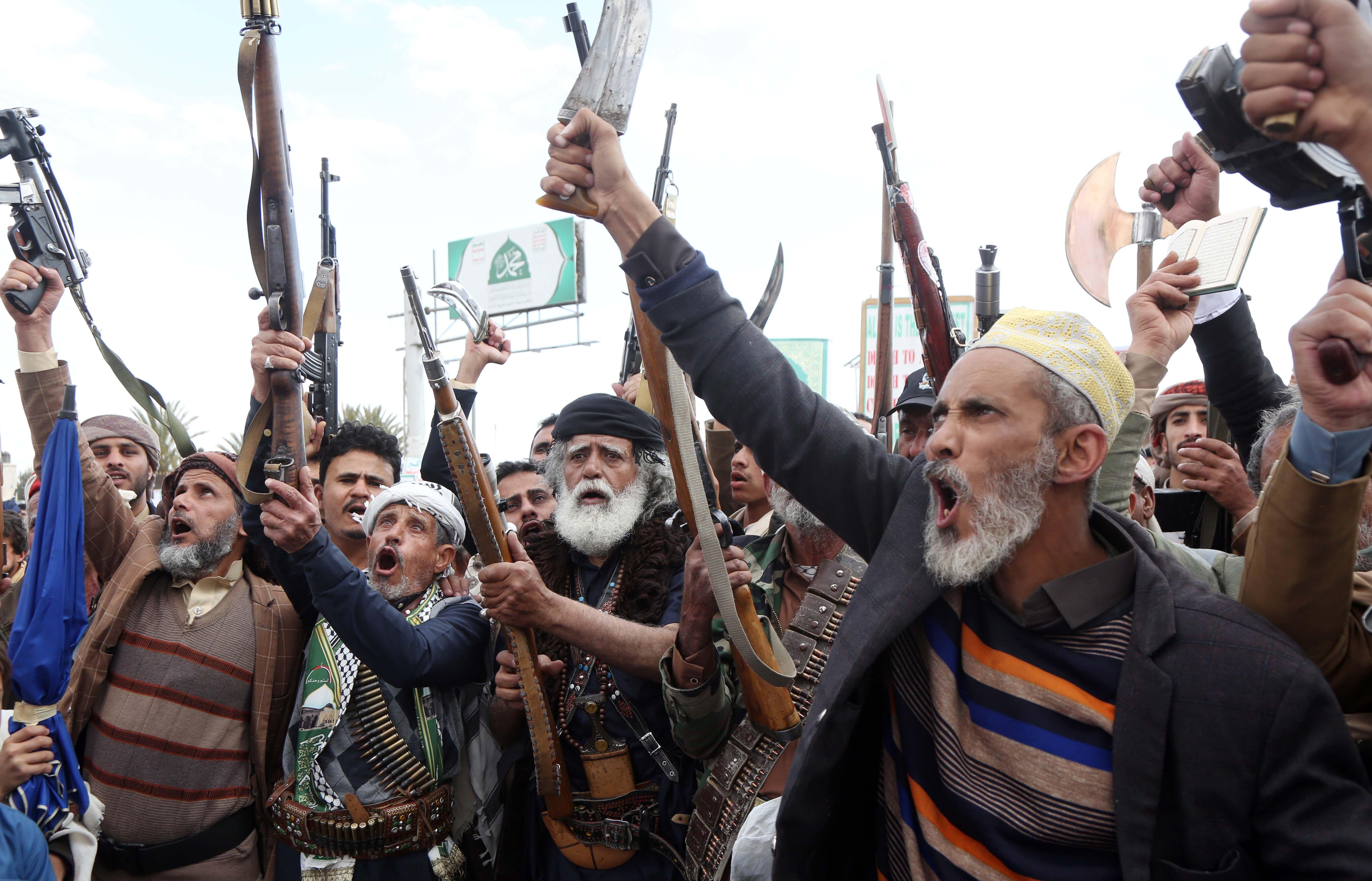
Since 2015, they have been fighting alongside Saudi Arabia and other countries against al-Qaeda and the radical Islamist Houthis, who control large parts of the country in the north. While the Saudis support Yemen’s internationally recognized government, based in Aden in the south, the Emirates have so far relied particularly on the STC militias, which have long cooperated with the government. However, they are significantly more radical and are demanding that South Yemen, which was independent until 1990, be seceded again.
Saudi red lines
At the beginning of December 2025, Arab news sites circulated a photo allegedly depicting STC fighters during an offensive. One of the men in camouflage clothes and with an STC flag, the other with a brown ammunition vest - both are making the victory sign. Behind them, uniformed men are praying in the sand, next to pickup trucks with mounted machine guns. In late 2025, STC troops suddenly advanced into territories controlled by the internationally recognized government. They are said to have seized oil fields there. Islam expert Al-Deen believes that the UAE likely at least approved, if not instigated, the attack. Shortly before that, the Saudi Crown Prince is said to have lobbied U.S. President Donald Trump to take action against Emirati interests in Sudan. Saudi Arabia is also involved there.
According to Al-Deen, however, the Emiratis “crossed the Saudis’ red lines” with this action. For Saudi Arabia, the offensive was no longer merely a power struggle once the STC rebels reached its border. It was a matter of its security. Thus, Riyadh attacked the alleged Emirati arms shipments in the port of Mukalla. And the government demanded that the Emirates leave the country within 24 hours. In fact, the UAE officially withdrew its troops, although Al-Deen assumes that some of them remain in the country. At the same time, government forces launched an offensive against the STC, which then, completely unexpectedly, announced its dissolution at the beginning of the year. Rebel leaders who had fled to Abu Dhabi, in turn, called on the group not to disband. Recently, armed groups linked to the STC attacked the presidential palace in Aden. “None of this would happen without the UAE’s approval,” think tank analyst Al-Deen is convinced.
Both Saudi Arabia and the Emirates not only sent troops to Yemen for combat operations. According to a 2024 BBC investigation, the UAE is alleged to have even facilitated targeted killings with the help of U.S. mercenaries starting in 2015—a claim Abu Dhabi denies. In the BBC documentary, mercenary Dale Comstock—muscular build, tattoos, bald—says during an interview in Florida: “When my handlers say, ‘This is the target, and this is the reason,’ who am I to ask questions?” His handlers, his superiors, were the Emiratis. They had ordered him to assassinate the Yemeni opposition politician Ansaf Mayo. Mayo belongs to the Muslim Brotherhood, which is not considered a terrorist organization in either the EU or the US, but is banned in the Emirates. Mayo told the BBC how someone blew up his car in the port city of Aden. He then fled to Saudi Arabia.