Mercosur remains a controversial topic at International Green Week in Berlin

The International Green Week in Berlin is celebrating its 100th anniversary. The Mercosur trade agreement is leaving its mark on the event. Austria intends to remain critical of Mercosur and closely monitor whether the protective mechanisms are being complied with. This was announced by Austria's Minister of Agriculture Norbert Totschnig (ÖVP) at the start of the fair, where he strongly called for mandatory origin labeling of agricultural products throughout the EU.
The Green Week was opened this Friday by Federal President Frank-Walter Steinmeier. The trade fair is a place of debate, where important questions of the future are negotiated. Since its founding a hundred years ago, it has contributed to the rapprochement of city and countryside. He said that reducing bureaucracy would help keep agricultural professions attractive. Although he understood the concerns, he was convinced of the benefits of new alliances such as the Mercosur agreement.
“Hard core of resistance”
Some Europeans see things differently. “We fought back when it came to Mercosur; we were the hard core of the resistance,” said Minister of Agriculture Totschnig from Vienna. He gave the impression that his country still had a problem with this. He said that the EU had introduced some protective mechanisms in response to pressure from Austria, together with countries such as Ireland, Poland, France, and Italy.
The minister is calling for a level playing field in plant protection, for example, and has announced stricter controls. “We will be looking closely to protect our own products.”
The new trade agreement increases competitive pressure from low-cost agricultural producers and poorer production standards. He therefore calls for mandatory origin labelling throughout the EU: “We are a quality producer of high-quality food. When South American goods compete with Austrian quality products, consumers must recognize at a glance where a product comes from,” Totschnig emphasized. You must be able to consciously choose an Austrian product on the shelf. Identification of origin is not a detail, but a central competitive factor.
Security of supply as geopolitical security
Totschnig also referred to the geopolitical turmoil: “Security of supply is security and must play a key role in the EU's strategic orientation, especially in these turbulent times in global politics.” The year 2026 will be a year of setting the course for the future Common Agricultural Policy (CAP), but also of opportunities for European agriculture, whose farmers are under enormous pressure as a result of falling producer prices and growing bureaucracy.
For Germans, price is more important than quality
Germany and Berlin are extremely important key markets for Austria, not only because of their geographical proximity, language, and purchasing power. “German guests love Austria,” said Christina Mutenthaler, managing director of Agrarmarkt Austria Marketing (AMA), at an event at the Austrian Embassy the day before the fair, “and appreciate our nature, landscape, and cuisine. Farmers are behind all three of these things. That's exactly what we want to market more strongly.”
Mutenthaler referred to the big difference between Germans and Austrians: “In Germany, the price beats everything. In Austria, quality, freshness and origin come first, and only later the price. ”
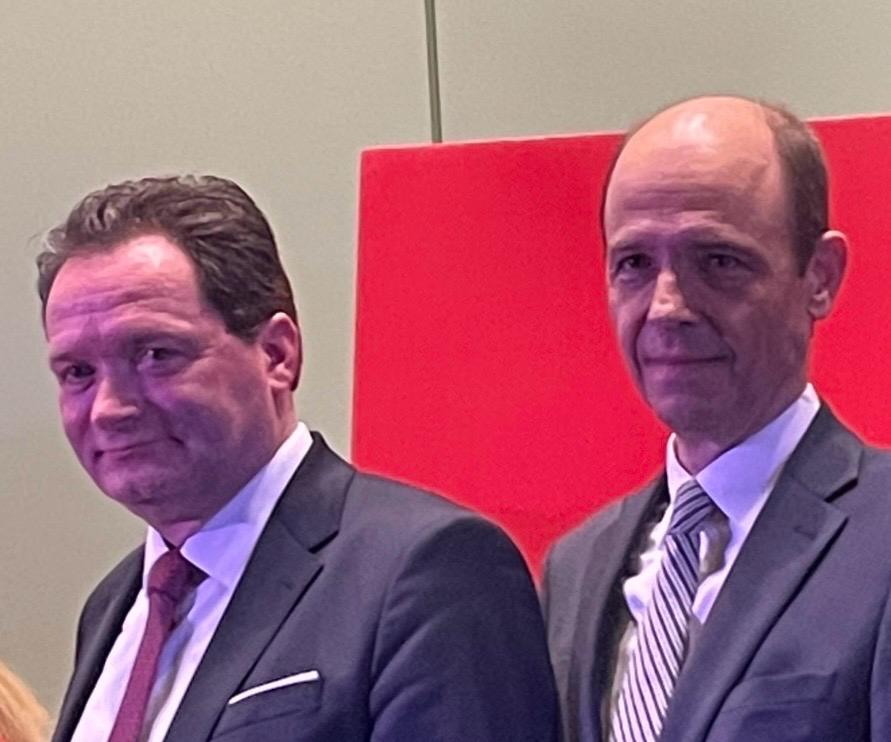
During his tour of the exhibition halls, German Minister of Agriculture Alois Rainer said that Germany should not let itself be broken down, but at the same time it must reduce bureaucracy and give agriculture more freedom.
ekö
%20(1).webp)