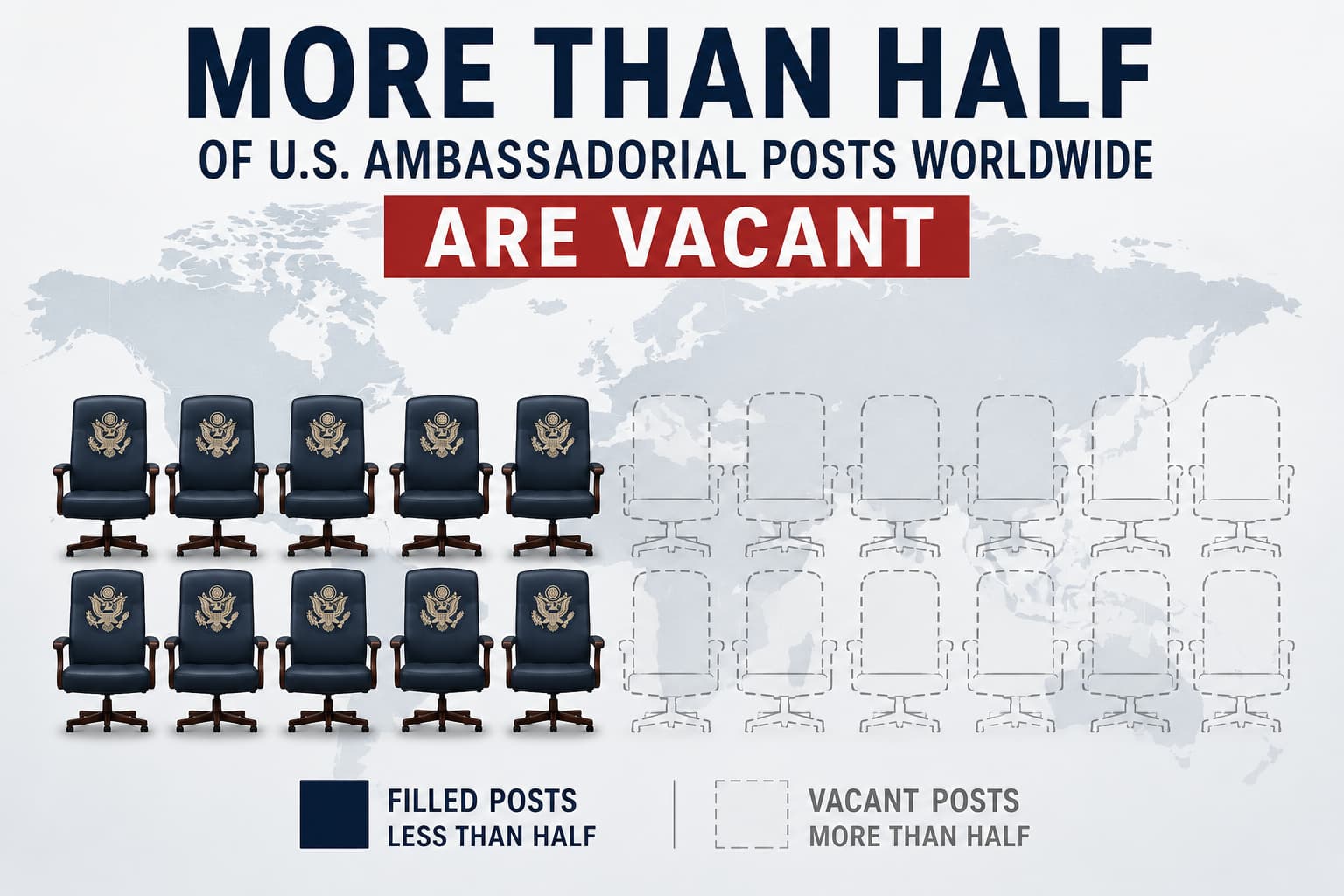
More than half of U.S. ambassadorial posts worldwide are vacant
War with Iran, peace talks with Ukraine, conflicts with Europe, Canada, Venezuela, Cuba, and China, global trade disputes—the number of conflicts in which the U.S. is involved is greater than ever before, and the need for effective diplomacy is actually more urgent than ever.
Instead, the U.S. professional foreign service, which numbered about 17,000 employees before Donald Trump took office in early 2025, is shrinking more and more. According to the American Foreign Service Association (AFSA), about a quarter have since left the service, either voluntarily or through dismissal. According to the data, the State Department laid off more than 200 employees in May, while simultaneously recruiting new diplomats. And roughly 16 months into Trump’s second term, more than half of the ambassadorial posts—namely 106 out of 193—remain vacant. Under his Democratic predecessor, Joe Biden, 55 out of 188 posts were vacant at the same point in time. In December 2025, the State Department even recalled around 30 career diplomats in a single day who had already taken up their ambassadorial posts.
Critics fear a significant weakening of the diplomatic service, as it is losing, above all, professionals with language skills, experience in crisis missions, or long-standing institutional expertise. According to a report by the U.S. broadcaster NBC, what counts is no longer objective analysis or impartial recommendations, but unconditional loyalty to Trump’s agenda. In an AFSA survey, diplomats lament the increasing politicization of the service in promotions and new hires—though it is by no means uncommon for top posts at U.S. embassies—even under Democratic presidents—to be awarded to confidants or sponsors.
Among the ambassadorial posts that remain unfilled is the one in Berlin, where lawyer and career diplomat Alan Meltzer has been serving as “chargé d’affaires ad interim” since the summer of 2024. Even in conflict zones such as Ukraine, career diplomat Julie Davis has been the only interim chargé d’affaires representing the U.S. for the past year. She recently announced her departure from the diplomatic service. The U.S. ambassador post is also vacant in four Gulf states, including Qatar and Saudi Arabia. In Pakistan, which is mediating in the Iran conflict, there is also only a deputy ambassador. Seven of 51 U.S. missions in Africa, including the African Union headquarters, are currently led on an interim basis. According to its own statements, the Senate Foreign Relations Committee is currently deliberating on nine nominations, including those for Canberra, Seoul, the European Bank for Reconstruction and Development, and the OSCE. However, it remains uncertain whether its recommendations will be approved by the full Senate.
While career diplomats serving as chargés d'affaires ad interim can maintain day-to-day operations, they often lack the access and influence of ambassadors who have been confirmed by the U.S. Senate and enjoy the government's trust. Trump often rejects professional, impartial advice even during difficult negotiations abroad: In both the Ukraine and Iran conflicts, he prefers to rely on real estate entrepreneur Steve Wittkoff and his son-in-law Jared Kushner.
gd
.webp)

%20(1).webp)