What Germany can learn from “China Speed”
By Christoph Kirsch and Klaus Mühlhahn
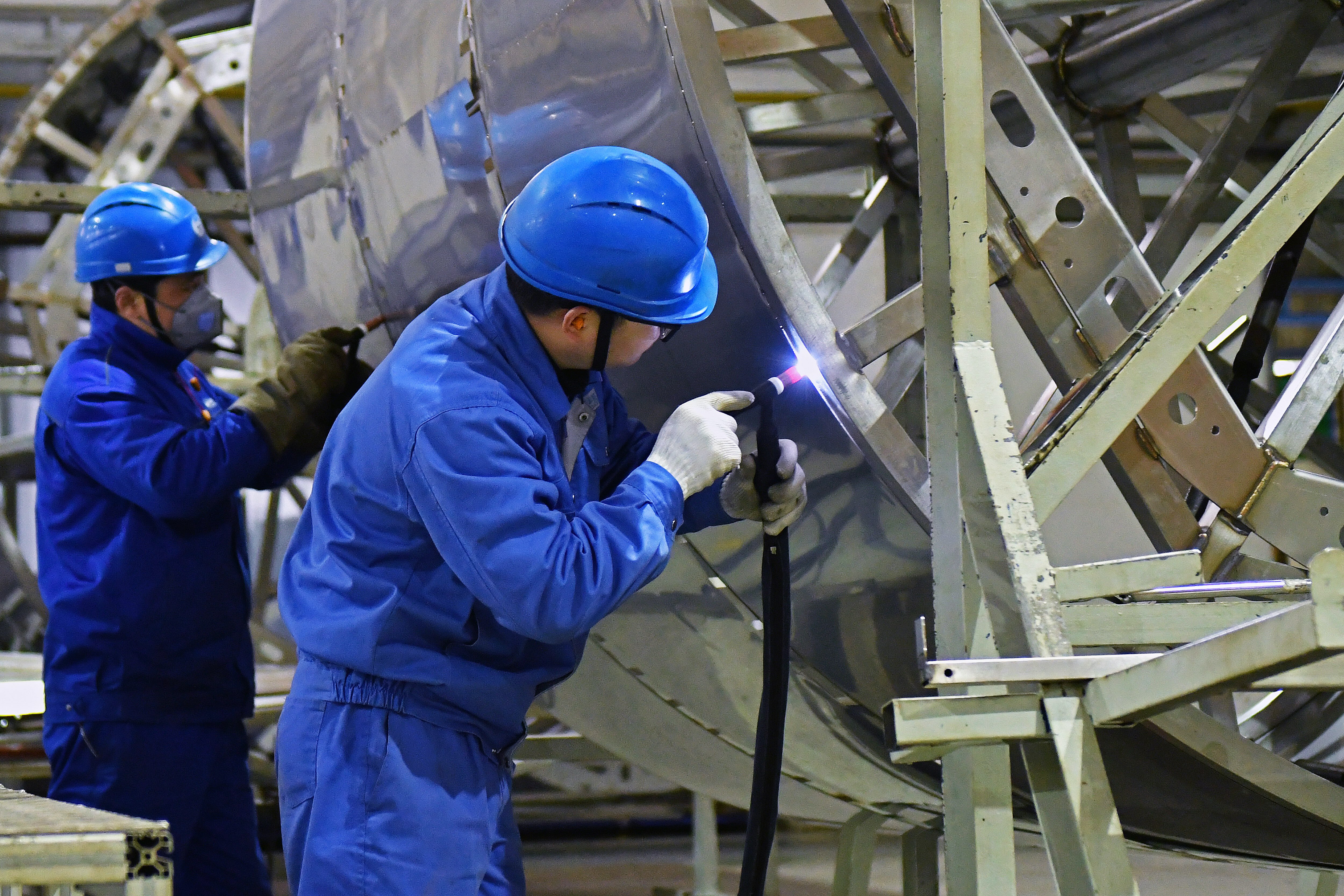
Following his trip to China in late February, Chancellor Friedrich Merz sparked a debate that has since extended far beyond the realm of economics. His assessment: Germany is no longer productive enough. Citing China as an example, he warned that the country’s prosperity “cannot be sustained in the long run with work-life balance and a four-day workweek.” The message is clear: Germany must work harder again.
But this explanation falls short. It reduces China’s economic dynamism—often referred to as “China Speed”—to a single argument: longer working hours. In fact, the success of Chinese companies is often explained by the infamous “996” model—working from 9 a.m. to 9 p.m., six days a week. But anyone who analyzes China’s rapid development, for example in the automotive industry, more closely will quickly realize that there are far more factors behind this success. Working hours are not the only decisive factor.
There is no doubt that people work more in China than in Germany. Working hours are longer, and vacation and sick days are significantly fewer. Yet this fact alone does not explain the enormous advantage in speed when it comes to developing new technologies. A look at the U.S. shows that people work long hours there as well, often with little vacation time and limited social security. Yet American companies in many industries do not match the development speed of their Chinese competitors. Focusing solely on working hours, therefore, falls short.
A key difference lies much more in the culture of communication. In many Western organizations, communication is highly formalized and tied to working hours. Outside these hours, availability is increasingly viewed critically. In China, by contrast, communication—supported by platforms like WeChat—is seamless and takes place in real time. Problems (known in Chinese as xiao huo, or “small fires”) are resolved immediately before they escalate into uncontrollable wildfires that later tie up immense resources. While Chinese society itself is hierarchically structured, communication in successful, fast-growing companies is surprisingly direct and unbureaucratic. This factor of on-time communication has at least as much influence on the speed of development as working hours alone.
Added to this is a different culture of decision-making and risk-taking. In Germany, business decisions are often shaped by lengthy approval processes, regulatory requirements, and a pronounced aversion to risk. Before an innovation is pursued, every conceivable risk must often be eliminated first. In China, by contrast, decisions are made more quickly and pragmatically. The Chinese willingness to take risks despite a certain probability of failure accelerates processes enormously. To put it bluntly: In China, people look for opportunities—in Germany, the primary focus is on avoiding mistakes.
This is particularly evident in the automotive industry at present. For decades, development cycles of three to five years for new models were considered the standard. But new competitors, particularly from the technology sector, are challenging this logic. Now, internet and software giants are entering the market, accustomed to the development cycles of smartphones (six to twelve months) or continuous software updates. They are increasingly applying this speed to industrial products as well. In China, this is giving rise to development processes that are significantly faster and organized in a more iterative manner than in Germany’s traditional industries.
Another factor is collaboration along the value chains. In Europe, complex compliance and competition regulations often complicate informal cooperation and flexible coordination between companies. While these regulations serve important functions, they can also slow down processes. In China, the boundaries between companies, suppliers, and partners are often more fluid, which helps facilitate quick problem-solving.
Finally, societal attitudes toward technology also play a role. In China, there is a remarkable openness toward new technologies. Digital innovations are quickly accepted and widely adopted. In Germany, by contrast, technological change is often viewed with greater skepticism. This reluctance can result in innovations reaching the market more slowly. Reservations and a certain degree of backward-looking attitudes hinder the rapid scaling of new technologies in the domestic market.
The importance of infrastructure is also often underestimated. Over the past two decades, China has invested heavily in transportation, logistics, energy supply, and digital networks—from high-speed trains and urban mobility to mobile payment systems and cloud platforms. This robust infrastructure shortens travel times, accelerates information exchange, and enables companies to develop, implement, and scale new technologies more quickly.
The bottom line: “China Speed” is not the result of longer working hours alone. It stems from faster communication, more pragmatic decision-making, a greater willingness to take risks, a high degree of societal openness to new technologies, and an efficient infrastructure. If Germany wants to strengthen its economic dynamism, it should focus more closely on these structural factors. The crucial question is not whether we work more—but whether we become more agile in our communication, bolder in our decisions, more flexible in our processes, and more open to technological progress. If this does not happen, we will indeed fall behind—but not because we work too little, but because we work the wrong way.
The Authors:
Christoph Kirsch is a consultant in the automotive sector and has worked internationally in the automotive supply industry for more than 35 years, including many years in senior management roles in China.
Klaus Mühlhahn is a professor of Chinese Studies at Freie Universität Berlin.
.JPG)
.jpg)