Is the EU falling apart?
Column by Michael Backfisch
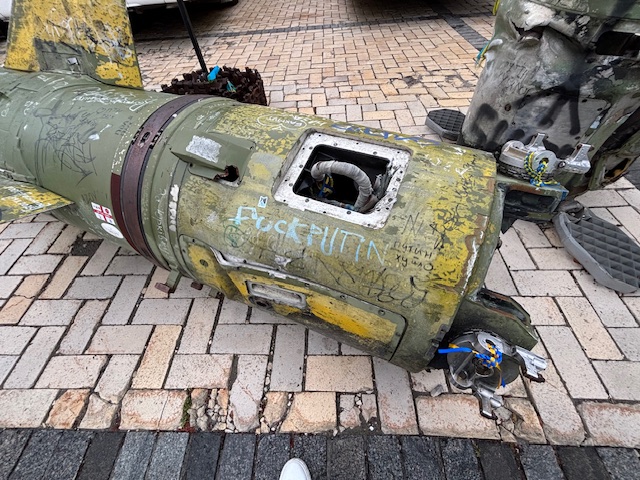
What gives cause for hope in the EU? Looking at the political developments of the last few days, one can only say: alarmingly little. The weeks-long tug-of-war over Ukraine's financing was a tragedy. The result is a lazy compromise that gives Ukraine a loan of 90 billion euros for the next two years, secured by the EU budget. However, the Eastern European countries Hungary, Slovakia, and Czechia first blocked the deal and then walked away from the financing. The model of collecting billions of euros from Brussels and then obstructing progress at will in order to gain advantages for oneself will continue to set a precedent.
The EU's design mistake of demanding unanimity on certain decisions instead of sticking to a qualified majority is taking bitter revenge. This makes the community painfully slow, paralyzed and powerless. In times when geopolitics is dominated by the autocracies of the US, Russia, and China, the EU is an ever-shrinking bonsai union. It is sure to be met with ridicule from Kremlin leader Vladimir Putin and contempt from US President Donald Trump.
EU Commission President Ursula von der Leyen set the bar extremely high and failed to live up to her own expectations: “My Commission will be a geopolitical Commission,” she said at the beginning of her term in 2019. “Europe must also learn the language of power,” she demanded in a speech on Europe at the Konrad Adenauer Foundation in Berlin that same year. “On the one hand, this means building up our own muscles where we have long been able to rely on others – for example, in security policy. On the other hand, it means using our existing strength in a more targeted manner when it comes to European interests.” The former German defense minister wanted to build the EU into not only an economic but also a political heavyweight.
One could casually summarize that von der Leyen jumped like a tiger and landed like a bedside rug. The trade agreement with the USA, which von der Leyen signed with Trump in Scotland at the end of July, is a sign of weakness. The major economic power Europe is now just a myth. The situation is even worse in geopolitics. In the major conflicts of this period — whether in Ukraine or in the Middle East — the EU plays an extra role.
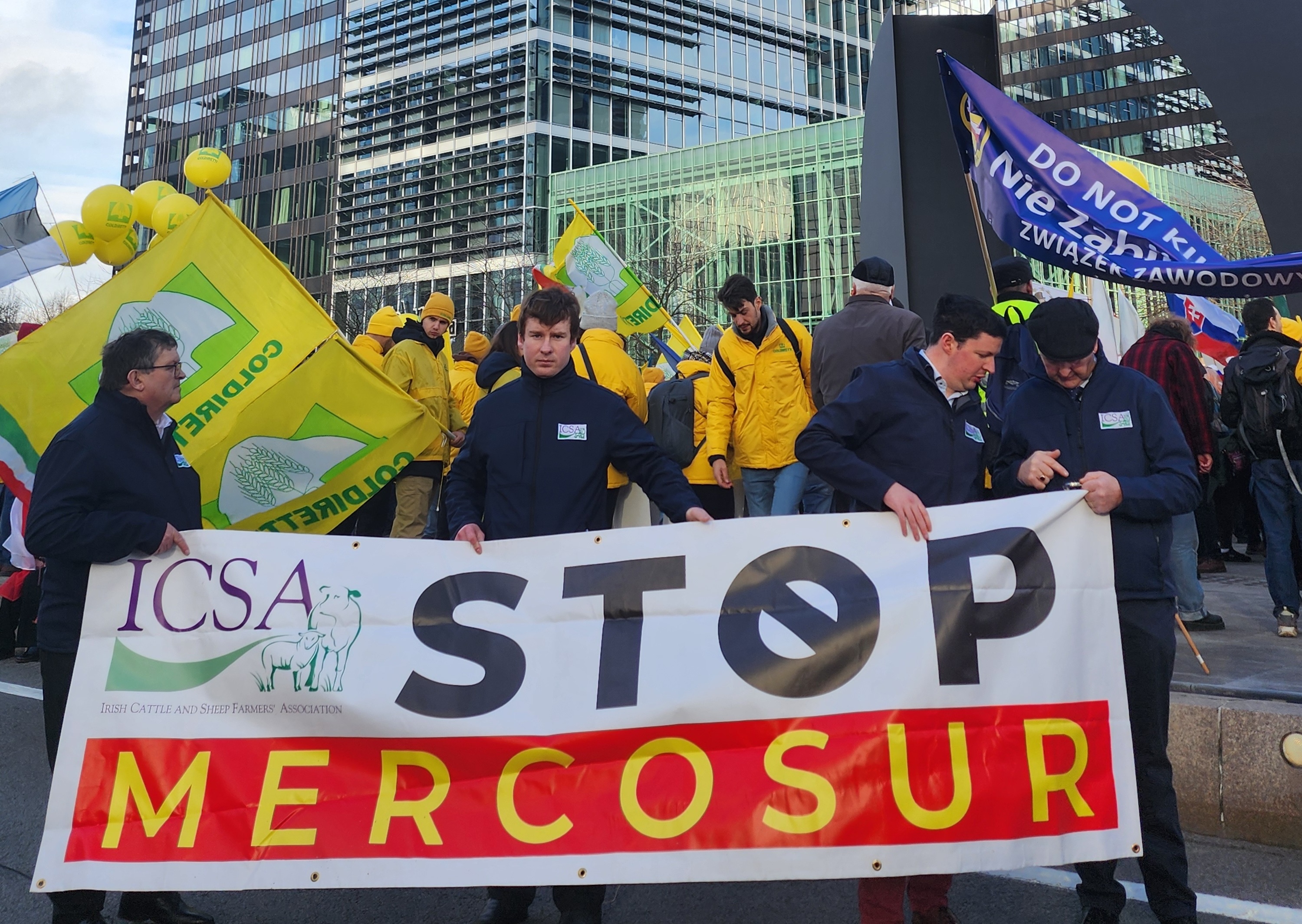
The squabbling over the free trade agreement with the Mercosur countries Argentina, Brazil, Paraguay, and Uruguay shows just how much the community stands in its own way. After 26 years (!) of negotiations, the agreement was supposed to be signed at the end of December. The signing was called off at the last minute. The governments of France, Italy, Poland, and Hungary – which form a blocking minority – vetoed the agreement because they fear protests from their farmers. The farmers fear being overwhelmed by cheap imports from South America. This is an unfounded panic reaction, as European agricultural companies would be protected by quotas, transition periods and, in extreme cases, customs duties. The much greater risk is borne by the Latin American countries, which have to open their weakly developed industrial markets to much more productive competition from the EU.
Europe has embarrassed itself on the world stage with its narrow-minded nationalistic attitudes. The EU has missed an opportunity to send a signal of strength. While Trump has declared war on rules-based global trade with his tariff club, the Europeans could have offered a positive alternative: a common market with over 700 million consumers and a total economic output of more than €22 trillion. According to calculations by the Brussels Commission, annual EU exports to South America could grow by up to 39 percent with the Mercosur agreement. While Europeans export cars and chemical products across the Atlantic, among other things, the Mercosur countries mainly supply agricultural products and raw materials.
A Mercosur agreement would send a signal that the EU could use toward the US and China—the world powers between which Europeans are currently at risk of being crushed. European policymakers have sounded the battle cry of “de-risking” for their own companies. The aim is to reduce dependence on China and America in favor of seeking new markets. Now, the European club of states is torpedoing this course of diversification with its Mercosur blockade. The naysayers must be accused of failing to recognize the signs of the times. They are obviously operating in one-dimensional political bubbles that obscure their view of geo-economic and geostrategic contexts. Added to this is the bitter realization that Chinese companies have been present in Latin America for years, securing access to natural resources and critical minerals. Are you still sleeping or are you already working, Europe?
Italian Prime Minister Giorgia Meloni is now playing a decisive role. She has asked for additional time to convince her farmers of Mercosur in the coming weeks. Perhaps — and with good luck — the blocking minority will be lifted after all and the agreement will be signed in Paraguay in January. But Europe's immense damage to its image remains. The community is moving in sleep mode.
Europe is facing challenges unlike any it has seen in 80 years. The EU was founded as a peace project to unite the continent as a community of states after two devastating world wars. Today, a similar quantum leap is needed. Europe's economy needs an initial spark of innovation to survive in a global market that has become increasingly harsh. However, without strengthening businesses through competitive energy prices and less bureaucratic red tape, there will be no new upswing. A welfare state without robust economic growth is not financially viable. Key European countries such as the UK, France, and Germany have failed to get major social reforms in place for pensions and health insurance.
If the parties in the political center do not turn things around, right-wing populists benefit. That is the new threat facing Europe. In Great Britain, the right-wing populist reform UK around the Brexit scare Nigel Farage is ahead in all surveys. He peddles the general topic of foreclosure and deportation. Elections in the UK are not due until 2029, but the concern is there: if Reform UK wins, Britain's rapprochement with the EU will be a thing of the past – participation in a “coalition of the willing” will be history.
The same risk is looming in France. Europe's second-largest economy is not getting off the ground; rapidly changing governments are staggering from budget crisis to budget crisis. The far-right Rassemblement National (RN) of Marine Le Pen and young star Jordan Bardella is riding the wave of dissatisfaction. The mix of topics such as halting migration and EU criticism as well as the storm against the political center are enough to catapult the RN to the top of the polls. With the never-ending fall in popularity of President Emmanuel Macron, the probability is increasing that either Bardella or Le Pen will sit in the Elysée Palace after the 2027 elections. It would mean the end of Franco-German friendship and the end of the EU as we know it.
In Germany, the centrist parties have what may be their last chance to turn the tide in mid-2026. The state elections in Baden-Württemberg, Rhineland-Palatinate, Saxony-Anhalt, Berlin, and Mecklenburg-Western Pomerania will be a test of their mettle. In Saxony-Anhalt and Mecklenburg-Western Pomerania, the right-wing populist AfD is polling at around 40 percent. With demands such as “remigration” and withdrawal from the EU, enriched by a mood of doom and gloom and the demonization of the political elites, the party has dramatically increased its share of the vote in many federal states.
All of these are signs of great concern. It is no longer enough to send wake-up calls to Brussels—too many have gone unheard. The cracks in the EU are getting deeper, as the recent wrangling over the Mercosur agreement has shown. If the warning signs continue to be ignored, the disintegration of the community will be unstoppable.
.webp)